Blocked drains or hidden leaks can quickly turn into expensive emergencies if you miss the early warning signs. Simple maintenance tasks often go overlooked, but they are vital for keeping your property protected from water damage and costly repairs. The right approach gives you the power to spot issues early and keep your drainage system running smoothly.
You are about to discover practical methods recommended by British experts, including tips for routine inspections and debris removal that are both easy and effective. Each step will help you understand what to look for and how to act before small problems become major headaches. The insights ahead reveal how regular attention can save you money and stress in the long run.
Table of Contents
- 1. Inspect Visible Drain Covers and Grates Regularly
- 2. Remove Debris to Prevent Surface Blockages
- 3. Check for Slow Draining Sinks and Baths
- 4. Flush Drains with Hot Water Monthly
- 5. Use Biological Cleaners to Break Down Residue
- 6. Schedule Professional CCTV Drain Surveys Annually
- 7. Watch for Signs of Leaks or Damp Near Drains
Quick Summary
| Key Message | Explanation |
|---|---|
| 1. Regularly Inspect Drain Covers | Check drain covers for damage, rust, or blockages to prevent drainage problems early. Small issues can escalate quickly, leading to costly repairs. |
| 2. Remove Debris Promptly | Keep drainage areas clear of leaves and litter to avoid blockages. Seasonal cleaning, especially after storms, is essential for maintenance. |
| 3. Monitor Slow Draining Fixtures | Address slow drains immediately as they indicate potential blockages in plumbing. Early intervention can prevent extensive damage and emergency repairs. |
| 4. Flush Drains with Hot Water Monthly | Monthly hot water flushing dissolves grease and soap residue, keeping drains clear. Consider adding vinegar for enhanced cleaning. |
| 5. Schedule Annual CCTV Surveys | Annual CCTV inspections help identify hidden problems within drainage systems, allowing for timely repairs and preventing costly failures. |
1. Inspect Visible Drain Covers and Grates Regularly
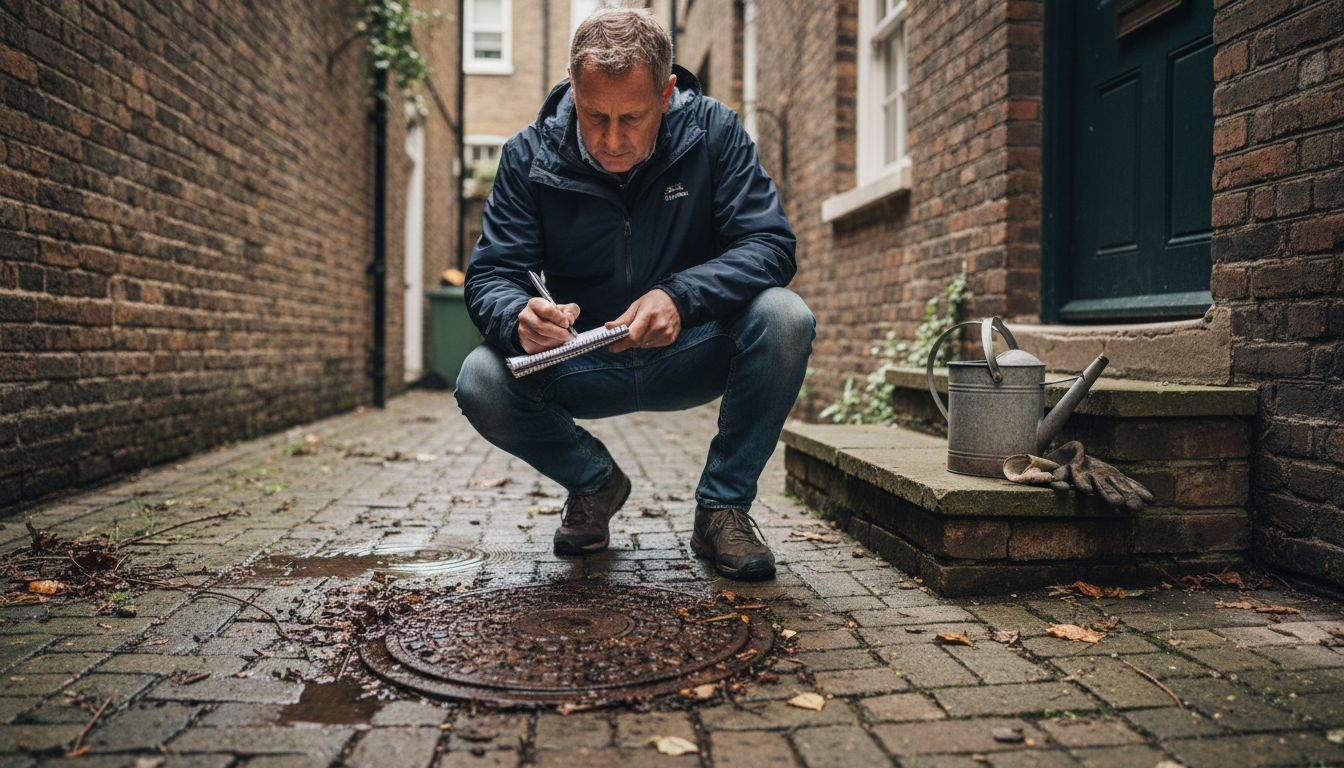
Maintaining the integrity of your property’s drainage system begins with a simple yet critical task: regular inspection of visible drain covers and grates. These unassuming components serve as your first line of defence against potential blockages and structural damage.
Visible drain components play a crucial role in managing water flow and protecting your drainage infrastructure. The drainage guidance from Approved Document H emphasises the importance of keeping these access points clear and functional.
Key areas to inspect include:
- Exterior manhole covers and access points
- Grates around your property’s perimeter
- Underground drainage chamber entrances
- Connections between different drainage sections
During your inspection, look for several critical signs of potential issues:
- Cracks or damage in the cover material
- Rust or corrosion on metal components
- Loose or unstable covers
- Accumulated debris blocking proper drainage
- Signs of water pooling around the grate
A small issue with a drain cover can quickly escalate into a significant drainage problem if left unaddressed.
Regular inspections allow you to catch potential problems early, preventing costly repairs and minimising the risk of unexpected drainage failures. By dedicating just a few minutes to checking these components periodically, you can save substantial time and money in the long run.
Pro tip: Keep a simple inspection log with dates and observations to track any developing issues with your property’s drainage system.
2. Remove Debris to Prevent Surface Blockages
Surface drainage systems are highly susceptible to blockages caused by accumulated debris. Understanding how to effectively manage and remove these obstructions is crucial for maintaining your property’s drainage infrastructure.
The National Standards for Sustainable Drainage Systems highlight the critical nature of keeping surface drainage features clear and unobstructed.
Types of debris that commonly cause drainage issues include:
- Fallen leaves and tree branches
- Litter and packaging materials
- Garden waste and plant clippings
- Soil and sediment buildup
- Plastic bags and packaging
Key strategies for debris removal involve:
- Regular visual inspections of drainage areas
- Clearing leaves and organic matter promptly
- Using appropriate tools like rakes and grabbers
- Installing protective mesh or screens
- Creating a consistent maintenance schedule
Accumulated debris can rapidly transform from a minor nuisance to a significant drainage blockage if left unattended.
Research from the University of Bath demonstrates that proactive debris management significantly reduces flood risks and maintains water flow efficiency.
Important prevention techniques include seasonal cleaning, especially during autumn when leaf fall is high, and after significant storm events.
Pro tip: Invest in a sturdy pair of waterproof gloves and a dedicated drainage maintenance kit to make debris removal safer and more efficient.
3. Check for Slow Draining Sinks and Baths
Slow draining sinks and baths are more than just a minor inconvenience. They represent early warning signs of potential drainage system problems that require immediate attention. Routine maintenance guidance emphasises the importance of monitoring water flow in household fixtures.
When water drains sluggishly, it indicates potential blockages developing within your plumbing system. These obstructions can emerge from various sources:
- Accumulated hair and soap residue
- Grease and food particle buildup
- Mineral deposits from hard water
- Small foreign objects accidentally dropped
- Tree root infiltration in outdoor pipes
Key Indicators of Drainage Problems:
- Water pooling around drain areas
- Gurgling sounds during drainage
- Unusual odours emanating from pipes
- Repeated need to plunge fixtures
- Inconsistent water flow rates
Addressing slow drainage promptly can prevent expensive emergency repairs and potential water damage.
Important Prevention Techniques involve regular inspection and proactive maintenance of your household drainage systems. Understanding these early warning signs allows you to intervene before minor issues escalate.
Residents are advised to report drainage issues quickly to prevent more serious blockages from developing.
Pro tip: Keep a simple maintenance log tracking drainage performance to identify patterns and potential recurring issues.
4. Flush Drains with Hot Water Monthly
Monthly hot water flushing is a simple yet powerful technique for maintaining your property’s drainage system. Approved Document H highlights the importance of regular drain cleaning to prevent potential blockages.
Hot water serves as a natural and environmentally friendly method for breaking down potential drain obstructions. The high temperature helps:
- Dissolve grease and fatty deposits
- Break down soap residue
- Loosen minor organic buildups
- Prevent bacterial growth
- Eliminate unpleasant odours
Key Hot Water Flushing Techniques:
- Use water at approximately 70-80 degrees Celsius
- Pour slowly to ensure complete pipe coverage
- Target kitchen and bathroom drains primarily
- Repeat process for each drainage point
- Follow with cold water rinse
Consistent monthly maintenance can significantly reduce the risk of costly drainage repairs.
While national standards do not mandate specific flushing protocols, regular hot water treatment remains an effective preventative measure.
Important Prevention Strategy involves understanding that prevention is always more cost-effective than emergency repairs.
Pro tip: Consider adding a cup of white vinegar to your monthly hot water flush for enhanced cleaning and odour elimination.
5. Use Biological Cleaners to Break Down Residue
Biological drain cleaners represent a sophisticated and environmentally conscious approach to maintaining your property’s drainage system. Sustainable drainage standards increasingly recommend natural treatments that minimise environmental impact.
These specialist cleaners leverage beneficial microorganisms to systematically break down organic matter within drainage pipes. Unlike harsh chemical alternatives, biological solutions offer gentle yet effective maintenance.
Key advantages of biological drain cleaners include:
- Environmentally friendly formulation
- Safe for pipework infrastructure
- Continuous bacterial action
- Non-corrosive treatment
- Prevents organic build-up
Biological Cleaner Application Steps:
- Select enzyme-based drainage product
- Follow manufacturer’s recommended dosage
- Apply directly into drain openings
- Allow recommended contact time
- Flush with warm water
Natural biological treatments represent the future of sustainable drainage maintenance.
University of Strathclyde research highlights innovative approaches to urban drainage performance that align with biological cleaning principles.
Important Maintenance Strategy involves selecting treatments that protect both your drainage infrastructure and the broader environmental ecosystem.
Pro tip: Choose biological cleaners containing multiple bacterial strains for more comprehensive organic residue breakdown.
6. Schedule Professional CCTV Drain Surveys Annually
Annual professional CCTV drain surveys represent a critical preventative maintenance strategy for London property owners. Flood risk asset maintenance guidance strongly recommends systematic infrastructure inspections to detect potential issues early.
CCTV drain surveys provide an unprecedented view into your property’s underground drainage system. These sophisticated camera inspections allow professionals to identify problems invisible to the naked eye.
Key benefits of annual CCTV surveys include:
- Early detection of structural weaknesses
- Identification of potential blockage points
- Mapping of drainage system configuration
- Assessment of pipe material integrity
- Prevention of catastrophic drainage failures
Essential Survey Insights:
- Locate hidden pipe damage
- Evaluate drainage system performance
- Create comprehensive maintenance records
- Predict potential future issues
- Recommend targeted repairs
A single annual survey can prevent thousands of pounds in emergency repair costs.
Maintenance specification documents emphasise the long-term value of systematic drainage infrastructure assessment.
Important Preventative Strategy involves treating your drainage system as a critical property asset requiring professional ongoing evaluation.
Pro tip: Request a digital copy of your CCTV survey report for your property maintenance records and future reference.
7. Watch for Signs of Leaks or Damp Near Drains
Monitoring your property for subtle signs of drainage issues can prevent significant structural damage and costly repairs. Environment Agency flood check services emphasise the critical importance of early leak detection.
Leaks and damp areas near drainage systems often signify underlying problems that require immediate attention. These seemingly minor indicators can reveal complex drainage infrastructure challenges.
Critical signs of potential drainage issues include:
- Persistent damp patches on walls or floors
- Unexplained musty odours
- Visible water stains
- Discolouration around drain areas
- Soft or deteriorating wall surfaces
Comprehensive Leak Investigation Techniques:
- Inspect basement and ground floor areas
- Check exterior wall junctions
- Monitor areas near drainage access points
- Look for salt efflorescence on walls
- Assess ground moisture levels
A small leak today could become a significant structural problem tomorrow.
Government flood guidance highlights the importance of proactive monitoring to mitigate potential water damage.
Important Prevention Strategy involves treating every moisture sign as a potential drainage system warning.
Pro tip: Keep a digital photo log of any damp areas to track changes and provide evidence for professional drainage assessments.
Below is a comprehensive table summarising the inspection and maintenance strategies for a property’s drainage system discussed throughout the article.
| Maintenance Strategy | Key Actions | Benefits |
|---|---|---|
| Inspect visible drain covers and grates | Regularly check for damage, rust, debris, and stability. | Prevents blockages and identifies issues early. |
| Remove debris from surface drains | Conduct regular cleaning and use tools such as rakes or protective meshes. | Mitigates surface blockages and optimises water flow. |
| Address slow-draining sinks and baths | Inspect and remove hair, grease, or mineral deposits promptly. | Avoids escalations to system-wide obstructions. |
| Flush drains with hot water monthly | Pour hot water at approx. 70–80°C along with optional vinegar. | Dissolves residues, prevents odours, and reduces buildup. |
| Use biological cleaners | Apply enzyme-based solutions as per guidelines. | Eco-friendly maintenance safeguarding pipes. |
| Conduct annual CCTV surveys | Engage professionals for system condition and blockage assessments. | Detects hidden issues and prevents critical failures. |
| Monitor for leaks or damp areas | Inspect walls, floors, and external junctions for moisture accumulation. | Identifies early signs of structural drainage challenges. |
Keep Your London Property’s Drains in Top Condition with RSJ Drains
The 7-step drain maintenance checklist highlights common challenges like blocked grates, slow draining sinks, and hidden pipe damage that can escalate into costly emergencies if ignored. Protect your property by combining these essential DIY checks with professional support. RSJ Drains offers expert services such as detailed CCTV drain surveys, high-pressure water jetting, and drain relining to tackle issues early and effectively.
Don’t wait for a minor clog to become a major disaster. Benefit from our 24-hour guaranteed emergency response and trusted family-run expertise. Visit RSJ Drains today to schedule your comprehensive drain inspection or quick repair. With RSJ Drains, you are choosing reliability, safety and affordability for your drainage maintenance needs.
Frequently Asked Questions
How often should I inspect my drain covers and grates?
Regularly inspect your drain covers and grates at least once a month. Look for signs of damage or blockage, and make any necessary repairs promptly to avoid costly drainage issues.
What should I do if I notice slow draining sinks or baths?
If you experience slow draining sinks or baths, address the issue immediately to prevent further blockages. Remove visible debris and consider using a plunger or a suitable drain cleaner, and aim to maintain regular inspections to spot potential problems early.
How can I effectively manage debris accumulation in my drainage system?
To manage debris accumulation, create a consistent maintenance schedule that includes clearing leaves and other debris from drains at least once every two weeks. This proactive approach can significantly reduce the risk of blockages.
What are the benefits of scheduling professional CCTV drain surveys?
Scheduling an annual CCTV drain survey allows for early detection of potential issues within your drainage system. By identifying problems before they escalate, you can save on future repair costs and extend the life of your drainage infrastructure.
How can hot water flushing help maintain my drains?
Flushing your drains with hot water once a month helps dissolve grease and soap buildup, promoting smooth water flow. Aim to pour approximately 70-80 degrees Celsius water down each drain to effectively maintain their performance.
Why should I consider using biological cleaners for my drains?
Using biological cleaners is environmentally friendly and effective at breaking down organic matter in your drainage system. Apply these cleaners as directed, typically on a monthly basis, to maintain a healthy drainage environment.
Recommended
- Affordable & Reliable Blocked Toilet Services in North London
- Reliable Blocked Drain Repairs and Services in North London
- Professional CCTV Drainage Inspection in North London For All
- The Most Effective and Fastest Drainage Services in Chelsea
- Essential Checklist for Boiler Maintenance: Step-by-Step Guide – Skan Plumbing & Heating
- Role Of Drain Maintenance – Protecting Sacramento Homes – Legacy Plumbing & Drain – Emergency Plumbers Of Sacramento
- Why Plumbing Maintenance Matters for Families