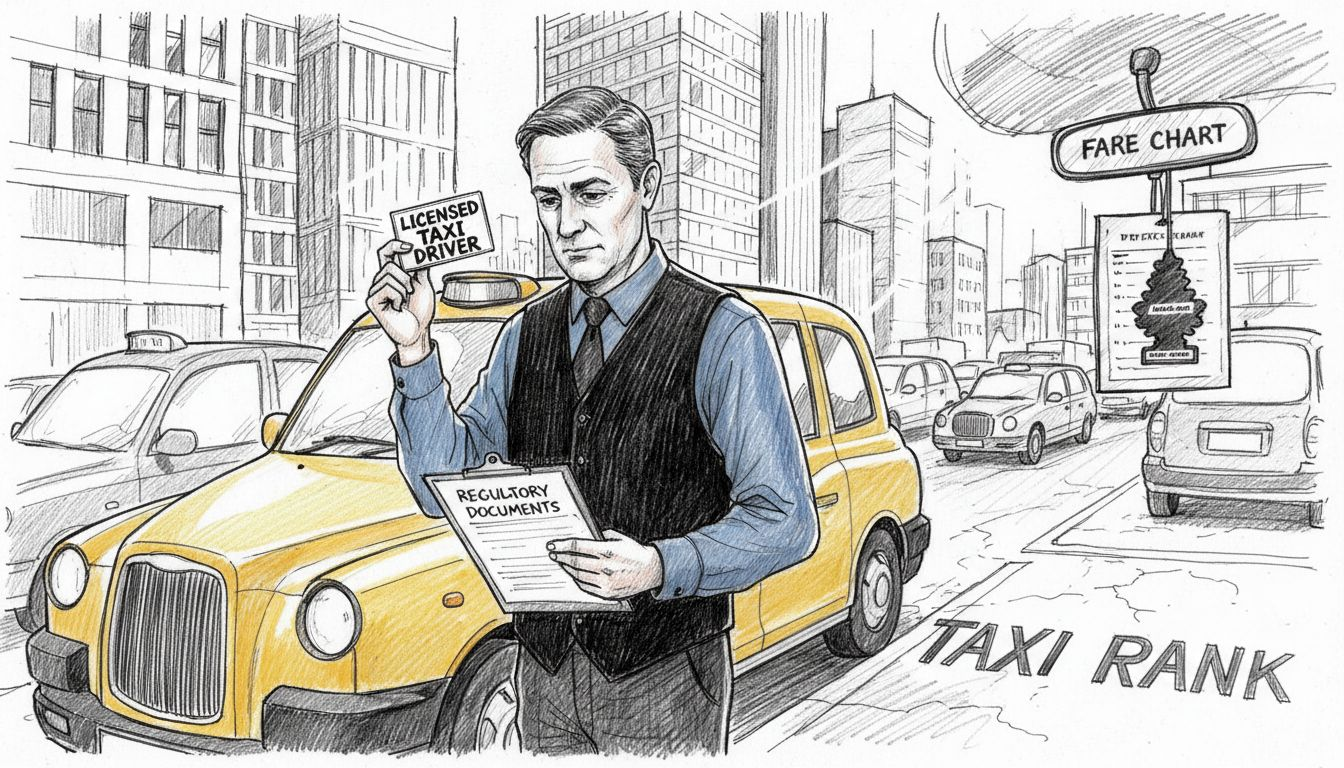
Finding honest, dependable transport in a new city is easy to overlook until you are laden with luggage outside Larnaca International Airport. Navigating the difference between formal and informal rides can shape your travel experience in Cyprus. This article brings clarity to the crucial distinctions behind a licensed taxi service, helping you choose only those options that guarantee public safety, verified drivers, and transparent fares for every trip in Larnaca.
Table of Contents
- Licensed Taxi Service: Core Definition And Misconceptions
- Types Of Licensed Taxis And Key Distinctions
- Legal Requirements And Licensing Processes
- Driver Qualifications And Vehicle Standards
- Passenger Rights, Fare Regulation, And Safety
- Risks, Costs, And Comparison To Unlicensed Taxis
Key Takeaways
| Point | Details |
|---|---|
| Licensed Taxi Services Ensure Safety | They operate under strict regulations, ensuring driver background checks, vehicle inspections, and insurance coverage, prioritising passenger safety. |
| Types of Licensed Taxis Vary Globally | Different regions utilise various taxi classifications, each with unique regulations and operational methods. |
| Passenger Rights are Protected | Legal frameworks guarantee fares, safe vehicles, and the right to lodge complaints, enhancing overall service quality. |
| Choose Licensed Services for Safety | Licensed taxis offer insurance protection and stringent safety standards compared to unlicensed alternatives, despite potentially higher costs. |
Licensed taxi service: Core definition and misconceptions
A licensed taxi service represents a professionally regulated transportation method for passenger travel, distinguished from informal transportation options by strict legal and safety standards. Unlike personal vehicles or unregulated ride-sharing platforms, licensed taxis operate under comprehensive governmental oversight to ensure public safety and service quality.
Taxis are legally classified as commercial vehicles for passenger transport that must meet specific operational requirements. These requirements typically encompass several critical elements:
- Mandatory driver licensing and background checks
- Vehicle safety inspections
- Commercial insurance coverage
- Standardised fare regulations
- Specialised driver training programmes
Common misconceptions about taxi services often stem from misunderstandings about their regulated nature. Many individuals incorrectly assume all vehicle-for-hire services are equivalent, overlooking the significant legal distinctions between licensed taxis and informal transportation alternatives. Taxis represent a specific category of commercial transportation with precise legal definitions and operational standards.
Key distinguishing features of licensed taxi services include:
- Guaranteed driver verification
- Standardised pricing mechanisms
- Regulated vehicle maintenance standards
- Comprehensive passenger protection protocols
Pro tip: Always verify a taxi’s official licensing credentials before commencing your journey to ensure your personal safety and service quality.
Types of licensed taxis and key distinctions
Licensed taxi services encompass diverse categories, each with unique operational characteristics and regulatory frameworks. Taxi classifications globally vary according to local transportation needs, legal requirements, and cultural transportation practices.
Four primary licensed taxi types exist in modern transportation systems:
- Hackney carriages: Street-hailable public hire vehicles
- Private hire vehicles: Pre-booked transportation services
- Taxibuses: Shared route-based transportation
- Limousine services: Specialised pre-booked luxury transportation
Each taxi classification operates under distinct regulatory parameters. Taxi operational structures differ substantially based on local governmental regulations, encompassing variations in:
- Permitted pickup methods
- Vehicle type restrictions
- Fare calculation mechanisms
- Licensing requirements
- Operational territories
Regional differences significantly impact taxi service structures. For instance, some jurisdictions mandate specific vehicle colours, while others focus on comprehensive driver background checks and vehicle maintenance standards.
Key operational distinctions include:
- Licensing complexity
- Geographic service limitations
- Passenger interaction protocols
- Vehicle standardisation requirements
Pro tip: Always confirm a specific taxi type’s operational rules and licensing credentials before booking to ensure appropriate transportation service.
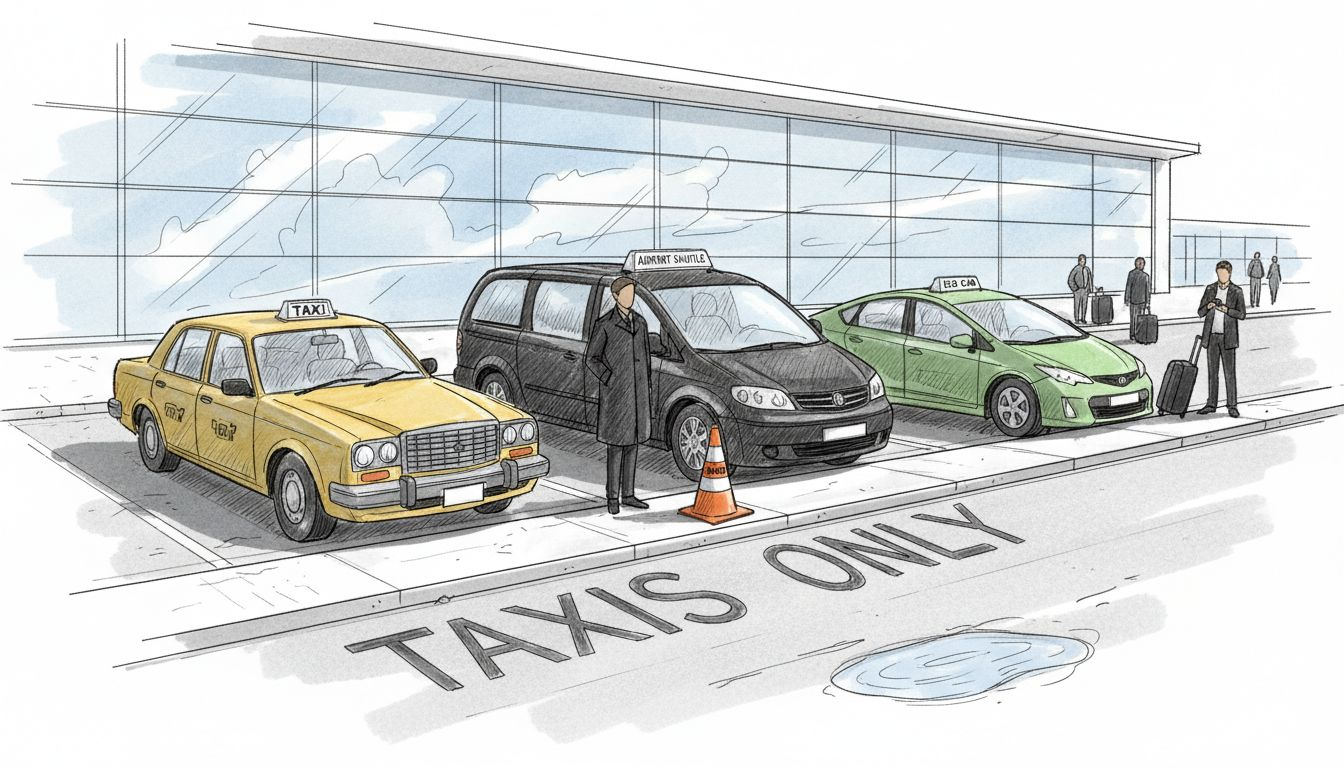
A global perspective on licensed taxi types reveals notable regional distinctions:
| Taxi Type | Common Regions | Typical Pickup Method | Unique Regulation Example |
|---|---|---|---|
| Hackney Carriage | UK, Ireland | Flagged on street | Mandatory black vehicle colour |
| Private Hire | Australia, Canada | Pre-booked via phone or app | Strict advance booking requirements |
| Taxibus | Europe, Asia | Shared route, fixed stops | Regulated passenger limits |
| Limousine | USA, UAE | Pre-booked luxury | Minimum vehicle size standards |
Legal requirements and licensing processes
Taxi licensing represents a comprehensive regulatory framework designed to ensure public safety and service quality. Licensing authorities establish detailed standards for evaluating potential taxi operators, drivers, and vehicles through rigorous assessment processes.
The licensing procedure typically involves multiple critical stages:
- Initial application submission
- Comprehensive background checks
- Local geographical knowledge examination
- Medical fitness evaluation
- Vehicle safety inspection
Key legal requirements for taxi licensing often encompass:
- Criminal record verification
- Professional conduct assessment
- Driving history investigation
- Financial reliability screening
- Physical and mental health certification
Taxi medallion systems represent another crucial mechanism for controlling taxi service quality. These government-issued permits regulate market entry, ensuring that only qualified operators can provide transportation services.
Regulatory compliance elements include:
- Strict vehicle maintenance standards
- Mandatory insurance coverage
- Regular performance reviews
- Continuous professional development requirements
Pro tip: Maintain comprehensive documentation and be prepared for ongoing regulatory scrutiny to ensure sustained licensing compliance.
Driver qualifications and vehicle standards
Taxi driver qualifications represent a comprehensive set of rigorous requirements designed to ensure public safety and professional service delivery. Licensed taxi drivers must obtain specialised credentials that go far beyond standard driving permissions.
Driver qualification processes typically involve multiple critical assessments:
- Commercial driver’s licence acquisition
- Comprehensive background screening
- Local geographical knowledge examination
- Professional conduct evaluation
- Medical fitness certification
Key driver qualification standards include:
- Minimum age requirements
- Clean driving record
- Advanced driving skills
- Professional communication abilities
- Physical and mental fitness
Vehicle standards are equally stringent, with regulatory authorities enforcing detailed inspection protocols to guarantee passenger safety and service reliability.
Critical vehicle inspection criteria encompass:
- Structural integrity assessment
- Mechanical systems verification
- Safety equipment validation
- Emissions compliance
- Accessibility feature confirmation
Pro tip: Maintain comprehensive documentation of your qualifications and vehicle maintenance records to streamline periodic regulatory assessments.
Passenger rights, fare regulation, and safety
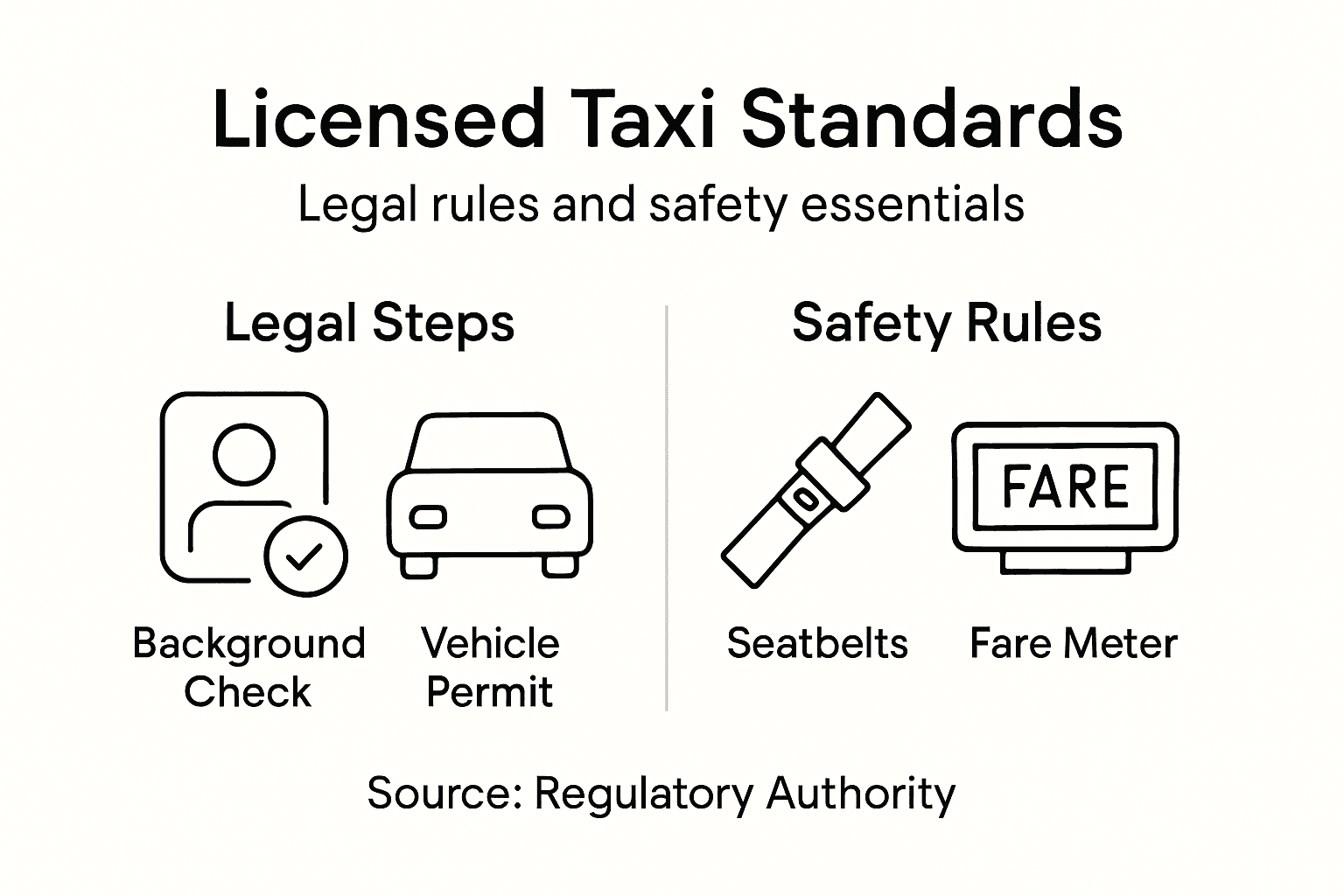
Passenger rights in licensed taxi services represent a critical framework designed to protect individuals during transportation. Comprehensive legal frameworks ensure passenger welfare through structured regulatory mechanisms that balance service quality, pricing, and safety considerations.
Passenger rights typically encompass several fundamental protections:
- Transparent fare structures
- Safe and maintained vehicles
- Professional driver conduct
- Right to lodge formal complaints
- Protection against discriminatory practices
Fare regulation mechanisms are instrumental in maintaining service integrity:
- Standardised metered pricing
- Pre-defined rate calculations
- Clear pricing display requirements
- Regulated maximum charge limits
- Mechanism for fare dispute resolution
International safety standards mandate rigorous passenger protection protocols, focusing on multiple critical dimensions of transportation safety. These standards address vehicle maintenance, driver qualifications, and operational guidelines to minimise potential risks.
Essential safety considerations include:
- Regular vehicle safety inspections
- Driver background verification
- Mandatory insurance coverage
- Emergency response preparedness
- Accessibility accommodations
Pro tip: Always request and verify the taxi’s official licensing information before commencing your journey to ensure your personal safety and rights are protected.
Risks, costs, and comparison to unlicensed taxis
Licensed taxi services represent a carefully regulated transportation ecosystem with built-in safeguards, contrasting sharply with informal transportation alternatives. Comparative research reveals significant operational differences between licensed and unlicensed transportation services, highlighting critical risk variations.
Key comparative risk factors include:
- Insurance coverage
- Driver background verification
- Vehicle safety standards
- Fare transparency
- Passenger protection mechanisms
Unlicensed taxi operations typically present multiple potential risks:
- Absence of formal insurance protection
- Unverified driver credentials
- Potential vehicle safety compromises
- Unpredictable pricing structures
- Limited passenger complaint resolution mechanisms
Gig economy transportation platforms introduce additional complexity to traditional taxi service models, challenging established regulatory frameworks and creating nuanced risk landscapes.
Cost considerations between licensed and unlicensed services encompass:
- Compliance-related operational expenses
- Safety infrastructure investments
- Driver training and certification costs
- Insurance and regulatory fee structures
- Technological infrastructure maintenance
Pro tip: Prioritise licensed taxi services to ensure comprehensive personal safety and reliable transportation, despite potentially higher initial costs.
Here’s a practical summary of core differences between licensed and unlicensed taxi services:
| Aspect | Licensed Taxi | Unlicensed Taxi | Impact for Passengers |
|---|---|---|---|
| Insurance Cover | Mandatory commercial | Often absent | Greater financial protection |
| Driver Vetting | Background checks | Unverified credentials | Enhanced safety assurance |
| Fare Structure | Metered, standardised | Arbitrary or negotiated | Predictable costs |
| Complaint Handling | Formal channels | Informal, limited | Recourse for service issues |
Experience Licensed Taxi Service with Confidence in Larnaca
Understanding the importance of regulated taxi services ensures your safety and peace of mind. The article highlights key challenges such as verifying driver credentials, standardised fare systems, and vehicle safety standards — all vital to protect you during your journeys. For anyone seeking trustworthy transportation grounded in strict legal compliance and passenger rights, choosing a licensed and professional taxi service is essential.
At Taxi in Larnaca, we fully embrace these core standards with a modern fleet and experienced drivers dedicated to your safety, comfort, and punctuality. Whether you need airport transfers or transportation for special occasions, our service adheres to comprehensive licensing and vehicle maintenance protocols to guarantee a secure and smooth ride.

Choose reliability today by booking with Larnaca’s leading licensed taxi provider. Visit Taxi in Larnaca now to arrange your journey and experience professional, regulated transportation designed with your wellbeing in mind.
Frequently Asked Questions
What is a licensed taxi service?
A licensed taxi service is a professionally regulated transportation option for passengers that operates under government oversight, ensuring safety and service quality. It includes mandatory driver checks, vehicle inspections, and commercial insurance.
How do licensed taxis differ from unlicensed transport options?
Licensed taxis have strict regulations concerning driver vetting, vehicle safety, fare transparency, and passenger protection, unlike unlicensed options which may lack these safeguards and present greater risks.
What are the key requirements for a taxi driver?
Taxi drivers must meet several qualifications, including obtaining a commercial driver’s licence, passing background checks, demonstrating knowledge of local geography, and completing medical fitness evaluations.
How are taxi fares regulated?
Taxi fares are regulated through standardised metered pricing, clear fare displays, predefined rate calculations, and established maximum charge limits to ensure transparency and fairness for passengers.