Leaking sewage or standing water on your property can disrupt your day and cause serious worry. When drainage systems malfunction in North London, the impact can affect health, safety and even the structural stability of your home. A clear emergency action plan puts you back in control and supports fast, effective solutions for peace of mind. Discover how a step-by-step approach to emergency drainage risks can minimise damage and help restore your property quickly while prioritising your satisfaction.
Table of Contents
- Step 1: Assess Immediate Drainage Issue And Risks
- Step 2: Prepare Essential Tools And Protective Equipment
- Step 3: Clear Blockages Using Appropriate Methods
- Step 4: Inspect Drains With Cctv For Hidden Problems
- Step 5: Verify Water Flow And Restore System Safely
Quick Summary
| Key Point | Explanation |
|---|---|
| 1. Assess drainage issues quickly | Conduct a visual inspection to identify signs of blockage, such as standing water and unusual sounds, to determine urgency. |
| 2. Categories risks associated with problems | Understand specific risks, like health hazards from sewage backups, to strategise effective responses to drainage issues. |
| 3. Gather essential tools and equipment | Always prepare a drainage emergency kit, including protective clothing and tools like plungers or drain snakes, for safety and efficiency. |
| 4. Clear blockages methodically | Start with the least invasive techniques, using a plunger or drain snake, to effectively resolve different types of drainage problems. |
| 5. Verify water flow post-repair | After addressing drainage issues, run water through fixtures to test for proper drainage and ensure all systems are functioning correctly. |
Step 1: Assess immediate drainage issue and risks
When confronting a drainage emergency, your first priority is understanding the specific nature and potential risks of the problem. Proper assessment helps prevent escalating damage and determines the urgency of professional intervention.
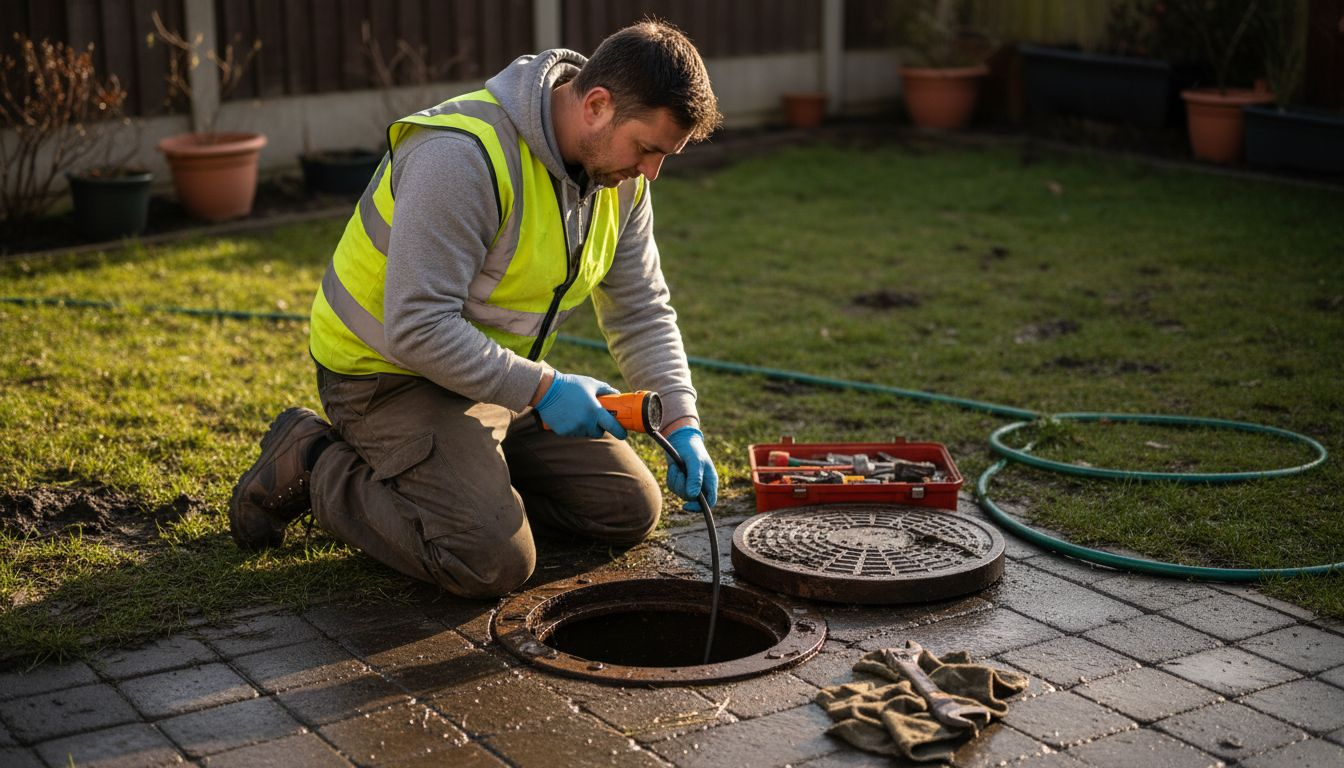
Start by conducting a rapid visual inspection of the affected drainage area. Look for obvious signs of blockage or damage such as standing water, unusual odours, gurgling sounds from pipes, or visible sewage backup. These indicators can signal different levels of drainage complications. Flood risk assessments recommend carefully documenting your observations, which will be crucial for potential insurance claims or professional diagnostic processes.
Next, categorise the potential risks associated with your drainage issue. Different scenarios require different response strategies:
- Sewage backup: Indicates potential health hazards
- Surface water pooling: Suggests potential structural drainage problems
- Unusual pipe noises: Could signal internal pipe damage
- Slow drainage: Might represent initial blockage stages
Quickly determine whether the issue is localised to a specific area or seems to be a broader systemic problem. For complex scenarios, consulting local flood authority services can provide additional guidance and risk assessment support.
Here is a summary of key emergency drainage risks and their typical consequences:
| Problem Type | Common Indication | Immediate Risk | Long-term Impact |
|---|---|---|---|
| Sewage backup | Overflow or foul odours | Health hazard | Property contamination |
| Surface water pooling | Visible standing water | Structural damage | Foundation weakening |
| Unusual pipe noises | Gurgling or banging | Internal pipe collapse | Costly repairs |
| Slow drainage | Prolonged water retention | Worsening blockage | Full drain blockage |
Emergency drainage risks escalate rapidly – swift, informed action is crucial.
Expert recommendation: Take clear photographs of drainage issues before attempting any repairs to document the original condition for professional assessment.
Step 2: Prepare essential tools and protective equipment
Before tackling any drainage emergency, you need to gather the right equipment to ensure your safety and improve your chances of successfully resolving the issue. Personal protective standards emphasise the critical importance of proper preparation.
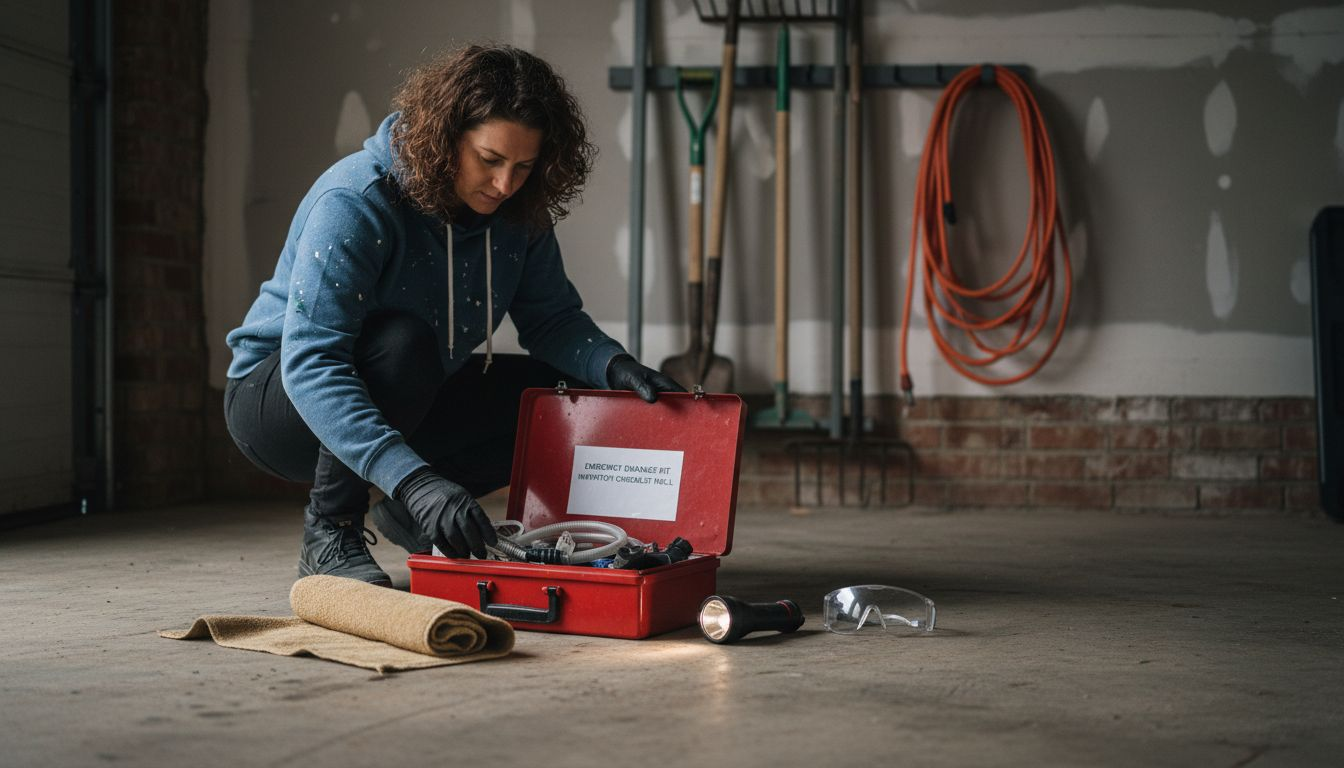
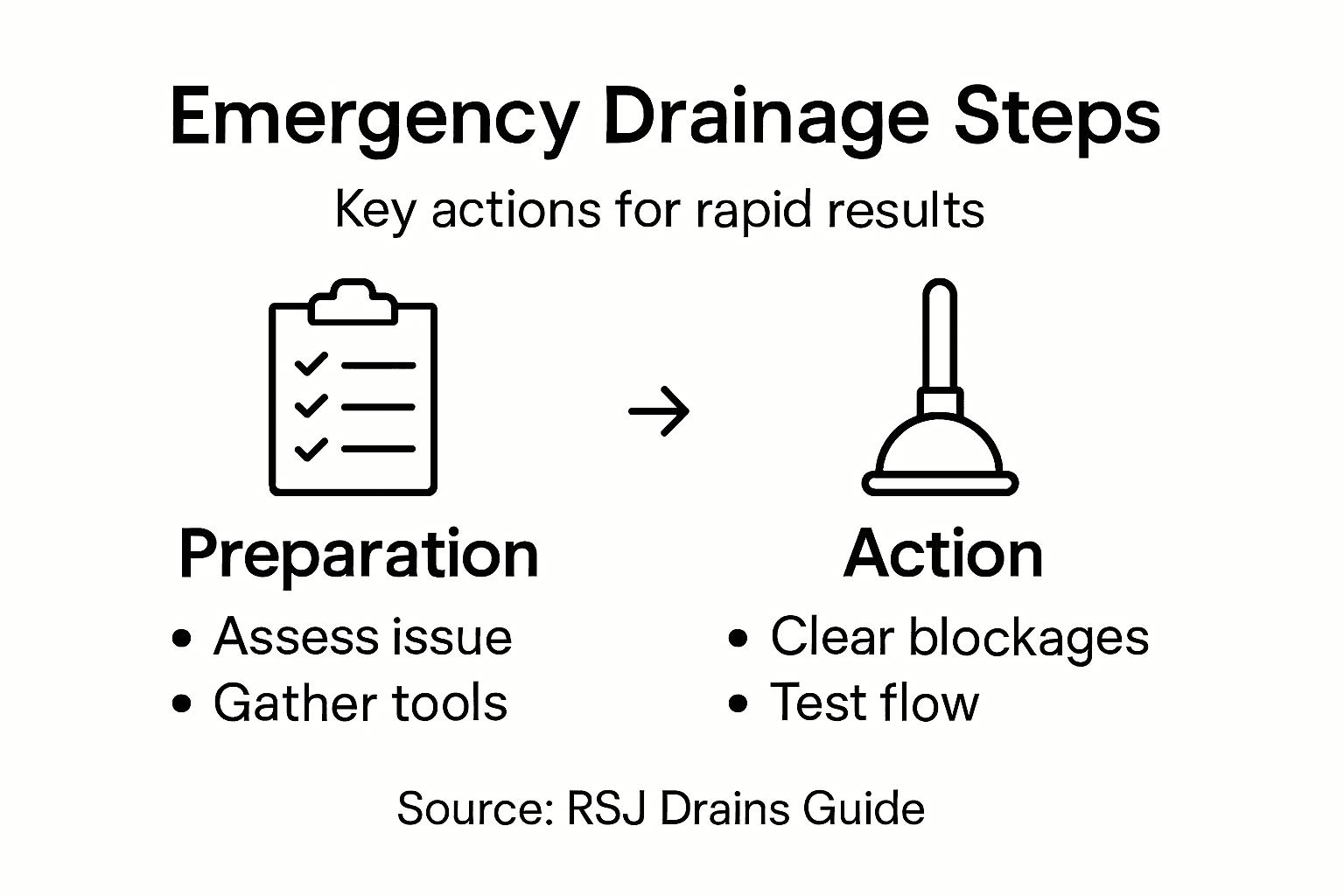
Start by assembling a comprehensive drainage emergency kit that includes both protective gear and specialised tools. Your equipment should cover personal safety and practical problem-solving:
-
Protective clothing:
- Waterproof rubber gloves
- Safety goggles
- Disposable overalls or protective coveralls
- Sturdy waterproof boots
-
Essential tools:
- Plunger with good suction capability
- Drain snake or auger
- Bucket for waste collection
- High-pressure water jet (if available)
- Torch for inspecting dark or confined spaces
Ensure you have appropriate drainage system safety equipment that complies with current health and safety regulations. Proper colour-coded equipment can help prevent cross-contamination and improve workplace safety.
Preparation prevents poor performance – equip yourself correctly before starting any drainage work.
Expert recommendation: Always keep your emergency drainage kit fully stocked and easily accessible, checking and replacing items every six months to ensure reliability.
Step 3: Clear blockages using appropriate methods
Understanding how to tackle drainage blockages efficiently can save you time, money, and potential extensive damage. Common drain blockage techniques offer multiple strategies for resolving different types of pipe obstructions.
Your approach will depend on the specific type and location of the blockage. Begin with the least invasive method and progressively move to more complex solutions:
-
Plunger Method:
- Create a tight seal around the drain opening
- Use firm, consistent vertical plunging motions
- Apply 10-15 strong plunges before checking results
-
Drain Snake Technique:
- Insert the drain snake slowly into the pipe
- Rotate the handle to navigate through blockages
- Gently push and pull to break up stubborn debris
Research indicates that survey data on blockage causes shows most issues stem from inappropriate materials like wet wipes and grease. Understanding these common culprits helps prevent future blockages.
Systematic approaches prevent costly drainage emergencies – tackle problems methodically.
Expert recommendation: Always have a bucket and towels ready to catch any water or debris during unblocking procedures, minimising potential mess and water damage.
Step 4: Inspect drains with CCTV for hidden problems
Uncovering hidden drainage issues requires advanced diagnostic techniques that go beyond visual surface inspections. CCTV drain survey technologies provide an innovative solution for detecting internal pipe problems with remarkable precision.
To conduct a comprehensive drain inspection, follow these systematic steps:
-
Preparation:
- Ensure clear access to drainage entry points
- Remove any visible obstructions
- Confirm equipment readiness
-
Camera Insertion:
- Carefully guide waterproof camera into drain opening
- Maintain steady, controlled movement
- Monitor live video feed for anomalies
Understanding drainage responsibility boundaries helps homeowners identify whether repair costs fall under personal or municipal jurisdiction. Professional CCTV surveys reveal critical details about pipe condition, potential blockages, and structural integrity.
For quick reference, here is a comparison of basic and advanced drain inspection approaches:
| Inspection Approach | Tools Required | Problem Detection Level | Usage Scenario |
|---|---|---|---|
| Visual surface check | Torch, gloves | Detects obvious issues | Initial assessment step |
| CCTV drain survey | Waterproof camera system | Identifies hidden faults | When blockages persist or recur |
Modern diagnostic technologies transform drainage problem detection from guesswork to precision.
Expert recommendation: Request a digital copy of the CCTV survey recording for future reference and potential insurance documentation.
Step 5: Verify water flow and restore system safely
After addressing drainage issues, systematically verifying water flow and ensuring system safety becomes paramount. Water assessment protocols provide essential guidelines for comprehensive system restoration.
Follow these critical steps to confirm drainage system functionality:
-
Initial Flow Testing:
- Run water through all connected fixtures
- Observe drainage speed and smoothness
- Check for any residual blockages or sluggish flow
-
System Integrity Verification:
- Listen for unusual gurgling sounds
- Inspect visible pipe connections
- Ensure no leaks or moisture around joints
Drainage system requirements emphasise the importance of maintaining proper discharge conditions and preventing potential environmental contamination during restoration processes.
Systematic verification prevents future drainage complications and ensures optimal system performance.
Expert recommendation: Conduct a final test flush during different water pressure conditions to ensure comprehensive system reliability.
Rapid Emergency Drainage Solutions Tailored for You
The challenges of emergency drainage detailed in this guide demonstrate how critical swift and expert intervention is to prevent escalating damage and health hazards. Whether you face sewage backups, slow drainage, or hidden pipe damage uncovered by CCTV surveys, these issues demand effective methods and professional care. Understanding the risks and preparation steps is essential, but when time matters most, relying on a trusted specialist makes all the difference.
At RSJ Drains, we specialise in providing 24-hour emergency drainage services across Greater London, combining rapid response with expert techniques such as CCTV drain inspections and high-pressure water jetting. Our family-run company is committed to professionalism and safety, ensuring every client benefits from detailed diagnostics and tailored repairs. We understand how distressing drainage emergencies can be and guarantee a response within two hours to restore your property quickly and securely.
Explore our Emergency Drainage Services and let our experienced team handle your urgent drainage issues with care and efficiency. Do not wait for problems to worsen. Visit RSJ Drains today and secure fast, reliable support that keeps your property safe and running smoothly.
Learn More About Our CCTV Drain Surveys to discover how precision inspections prevent costly surprises. Your emergency solution starts with the right experts on your side.
Frequently Asked Questions
What should I do first when faced with a drainage emergency?
To address a drainage emergency, start by assessing the immediate drainage issue. Conduct a visual inspection for signs of blockage or damage, such as standing water or foul odours, to determine the urgency of the situation.
How can I prepare my emergency drainage kit effectively?
Assemble a comprehensive emergency drainage kit that contains protective clothing, such as gloves and goggles, as well as essential tools like a plunger and drain snake. Ensure your kit remains stocked and accessible for prompt action when needed.
What techniques can I use to clear blockages in drainage systems?
Begin with the plunger method, using firm vertical motions to create suction, and then progress to a drain snake for more stubborn blockages. Use 10-15 plunges or rotate the snake to break up debris effectively.
How do I conduct a CCTV drain inspection?
Prepare by clearing access to drainage entry points, then carefully insert a waterproof camera into the drain to monitor for hidden problems. This method allows for precise identification of internal pipe issues that are not visible externally.
What steps should I take to verify that the drainage system is functioning properly?
Run water through all connected fixtures and observe the drainage speed and any unusual gurgling sounds. Perform this test systematically to ensure the system is free from blockages and leaks after addressing any drainage issues.
Why is it important to document drainage issues before repairs?
Taking clear photographs of the drainage issues provides a record of the original condition, which can be vital for insurance claims or professional assessments. Always document any significant problems to support future evaluations or repairs.
Recommended
- 24-Hour Emergency Drain Services in North London | RSJ
- The Most Effective and Fastest Drainage Services in Chelsea
- Drainage Services in Hertfordshire Long-lasting Drain Solutions
- Drainage Services in Kensington Get Free Estimate | RSJ
- Emergency Roof Repair Workflow for Fast Storm Solutions
- Emergency Roof Repair Steps for Fast Leak Protection