TL;DR:
- Drainage surveys use CCTV technology to detect hidden pipe issues before visible problems occur.
- Regular surveys help property owners avoid costly repairs and structural damage by early detection.
- Choose qualified, experienced providers with detailed reporting and modern equipment for best results.
Most property owners only think about their drains when something goes visibly wrong. A blocked sink, a flooded garden, or a foul smell from a manhole. But the reality is that some of the most damaging drain problems develop slowly, silently, and completely out of sight. By the time you notice symptoms, the underlying issue may already be serious. A drainage survey gives you a clear picture of what is happening beneath your property before small problems become expensive ones. This guide covers what drainage surveys involve, who needs them, how they work, what problems they reveal, and how to choose a quality provider in Greater London.
Table of Contents
- What is a drainage survey?
- How are drainage surveys carried out?
- Common issues surfaced by drainage surveys
- When should you get a drainage survey?
- Choosing the right drainage survey provider
- A fresh perspective: The hidden value of regular inspections
- Book your professional drainage survey today
- Frequently asked questions
Key Takeaways
| Point | Details |
|---|---|
| Detect hidden problems | A drainage survey identifies blockages, leaks, and damage before they cause costly emergencies. |
| CCTV technology gives clarity | Surveys use advanced cameras for detailed, minimal-disruption inspection and evidence. |
| Know when to survey | Order surveys when buying, selling, or at first sign of trouble to protect your investment. |
| Choose experienced providers | Select surveyors with proper credentials, clear reporting, and modern equipment for reliable results. |
What is a drainage survey?
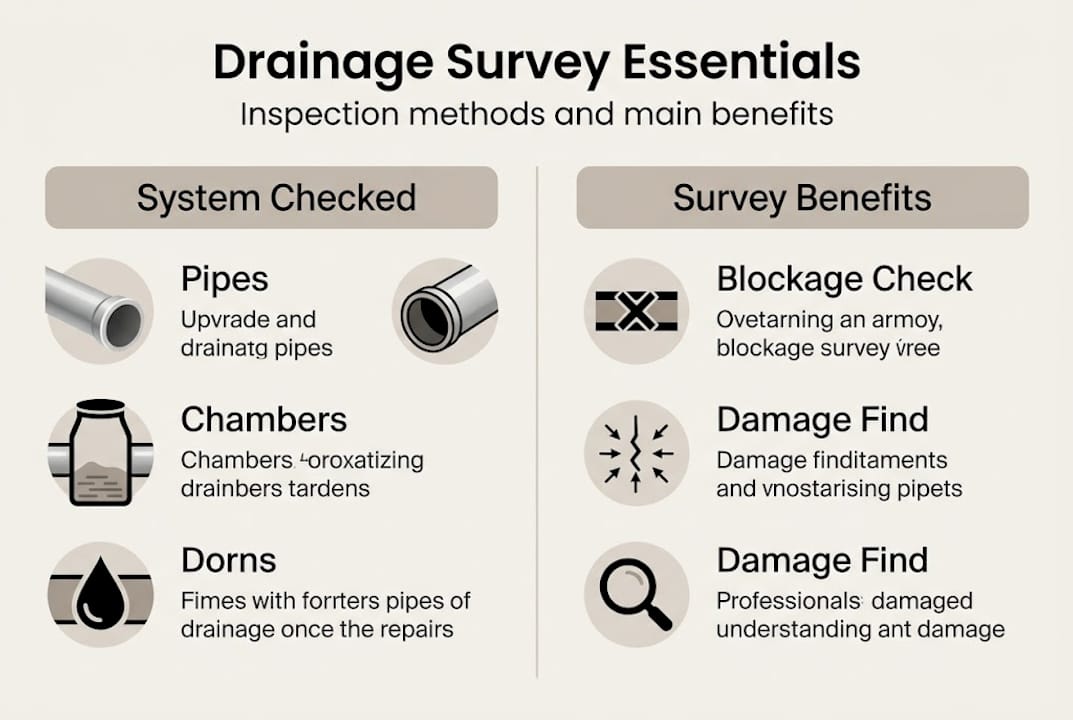
A drainage survey is a systematic inspection of a property’s underground drainage network using specialist technology. As defined by industry professionals, a drainage survey is a comprehensive inspection of a property’s underground drainage system, including pipes, manholes, and connections, primarily using CCTV cameras to identify issues like blockages, cracks, leaks, root intrusion, and structural damage. In plain terms, it is a way of seeing inside your drains without digging anything up.
The inspection covers all key components of a drainage system. That includes underground pipework, inspection chambers, manholes, and the connections between them. Engineers use a waterproof CCTV camera system that travels through the pipes, capturing live footage and logging data as it goes. The result is a detailed visual record of the drain’s internal condition.
Here is a quick comparison of a standard drainage survey versus a basic visual check:
| Feature | Basic visual check | CCTV drainage survey |
|---|---|---|
| Depth of inspection | Surface level only | Full pipe interior |
| Problems detected | Obvious blockages | Cracks, root ingress, leaks, collapse |
| Evidence provided | None | Video footage and written report |
| Accuracy | Low | High |
| Disruption | Minimal | Minimal |
The problems a survey can identify include:
- Blockages caused by grease, debris, or foreign objects
- Cracks and fractures in pipe walls
- Root intrusion from nearby trees or shrubs
- Leaking joints that allow water to escape into surrounding soil
- Structural collapse or misaligned pipe sections
- Corrosion in older clay or cast-iron pipework
For homeowners and property managers, the CCTV drain survey process is particularly valuable before purchasing a property, during ongoing maintenance programmes, or when unexplained plumbing symptoms appear. It removes guesswork entirely.
“A drainage survey reveals problems that are completely invisible from the surface, giving property owners the information they need to act before small faults become structural emergencies.”
The value here is not just about fixing problems. It is about knowing what you are dealing with before you commit to a property purchase, a renovation, or a repair budget.
How are drainage surveys carried out?
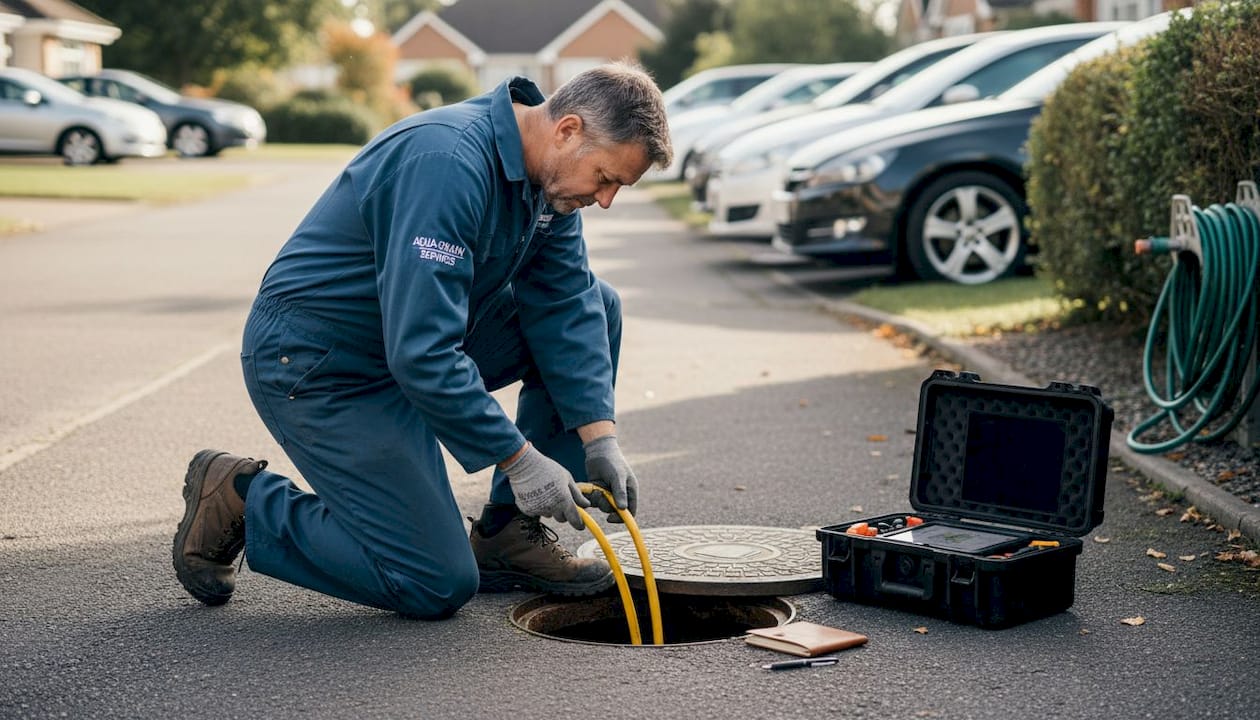
Understanding the process helps you know what to expect on the day and why each step matters. The CCTV drain survey process uses high-resolution waterproof cameras inserted via access points like manholes, covering preparation, camera insertion, live inspection, defect logging, and report generation.
Here is how a typical survey unfolds:
- Access point identification. The engineer locates manholes, inspection chambers, or rodding eyes around your property. These are the entry points for the camera equipment.
- Equipment setup. The CCTV camera unit is prepared. Modern systems use push-rod or crawler cameras depending on pipe diameter and depth.
- Camera insertion. The waterproof camera is fed into the drain through the access point. It travels along the pipe while transmitting live footage back to the engineer’s monitor.
- Live inspection. The engineer watches the footage in real time, identifying defects, measuring their location, and noting the condition of joints, bends, and junctions.
- Defect logging. Each issue is recorded with its precise location within the system, often using industry-standard coding (such as WRC codes used across the UK drainage sector).
- Report generation. After the inspection, a technical report is produced. This includes annotated footage, photographs, a written summary, and clear recommendations for any remedial work.
Here is a rough guide to survey timeframes:
| Property type | Estimated duration |
|---|---|
| Single domestic property | 1 to 2 hours |
| Small commercial premises | 2 to 3 hours |
| Large commercial or multi-unit | 3 to 5 hours or more |
Timeframes vary based on the drainage system’s size and complexity, so it is always worth asking your provider for an estimate before booking.
Pro Tip: Ask your drainage engineer to walk you through the footage after the survey. Seeing the inside of your own drains makes the report far easier to understand and helps you prioritise any repairs with confidence.
For those in specific areas, a drain survey in Islington or a CCTV survey in Kensington follows the same rigorous process, adapted to the local infrastructure and property types in each borough.
Common issues surfaced by drainage surveys
One of the most useful things a drainage survey does is make abstract risks concrete. You stop guessing and start knowing. Surveys identify a wide spectrum of defects including blockages, leaks, root intrusion, and structural damage, all of which carry real consequences for your property if left unaddressed.
Here are the most common problems found during inspections:
- Fat and grease blockages. These build up gradually on pipe walls, narrowing the bore until flow is severely restricted. They are extremely common in kitchen drain lines.
- Hair and debris accumulation. Bathroom waste pipes frequently collect hair, soap residue, and small objects that compact over time.
- Tree root ingress. Roots seek out moisture and can enter pipes through even the smallest crack. Once inside, they grow rapidly and can cause significant structural damage over months or years.
- Cracked or fractured pipes. Ground movement, frost, heavy traffic overhead, or simple age can crack pipework. Cracks allow groundwater to enter and wastewater to escape into the surrounding soil.
- Displaced or open joints. Pipe joints can shift due to ground settlement, creating gaps that allow debris to enter and water to leak out.
- Structural collapse. In severe cases, sections of pipe can collapse entirely, causing complete loss of drainage function and requiring urgent excavation.
- Corrosion. Older properties in London often have clay or cast-iron drainage that corrodes over decades, thinning pipe walls until they fail.
The risk of ignoring these issues goes beyond inconvenience. Leaking drains can cause subsidence, which affects your property’s foundations. Root ingress left unchecked can lead to complete pipe failure. A CCTV drain survey in Westminster or any other London borough can surface these risks before they escalate into insurance claims or structural repairs costing tens of thousands of pounds.
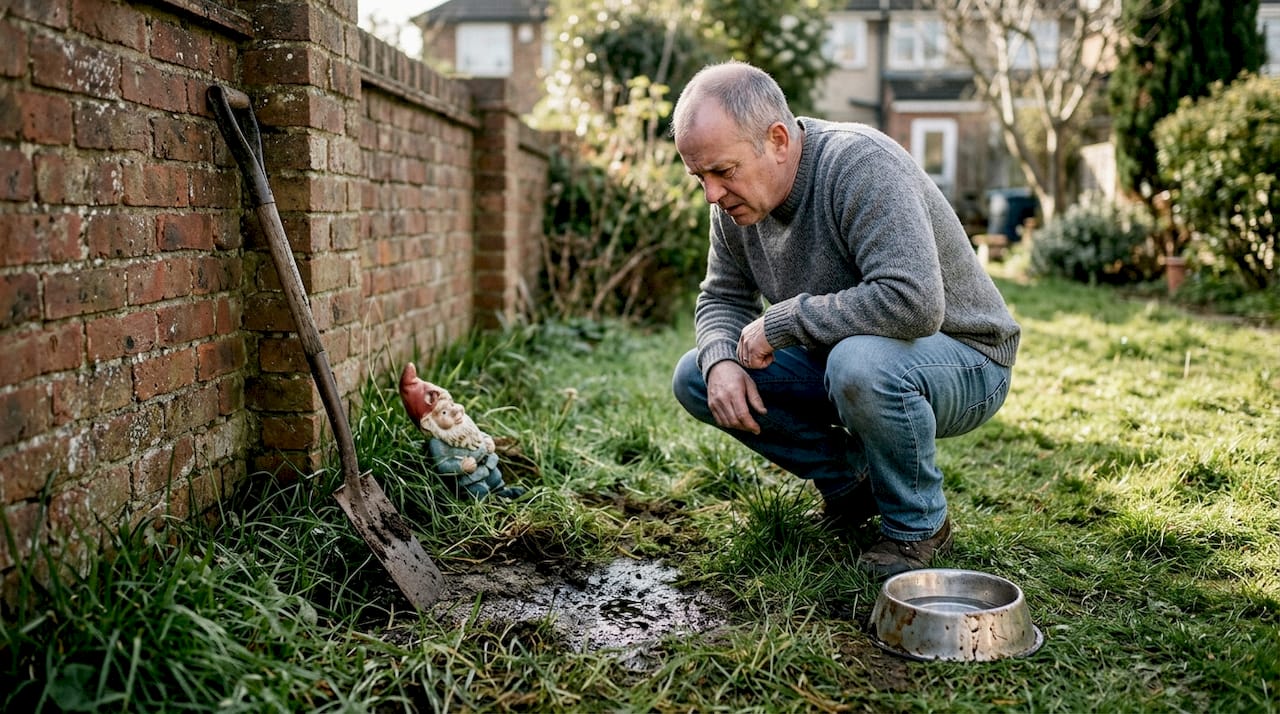
Regular surveys prevent escalation. Catching a small crack early means a relatively inexpensive repair. Catching it after it has caused soil erosion beneath your foundations is a very different financial conversation.
When should you get a drainage survey?
The honest answer is: more often than most property owners think. A drainage survey is a comprehensive inspection to prevent costly surprises, and it is especially useful during property transactions or after unexplained plumbing issues. But there are several specific scenarios where a survey is not just useful but essential.
- Before buying a property. A standard homebuyer’s survey does not inspect drains. Hidden drainage problems can cost thousands to fix and are rarely disclosed by sellers. A survey before exchange gives you negotiating power or peace of mind.
- Before selling a property. Knowing the condition of your drains before listing means no nasty surprises during the buyer’s due diligence process. It also signals transparency and professionalism to prospective buyers.
- When you notice recurring slow drains. If water drains slowly in multiple locations, or if the problem keeps returning after you clear it, there is likely a structural issue further along the system.
- If you detect foul odours. Persistent smells from drains, even outside the property, often indicate a leak, a broken seal, or a partial blockage trapping decomposing material.
- After flooding or nearby building works. Ground disturbance from construction, excavation, or severe flooding can shift or crack drainage pipes. A post-event survey confirms whether damage has occurred.
- As part of routine maintenance. Many property managers in Greater London schedule annual or biennial surveys as part of a planned maintenance programme. This approach catches issues early and keeps maintenance costs predictable.
Pro Tip: If you manage multiple properties, consider scheduling surveys in rotation across your portfolio. This spreads costs, keeps records current, and means you are never caught off guard by a sudden drainage failure.
For properties in North London, older housing stock and mature street trees make regular surveys particularly worthwhile, given the higher likelihood of root ingress and ageing pipework.
Choosing the right drainage survey provider
Not all drainage surveys are equal. The quality of the report, the technology used, and the expertise of the engineer all vary significantly between providers. Choosing well means getting actionable information, not just a vague summary.
Here is what to look for:
- Industry qualifications and experience. Look for engineers with recognised certifications such as those from the National Association of Drainage Contractors (NADC) or equivalent bodies. Experience with London’s varied property types and drainage infrastructure matters.
- High-quality reporting. A good survey report should include video footage, annotated photographs, a drainage plan, and clear written recommendations. Avoid providers who offer verbal summaries only.
- Up-to-date technology. CCTV cameras and detailed defect logging are indicative of a professional and thorough service. Ask about camera resolution and whether digital logging is used.
- Availability for urgent callouts. Drainage problems do not follow office hours. Choose a provider who can respond quickly when symptoms appear suddenly.
- Transparent pricing. A reputable provider will give you a clear quote before the work begins, with no hidden charges for the report or follow-up advice.
- Local client testimonials. Reviews from customers in your area are more relevant than generic ratings. A provider with strong feedback from London homeowners and property managers is a better indicator of real-world performance.
For properties in Hertfordshire or across the Greater London boundary, it is worth confirming your chosen provider has direct experience with the local drainage infrastructure, which can differ from inner-city systems.
A fresh perspective: The hidden value of regular inspections
Most property owners treat drainage as a reactive concern. Something breaks, you call someone. But this approach is a false economy, and we see the consequences of it regularly. A drainage emergency rarely arrives without warning. The warning signs were simply underground, invisible, and ignored.
The return on investment of a routine drainage survey rarely gets the attention it deserves. A survey costing a few hundred pounds can identify a developing crack before it causes subsidence, or catch root ingress before it collapses a pipe beneath a driveway. Compare that to the cost of emergency excavation, structural repairs, or an insurance dispute, and the maths becomes very clear.
We would argue that drain maintenance for London homes should be treated the same way as boiler servicing or roof inspections: a scheduled, professional check that protects your investment and keeps surprises off the table. The property owners who adopt this mindset consistently spend less on drainage over time. Not because they are lucky, but because they are informed.
Book your professional drainage survey today
If this guide has made one thing clear, it is that waiting for a visible problem is rarely the right strategy. RSJ Drains provides expert drainage surveys across Greater London, carried out by fully certified engineers using the latest CCTV technology.
Whether you need a routine inspection or an urgent assessment, our CCTV drain survey services cover every borough with fast response times and clear, detailed reports. Our drain inspection specialists provide transparent pricing, honest recommendations, and genuine aftercare support. Book online or call us directly to arrange a survey at a time that suits you. We are ready when you are.
Frequently asked questions
How long does a drainage survey take?
Most domestic drainage surveys are completed within one to two hours, though survey timeframes vary based on the drainage system’s size and complexity.
Do I need a drainage survey before buying a house?
Yes, a drainage survey is strongly advised during property transactions. Drainage surveys reveal issues invisible from the surface that can significantly affect property value and future repair costs.
What problems can a drainage survey detect?
It can identify blockages, leaks, root intrusion, cracks, and structural damage. Drainage surveys identify a full spectrum of defects within the underground drainage network.
Is there much disruption during a CCTV drainage survey?
Minimal disruption occurs because high-resolution waterproof cameras are inserted via manholes or existing access points, so there is no need to dig up your garden or driveway.
Can drainage surveys help prevent emergencies?
Yes, regular surveys detect hidden issues early. Surveys reveal risks early, helping property owners avoid emergency callouts and the significant costs that come with them.