Blocked drains in busy Greater London buildings can halt operations and raise serious concerns for property managers who depend on consistent plumbing performance. Commercial drainage systems face unique pressures, from heavy usage to complex pipework, making professional solutions a necessity rather than a luxury. Commercial drain cleaning uses specialised methods such as hydro-jetting, mechanical snaking, and CCTV inspections to quickly clear obstructions and prevent expensive damage, offering immediate peace of mind and safeguarding business continuity.
Table of Contents
- What Is Commercial Drain Cleaning?
- Techniques Used In Commercial Drain Cleaning
- Types Of Commercial Drain Issues
- Legal And Safety Obligations For Businesses
- Costs, Pitfalls And Choosing Services
Key Takeaways
| Point | Details |
|---|---|
| Importance of Commercial Drain Cleaning | Regular drain cleaning is essential for maintaining operational efficiency and preventing costly plumbing emergencies for businesses. |
| Techniques Overview | Utilising methods such as Hydro-Jetting and CCTV inspections ensures effective blockage removal and precise problem identification. |
| Common Drain Issues | Businesses must address frequent challenges like grease accumulation and root intrusion to avoid operational disruptions. |
| Legal Compliance | Adhering to UK environmental regulations is critical to prevent pollution and safeguard public health in commercial drain management. |
What Is Commercial Drain Cleaning?
Commercial drain cleaning represents a critical preventative maintenance strategy designed to protect the intricate plumbing infrastructure of businesses across London. This specialised service involves systematically removing obstructions, debris, and potential blockage risks from commercial drainage systems before they escalate into costly emergencies.
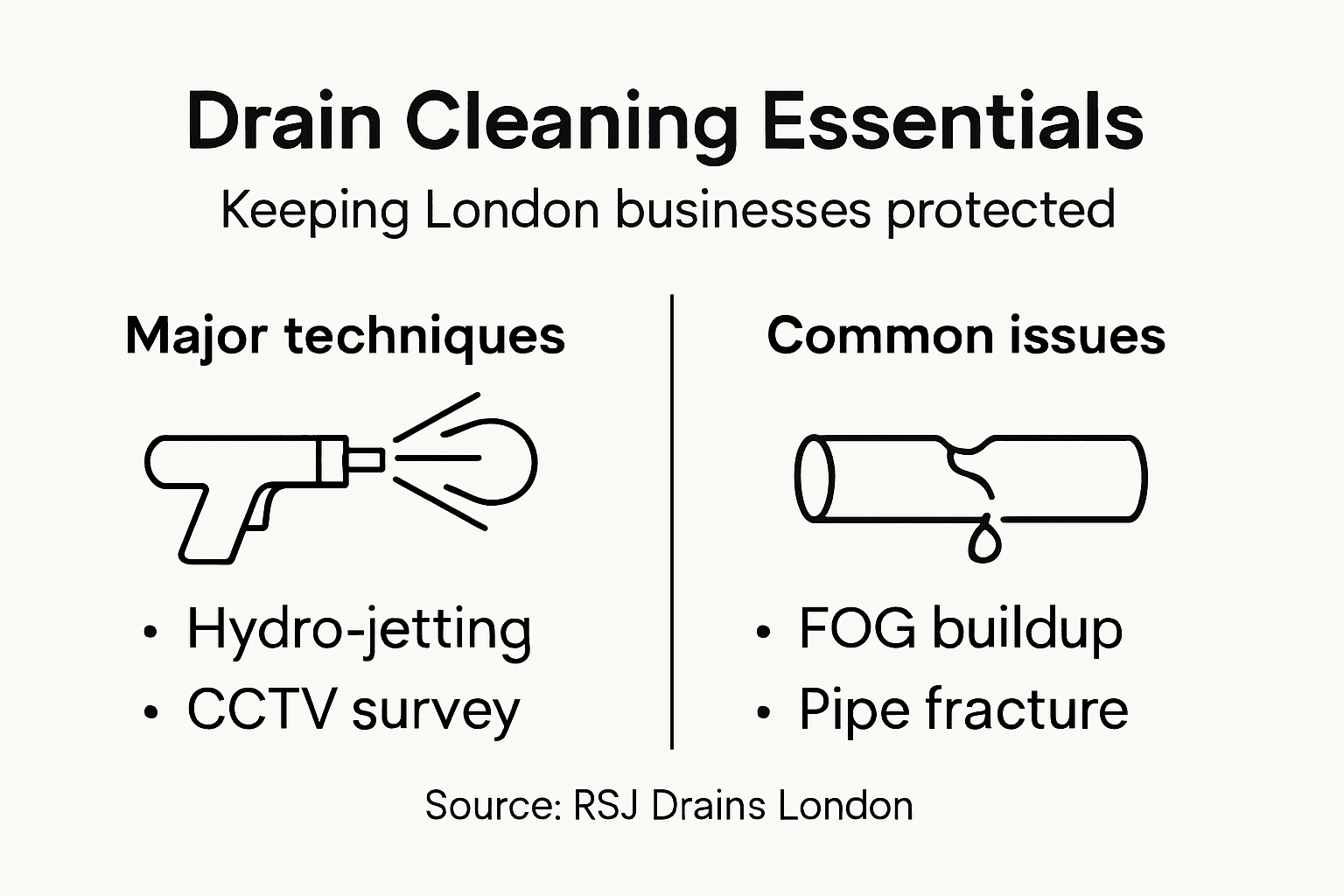
Professional drain cleaning employs multiple sophisticated techniques to maintain optimal plumbing performance. These methods include:
- Mechanical cleaning using specialised augers and drain snakes
- High-pressure hydro-jetting for comprehensive pipe clearance
- Chemical treatments targeting grease and organic matter buildup
- CCTV diagnostic surveys to identify potential structural issues
The primary objective of commercial drain cleaning goes far beyond simple blockage removal. Professional drain cleaning techniques help businesses prevent significant plumbing infrastructure damage, minimise unexpected downtime, and maintain consistent operational efficiency.
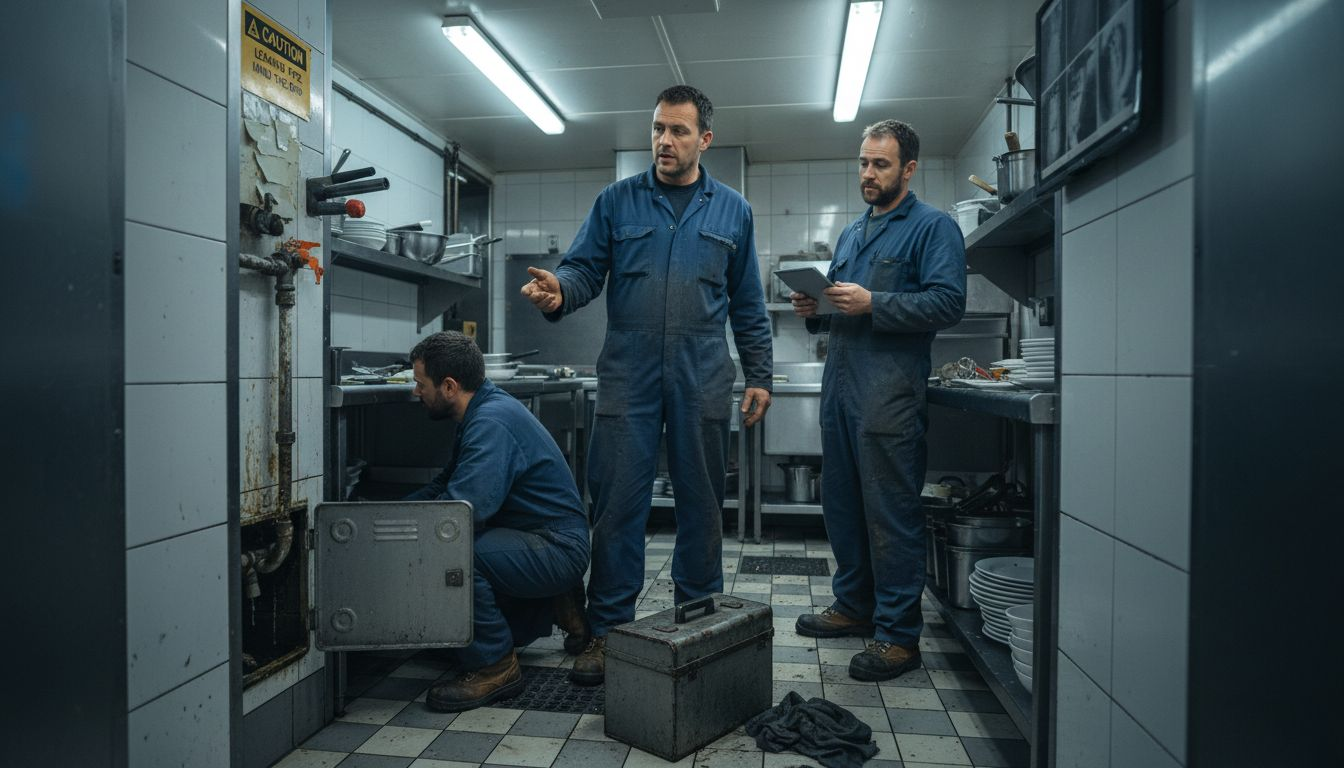
Commercial properties face unique drainage challenges due to higher usage volumes and more complex pipe networks compared to residential systems. Restaurants, offices, industrial facilities, and healthcare environments all require tailored drain maintenance approaches that address their specific environmental and operational demands.
Pro tip: Schedule comprehensive drain inspections quarterly to catch potential issues before they become expensive emergencies.
Techniques Used in Commercial Drain Cleaning
Commercial drain cleaning involves a sophisticated array of specialised techniques designed to address complex drainage challenges faced by London’s diverse business environments. Each method offers unique advantages in maintaining optimal plumbing infrastructure and preventing potentially costly blockages.
Professional drain technicians typically employ multiple advanced cleaning approaches:
- Mechanical snaking using flexible, precision-engineered tools
- Hydro-jetting with high-pressure water streams
- Chemical treatments targeting specific organic and mineral buildups
- Air burst techniques for comprehensive debris removal
- CCTV diagnostic inspections for precise problem identification
Advanced drain cleaning methods enable technicians to address intricate drainage challenges with remarkable precision. The selection of technique depends on multiple factors including pipe material, blockage type, system complexity, and potential environmental sensitivities.
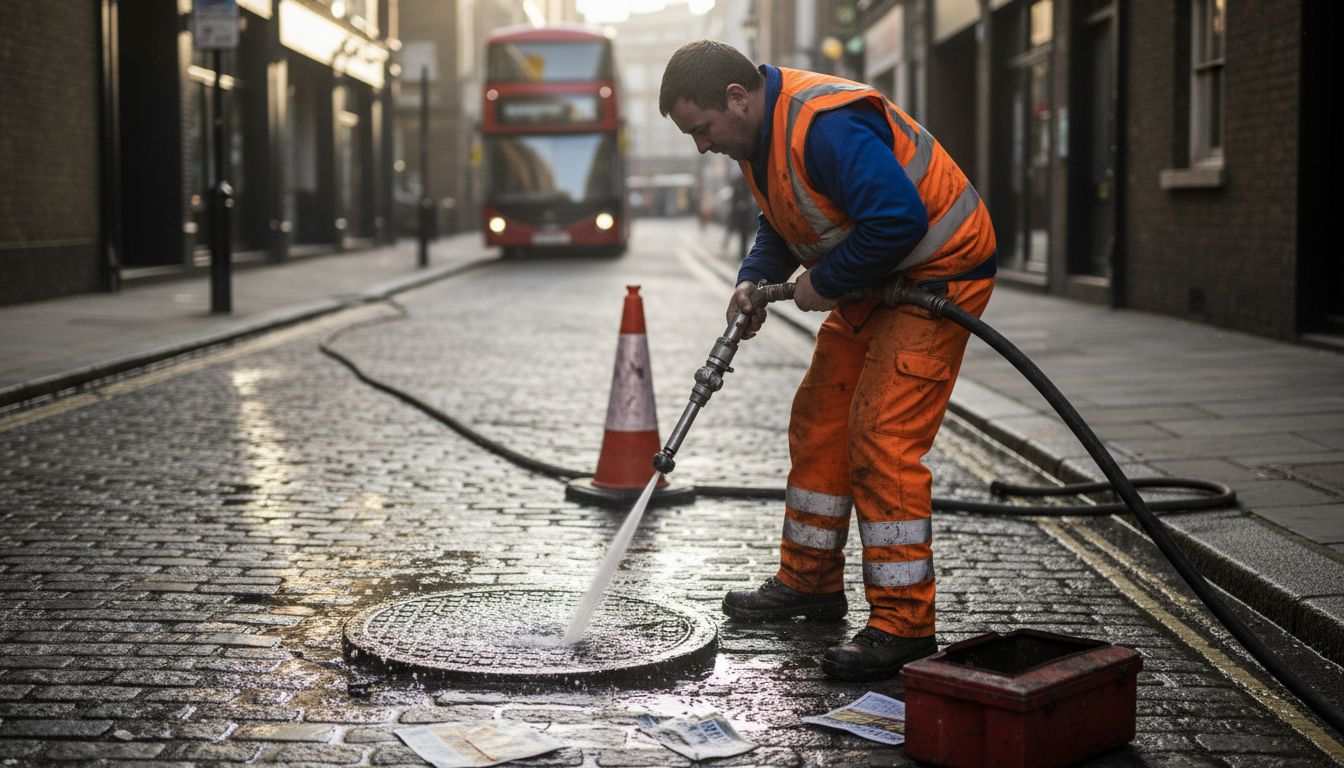
Hydro-jetting stands out as a particularly powerful technique, capable of removing stubborn grease accumulations, mineral deposits, and even tree root intrusions without causing structural damage to pipework. This method uses carefully calibrated water pressure to scour pipe interiors, effectively restoring drainage systems to near-original performance levels.
Pro tip: Request a comprehensive CCTV survey before selecting a specific drain cleaning technique to ensure the most appropriate and least invasive solution.
Here is a comparison of major commercial drain cleaning techniques and their typical applications:
| Technique | Ideal Use Cases | Key Advantages |
|---|---|---|
| Mechanical Snaking | Local blockages, soft obstructions | Quick and cost-effective removal |
| Hydro-Jetting | Stubborn grease, major build-up | Deep cleaning without pipe damage |
| Chemical Treatments | Organic/microbial accumulations | Effective for organic matter |
| Air Burst Methods | Small debris or soft blockages | Fast and minimally invasive |
| CCTV Inspections | Structural diagnosis, maintenance | Accurate problem identification |
Types of Commercial Drain Issues
Commercial properties across London face a complex array of drainage challenges that can significantly disrupt business operations and infrastructure integrity. Common drainage problems require comprehensive understanding and proactive management to prevent costly interruptions and potential structural damage.
The most prevalent commercial drain issues include:
- Grease and fat accumulation in food service establishments
- Root intrusion compromising underground pipe networks
- Collapsed or fractured pipework from ground movement
- Surface water management failures
- Debris and sediment buildup in industrial settings
- Pipe corrosion and material degradation
Fat, oil, and grease (FOG) represent a particularly insidious challenge for commercial kitchens and food-related businesses. These substances solidify within drainage systems, creating progressive blockages that can completely obstruct pipe functionality. Industrial environments face additional complications from chemical residues, heavy particulate matter, and complex waste streams that challenge standard drainage infrastructure.
Geological factors and urban infrastructure also contribute to drainage complications. Ground movement, construction activities, and ageing pipe networks can lead to structural failures, creating potential sinkholes, leaks, and catastrophic drainage breakdowns that demand immediate professional intervention.
Pro tip: Implement a quarterly preventative maintenance schedule with professional CCTV drainage surveys to identify potential issues before they escalate into major disruptions.
For quick reference, here are the most common commercial drain issues matched to business impacts:
| Issue | Likely Business Impact | Urgency for Action |
|---|---|---|
| Grease, Fat & Oil (FOG) | Kitchen downtime, health violations | Immediate |
| Root Intrusion | Backups, costly repairs | High |
| Pipe Fractures or Collapse | Flooding, property damage | Critical |
| Sediment & Debris Build-Up | Reduced flow, process inefficiency | Moderate |
| Corrosion or Material Failure | Water leaks, long-term infrastructure | High |
| Surface Water Failures | Flood risk, safety hazards | Moderate to High |
Legal and Safety Obligations for Businesses
Businesses in the United Kingdom are subject to stringent legal requirements governing drainage management and environmental protection. UK environmental regulations mandate comprehensive compliance to prevent pollution, protect public health, and maintain sustainable infrastructure.
Key legal obligations for businesses include:
- Environmental Protection Act 1990 compliance
- Water Industry Act 1991 discharge regulations
- Workplace Health and Safety Regulations
- Trade effluent permit management
- Hazardous substance control
- Watercourse contamination prevention
Commercial entities must navigate a complex landscape of regulatory requirements. Non-compliance can result in significant financial penalties, potential legal action, and reputational damage. Businesses are responsible for implementing robust drainage management systems that prevent environmental contamination, particularly those in food service, manufacturing, and industrial sectors.
Specific legal responsibilities extend to preventing pollution incidents, managing wastewater discharge, and maintaining comprehensive documentation of drainage infrastructure. This includes obtaining necessary environmental permits, conducting regular system inspections, and implementing proactive maintenance strategies that meet statutory requirements.
Pro tip: Consult with a legal compliance specialist to develop a comprehensive drainage management plan that addresses all regulatory requirements specific to your business sector.
Costs, Pitfalls and Choosing Services
Navigating the complex landscape of commercial drain cleaning services requires strategic understanding of pricing structures, service capabilities, and potential operational risks. Commercial drain cleaning costs are influenced by multiple sophisticated factors that extend far beyond simple repair work.
Key considerations when evaluating drain cleaning services include:
- System complexity and scale
- Type and severity of blockage
- Required specialist equipment
- Access difficulty and site requirements
- Regulatory compliance needs
- Preventative maintenance options
Businesses must critically evaluate service providers based on their technological capabilities, regulatory knowledge, and proven track record. Cheaper services might seem attractive initially but can result in substantial long-term expenses if they fail to address underlying drainage infrastructure challenges or neglect critical compliance requirements.
Comprehensive commercial drain cleaning services should offer integrated solutions that combine advanced diagnostic technologies, precise intervention techniques, and ongoing maintenance strategies. This holistic approach helps businesses mitigate potential operational disruptions, prevent costly infrastructure damage, and maintain consistent regulatory adherence.
Pro tip: Request detailed service portfolios and compliance certifications from potential drainage service providers to ensure comprehensive protection for your commercial infrastructure.
Ensure Your Business Drainage Stays Ahead of Blockages and Failures
London businesses face costly disruptions from issues like grease build-up, root intrusion, and pipe fractures as detailed in the article. Tackling these challenges requires expert commercial drain cleaning techniques such as hydro-jetting and CCTV inspections that identify problems before they escalate. RSJ Drains specialises in these precise solutions with rapid 24-hour response times across Greater London.
Don’t wait for an emergency to impact your business operations. Benefit from RSJ Drains’ family-run expertise in advanced drain maintenance, CCTV surveys, and drain relining that ensure compliance with legal standards and protect your property. Discover how their professional team can safeguard your plumbing infrastructure today by visiting RSJ Drains. Take action now to prevent costly downtime and maintain efficient drainage systems with trusted emergency support and routine services.
Frequently Asked Questions
What is commercial drain cleaning?
Commercial drain cleaning is a preventative maintenance strategy that involves removing obstructions and debris from drainage systems in businesses to avoid costly emergencies and protect plumbing infrastructure.
What techniques are used in commercial drain cleaning?
Techniques include mechanical cleaning, high-pressure hydro-jetting, chemical treatments, air burst methods, and CCTV diagnostic inspections. Each method is tailored to address specific drainage challenges effectively.
What are common drain issues faced by commercial properties?
Common issues include grease and fat accumulation, root intrusion, pipe fractures or collapse, debris buildup, and corrosion. These problems can disrupt operations and lead to significant infrastructure damage if not managed promptly.
What legal obligations do businesses have regarding drainage management?
Businesses must comply with regulations such as the Environmental Protection Act 1990 and the Water Industry Act 1991, which govern pollution prevention and wastewater management. Non-compliance can result in legal penalties and reputational damage.