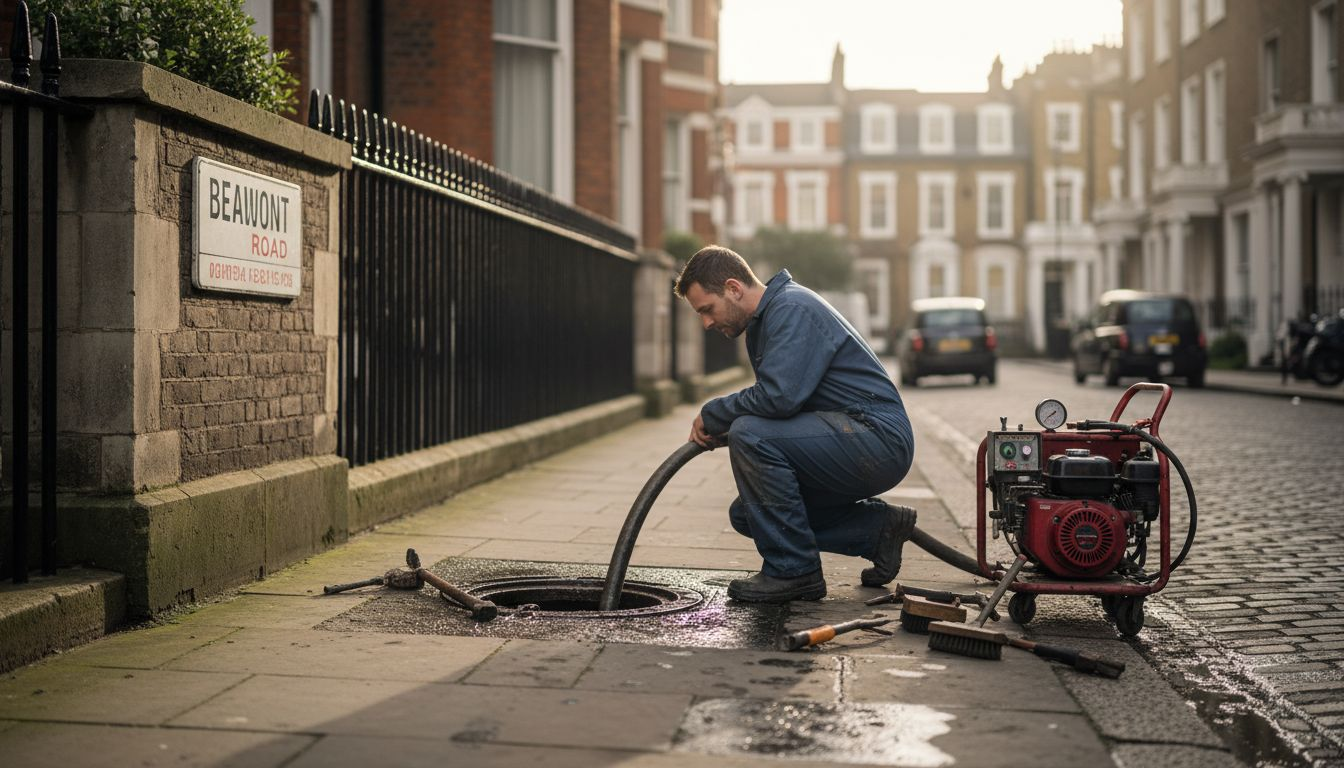
Blocked drains in North London properties can bring daily life to an abrupt halt, leaving homeowners and property managers in urgent need of expert solutions. When stubborn obstructions threaten the safety and comfort of your building, immediate action is vital. By relying on professional drain jetting, which uses flexible hoses and carefully monitored water pressure between 3000 and 8000 PSI, you get powerful clearance without risking damage to your pipes. Discover how local specialists assess, prepare, and restore your drainage system for lasting peace of mind.
Table of Contents
- Step 1: Assess Blockage And Select Drain Jetting Equipment
- Step 2: Prepare Site And Ensure Safe Drain Access
- Step 3: Set Up High-Pressure Water Jetting System
- Step 4: Perform Controlled Jetting To Clear Obstructions
- Step 5: Check Drainage Flow And Confirm Blockage Removal
- Step 6: Restore Area And Advise On Future Prevention
Quick Summary
| Key Point | Explanation |
|---|---|
| 1. Assess blockage thoroughly | Conduct a detailed inspection to identify blockage type and location before attempting any drain jetting. |
| 2. Select appropriate jetting equipment | Match equipment specifications to the blockage type to ensure effective and safe removal of obstructions. |
| 3. Prioritise safe site preparation | Clear the area of hazards, provide ventilation, and ensure all workers wear personal protective equipment (PPE) before starting work. |
| 4. Execute controlled jetting techniques | Start with lower pressure, gradually increasing as needed while monitoring the drainage response for effective blockage removal. |
| 5. Confirm effective drainage flow | After jetting, verify water flow through the system to ensure all blockages are cleared and no residual issues remain. |
Step 1: Assess blockage and select drain jetting equipment
Drain blockages in London properties require strategic assessment before deploying any high-pressure water jetting solutions. Understanding the specific characteristics of your drainage issue is crucial for selecting appropriate equipment and ensuring effective clearance of stubborn obstructions.
Begin by conducting a thorough visual inspection or professional CCTV drainage investigation to determine the blockage’s precise location, composition, and severity. Key factors to evaluate include:
- Depth and accessibility of the blockage
- Material causing the obstruction (grease, tree roots, debris)
- Pipe diameter and material
- Potential structural damage or fragility of drainage system
Based on your assessment, select the appropriate drain jetting equipment. High-pressure water jetting systems come in various configurations, typically ranging from 1500 to 4000 psi, with different nozzle attachments designed for specific drainage challenges.
Professional drain technicians recommend matching equipment specifications precisely to your specific blockage type for optimal results.
The most common jetting equipment categories include:
- Portable jetting units for residential applications
- Truck-mounted high-power systems for commercial drainage
- Specialised compact units for hard-to-reach drainage sections
Careful equipment selection ensures efficient blockage removal while minimising potential pipe damage.
Here is a comparison of common drain jetting equipment solutions to help you select the most suitable option:
| Equipment Type | Typical Use Cases | Power Output (PSI) | Key Advantages |
|---|---|---|---|
| Portable Jetting Unit | Domestic/residential drainage | 1500–2500 | Easy to carry and operate |
| Truck-Mounted System | Commercial/large properties | 3000–4000 | Handles severe blockages |
| Compact Specialist Unit | Limited or confined access | 2000–3200 | Fits narrow/complex spaces |
Insider tip: Always inspect equipment for proper calibration and maintenance before commencing any drain jetting procedure to prevent potential equipment failure or incomplete blockage removal.
Step 2: Prepare site and ensure safe drain access
Preparing the site for drain jetting requires meticulous planning and safety precautions to protect both the drainage infrastructure and personnel involved. Before commencing any work, conducting a comprehensive drainage services inspection is critical to identify potential risks and determine the most appropriate access strategy.
Key preparation steps include:
- Locate the precise drainage access point
- Clear the surrounding area of obstacles and potential hazards
- Ensure adequate ventilation around the work site
- Wear appropriate personal protective equipment (PPE)
- Confirm no electrical or gas infrastructure interferes with the drainage access
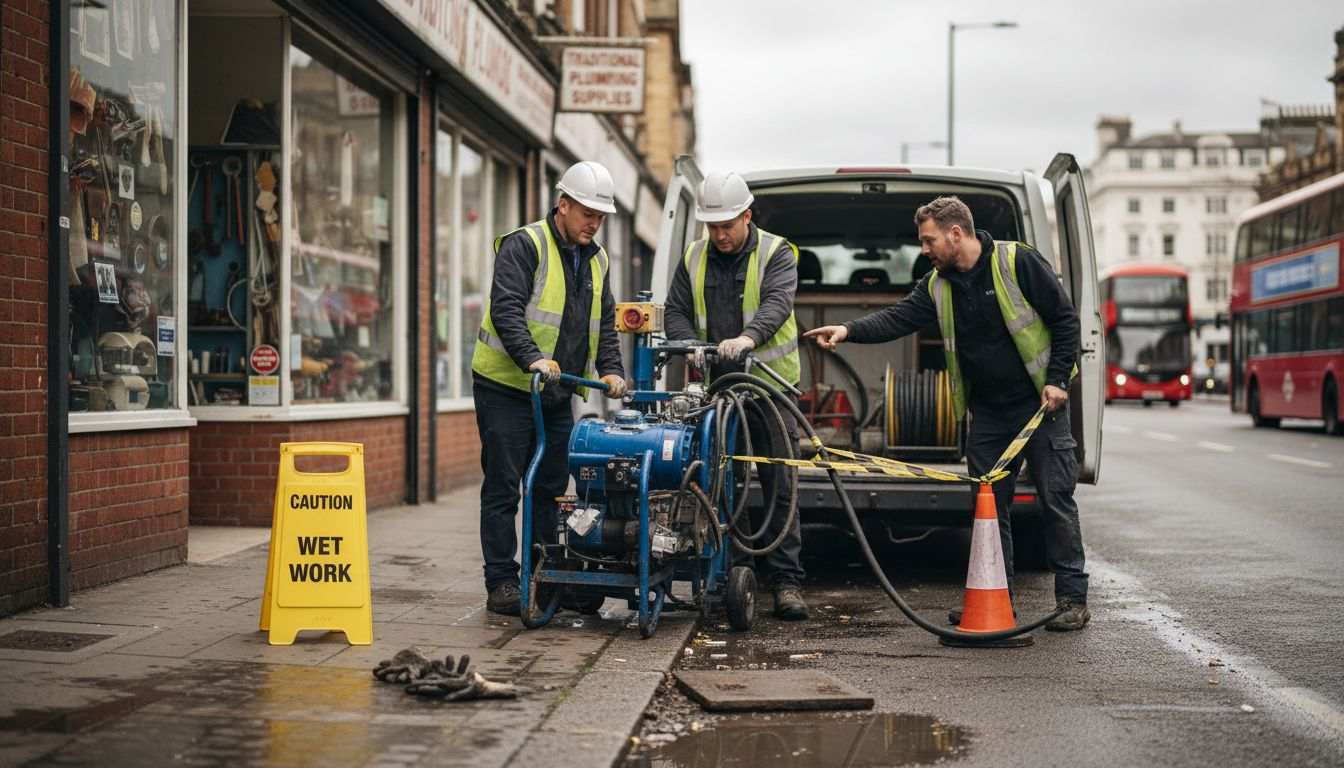
Safe site preparation involves establishing a clear working zone with defined boundaries. This means cordoning off the immediate area, placing warning signs, and ensuring minimal public or pedestrian interaction during the drain jetting procedure.
Proper site preparation is not just about efficiency—it’s about preventing potential accidents and protecting both workers and property.
Identify the most suitable access point by examining surface-level indicators and using underground utility mapping if available. This might involve:
- Removing drain covers carefully
- Checking for structural integrity of surrounding surfaces
- Ensuring stable ground for equipment placement
- Verifying drainage system configuration
Equipment positioning plays a crucial role in successful drain jetting, requiring precise placement and stable support for high-pressure water jetting machinery.
Expert advice: Always have a comprehensive emergency plan and first aid kit readily available at the work site in case of unexpected complications during drain access preparation.
Step 3: Set up high-pressure water jetting system
Successfully setting up a high-pressure water jetting system requires precision, technical knowledge, and careful preparation. High-pressure water jetting equipment demands meticulous attention to detail to ensure optimal performance and safety during drainage clearance operations.
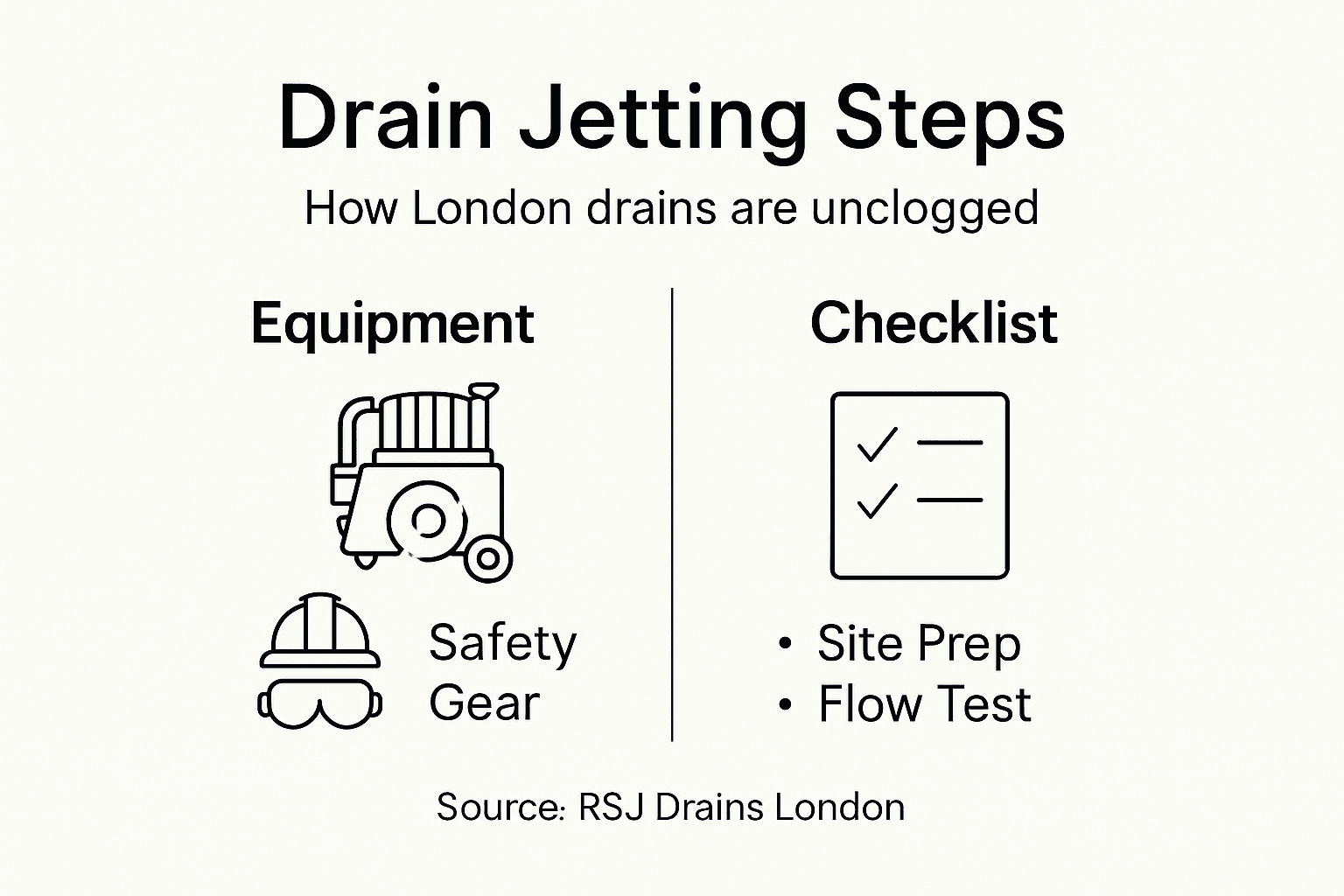
The primary components of a professional drain jetting setup include:
- High-pressure water pump
- Flexible reinforced water hose
- Specialised drain jetting nozzles
- Pressure regulation controls
- Protective safety equipment
System configuration involves connecting each component systematically, ensuring all connections are secure and pressure-rated for the intended operation. The water pump must be mounted securely on the service vehicle, with clear access to control mechanisms and sufficient ventilation.
Professional drain technicians understand that proper equipment setup is 50% of successful drain jetting.
The critical setup steps include:
- Inspect all equipment for potential damage or wear
- Connect water supply lines securely
- Calibrate pressure settings according to pipe specifications
- Test system integrity before full deployment
- Verify all safety mechanisms are functional
Pressure management requires constant monitoring, with most professional systems operating between 3000-4000 PSI for residential drainage work.
Expert advice: Always perform a comprehensive equipment check and pressure test before initiating any drain jetting procedure to prevent potential system failures or unexpected complications.
Step 4: Perform controlled jetting to clear obstructions
Controlled drain jetting requires precision and expertise to effectively remove blockages while protecting your drainage infrastructure. Emergency drain services often rely on strategic water pressure techniques to resolve complex drainage issues.
The controlled jetting process involves several critical stages:
- Gradually insert the high-pressure hose into the drainage system
- Start with lower water pressure to assess blockage resistance
- Incrementally increase pressure as needed
- Rotate and manoeuvre the jetting nozzle systematically
- Monitor real-time system response and blockage breakdown
Jetting technique demands a methodical approach, focusing on strategic nozzle positioning and consistent water flow to break down and flush out accumulated debris.
Successful drain jetting is about applying the right pressure at the right location, not simply blasting water with maximum force.
Professional technicians follow these precise operational steps:
- Position the jetting nozzle at the optimal angle
- Initiate water flow at controlled pressure
- Slowly advance the nozzle through the pipe section
- Observe debris movement and drainage improvements
- Adjust technique based on real-time blockage characteristics
Pressure modulation is crucial, with most residential blockages requiring 2500-3500 PSI for effective clearance.
Expert advice: Always maintain a steady, controlled movement during jetting and be prepared to adjust technique if initial approaches do not yield immediate results.
Step 5: Check drainage flow and confirm blockage removal
Validating the success of your drain jetting operation requires systematic assessment and careful observation. Blocked drain services emphasise the importance of comprehensive flow verification after clearing obstructions.
Key verification methods include:
- Run water through the entire drainage system
- Check water drainage speed and consistency
- Listen for unusual sounds or gurgling
- Observe water pressure and volume
- Inspect surrounding drainage points for potential residual issues
Flow assessment involves monitoring multiple indicators to ensure complete blockage elimination and system functionality.
Thorough verification prevents potential recurring drainage problems and identifies any underlying infrastructure concerns.
Professional technicians recommend these verification steps:
- Open all water sources connected to the cleared drainage line
- Observe water flow rate and drainage efficiency
- Check for complete water clearance without backing up
- Validate consistent water pressure across all connected fixtures
- Conduct a final visual inspection of drainage points
Performance indicators should demonstrate smooth, unrestricted water movement without any signs of previous blockage.
Expert advice: Conduct multiple test runs at different water volumes to comprehensively confirm the drainage system’s complete restoration and functionality.
Step 6: Restore area and advise on future prevention
After successfully completing the drain jetting procedure, restoring the work area and providing preventative guidance is crucial for long-term drainage health. Sink blockage prevention requires a comprehensive approach to maintaining your drainage infrastructure.
Area restoration involves multiple critical steps:
- Remove and clean all equipment thoroughly
- Wipe down surrounding surfaces
- Dispose of any collected debris responsibly
- Return movable objects to their original positions
- Ensure no residual water or moisture remains
Site clean-up is more than cosmetic—it prevents potential slip hazards and protects your property’s integrity.
Proper restoration demonstrates professional service and prevents potential future complications.
Prevention recommendations for homeowners include:
- Regular drain maintenance schedules
- Avoid disposing of grease and non-biodegradable materials
- Install drain guards to catch potential blockage materials
- Conduct periodic professional drainage inspections
- Use enzyme-based drain cleaners for routine maintenance
Long-term drainage health depends on consistent, proactive maintenance strategies.
For quick reference, this table outlines symptoms of persistent drainage issues and recommended prevention strategies:
| Common Warning Sign | Potential Cause | Prevention Suggestion |
|---|---|---|
| Slow water drainage | Grease or debris build-up | Schedule regular professional cleaning |
| Gurgling sounds | Partial pipe blockage | Avoid pouring oils down drains |
| Frequent sink backups | Misuse or neglected system | Install drain guards and inspect quarterly |
Expert advice: Implement a quarterly drain maintenance routine to prevent future blockages and maintain optimal drainage system performance.
Ensure Your Blocked Drains Are Cleared Safely and Effectively with RSJ Drains
Dealing with stubborn drain blockages in London properties requires not just knowledge but also the right equipment and expert technique. If you are facing persistent obstructions, uncertain about the correct drain jetting procedure, or need professional assessment and clearing, RSJ Drains provides reliable solutions tailored to your needs. Our expert team specialises in high-pressure water jetting, comprehensive CCTV drainage surveys, and emergency drainage services that prioritise safety and efficiency.
Don’t wait until a small blockage turns into a costly problem. Benefit from RSJ Drains’ guaranteed rapid response service with a professional approach that covers every step from site preparation to restoring your drainage system. Reach out today via our drainage services page or visit https://rsjdrains.com to book expert help and keep your property’s drains flowing freely.
Frequently Asked Questions
What is the purpose of drain jetting in London?
Drain jetting aims to clear stubborn blockages in drainage systems using high-pressure water. To address drainage issues effectively, assess the blockage’s characteristics and choose the right equipment before starting the jetting process.
How do I prepare for a drain jetting procedure?
Preparing for drain jetting involves assessing site conditions and ensuring safe access to the drainage system. Clear the area of obstacles and confirm ventilation, then wear appropriate personal protective equipment before starting the jetting procedure.
What equipment is needed for drain jetting?
Drain jetting requires specific equipment such as a high-pressure water pump, flexible water hoses, and specialised nozzles. Ensure that all equipment is inspected for damage and calibrated correctly to the required pressure settings before deployment.
How do I know if a blockage is fully cleared after jetting?
To confirm blockage removal, run water through the drainage system and observe the flow rate and consistency. If the water drains smoothly without backing up, the blockage has likely been cleared successfully.
What steps can I take to prevent future drain blockages?
Prevent future blockages by regularly maintaining your drainage system, avoiding the disposal of grease and non-biodegradable materials, and using drain guards. Scheduling professional inspections at least once a year can also help identify potential issues before they become severe.