Blocked drains can lead to unexpected chaos and expensive repairs for properties across North London. Acting quickly protects your investment and prevents water damage from escalating. By assembling proper safety gear and using proven methods like baking soda and vinegar for eco-friendly drain cleaning, you gain control over even the most stubborn clogs. This guide walks you through practical steps for safe, effective blockage removal so you restore flow and safeguard your home.
Table of Contents
- Step 1: Gather Essential Tools And Safety Equipment
- Step 2: Remove Visible Debris From The Drain Entrance
- Step 3: Apply Safe Home Remedies To Loosen The Blockage
- Step 4: Use A Plunger Or Drain Snake To Clear The Pipe
- Step 5: Flush The Drain To Verify Full Water Flow
Quick Summary
| Key Insight | Explanation |
|---|---|
| 1. Prepare with proper tools and safety gear | Gather rubber gloves, safety glasses, a plunger, and a plumber’s snake to effectively tackle drain blockages while ensuring safety during the process. |
| 2. Remove visible debris first | Clear hair, soap scum, and other obstructions at the drain entrance using protective gloves to improve water flow and prevent further clogs. |
| 3. Use eco-friendly home remedies | Combine baking soda and vinegar to create a natural solution that helps dislodge minor blockages without harming your plumbing or the environment. |
| 4. Employ mechanical methods when needed | Use a plunger for shallow clogs and a drain snake for deeper obstructions, ensuring you work carefully to avoid damaging pipes. |
| 5. Flush the drain to verify complete clearance | Run hot water to check for proper drainage, monitoring for any unusual sounds or slow drainage that may indicate remaining blockages. |
Step 1: Gather essential tools and safety equipment
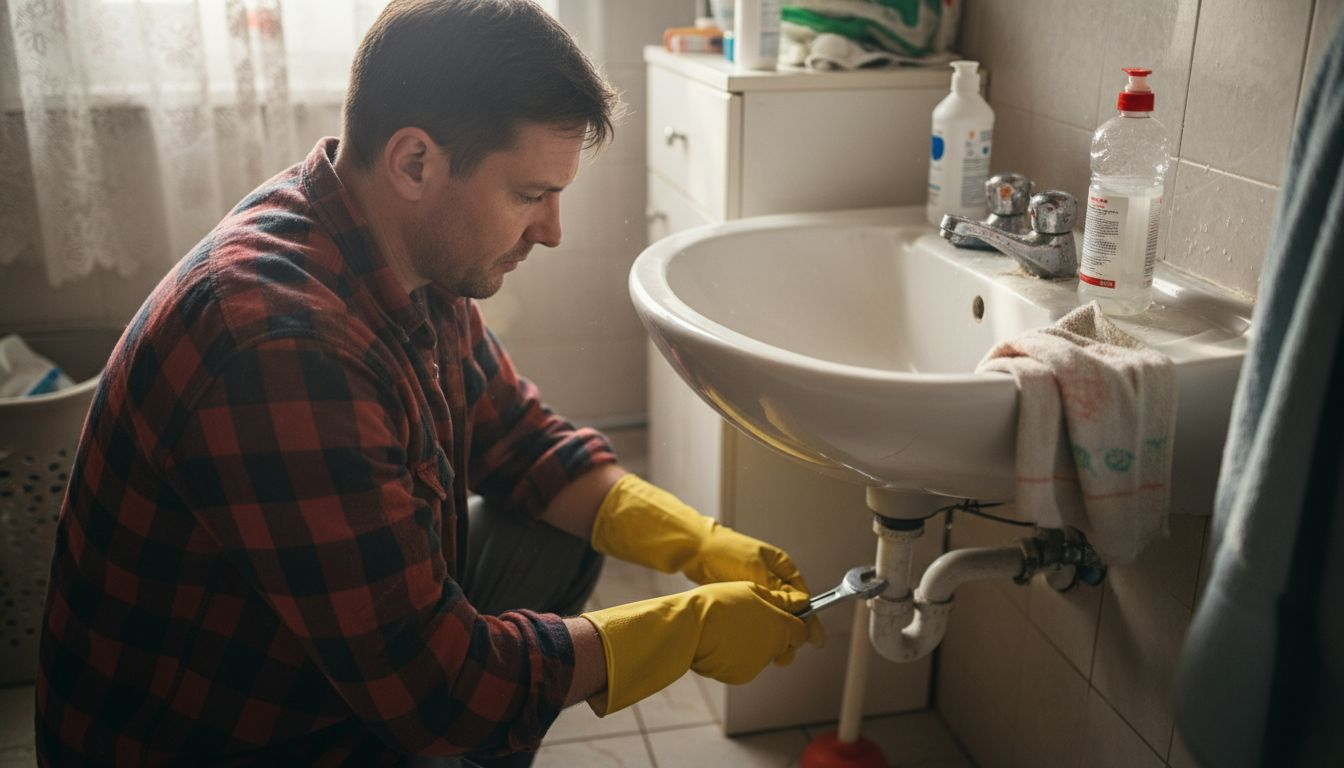
Before tackling a stubborn drain blockage, you’ll need to prepare your workspace with the right tools and safety equipment. Having everything ready beforehand will make the unclogging process smoother and prevent potential accidents.
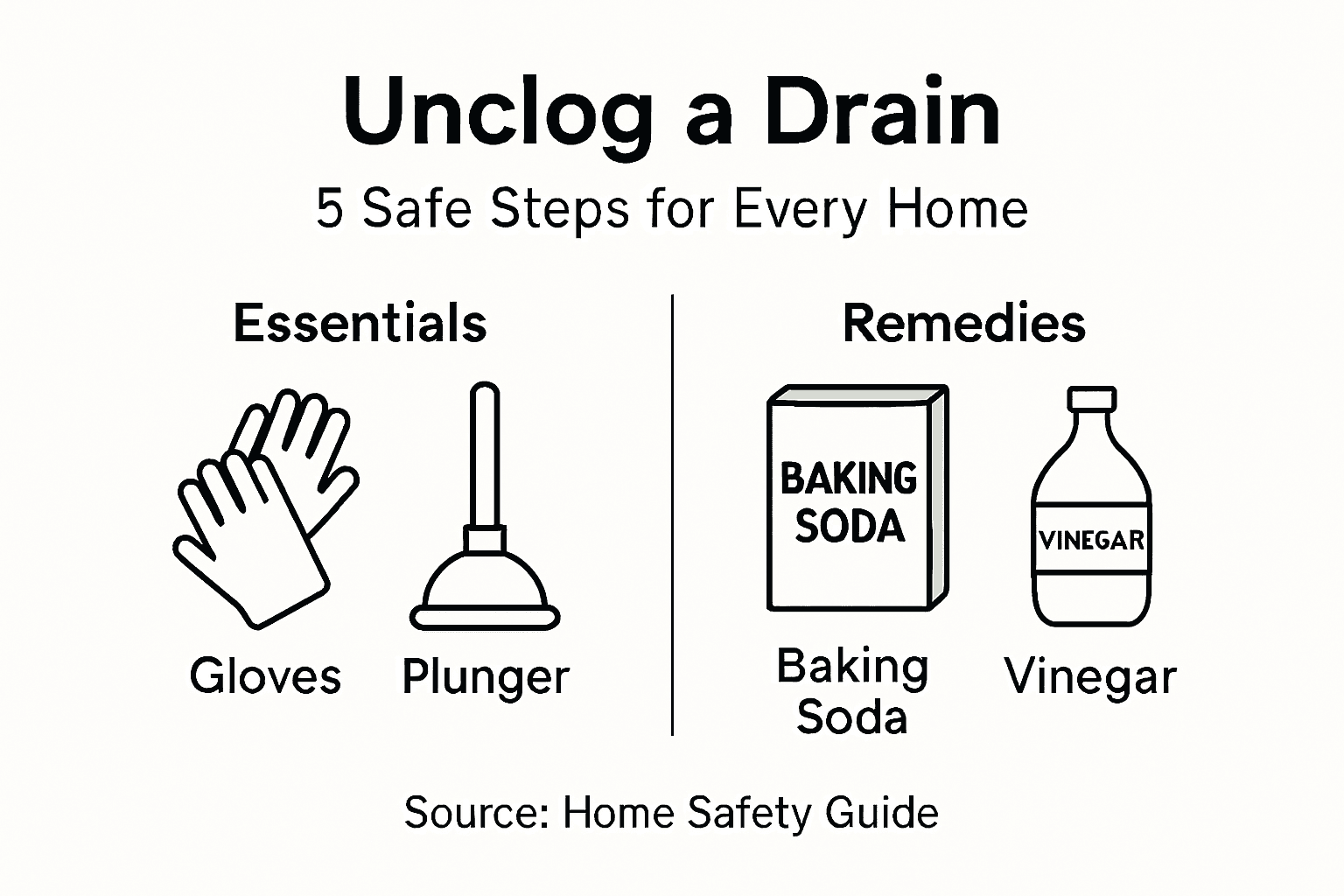
Start by assembling your drainage rescue kit with these key items:
- Rubber gloves to protect your hands from chemicals and debris
- Safety glasses to shield your eyes from splashing liquids
- Plunger for initial blockage removal
- Plumber’s snake for deeper obstructions
- Baking soda and vinegar for eco-friendly drain cleaning
When selecting your safety gear, prioritise high-quality, well-fitting equipment that provides comprehensive protection. Your rubber gloves should extend past your wrists, and safety glasses should offer complete eye coverage. These precautions will help prevent potential skin irritation or accidental chemical splashes.
Safety first: Proper protective equipment can prevent injury and make drain clearing more effective.
Top tip: Store your drain-clearing tools in a dedicated, easily accessible kit to ensure you’re always prepared for unexpected blockages.
Step 2: Remove visible debris from the drain entrance
Clearing visible debris is a crucial first step in resolving drainage blockages and preventing potential plumbing complications. By carefully removing surface-level obstructions, you can often improve water flow and minimise the risk of more serious clogs developing.
Follow these systematic steps to safely remove visible debris:
- Inspect the drain entrance carefully for any obvious blockages
- Use protective gloves throughout the cleaning process
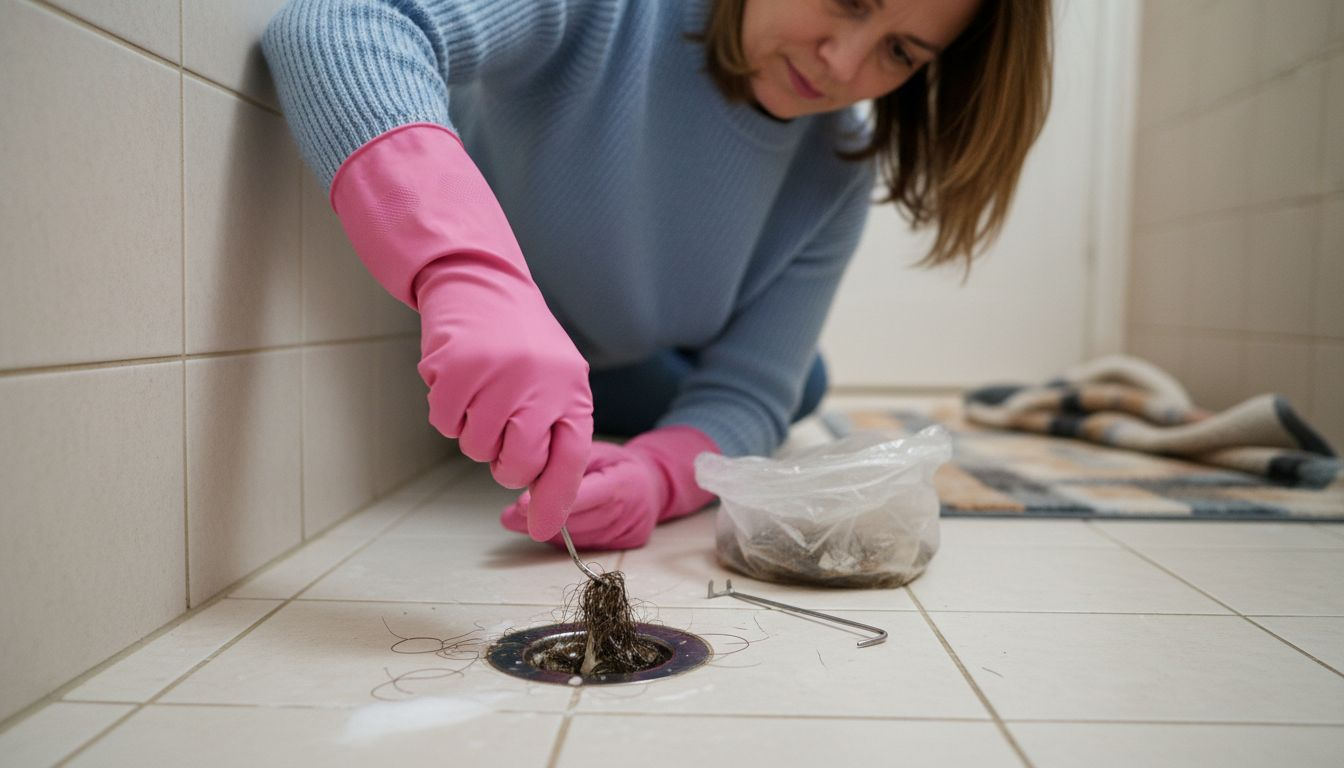
- Remove hair, soap scum, and loose materials using a small tool
- Avoid pushing debris further down the drainage system
When cleaning, use a narrow implement like a bent wire or specialised drain hook to gently extract materials. Work slowly and methodically, ensuring you don’t damage the drain’s interior surface. Building regulations recommend maintaining clear drainage systems to prevent potential blockages.
Careful removal of surface debris can prevent more complex drainage issues from developing.
Pro tip: Keep a dedicated pair of rubber gloves and a small extraction tool near your drain for quick and efficient debris removal.
Step 3: Apply safe home remedies to loosen the blockage
Addressing drain blockages with gentle, environmentally friendly methods can effectively clear minor obstructions without resorting to harsh chemical treatments. Eco-friendly home remedies offer a safe alternative to commercial drain cleaners, protecting both your plumbing and the environment.
Prepare your natural drain-clearing solution using these simple ingredients:
- Baking soda (1/2 cup)
- White vinegar (1/2 cup)
- Boiling water
- Kettle or large pot for heating water
Follow these step-by-step instructions for a gentle yet effective drain-clearing approach:
- Pour baking soda directly into the drain
- Add white vinegar immediately after
- Cover the drain to contain the fizzing reaction
- Wait 15 minutes to allow the mixture to work
- Flush with boiling water to clear loosened debris
The chemical reaction between baking soda and vinegar creates a powerful fizzing action that helps break down greasy buildup and soft blockages. This method works particularly well for minor clogs caused by soap scum, hair, and organic materials.
Natural remedies can effectively clear drains without damaging your plumbing infrastructure.
Pro tip: Repeat this process monthly as a preventative maintenance technique to keep your drains running smoothly.
Step 4: Use a plunger or drain snake to clear the pipe
When home remedies fall short, mechanical methods become your next line of defence against stubborn drain blockages. Mechanical tools like plungers and drain snakes offer targeted approaches to dislodge and remove persistent clogs without causing damage to your pipes.
Choose your tool based on the blockage location and severity:
- Plunger for surface-level blockages near drain openings
- Drain snake for deeper, more complex obstructions
- Protective gloves for safety
- Eye protection to prevent splashing
Plunger technique for shallow clogs:
- Create a tight seal around the drain opening
- Push and pull with firm, consistent pressure
- Repeat 4-6 times to dislodge the blockage
- Flush with water to check drainage
For deeper blockages, carefully insert a drain snake, rotating it gently to break up or retrieve debris. Avoid using excessive force that might damage your pipes.
Mechanical clearing methods can effectively resolve drainage issues when used correctly and cautiously.
Pro tip: Always have a bucket nearby to catch any water or debris that might emerge during the unclogging process.
Here’s how different drain-clearing methods compare in terms of effectiveness and environmental impact:
| Method | Typical Effectiveness | Environmental Impact | Best For |
|---|---|---|---|
| Manual Removal | High for surface debris | No chemicals released | Hair, soap scum at entrance |
| Home Remedies | Moderate for minor clogs | Very eco-friendly | Grease, light blockages |
| Plunger | High for shallow clogs | No chemical risk | Sudden full drain clogs |
| Drain Snake | High for tough blockages | No chemical risk | Deep, persistent blockages |
Step 5: Flush the drain to verify full water flow
After successfully clearing the blockage, the final crucial step is to confirm that your drainage system is functioning correctly. Proper drainage verification involves systematic flushing to ensure complete obstruction removal and restore optimal water flow.
Flushing the drain requires a systematic approach:
- Use hot water to help clear remaining debris
- Run tap at full pressure to test drainage
- Observe water speed and drainage pattern
- Check for any lingering blockages
Follow these specific steps to verify complete drainage:
- Open hot water tap fully
- Pour water directly into drain
- Observe drainage speed
- Listen for unusual gurgling sounds
- Repeat flushing if necessary
Watch for potential indicators of remaining blockages such as slow drainage, unusual sounds, or water backing up. These might suggest that additional clearing techniques are required.
This table summarises key signs indicating whether your drain is fully clear or still blocked:
| Indicator | Possible Cause | Recommended Action |
|---|---|---|
| Rapid water drainage | Obstruction fully cleared | No further steps needed |
| Slow drainage | Partial blockage remains | Repeat clearing method |
| Gurgling sounds | Trapped air or minor debris | Inspect and flush again |
| Water backing up | Significant blockage persists | Use snake or consult plumber |
Thorough flushing confirms your drain-clearing efforts have been successful.
Pro tip: Keep a bucket nearby during flushing to quickly catch and redirect any unexpected water overflow.
Trusted Drain Solutions When Home Remedies Are Not Enough
Unclogging a drain safely and effectively at home can be challenging, especially when blockages persist despite your best efforts with plungers or natural remedies. If you are dealing with stubborn clogs, slow drainage, or recurring issues described in the article, professional help can save you time and stress while protecting your property from further damage.
At RSJ Drains, we understand how urgent and frustrating drainage problems can be. Our expert team offers fast, reliable solutions including CCTV drainage surveys, high-pressure jetting, and emergency drain repairs to clear blockages fully and verify drainage flow. Benefit from a family-run service with a local presence across Greater London and guaranteed 24-hour emergency response within two hours. Don’t wait until minor issues turn into expensive repairs—act now for peace of mind and lasting results by visiting RSJ Drains and discovering how our comprehensive services can restore your drains safely and efficiently.
Frequently Asked Questions
How can I prepare for unclogging a drain at home?
To prepare for unclogging a drain, gather essential tools such as rubber gloves, safety glasses, a plunger, and a plumber’s snake. Assemble everything in a dedicated kit to ensure you are ready for unexpected blockages.
What are some eco-friendly methods to unclog a drain?
You can use a mixture of baking soda and white vinegar to unclog drains naturally. Pour half a cup of baking soda followed by half a cup of vinegar into the drain, cover it, and wait for 15 minutes before flushing it with boiling water.
How do I use a plunger effectively to clear a blockage?
To use a plunger, create a tight seal around the drain opening and push and pull with firm, consistent pressure for about 4-6 times. After that, flush the drain with water to check if it drains properly.
What signs indicate that my drain is still blocked?
Signs that your drain may still be blocked include slow drainage, unusual gurgling sounds, or water backing up in the sink. If you notice any of these, you may need to repeat the clearing process or use a drain snake.
How do I safely remove visible debris from the drain?
To safely remove visible debris, inspect the drain entrance and use protective gloves to take out hair, soap scum, and other loose materials. Use a narrow tool to gently extract debris without pushing it further down the drain.
How often should I maintain my drains to prevent clogs?
Performing a gentle cleaning with baking soda and vinegar monthly can help maintain your drains and prevent clogs. This regular maintenance keeps your drainage system running smoothly and reduces the risk of more serious blockages.
Recommended
- Experiencing Sink Blockage in North London? Call RSJ Drains
- Blocked Sink Hackney ✔️ RSJ Drains 📞 020 3566 6031
- Blocked Sink Islington ✔️ RSJ Drains 📞 020 3566 6031
- Blocked Sink Knightsbridge ✔️ RSJ Drains 📞 020 3566 6031
- Toilet Troubles? Home Depot’s Unclogging Tips to the Rescue! – Davinroy Plumbing and Mechanical