Most North London homeowners only notice their drains when something goes wrong, often discovering too late that drainage systems do much more than simply carry water away. Hidden beneath every property lies a complex network that manages runoff, prevents flooding, and even helps safeguard your foundations. If your drains are slow, backing up, or giving off bad smells, understanding the real role of a modern drainage system could save you thousands—and protect your home from major emergencies.
Table of Contents
- Drainage System Basics And Common Misconceptions
- Household Drainage Types And How They Work
- Essential Components And Routine Maintenance
- Legal Responsibilities And Compliance In The Uk
- Typical Issues, Emergency Solutions, And Costs
Key Takeaways
| Point | Details |
|---|---|
| Importance of Maintenance | Regular maintenance of drainage systems is crucial to prevent costly emergencies and protect property value. |
| Misconceptions about Drains | Many homeowners mistakenly believe that drains only need to move water, overlooking their role in flood prevention and ecosystem protection. |
| Types of Drainage Systems | Understanding whether your property has foul, surface, or combined drainage systems helps in implementing appropriate maintenance strategies. |
| Legal Responsibilities | Property owners must comply with drainage regulations and obtain necessary approvals for connections and modifications to avoid legal issues. |
Drainage System Basics and Common Misconceptions
Most North London homeowners assume drainage systems simply move water away from their properties. This oversimplification leads to poor maintenance decisions and costly repairs down the line.
Modern drainage systems do far more than just shift water from point A to point B. They manage runoff, prevent flooding, improve water quality, and protect local ecosystems all at once.
What Your Drainage System Actually Does
Your home’s drainage system comprises several interconnected components working together as a unified network.
Key components include:
- Surface water drains that collect rainwater from roofs and patios
- Foul drains that transport wastewater from toilets, sinks, and showers
- Gullies and catchpits that trap debris before it enters main pipes
- Connection points linking your property to public sewers
- Inspection chambers allowing access for maintenance and CCTV surveys
These parts operate silently until something goes wrong, which is why many homeowners overlook their importance until blockages or breaks occur.
Well-maintained drainage systems prevent flooding, protect your foundations, and save thousands in emergency repairs—yet most homeowners only notice them when they fail.
Common Misconceptions About Drainage
Several myths about drainage persist in North London properties, causing preventable damage and unnecessary expenses.
Misconception 1: “Drains only move water away”
Modern drainage thinking recognises that sustainable drainage systems deliver multiple benefits beyond simple runoff management. Quality systems improve water quality, create habitats, and reduce flooding through integrated approaches rather than just channelling water away rapidly.
Misconception 2: “My drains are fine if water flows”
Water flowing doesn’t mean your system is healthy. Slow-draining sinks, damp patches, or gurgling sounds signal early problems that worsen silently underground. Tree roots, mineral buildup, and partial blockages progress undetected until they cause complete failures.
Misconception 3: “Drainage maintenance is unnecessary”
Regular attention prevents expensive emergencies. Neglected systems accumulate debris, develop cracks, and attract rodents through deteriorating pipes. Professional inspections using CCTV drainage surveys catch issues before they become disasters costing £2,000 or more.
Misconception 4: “All drains work the same way”
Older Victorian properties in North London have different drainage arrangements than modern homes. Victorian terraces often feature combined sewers mixing foul and surface water, whilst newer properties separate them entirely. This distinction affects maintenance approaches and repair strategies significantly.
Why This Matters for Your Home
Understanding your drainage system prevents costly damage and protects your property value. Unresolved issues lead to foundation problems, mould growth, and sewage backups inside your home.
Regular maintenance costs considerably less than emergency repairs. A blocked drain discovered during routine inspection costs far less than one that floods your basement or damages your garden.
Pro tip: Schedule annual drainage inspections, especially if you live in older North London properties where tree roots and Victorian pipe configurations commonly cause hidden problems that escape immediate detection.
Household Drainage Types and How They Work
North London properties have different drainage systems depending on their age and location. Understanding which type serves your home helps you maintain it properly and avoid costly mistakes.
Your drainage system is either foul only, surface water only, or a combination of both. Each type handles different waste and requires distinct maintenance approaches.
Foul Water Drainage
Foul water drainage carries wastewater from toilets, sinks, baths, and showers underground to treatment facilities. This system removes human waste and contaminated water from your property safely.
Foul drains connect to either public sewers, septic tanks, or cesspools depending on your location. Most North London properties connect to public sewers, whilst rural areas may use private treatment systems.
The pipes slope slightly downhill to maintain proper flow without stagnation. Blockages occur when grease, hair, or solid objects lodge inside, preventing water movement.
Surface Water Drainage
Surface water drainage manages rainwater from roofs, gutters, patios, and gardens. This system prevents water pooling around your property, which damages foundations and creates damp problems.
Surface water typically drains to public storm sewers, watercourses, or ground soakage systems. Modern sustainable drainage approaches encourage rainwater absorption into the ground rather than rapid discharge.
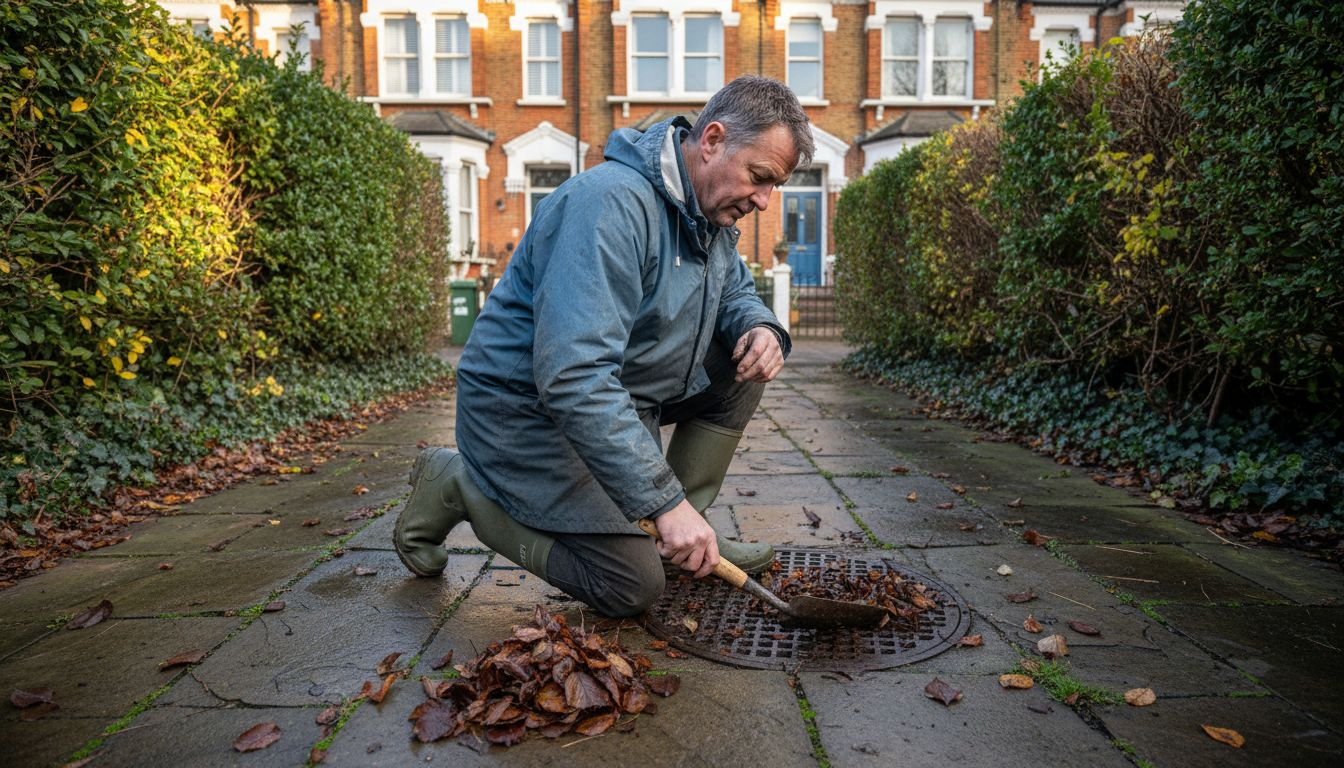
Leaves, silt, and debris frequently block surface water gullies during autumn and winter. Regular clearing prevents water backing up into your property.
Combined Versus Separate Systems
Older Victorian properties often feature combined drainage systems mixing foul and surface water. Modern homes use separate systems keeping each type independent.
Combined systems:
- Mix toilet waste with rainwater in a single pipe network
- Create problems during heavy rainfall when systems overflow
- Cost more to maintain due to complexity
- Common in properties built before 1970 across North London
Separate systems:
- Keep foul and surface water completely isolated
- Reduce sewer overloading during storms
- Easier to maintain and upgrade individually
- Standard for all new developments under current building regulations
Understanding whether your home uses combined or separate drainage determines maintenance priorities and repair costs, making this distinction crucial for every North London homeowner.
How Water Flows Through Your System
Water enters your drainage through fixtures like sinks and toilets, then flows downward through waste pipes. Branch pipes connect individual rooms to a main vertical stack pipe.
The stack pipe carries all waste downward, often positioned centrally within your home. This single stack system with proper fill levels in branch pipes prevents air lock and maintains consistent flow rates.
At ground level, the main drain exits your property and connects to public sewers or treatment systems. Inspection chambers allow access for clearing blockages and conducting CCTV surveys.
Proper slope encourages water movement without allowing sediment accumulation. Flat sections or reversed slopes create problems where debris settles and builds up.
Modern Materials and Standards
Historical clay pipes have given way to durable materials like uPVC and HDPE. These modern alternatives resist corrosion, root infiltration, and ground movement better than older materials.
All household drainage must conform to building regulations and BS EN 12056 standards. These standards ensure systems handle household requirements safely and prevent environmental contamination.
Pipe diameter, gradient, and connection methods follow strict calculations based on expected water volume. Undersized pipes cause backups whilst oversized ones allow sediment settlement.
Pro tip: Request a CCTV drainage survey if purchasing a North London property over 40 years old—hidden defects in Victorian or Edwardian pipes often prove far cheaper to address before purchase than after discovering problems during occupation.
Essential Components and Routine Maintenance
Your drainage system contains several critical components working silently beneath your property. Neglecting routine maintenance turns minor issues into £3,000+ emergency repairs.
Understanding what these parts do helps you spot problems early and keep water flowing properly. Regular attention prevents blockages, leaks, and foundation damage that plague North London homes.
Key Drainage Components
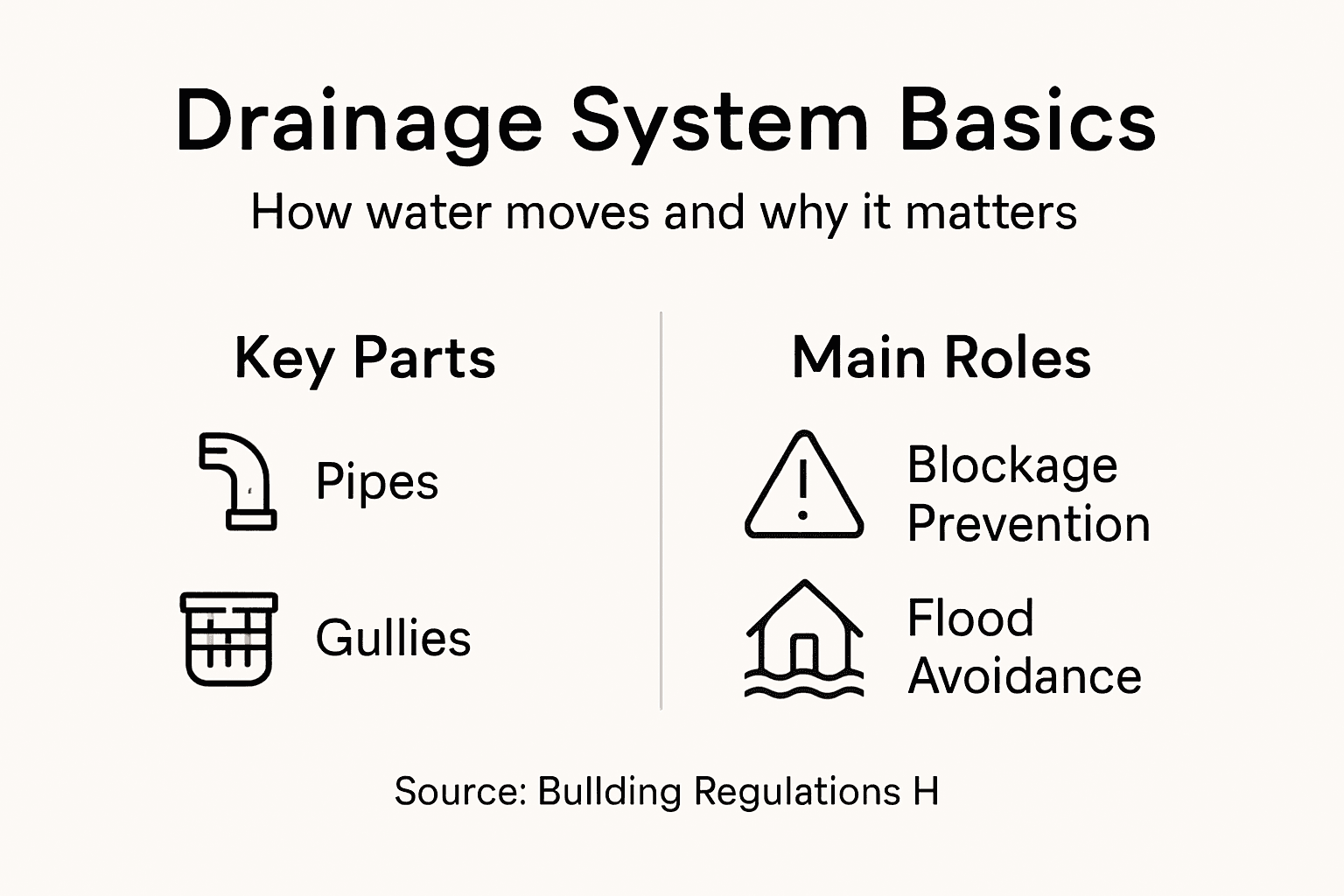
Pipes form the backbone of your drainage system, carrying waste underground from your property to public sewers or treatment facilities. Different sizes handle different volumes, with main drains larger than branch pipes feeding individual rooms.
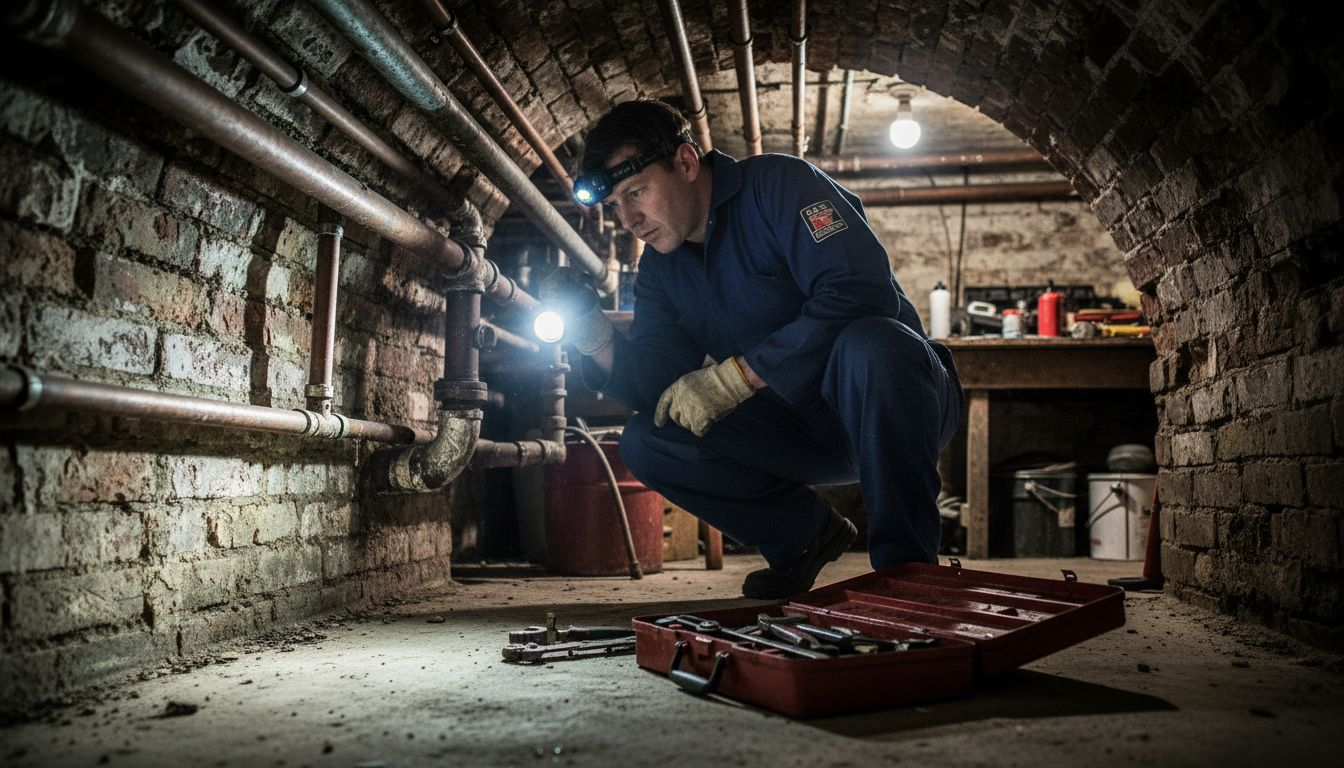
Inspection chambers (also called manholes) provide access points for clearing blockages and conducting surveys. These brick or plastic chambers sit at junctions and changes in pipe direction, allowing professionals to reach pipes safely.
Gullies collect water from gutters, patios, and surface areas before it enters underground drainage. These shallow catchpits trap leaves and debris, protecting main pipes from blockages.
Traps sit beneath sinks and baths, creating water seals that prevent foul gases rising from sewers into your home. U-bends are the most common type, though S-bends appear in older properties.
Rodding eyes extend vertical pipes above ground, allowing high-pressure water jetting to clear stubborn blockages without excavation. Many North London properties lack these features, complicating emergency repairs.
Understanding Building Regulations
All drainage systems must meet essential component specifications outlined in Approved Document H of the Building Regulations. These standards ensure pipes, manholes, and inspection chambers function safely and protect public health.
Proper installation prevents structural damage to your home and environmental contamination. Regulations specify pipe materials, gradients, depths, and connection methods that professional installers must follow.
Routine Maintenance Checklist
Consistent maintenance prevents expensive failures and extends your drainage system’s lifespan significantly. Most North London homeowners ignore drains until problems emerge.
Monthly tasks:
- Clear gutters and downpipes of leaves and debris
- Check gullies for blockages or standing water
- Listen for unusual gurgling or slow drainage sounds
Quarterly tasks:
- Pour boiling water down drains to dissolve grease buildup
- Run water through unused drains to maintain trap seals
- Inspect visible pipes for leaks or damage
Annual tasks:
- Request professional drain inspection using CCTV surveys
- Clear inspection chambers and rodding eyes
- Check for signs of subsidence or ground movement near pipes
Why Maintenance Matters
Regular system inspections prevent blockages, environmental contamination, and damage to urban infrastructure. Debris accumulation, tree roots, and grease buildup progress undetected until complete failure occurs.
A blocked drain discovered during routine inspection costs a fraction of emergency repairs needed when sewage backs into your home or gardens flood. Prevention always beats crisis management.
Regular maintenance transforms your drainage from a hidden liability into a reliable system lasting decades without costly interruptions or property damage.
What Kills Drains Fast
Certain habits destroy drainage systems remarkably quickly. Avoiding these protects your investment substantially.
Never flush or pour:
- Wet wipes, nappies, or sanitary products
- Cooking grease or oil
- Hair or dental floss
- Medications or chemicals
- Food scraps or coffee grounds
These items accumulate in pipes, creating blockages that grow progressively worse. Professional clearing costs £150–400, whilst full pipe replacement costs thousands.
Pro tip: Install a simple drain strainer basket in kitchen sinks and bathroom basins—this £3 investment catches hair and food particles before they enter pipes, preventing 70% of blockages that plague North London properties.
Legal Responsibilities and Compliance in the UK
Drainage compliance isn’t optional in the UK—it’s a legal requirement with real consequences for non-compliance. North London property owners must understand their responsibilities to avoid enforcement actions and protect their investments.
Breaking drainage regulations can result in fines, forced remedial work, and reduced property value. Building control authorities actively monitor compliance, and water authorities enforce standards rigorously.
Understanding Approved Document H
Approved Document H sets out acceptable methods for foul and surface water disposal in all UK buildings. This legal framework specifies connection priorities, installation standards, and system design requirements that property owners must follow.
Building control authorities monitor adherence and can enforce compliance through legal action. Failure to meet these standards exposes you to enforcement notices requiring expensive remedial work.
The document covers pipe materials, gradients, depths, connection methods, and maintenance accessibility. Professional installers understand these requirements, but DIY modifications often violate standards unknowingly.
Your Legal Responsibilities
As a property owner, you hold legal responsibility for your drainage system. This includes ensuring it doesn’t adversely affect neighbouring properties or the environment.
Your responsibilities include:
- Maintaining pipes so they don’t leak into surrounding soil
- Preventing foul water or surface water from polluting watercourses or groundwater
- Ensuring connections to public sewers comply with water authority requirements
- Obtaining building control approval for any alterations or new installations
- Preventing drainage from causing flooding or subsidence to neighbouring properties
These aren’t suggestions—they’re legal obligations. Ignoring them creates liability exposure.
Water Authority Approval Requirements
Local water authorities oversee public sewers and must approve any connections. Most North London properties connect to Thames Water’s network, which operates under strict regulatory oversight.
Approvals cover pipe sizing, connection points, and discharge rates. Unauthorised connections breach water authority regulations and can result in enforcement action requiring disconnection and costly reinstallation.
Property modifications affecting drainage, including loft conversions or extensions, require water authority notification. Building control processes include water authority consultation, ensuring compliance before work begins.
Building Regulations and Control
Building control approval is mandatory for any new drainage installation, major repairs, or system modifications. Selling a property without building control certification for drainage work creates liability for the new owner.
Local authority building control inspectors verify compliance during installation and upon completion. They check pipe materials, gradients, depths, inspection chamber placement, and system connections.
Skipping building control approval saves money initially but creates legal liability lasting decades—future buyers or their mortgage lenders will demand certificates, making sale or refinancing impossible.
Separate Versus Combined System Requirements
Water authority regulations prefer separate drainage systems reducing sewer overloading during heavy rainfall. New developments must use separate systems, whilst older combined systems remain legal if properly maintained.
Retrofitting older properties to separate foul and surface water requires building control approval and water authority connection agreements. This work costs £3,000–8,000 depending on pipe complexity.
Combined systems must prevent flooding and environmental pollution. Regular maintenance becomes more critical, especially during storm events.
Environmental Compliance
Drainage systems must prevent pollution of watercourses, groundwater, and surrounding land. Leaking foul drains contaminate soil and groundwater with harmful pathogens.
Surface water drainage must manage runoff without causing erosion or flooding. Sustainable drainage approaches now prioritise infiltration over rapid discharge, protecting water quality and natural habitats.
Propertyies near sensitive water sources face stricter requirements. Environmental agencies can enforce remedial action if drainage causes contamination.
Practical Steps for Compliance
Ensuring your drainage meets legal standards requires professional oversight and documentation.
Steps to maintain compliance:
- Keep building control certificates for all drainage work completed
- Maintain accurate records of drain surveys and professional inspections
- Address any defects identified during surveys promptly
- Notify building control before modifying or extending drainage systems
- Request water authority approval before new connections
- Obtain CCTV survey documentation if problems emerge
Documentation proves compliance if disputes arise and protects you during property sales.
Pro tip: Request building control certificates and water authority connection agreements from the previous owner when purchasing a North London property—missing documentation signals potential compliance issues requiring immediate professional investigation before legal liability transfers to you.
Typical Issues, Emergency Solutions, and Costs
Drainage problems escalate quickly in North London properties, turning minor blockages into catastrophic failures overnight. Understanding what typically goes wrong helps you recognise warning signs before damage becomes severe.
Most issues stem from preventable causes: grease buildup, tree roots, or neglected maintenance. Acting fast minimises costs and prevents water damage, foundation problems, and sewage backups inside your home.
Common Drainage Problems
Blockages rank as the most frequent issue, caused by grease, hair, wet wipes, or tree roots accumulating inside pipes. Water drains slowly or backs up into sinks, baths, and toilets simultaneously.
Pipe fractures and cracks develop from ground movement, tree root pressure, or aging materials. Water leaks into surrounding soil, causing damp patches, subsidence, and foul odours externally.
Collapsed pipes occur when old clay or concrete pipes deteriorate completely. This represents a structural failure requiring full pipe replacement—the most expensive repair scenario.
Tree root infiltration happens when roots exploit small cracks seeking water. Roots expand inside pipes, blocking flow entirely whilst causing physical damage to pipe structures.
Misconnections and poor gradients cause water pooling inside pipes. This allows sediment accumulation and creates conditions where blockages develop progressively.
Emergency Warning Signs
Recognising these signals allows you to call professionals before complete failure occurs. Early intervention costs considerably less than emergency repairs.
Watch for:
- Slow drainage from multiple fixtures simultaneously
- Gurgling sounds when water drains
- Foul odours near drains or outside inspection chambers
- Wet patches in gardens or basements
- Backed-up toilets or overflowing gullies
- Unusual pest activity indicating drain damage
These symptoms indicate problems ranging from simple blockages to structural failures requiring immediate professional assessment.
Typical Emergency Solutions
Poor drainage effects including flooding and property damage require rapid intervention using professional techniques. Most issues resolve within hours when addressed immediately.
High-pressure water jetting clears blockages by forcing water through pipes at 4,000+ PSI. This removes grease, hair, and mineral deposits without chemicals or pipe damage. Cost: £150–350.
CCTV drainage surveys identify the exact problem location and cause before repair work begins. This prevents unnecessary excavation and confirms whether pipes are damaged or simply blocked. Cost: £200–500.
Drain clearance and rodding uses mechanical tools to break up blockages manually. This works for accessible blockages but won’t clear root infiltration or severe buildup. Cost: £100–250.
Pipe repair or relining addresses cracks, fractures, and minor collapses without full excavation. Modern relining techniques insert new pipe liners inside existing damaged pipes. Cost: £1,500–4,000.
Full pipe replacement becomes necessary when pipes collapse completely or suffer irreparable damage. This requires excavation, new materials, and restoration work. Cost: £3,000–12,000+.
Cost Breakdown by Issue Severity
Understanding typical costs helps you plan financially and recognise when quotes seem unreasonable. Prices vary based on access difficulty, pipe location, and damage extent.
Simple blockage: £150–400 (water jetting or rodding)
Multiple blockages or slow drainage: £300–800 (survey plus clearance)
Cracked or fractured pipe: £1,500–4,000 (relining or section replacement)
Collapsed pipe: £4,000–12,000+ (full replacement with excavation)
Tree root damage: £2,000–6,000 (root removal plus pipe repair)
A £200 drain survey preventing an unnecessary £8,000 excavation represents exceptional value—professional diagnosis always costs less than guessing and digging.
Preventing Costly Emergencies
Regular maintenance costs £100–300 annually and prevents emergencies costing thousands. Most North London properties lack basic drainage care until problems force expensive interventions.
Prevention strategies:
- Annual professional drainage inspections
- Regular clearing of gutters and gullies
- Avoiding problematic items down drains
- Installing drain strainers in sinks
- Tree management near drainage pipes
- Prompt addressing of slow drainage
These simple actions extend your system’s lifespan dramatically and avoid catastrophic failures.
Choosing Emergency Services
When blockages or backups occur, professional response times matter enormously. Water damage accelerates rapidly, and sewage exposure creates health hazards.
Look for services offering 24-hour availability with guaranteed response within two hours. Expect professional assessment before quoting repair costs—reputable services conduct CCTV surveys confirming the problem before proposing solutions.
Pro tip: Keep inspection chamber locations documented and accessible before emergencies strike—knowing where your drains are buried saves professionals hours of excavation work, reducing emergency call-out costs by hundreds of pounds.
Protect Your Home with Expert Drainage Services from RSJ Drains
Understanding what your drainage system does and the risks of neglect highlighted many crucial challenges such as blocked pipes, root infiltration and costly emergency repairs. If you recognise any slow drainage issues or unusual smells around your property it is vital to act quickly to avoid property damage and expensive fixes. Modern drainage involves complex components needing specialist care including CCTV drainage surveys and high-pressure water jetting to clear blockages safely.
Take control of your propertys drainage health with professional services from RSJ Drains. We offer rapid 24-hour emergency responses within two hours for urgent issues such as cracked drains or blockages. Our expert inspections and relining solutions help maintain older North London systems and Victorian pipes efficiently. Dont wait for small problems to escalate. Visit RSJ Drains now to schedule a thorough drain inspection or emergency support and protect your home from costly drainage failures.
Frequently Asked Questions
What is the primary function of a drainage system?
A drainage system primarily manages the removal of excess water from properties, preventing flooding and ensuring proper water flow to treatment facilities.
Why is regular maintenance of a drainage system necessary?
Regular maintenance is essential to prevent blockages, avoid costly repairs, and ensure the system functions effectively, protecting the property from water damage and foundation issues.
What are the common types of drainage systems?
The common types of drainage systems are foul water drainage, which carries wastewater from toilets and sinks, and surface water drainage, which manages rainwater from roofs and patios. Combined systems mix both types, while separate systems keep them independent.
How can homeowners identify drainage issues early?
Homeowners can identify drainage issues early by looking for signs such as slow drainage, unusual gurgling sounds, unpleasant odours, or wet patches in gardens and basements.