When your drains block or overflow, it’s tempting to grab a plunger and tackle the problem yourself. Many homeowners underestimate the complexity of drainage systems, treating symptoms rather than root causes. Drainage contractors are specialists who diagnose, clear, and repair these hidden networks using advanced technology and expertise. This guide explains exactly who drainage contractors are, what methods they use, and how they solve common drainage problems across Greater London. You’ll learn when to call a professional and what to expect from their service.
Table of Contents
- Key takeaways
- Who is a drainage contractor and what do they do?
- Techniques and tools drainage contractors use for diagnosis and repair
- Common drainage problems and how contractors solve them
- Choosing and working with a drainage contractor in Greater London
- Discover expert drainage solutions with RSJ Drains
- Frequently asked questions
Key Takeaways
| Point | Details |
|---|---|
| Drainage contractor specialists | Drainage contractors diagnose, clear and repair underground drainage networks for homes, businesses and public properties. |
| Advanced inspection tools | They use CCTV drain cameras and electronic locating devices to inspect pipes without unnecessary excavation. |
| High pressure jetting | High pressure water jetting applied at 3000 to 8000 PSI removes grease, fatbergs and roots without harming pipes. |
| Maintenance and emergencies | They offer routine maintenance and rapid emergency callouts to prevent blockages and structural damage. |
Who is a drainage contractor and what do they do?
A drainage contractor is a specialist service provider who diagnoses, clears, repairs, and maintains drainage systems for residential, commercial, and public properties. Unlike general plumbers who focus primarily on water supply and fixtures, drainage contractors concentrate exclusively on wastewater removal and the underground pipe networks that carry it away. Their expertise covers everything from simple blockage clearing to complex structural repairs involving excavation or trenchless technology.
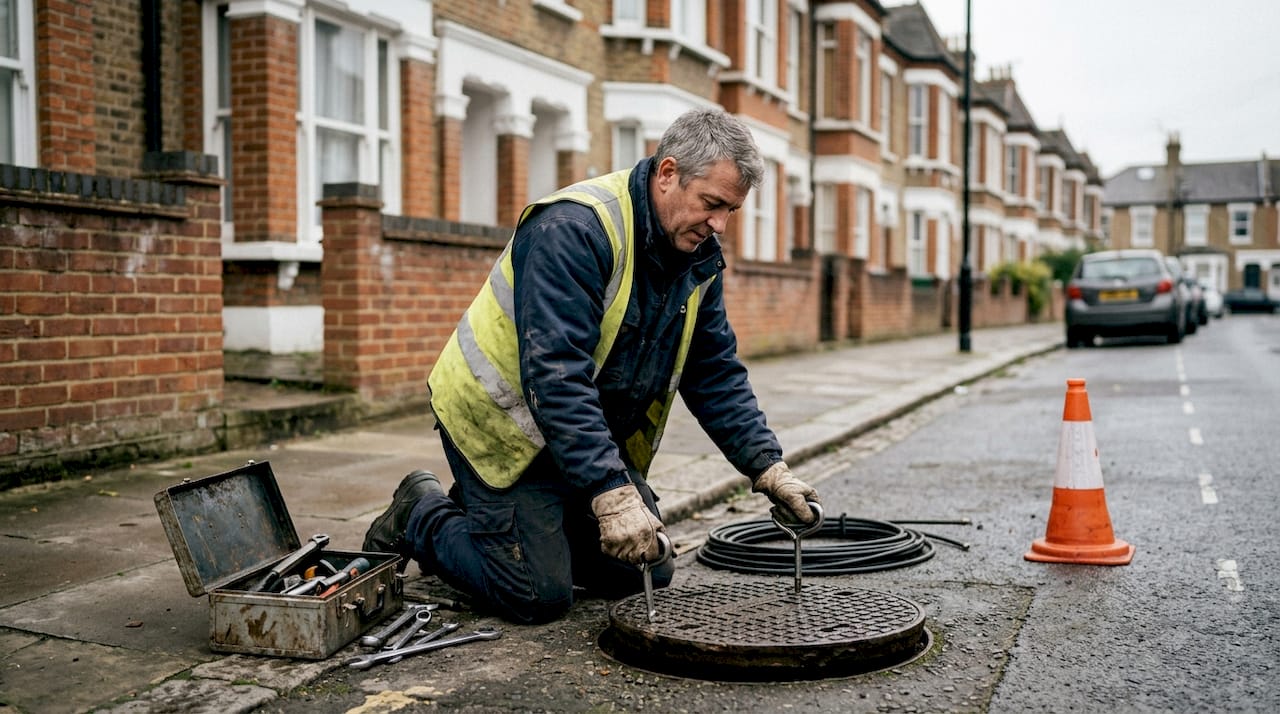
Drainage contractors handle a broad range of tasks that keep your property’s drainage system functioning properly. They diagnose problems using specialised inspection equipment, clear blockages with high-pressure water jetting or mechanical rodding, repair damaged pipes through relining or replacement, and perform routine maintenance to prevent future issues. Their work extends beyond emergency callouts to include scheduled inspections that identify potential problems before they escalate into costly failures.
Common drainage issues these professionals address include stubborn blockages caused by grease, foreign objects, or tree root infiltration, cracked or collapsed pipes resulting from ground movement or age, foul odours indicating trapped waste or ventilation problems, and slow drainage suggesting partial obstructions. They also manage more complex situations like fatberg removal, rat infestations entering through damaged pipes, and flood prevention measures for properties in vulnerable areas.
What sets drainage contractors apart is their investment in specialised equipment that general tradespeople don’t typically own. CCTV drain cameras allow them to inspect pipes internally without excavation, high-pressure jetting machines deliver enough force to scour away years of accumulated debris, and electronic locating devices pinpoint exact problem areas beneath concrete or landscaping. This technology enables accurate diagnosis and targeted repairs rather than guesswork.
Pro Tip: Before hiring any drainage contractor, verify their qualifications and ask for evidence of public liability insurance. Reputable professionals will gladly provide references from recent jobs and explain their diagnostic process before starting work. This transparency indicates experience and professionalism.
Techniques and tools drainage contractors use for diagnosis and repair
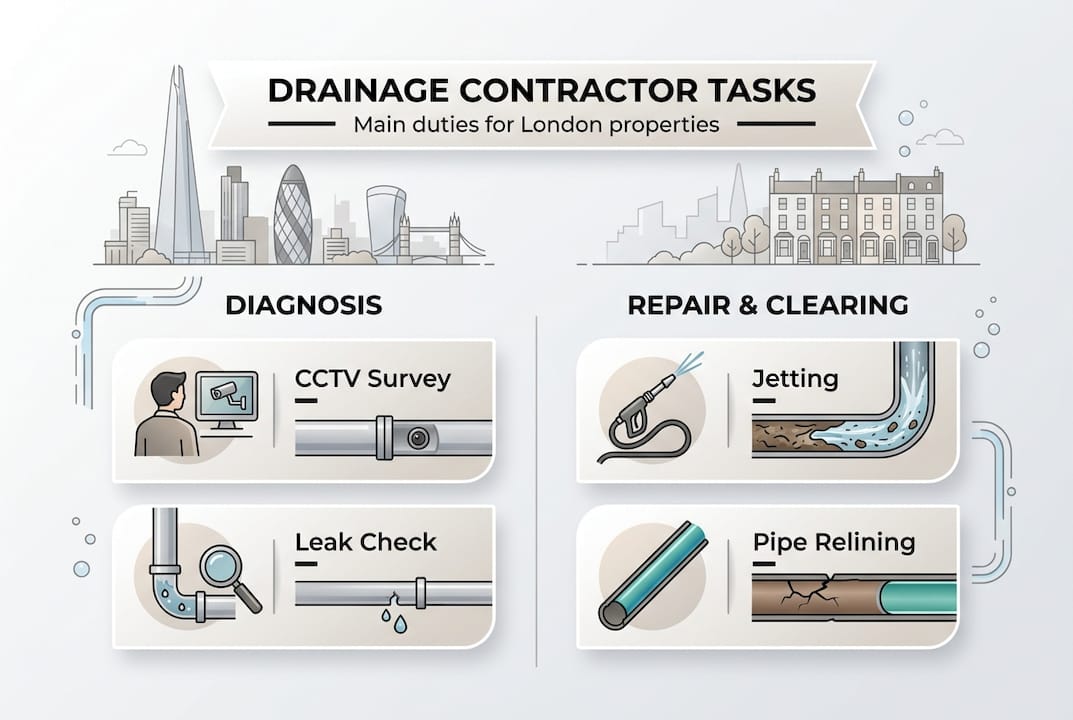
Modern drainage contractors employ several sophisticated techniques that have revolutionised how drainage problems are identified and resolved. High-pressure water jetting uses water pressurised between 3,000 and 8,000 PSI to scour pipe interiors, effectively removing grease buildup, fatbergs, tree roots, and mineral deposits that mechanical methods can’t shift. The pressurised water cuts through obstructions whilst simultaneously flushing debris downstream, restoring full flow capacity without damaging the pipe structure itself.
Rodding remains valuable for certain blockage types, particularly localised obstructions in accessible sections of pipework. Contractors feed flexible rods tipped with various attachments through the drainage system, mechanically breaking up or pushing through blockages. Whilst less powerful than jetting, rodding works well for shallow blockages near access points and doesn’t require the water supply and power connections that jetting equipment needs.
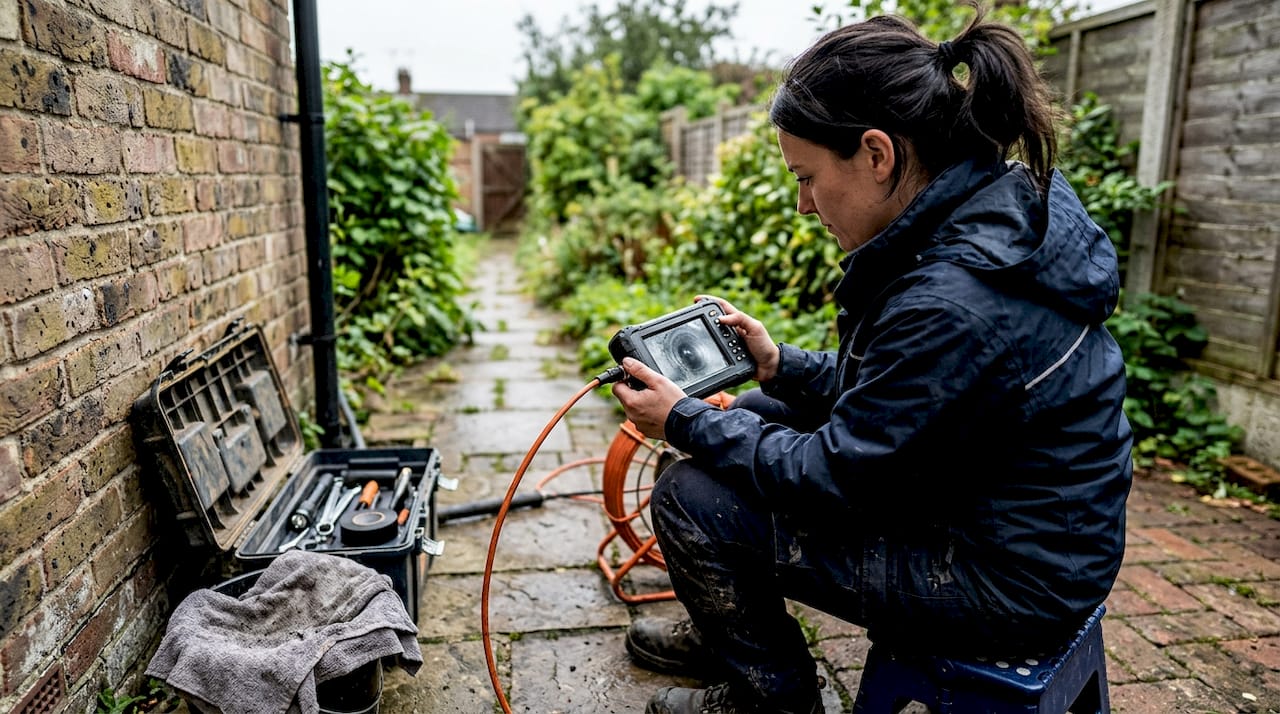
CCTV drain surveys provide the diagnostic foundation for effective drainage work. Contractors insert waterproof cameras mounted on flexible cables into your drainage system, capturing real-time video footage of pipe interiors. This reveals cracks, root penetration, misaligned joints, and structural damage invisible from above ground. The footage creates a permanent record that helps contractors plan repairs precisely and provides evidence for insurance claims or property surveys.
No-dig drain relining represents a breakthrough in drainage repair technology. Rather than excavating to replace damaged pipes, contractors insert resin-impregnated liners into existing pipework, then inflate and cure them to create a new pipe within the old one. This method repairs cracks, seals joints, and extends pipe life by decades whilst avoiding the disruption, cost, and property damage associated with traditional excavation. The cured liner is seamless, smooth, and resistant to root penetration.
| Method | Best for | Advantages | Limitations |
|---|---|---|---|
| High-pressure jetting | Grease, roots, fatbergs, mineral deposits | Thorough cleaning, environmentally safe, no pipe damage | Requires water supply and power, not suitable for collapsed pipes |
| Rodding | Localised blockages, accessible sections | Simple, portable, effective for shallow obstructions | Limited reach, less powerful than jetting, manual effort required |
| CCTV survey | Diagnosis, pre-purchase inspections, damage assessment | Non-invasive, accurate location data, permanent record | Cannot clear blockages, requires some pipe access |
| No-dig relining | Cracked pipes, root damage, joint failures | Minimal excavation, faster completion, long-lasting repair | Higher initial cost, requires specialist equipment and training |
Pro Tip: Request a CCTV survey before any major repair work begins. The footage reveals exactly what’s wrong and where, preventing unnecessary excavation or guesswork repairs. Many contractors include survey costs in their overall quote, and the diagnostic accuracy saves money by targeting the actual problem.
Common drainage problems and how contractors solve them
Drainage systems fail in predictable patterns, and experienced contractors recognise these issues quickly. Blockages top the list, caused by accumulated grease, foreign objects flushed down toilets, wet wipes that don’t break down, and tree roots seeking moisture inside pipes. Root infiltration particularly affects older clay pipe systems where roots exploit tiny cracks at joints, eventually filling the pipe with a dense mat that traps other debris.
Collapsed or fractured pipes create serious drainage failures requiring structural repair. Ground movement, heavy traffic loads above buried pipes, corrosion in metal pipework, and simple age-related deterioration all cause pipe failures. When pipes collapse, waste cannot flow properly, creating backups that affect multiple fixtures simultaneously. Foul odours signal trapped waste, damaged ventilation pipes, or dry traps that allow sewer gases to enter your property.
When you contact a drainage contractor, they follow a systematic approach:
- Initial assessment involves discussing symptoms, identifying affected fixtures, and reviewing any previous drainage work to understand the system layout.
- Visual inspection checks external access points, gullies, and manholes for obvious signs like standing water, debris accumulation, or structural damage.
- CCTV survey provides internal pipe inspection, revealing the exact nature, location, and extent of problems without excavation.
- Diagnosis interprets survey findings, identifies root causes rather than just symptoms, and develops a targeted repair strategy.
- Treatment implements the appropriate solution, whether clearing blockages, repairing structural damage, or replacing failed sections.
- Verification confirms the repair worked through follow-up CCTV inspection or flow testing, ensuring the system functions properly.
- Prevention advice helps you avoid future problems through maintenance recommendations and usage guidance.
| Problem type | Severity | Common causes | Typical treatment |
|---|---|---|---|
| Blockages | Moderate to high | Grease, foreign objects, roots, wet wipes | High-pressure jetting, rodding, chemical treatment |
| Root infiltration | High | Tree roots entering through cracks or joints | Mechanical cutting, jetting, relining to seal entry points |
| Cracked pipes | High | Ground movement, age, corrosion, frost damage | Patch repairs, sectional relining, excavation and replacement |
| Collapsed pipes | Critical | Structural failure, heavy loads, severe corrosion | Excavation and replacement, extensive relining |
| Foul odours | Low to moderate | Dry traps, ventilation issues, partial blockages | Trap refilling, ventilation repair, blockage clearing |
| Slow drainage | Low to moderate | Partial blockages, pipe sagging, inadequate fall | Jetting, gradient correction, pipe realignment |
Professional intervention prevents minor issues escalating into emergencies. A small crack left unrepaired allows roots to enter, gradually creating a complete blockage. Partial blockages slow drainage initially but eventually cause complete backups, potentially flooding your property with contaminated water. The health risks from sewage exposure and the property damage from flooding far exceed the cost of timely professional repairs.
Pro Tip: Schedule annual drain maintenance inspections rather than waiting for problems to appear. Preventative maintenance costs a fraction of emergency callouts and catches developing issues when they’re cheapest to fix. Think of it like servicing your car rather than waiting for it to break down on the motorway.
Choosing and working with a drainage contractor in Greater London
Selecting the right drainage contractor protects you from substandard work and unexpected costs. Start by verifying professional certifications and memberships in industry bodies that maintain standards and provide dispute resolution. Check online reviews across multiple platforms, paying attention to how contractors respond to complaints as well as their positive feedback. Emergency availability matters enormously when sewage backs up into your home, so confirm response times and out-of-hours coverage before you need it.
Maintenance plans offered by reputable contractors provide excellent value for property managers and homeowners who want predictable costs and priority service. These plans typically include annual CCTV inspections, scheduled jetting to prevent blockage buildup, priority emergency response, and discounted repair rates. Regular maintenance extends your drainage system’s life significantly, catching minor issues before they require expensive repairs.
Before a contractor visits, prepare your property to maximise efficiency:
- Clear access to all external manholes, inspection chambers, and drain access points by moving vehicles, garden furniture, or stored items
- Document drainage problems with photos or videos showing slow drainage, standing water, or visible damage to support your description
- Locate any previous drainage reports, building plans, or CCTV surveys that show your system layout and past work
- Identify all affected fixtures and note when problems occur, helping contractors understand drainage patterns and potential causes
- Secure pets away from work areas for their safety and to allow contractors to work efficiently
- Inform neighbours if contractors need to access shared drainage systems or work may cause temporary disruption
London’s unique environment creates specific drainage challenges that experienced local contractors understand. The capital’s Victorian-era drainage infrastructure combines with modern high-density housing, creating complex interconnected systems where one property’s problem can affect neighbours. Heavy rainfall overwhelms combined sewers that handle both surface water and sewage, increasing flood risk. The clay soil common across London expands and contracts with moisture changes, stressing buried pipes and creating movement that damages rigid connections.
Regular professional maintenance becomes even more critical in Greater London’s demanding conditions. Tree roots from the capital’s extensive urban forestry seek moisture aggressively during dry periods, infiltrating any weakness in underground pipes. The concentration of restaurants and takeaways means fatberg formation occurs more frequently in London than rural areas, requiring professional intervention to clear.
Pro Tip: Schedule drain inspections after periods of heavy rainfall or before winter when falling leaves and seasonal debris increase blockage risk. This timing catches weather-related damage early and prepares your system for the demanding winter months when frozen pipes and increased water flow create additional stress.
Discover expert drainage solutions with RSJ Drains
Understanding what drainage contractors do helps you recognise when professional expertise is essential rather than optional. RSJ Drains brings decades of specialist experience to Greater London properties, combining rapid emergency response with thorough diagnostic capabilities. Our team uses the latest CCTV technology and high-pressure jetting equipment to identify and resolve drainage issues efficiently, minimising disruption to your property.
Whether you need emergency assistance with a blocked drain or want to schedule preventative maintenance, our comprehensive drain inspection services provide the detailed assessment your property deserves. We offer complete drain repairing services from minor fixes to major structural work, all delivered with transparent pricing and guaranteed workmanship. Our emergency drainage services operate around the clock, ensuring help arrives within two hours when you face urgent drainage failures. Contact RSJ Drains today for reliable, professional drainage solutions backed by our family-run commitment to customer satisfaction.
Frequently asked questions
What types of properties do drainage contractors service?
Drainage contractors work across all property types including residential homes, commercial premises, industrial facilities, and public buildings. They handle everything from single-family houses with simple drainage layouts to complex multi-unit developments with shared systems. Contractors adapt their approach and equipment to suit each property’s specific requirements and access constraints.
How often should drains be inspected to prevent problems?
Annual inspections suit most residential properties, catching developing issues before they cause failures. Commercial properties with heavy usage benefit from six-monthly checks, whilst older buildings or those with known drainage vulnerabilities may need quarterly assessments. Schedule additional inspections after significant weather events or if you notice any drainage performance changes between regular checks.
What emergency services can drainage contractors provide?
Emergency drainage contractors offer immediate response to urgent situations including severe blockages causing sewage backup, collapsed pipes flooding properties, foul water overflowing from manholes, and drainage failures affecting multiple properties. They arrive equipped to diagnose problems quickly using CCTV surveys and implement immediate solutions like high-pressure jetting or temporary repairs to restore basic function whilst planning permanent fixes.
How long does a typical drain clearing or repair take?
Simple blockage clearing using jetting or rodding typically takes one to three hours depending on blockage severity and access. CCTV surveys require two to four hours for thorough inspection and reporting. Structural repairs vary significantly, with patch relining completed in half a day whilst extensive excavation and replacement may take several days. Contractors provide time estimates after initial assessment once they understand the specific problem.
Are drainage contractors certified or regulated professionals?
Reputable drainage contractors hold relevant qualifications and memberships in professional bodies that maintain industry standards. Look for certifications in confined space working, CCTV drainage surveying, and high-pressure jetting operations. Professional contractors carry public liability insurance protecting you against accidental damage and maintain health and safety standards that safeguard both their workers and your property during drainage work.