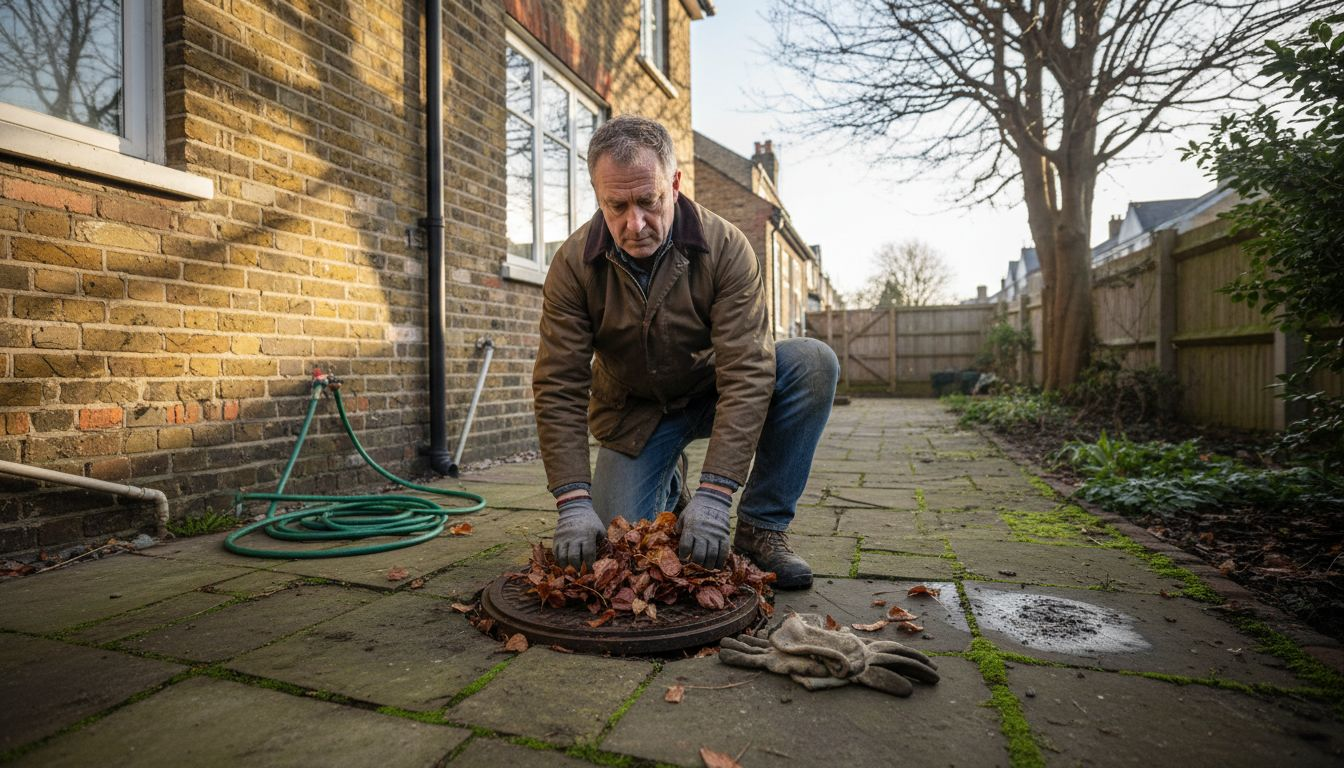
Blocked drains in North London can turn routine maintenance into an urgent headache for homeowners and property managers, risking costly repairs and disruption. Identifying issues early is vital, as statutory guidance in England stresses that timely inspections prevent flooding and protect properties from damage. This guide delivers practical steps and expert advice to help you prepare, inspect and clear your drainage safely with confidence.
Table of Contents
- Step 1: Prepare for Safe and Thorough Drain Access
- Step 2: Inspect and Identify Drainage Issues Effectively
- Step 3: Clear Blockages Using Professional Techniques
- Step 4: Test and Verify Drain Functionality Completely
Quick Summary
| Key Insight | Explanation |
|---|---|
| 1. Identify Drain Access Points | Locate and mark drain access points clearly to prepare for any maintenance or inspections effectively. |
| 2. Conduct Regular Visual Inspections | Frequently check drain access points for blockages and signs of damage to prevent costly drainage issues. |
| 3. Use Professional Blockage Clearing Methods | Employ techniques like high-pressure jetting or mechanical rodding to effectively clear persistent blockages. |
| 4. Verify Drain Functionality After Repairs | Always test your drainage system post-clearance to ensure it operates correctly before considering the job done. |
| 5. Keep Records of Drainage Maintenance | Document inspections, repairs, and test results for future reference and to help professionals understand your system’s history. |
Step 1: Prepare for Safe and Thorough Drain Access
Before you touch anything in or around your drainage system, you need to understand what you’re working with and prepare the area properly. This step prevents accidents, protects your property, and ensures professionals can access your drains safely when needed.
Start by identifying where your drains actually are. Most London homes have drains running beneath gardens, under patios, or along property boundaries. Look for inspection covers or small circular metal plates in your garden or driveway. These are your access points. Mark them clearly so you know exactly where they sit.
Next, observe your garden or property for drainage problems. Poor drainage signs include standing water, soggy patches that persist after rain, or areas where puddles form regularly. These observations tell you where water isn’t flowing properly and help pinpoint potential blockage areas.
Check your local byelaws and drainage regulations. London has specific rules about where drainage water can be discharged, and you must follow them. Contact your local council to understand any restrictions that might affect your property.
Timing matters significantly. The ideal window for drain access work in London is late summer through early winter when soil conditions are drier and more stable. Avoid attempting major drain work during heavy rainfall or when the ground is waterlogged.
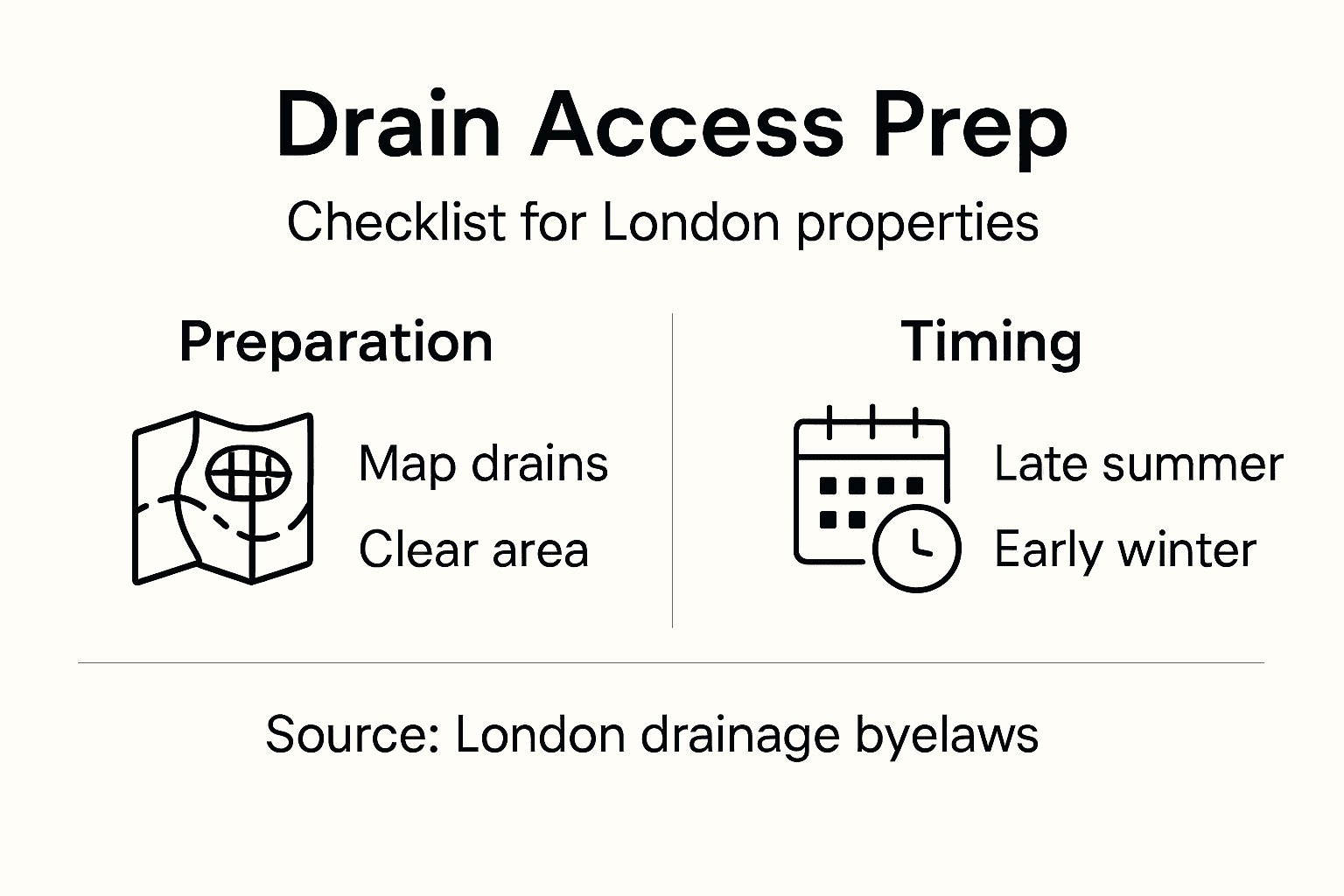
Clear the area around any drain access points. Remove garden furniture, pots, or loose items that might obstruct a drainage engineer’s work. Make sure pathways to these points are clear and safely accessible. Professionals need room to manoeuvre equipment like CCTV cameras and high-pressure water jetting tools.
Document your findings. Take photographs of drainage issues, note the locations of access covers, and record any odd smells or sounds coming from drains. This information helps professionals diagnose problems faster.
Clear access points and understanding your drainage layout transforms what could be a complicated job into a straightforward inspection and repair.
Pro tip: Keep a simple property map showing drain access points, downpipe locations, and any areas prone to standing water, so you’re always prepared if emergency drain work becomes necessary.
Step 2: Inspect and Identify Drainage Issues Effectively
Now that your drain access points are prepared, it’s time to inspect them carefully. Spotting problems early prevents costly flooding and property damage whilst keeping your drainage system compliant with regulations.
Start with a visual inspection of each access point. Carefully remove the inspection cover and look inside. You’re checking for visible blockages, sediment buildup, or obvious damage to the pipe walls. Shine a torch down to see clearly. Note any unusual odours, which can indicate decomposing matter or gas buildup inside the system.
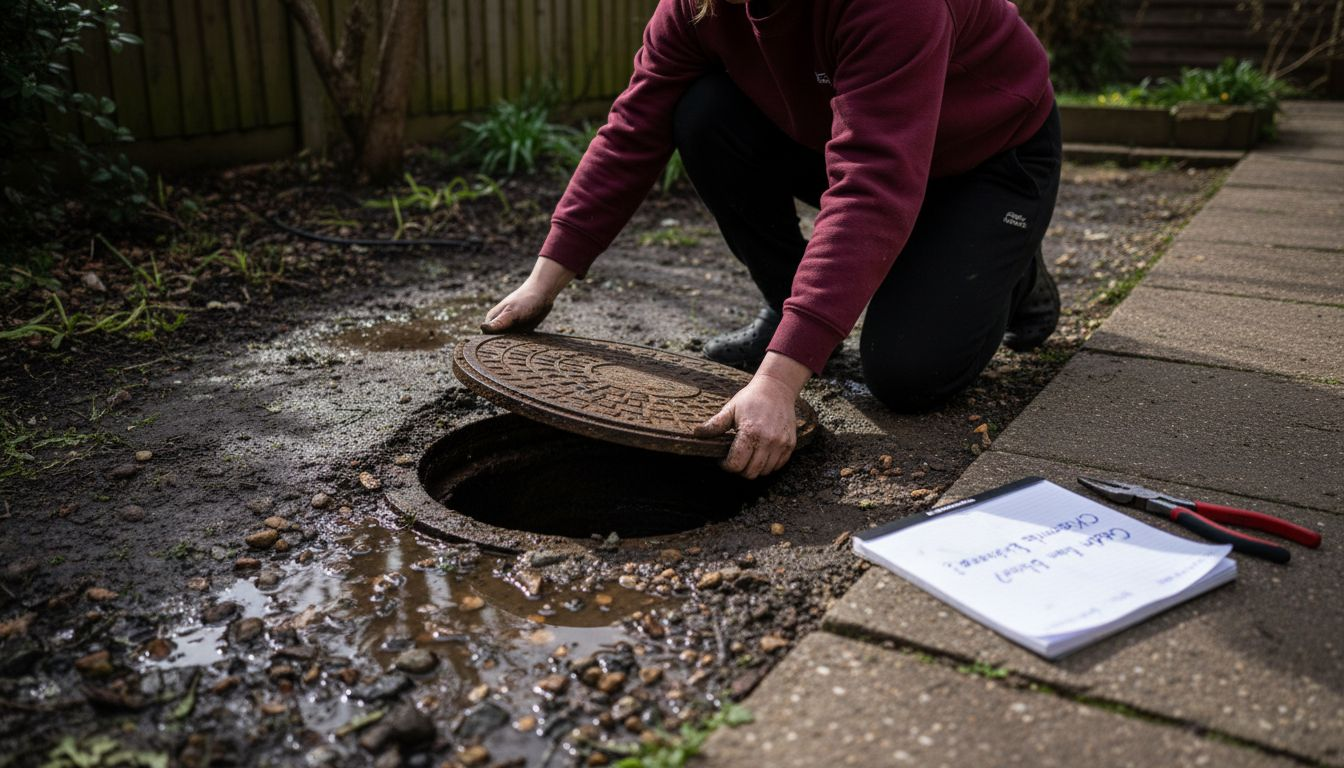
Listen for unusual sounds when water drains. Gurgling noises, slow drainage, or water backing up suggests blockages further down the line. These audio cues often signal problems before you see them visually.
Check for these common warning signs across your property:
- Water pooling in specific areas of your garden after rainfall
- Persistent dampness near foundations or underneath patios
- Foul smells coming from drains or garden areas
- Cracks in external walls or subsidence indicators
- Unusually lush patches of grass over drain routes
Statutory inspection requirements exist to ensure blockages and damage are identified early and treated before they escalate into major problems. Your inspection chambers and manholes are designed specifically to allow this access.
If you notice anything concerning, document it with photographs and notes. Record the depth of water in the chamber, any discolouration, or visible debris. This information helps drainage professionals diagnose the exact issue quickly. Different inspection methods exist, and your detailed observations guide which approach works best for your situation.
Here’s how professional drain inspection methods compare:
| Method | Ideal For | Advantages | Limitations |
|---|---|---|---|
| Visual inspection | Surface blockages | Quick and no specialist equipment | Cannot spot hidden issues |
| CCTV survey | Deep or complex blockages | Reveals internal pipe condition | Requires specialist equipment |
| Water flow testing | Post-clearance verification | Confirms drainage speed and function | May not detect minor leaks |
| Acoustic detection | Subtle blockages or leaks | Finds air gaps and leaks | Limited detail compared to CCTV |
Early identification of drainage problems saves thousands in repair costs and prevents the stress of emergency situations.
Pro tip: Inspect your drains during or immediately after heavy rainfall to see how your system behaves under pressure, revealing blockages or capacity issues that might not show during dry periods.
Step 3: Clear Blockages Using Professional Techniques
Once you’ve identified a blockage, professional clearing methods make the difference between a quick fix and recurring problems. London’s drainage systems face specific challenges from unflushables and accumulated debris that require targeted approaches.
Understand what’s causing your blockage first. Most London blockages stem from common materials like wet wipes and fats that mix together, creating stubborn obstructions. Knowing what you’re dealing with helps determine which clearing method works best.
Professional drainage engineers use several proven techniques depending on blockage type and location:
- High-pressure water jetting blasts away accumulated debris and grease buildup
- Mechanical rodding physically breaks through solid blockages
- Drain snakes navigate bends to dislodge trapped materials
- Chemical treatments dissolve certain blockage types when appropriate
Advanced detection methods now help professionals pinpoint exact blockage locations and size before beginning clearance work. This targeted approach means less guesswork and faster resolution.
High-pressure water jetting is particularly effective for North London properties. The force of pressurised water removes built-up debris whilst cleaning pipe walls thoroughly. This preventative action reduces the likelihood of blockages returning quickly after clearing.
After professional clearance, ask your drainage engineer about maintenance recommendations. Some properties benefit from regular jetting to prevent future blockages. Understanding your drain’s specific vulnerabilities helps you prevent emergency situations down the line.
The following table helps clarify maintenance recommendations after professional drain clearance:
| Property Type | Recommended Service | Frequency | Benefit |
|---|---|---|---|
| Older terraced house | High-pressure jetting | Twice per year | Prevents recurring blockages |
| Modern detached property | CCTV inspection | Annually | Identifies pipe deterioration |
| Commercial premises | Scheduled rodding | Quarterly | Minimises business disruption |
| Flats or conversions | Combined servicing | Every six months | Covers multiple drain routes |
Professional blockage clearance isn’t just about removing what’s there now; it’s about preventing the same problem recurring next month.
Pro tip: Request a post-clearance CCTV survey to confirm the blockage is completely gone and identify any underlying pipe damage that might cause future problems.
Step 4: Test and Verify Drain Functionality Completely
After clearing blockages or completing repairs, you need to verify your drainage system works properly before declaring the job finished. Testing ensures water flows correctly and your system meets building regulation standards.
Start with a simple visual test. Run water from taps and observe how quickly it drains. Watch for slow drainage, backing up, or unusual gurgling sounds. These signs indicate problems that professional testing can pinpoint.
Professional drainage engineers conduct thorough testing using standardised methods. Building regulations require specific drainage system testing protocols including airtightness checks and inspection chamber examination to confirm everything functions correctly.
Key testing procedures include:
- Running water through the system to observe flow rates and drainage speed
- Checking all inspection chambers are watertight and properly sealed
- Verifying pipe gradients allow water to flow naturally without pooling
- Inspecting for surcharging, which occurs when water rises unexpectedly in chambers
- Conducting CCTV surveys to visualise pipe condition after repairs
Listen carefully during water tests. Normal drainage should be quiet and smooth. Bubbling, gurgling, or whistling sounds suggest air entering the system or partial blockages remaining.
Check outside after running water inside. Look for damp patches, foul smells, or water seeping from unexpected areas. These indicate leaks or unresolved drainage issues requiring further investigation.
Ask your drainage engineer for a written test report documenting what was checked and the results. Keep this record with your property maintenance files. It proves your drains meet regulations and helps future professionals understand your system’s history.
Proper testing catches hidden problems now rather than causing emergencies weeks later.
Pro tip: Request a copy of the post-repair CCTV survey footage so you can see exactly what your pipes look like inside and understand any future recommendations from drainage specialists.
Keep Your London Property Safe with Expert Drain Maintenance Solutions
The challenges highlighted in the “Drain Maintenance Guide for London Homes and Properties” reveal the importance of clear access, early inspection, and professional blockage clearance to avoid costly floods and damage. Many property owners face issues such as persistent blockages, slow drainage, and unexpected foul smells that signal deeper problems requiring swift and reliable action. RSJ Drains understands these concerns and offers specialist services tailored to the unique demands of London properties. Whether you need a high-pressure water jetting solution, detailed CCTV surveys, or emergency drain clearance, our family-run team delivers prompt, professional care designed to restore and protect your drainage system.
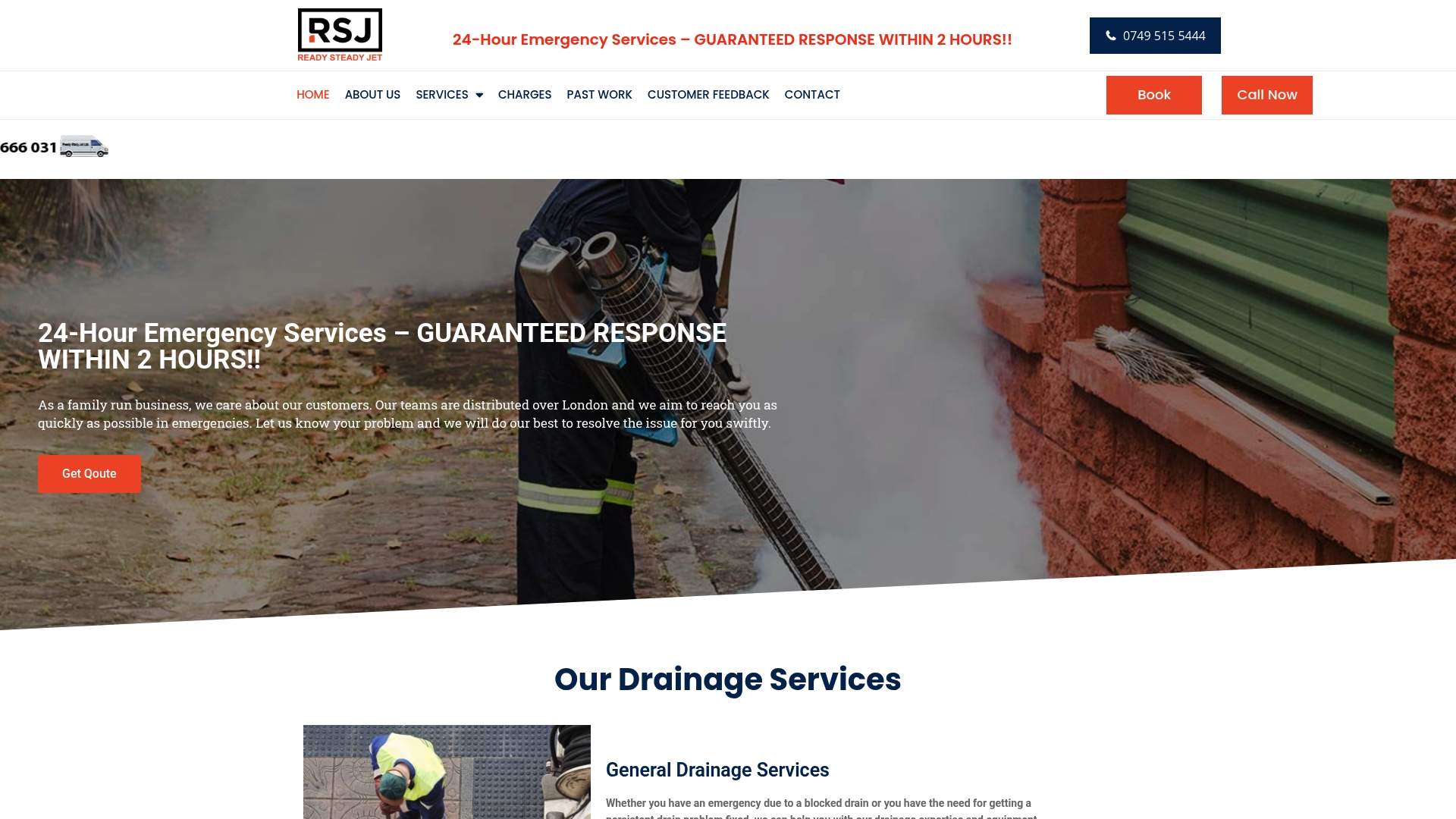
Do not wait until minor drainage issues become major emergencies. Experience the confidence of a fully inspected and expertly maintained system by choosing RSJ Drains. Visit RSJ Drains Professional Services to explore our comprehensive solutions including CCTV drainage surveys and drain inspections. Act now to secure a safer, dryer property with our 24-hour emergency response guaranteed within two hours across Greater London.
Frequently Asked Questions
How can I identify drainage problems in my London home?
To identify drainage problems, look for signs such as standing water, persistent dampness, and foul odours around your property. Observe areas where water pools after rainfall and document your findings with photographs to aid in diagnosis.
What preparation is needed before accessing drains?
Before accessing drains, mark the locations of inspection covers clearly, remove any obstructions, and ensure the area is safe and accessible for professionals. Prepare a simple map of your drain access points and any areas prone to water accumulation to assist in future maintenance.
What professional methods are used to clear blockages in drains?
Professionals typically use techniques such as high-pressure water jetting, mechanical rodding, and drain snakes to effectively clear blockages. Select the method based on the type of blockage to ensure a long-lasting solution, preventing recurrence by addressing the underlying issue.
How do I ensure my drainage system meets building regulations after repairs?
To ensure your drainage system meets building regulations after repairs, conduct thorough testing of flow rates and drainage speed. Request a written report from your drainage engineer detailing the checks performed, including the results of any CCTV surveys to confirm the system’s integrity.
What maintenance strategies can help prevent future drainage issues?
Implement preventive maintenance strategies like scheduling high-pressure jetting every six months or conducting annual CCTV inspections. Regular maintenance helps reduce the risk of blockages and keeps your drainage system functioning efficiently, potentially saving on costly repairs later on.
When is the best time to perform drainage maintenance in London?
The best time to perform drainage maintenance in London is between late summer and early winter, when the soil is drier and more stable. Schedule inspections and maintenance during this period to avoid complications associated with heavy rainfall or waterlogged ground.