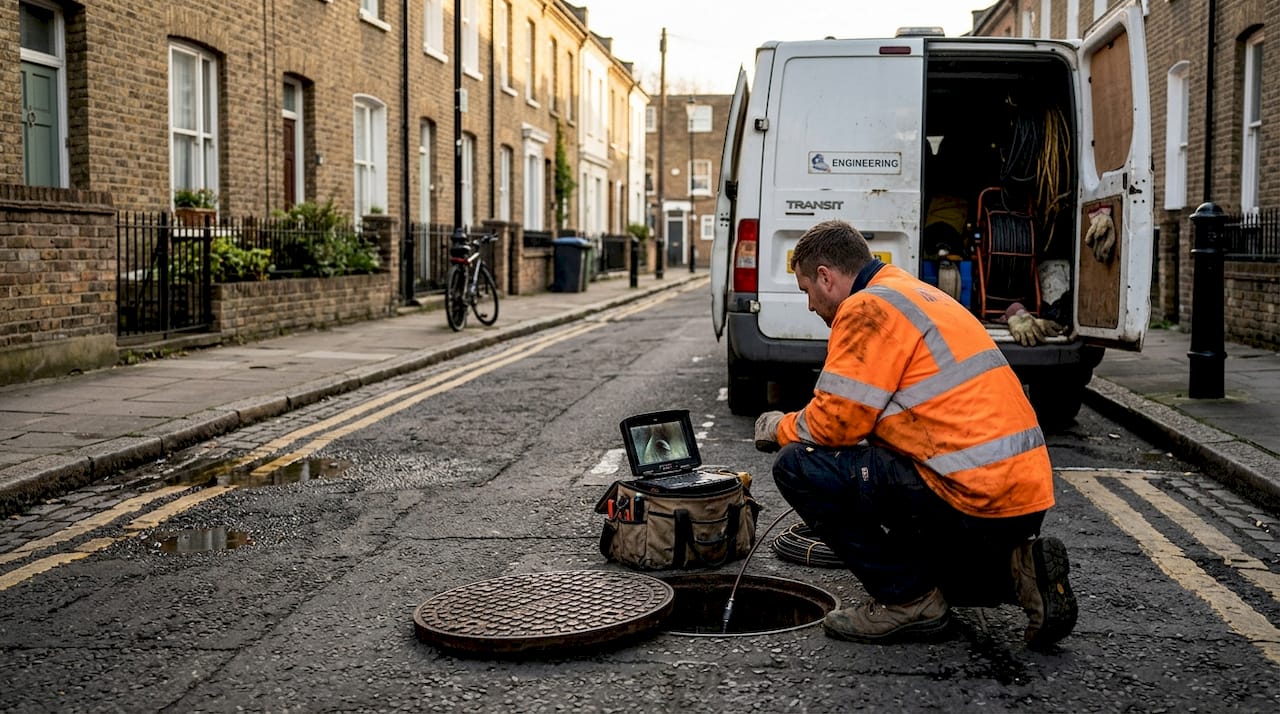
Proactive drainage maintenance cuts tenant complaints by up to 80%, yet most property owners in Greater London still treat their drains as an afterthought until something goes badly wrong. Blocked pipes, slow-draining sinks, and foul odours rarely appear without warning. The warning signs are simply ignored. For property managers juggling multiple sites across London, the cost of that inaction compounds quickly. This article explains why local drainage expertise is far more valuable than emergency call-outs alone, covering preventative strategies, the real differences between local and national providers, and how consistent professional support protects your investment over the long term.
Table of Contents
- The real risks of drainage delays in London properties
- Local drainage experts vs national firms: What property managers need to know
- Preventative measures that reduce emergencies and costs
- Consistent local expertise: The long-term value for London owners
- The truths most property owners miss about local drainage support
- Book trusted local drainage solutions in London
- Frequently asked questions
Key Takeaways
| Point | Details |
|---|---|
| Local expertise matters | Hiring drainage professionals familiar with London delivers faster, more reliable solutions. |
| Preventative care saves money | Routine maintenance and CCTV inspections cut emergencies and reduce complaints by up to 80%. |
| Long-term relationships benefit owners | Consistent support from local experts enhances property value and tenant satisfaction. |
| National firms lack local insight | Local drainage specialists understand regulations and infrastructure complexities better than nationwide providers. |
The real risks of drainage delays in London properties
London’s property landscape is unlike anywhere else in the UK. Ageing Victorian-era pipework sits beneath densely packed streets, and many residential and commercial buildings share drainage systems that were never designed for modern usage levels. When something goes wrong, the knock-on effects spread fast.
Delaying action on a drainage issue is rarely a neutral choice. A slow drain becomes a full blockage. A minor crack in a pipe allows root ingress. What could have been a straightforward jetting job turns into an excavation. The financial gap between early intervention and late-stage repair is significant, and that gap widens with every week you wait.
Property managers who rely on non-specialist tradespeople or ignore early warning signs often find themselves facing:
- Tenant complaints that escalate into formal disputes
- Water damage to flooring, walls, and foundations
- Regulatory notices from local councils regarding shared drainage responsibilities
- Emergency call-out fees that dwarf the cost of routine maintenance
- Reputational damage affecting occupancy rates
“Proactive inspections avoided costly downtime, and routine cleaning reduced emergency call-outs significantly across a Central London commercial complex.”
The solution is not simply reacting faster. It is building a relationship with professionals who understand London’s specific infrastructure. A good drainage problem checklist helps you spot early signs before they escalate, and pairing that awareness with expert support is how costly repairs prevention becomes a realistic goal rather than a hopeful one. Local experts know which postcodes have the oldest pipework, which council regulations apply to shared drains, and how to move quickly when time matters.
Local drainage experts vs national firms: What property managers need to know
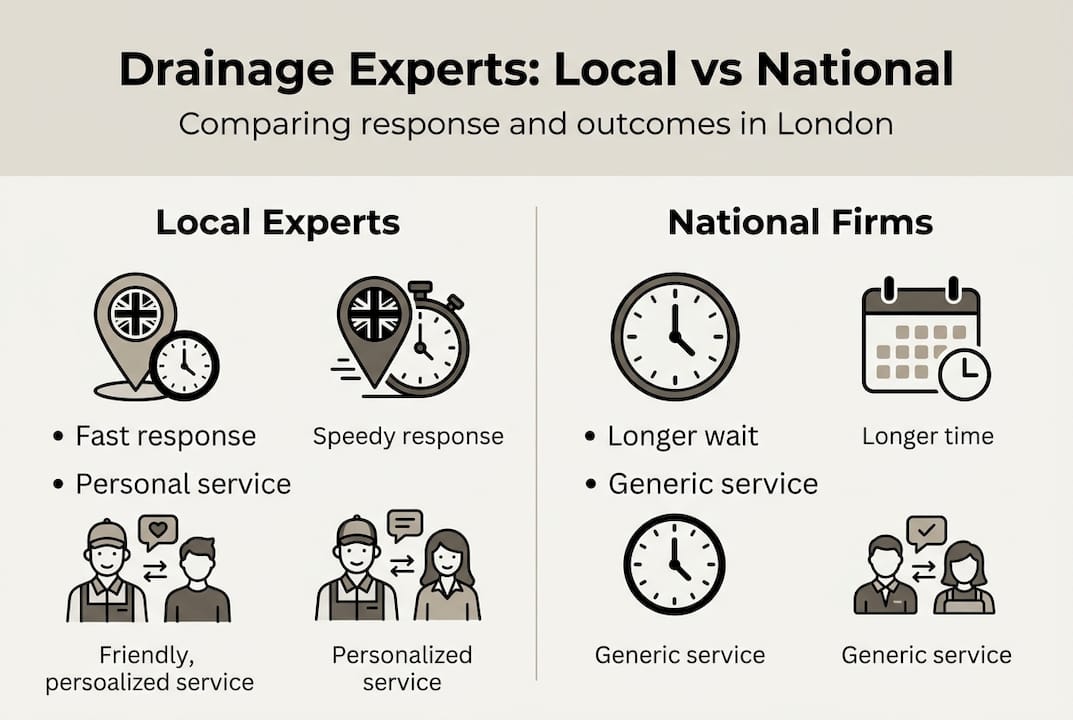
The choice between a local drainage specialist and a large national firm is not simply about price. It is about outcomes, and the differences are more significant than most property managers realise.
| Factor | Local drainage expert | National firm |
|---|---|---|
| Response time | Often same day or within hours | Typically 24 to 72 hours |
| Local knowledge | Deep familiarity with London infrastructure | Generalised approach |
| Council regulation awareness | Up to date with borough-specific rules | Variable and inconsistent |
| Relationship continuity | Same team, ongoing property history | Different operatives each visit |
| Pricing transparency | Direct and straightforward | Often tiered or call-centre managed |
National firms are not without merit for large-scale contracts, but for day-to-day property management in Greater London, the advantages of a local specialist are hard to argue against. Faster response means less disruption for tenants. Familiarity with local pipework means fewer misdiagnoses. And a long-term relationship means the engineer who arrives already knows your building.
Routine cleaning and proactive CCTV inspections result in 80% fewer tenant complaints, a figure that reflects the compounding value of consistent, expert-led maintenance rather than reactive fixes.
Pro Tip: When vetting any drainage provider, ask specifically about their experience with properties in your borough. A firm that has worked extensively in, say, Hackney or Southwark will understand the local infrastructure quirks that a national call centre simply cannot anticipate.
For a deeper look at why professional support matters for London homes, the case for local professional drainage is well established. Understanding the tools they use is equally important, and comparing drain inspection methods helps you ask the right questions before any work begins.
Preventative measures that reduce emergencies and costs
Prevention is not glamorous, but it is effective. The most successful property managers in Greater London are not the ones who respond fastest to emergencies. They are the ones who have fewer emergencies to respond to.
Local drainage experts follow a structured approach to preventative care. Here is how a typical preventative maintenance programme works:
- Initial visual inspection to identify obvious signs of wear, blockage, or damage at accessible points
- CCTV camera survey to assess the internal condition of pipes without excavation
- High-pressure water jetting to clear minor build-up before it becomes a full blockage
- Written condition report detailing findings, risk areas, and recommended actions
- Scheduled follow-up based on the property’s usage level and pipe condition
The data behind this approach is compelling:
| Maintenance approach | Average emergency call-outs per year | Tenant complaints (annual) |
|---|---|---|
| Reactive only | 6 to 9 | High |
| Annual inspection | 3 to 5 | Moderate |
| Proactive CCTV and routine cleaning | 0 to 2 | Low to none |
Proactive CCTV inspections avoided costly downtime and delivered an 80% reduction in tenant complaints for a Central London commercial complex that adopted this model. That is not a marginal improvement. It is a transformation in how the property operates.
A professional drain camera inspection gives you a real-time view of what is happening inside your pipes, removing the guesswork entirely. Reviewing drain maintenance examples shows what a well-maintained system looks like in practice, and getting drain maintenance explained in plain terms helps you plan with confidence. Booking regular CCTV drain surveys is the single most impactful step most London property owners are not yet taking.
Consistent local expertise: The long-term value for London owners
One-off fixes solve immediate problems. Long-term relationships with trusted local drainage professionals solve the underlying pattern of problems. That distinction matters enormously for property owners managing assets worth hundreds of thousands or millions of pounds.

When a local expert visits your property regularly, they build a picture of its drainage history. They notice when something has changed. They remember the repair carried out six months ago and can assess whether it is holding. That institutional knowledge is genuinely valuable and is something no national firm rotating operatives can replicate.
The long-term benefits of consistent local expertise include:
- Lower repair costs as issues are caught and resolved before they escalate
- Faster troubleshooting because the engineer already knows the property layout
- Regulatory compliance with borough-specific drainage obligations
- Improved tenant satisfaction and reduced void periods linked to maintenance complaints
- Property value protection through documented maintenance records
Ongoing preventative maintenance by local experts reduces costly downtime and tenant complaints, and the evidence from commercial properties across London supports this consistently.
Pro Tip: Build a simple log of every drainage inspection and repair carried out at your property. When you share this with your local expert at each visit, it accelerates diagnosis and helps them spot recurring patterns you might have missed.
The routine inspection benefits are measurable and well-documented, and following a structured drain maintenance guide tailored to London properties gives you a framework that works across your entire portfolio.
The truths most property owners miss about local drainage support
Here is something we see repeatedly: property owners treat drainage as a purely reactive concern. A blockage happens, they call someone, the problem is fixed, and they move on. The idea of scheduling inspections when nothing appears to be wrong feels unnecessary. It is not.
London’s drainage infrastructure has quirks that only local specialists truly understand. The depth of Victorian sewers in certain boroughs, the way certain soil types affect pipe movement, the council rules around shared drainage in converted flats. These details are not in any national firm’s training manual. They come from years of working in specific areas.
We have also seen owners prioritise the cheapest quote over the most reliable provider, only to spend far more on follow-up repairs when the initial work falls short. The true cost of drainage is not the invoice you receive today. It is the cumulative cost of every call-out, every complaint, and every repair over the next five years.
Getting drain maintenance explained by someone who knows your specific area turns reactive property management into proactive asset care. That shift in mindset is where real savings begin.
Book trusted local drainage solutions in London
If this article has shown you anything, it is that drainage expertise is not just about unblocking pipes when things go wrong. It is about protecting your property, your tenants, and your finances through consistent, informed professional support.
RSJ Drains provides trusted drainage services across Greater London, from urgent emergency call-outs to scheduled preventative maintenance programmes. Whether you need a CCTV drain survey service to assess your pipework, professional drain inspection services for a specific concern, or access to the full range of full drainage services for your portfolio, our local team is ready to help. Contact RSJ Drains today and take the first step towards fewer emergencies, lower costs, and greater peace of mind.
Frequently asked questions
How quickly can local drainage experts respond to emergencies?
Local drainage experts in Greater London often provide same-day response, with RSJ Drains guaranteeing arrival within two hours for urgent call-outs.
Do proactive CCTV drain inspections really prevent costly repairs?
Yes, regular CCTV inspections identify problems early, reducing downtime and tenant complaints by up to 80% in documented London commercial properties.
Are local drainage firms more cost-effective than national companies?
Local specialists typically deliver better value through faster response, tailored maintenance, and fewer repeat call-outs, resulting in lower overall expenditure across a property’s lifetime.
What preventative measures are recommended for London properties?
Routine cleaning, CCTV camera surveys, and scheduled visual inspections are the key preventative steps most strongly recommended for London residential and commercial properties.
How does local drainage expertise protect property value?
Consistent maintenance records, fewer emergency repairs, and compliance with local council regulations all contribute to a well-maintained property that retains its value and attracts reliable tenants.