TL;DR:
- Most London homeowners neglect proactive drain maintenance, risking costly issues.
- Regular inspections, passive prevention, and professional services help avoid emergencies and structural damage.
- Early signs like slow drains and gurgling should prompt immediate professional assessment.
Most London homeowners assume a blocked drain announces itself dramatically: water backing up, a foul smell, or a flooded kitchen. The truth is far less dramatic and far more costly. The majority of drain problems build up quietly over weeks or months, often invisible until they become a genuine emergency. Proactive residential drain maintenance is not about reacting to disaster; it is about making small, consistent choices that keep your drainage system working reliably. This guide explains what maintenance actually involves, what it costs, and how London homeowners can protect their properties before problems take hold.
Table of Contents
- Why residential drain maintenance matters
- Core methods of residential drain maintenance
- Professional drain maintenance: what experts do
- Practical drain maintenance tips for London homeowners
- What most London homeowners get wrong about drains
- Get professional help for your drains
- Frequently asked questions
Key Takeaways
| Point | Details |
|---|---|
| Preventative habits matter | Regular simple actions can prevent costly blockages or emergencies. |
| Professional tools save money | Jetting and CCTV inspections quickly resolve hidden issues before they escalate. |
| Each home is unique | London homes often face extra challenges, making tailored drain strategies essential. |
| Spot warning signs early | Slow drains and bad smells signal developing problems—address them before they grow. |
Why residential drain maintenance matters
Neglecting your drains is a bit like ignoring a slow puncture in a tyre. You can carry on for a while, but eventually you will be stranded at the worst possible moment. For London homeowners specifically, the risks are compounded by factors that do not apply in the same way to newer properties outside the capital.
Greater London has a significant proportion of Victorian and Edwardian housing stock, meaning many pipes are over a century old. These older systems were not designed for modern water usage, and they are far more susceptible to root intrusion from mature street trees, gradual corrosion, and the accumulation of fat, grease, and debris. Add to that the sheer population density of the city, and you have drainage systems working harder than almost anywhere else in the country.
As drain issues most often result from long-term build-up rather than sudden incidents, the consequences of neglect tend to be severe by the time they become visible. These consequences include:
- Persistent blockages that restrict or fully stop water flow
- Localised flooding inside or outside your property
- Structural damage to walls, floors, and foundations caused by leaking pipes
- Foul odours from stagnant water and decomposing organic matter
- Pest infestations, particularly rats, which use damaged drains as entry points
- Subsidence risk in properties where leaking pipes have eroded the ground beneath
The warning signs are usually there if you know what to look for. Slow-draining sinks, gurgling sounds from pipes, unpleasant smells near plug holes, or damp patches on walls near pipework are all signals that something is developing underground.
Take it seriously from the start. A gurgling drain is not just an annoyance; it is often the first sign of a partial blockage that will worsen. Acting at this stage is far cheaper than waiting.
A CCTV drain survey is one of the most reliable ways to understand what is actually happening inside your pipes before a minor issue becomes a major repair bill.
Core methods of residential drain maintenance
Drain maintenance is not a single action. It is a layered approach, and the most effective strategy combines everyday habits with periodic professional intervention. Understanding which method suits which situation helps you make better decisions and spend money only where it is genuinely needed.
Key methodologies include passive prevention such as strainers, hot water flushes, and baking soda and vinegar treatments, as well as active DIY approaches like plunging and snaking, and professional techniques including high-pressure water jetting, mechanical rodding, and CCTV surveys.
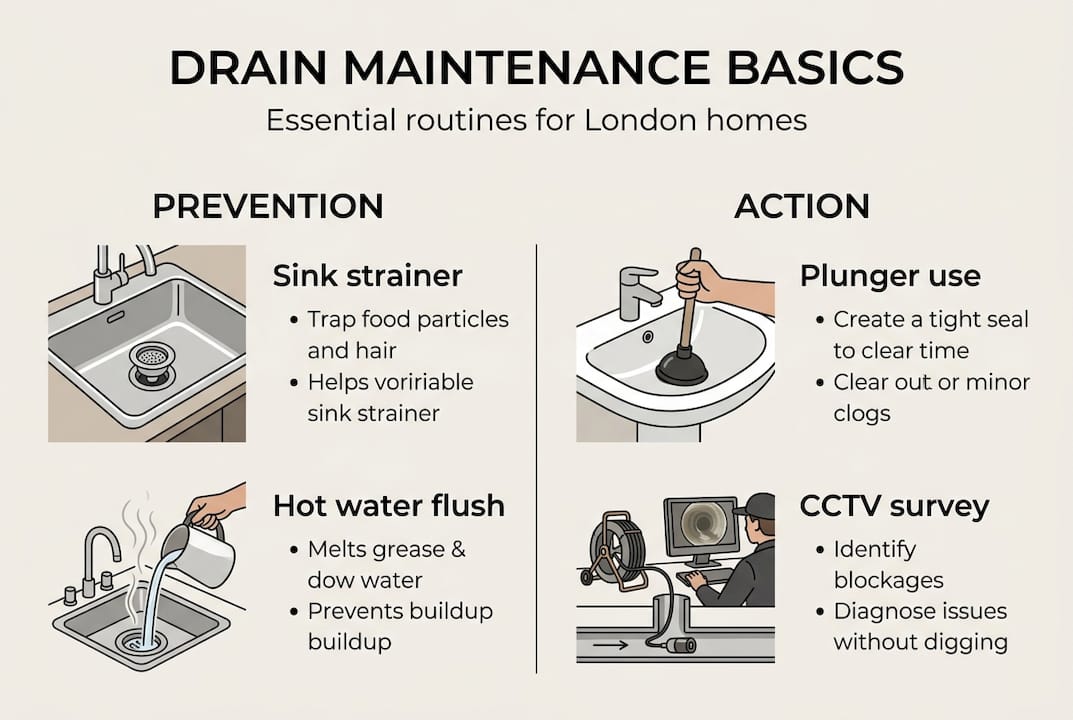
Here is a clear comparison of the main approaches:
| Method | Best for | Frequency | Cost ||
|—|—|—|—|
| Sink strainers | Preventing debris entry | Ongoing | Minimal |
| Boiling water flush | Grease and soap build-up | Weekly | Free |
| Baking soda and vinegar | Mild odours and light build-up | Monthly | Very low |
| Plunging | Soft blockages near the surface | As needed | Free |
| Drain snake | Deeper soft blockages | As needed | Low |
| High-pressure jetting | Stubborn blockages and grease | Annually or as needed | £150 to £400 |
| CCTV inspection | Hidden damage, root intrusion | Every 1 to 2 years | £150 to £350 |
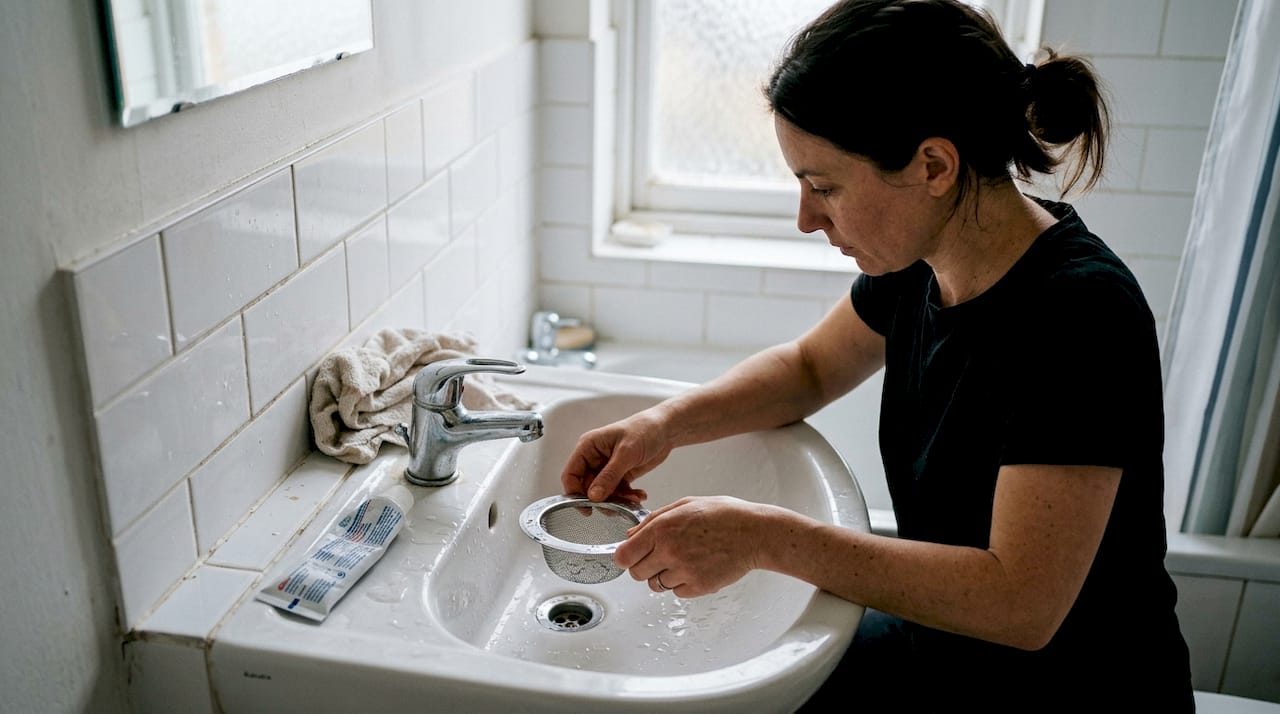
For everyday prevention, the simplest habits make a meaningful difference. Fit strainers to every sink and shower to catch hair, food particles, and debris before they enter the pipe. Flush your kitchen drain with very hot water once a week to break down grease before it solidifies. A monthly treatment of baking soda followed by white vinegar and then a hot water rinse can help keep pipes clear and odour-free without damaging older pipework.
When a blockage does occur, a plunger is your first tool. Use it with firm, consistent pressure rather than frantic movement. For blockages that do not respond to plunging, a drain snake (also called a drain auger) can reach further into the pipe and break up or retrieve the obstruction.
Pro Tip: Never use chemical drain unblockers regularly. They can corrode older pipes and often only partially clear a blockage, leaving residue that accumulates further. A professional drain inspection by CCTV survey will identify the actual cause rather than masking it.
If you are dealing with recurring blockages, persistent foul smells, or water backing up into multiple fixtures at once, that is a clear signal to call in a professional rather than attempting further DIY.
Professional drain maintenance: what experts do
Professional drain maintenance goes well beyond what any homeowner can achieve with a plunger and a bottle of white vinegar. Qualified drainage engineers have access to specialist equipment and the expertise to interpret what they find, which makes a significant difference in older London properties.
The process typically begins with a CCTV drain survey in Tottenham or whichever part of London you are in, where a small camera is fed through the pipe to produce a live video feed. This reveals cracks, root intrusion, collapsed sections, and blockage locations with precision that no other method can match. It removes the guesswork entirely.
Following the inspection, the appropriate treatment is selected. Here are the most common professional services and their typical costs in London:
| Service | Typical cost in London | What it addresses |
|---|---|---|
| CCTV drain survey | £150 to £350 | Hidden damage, blockages, root intrusion |
| High-pressure water jetting | £150 to £400 | Stubborn blockages, grease, scale build-up |
| Mechanical rodding | £80 to £145 | Soft blockages, debris removal |
| Enzyme treatments | £50 to £120 | Organic build-up, odour control |
As CCTV surveys cost £150 to £350 and high-pressure jetting ranges from £150 to £400, these are not trivial expenses. But compare them to the cost of repairing flood damage to a kitchen floor or addressing subsidence caused by a leaking drain, and the value becomes obvious.
When choosing a drainage professional in London, look for the following:
- Clear, itemised quotes provided before work begins
- Evidence of CCTV equipment and the ability to share footage with you
- Local knowledge of the drainage systems common to your area
- Verifiable reviews from other London homeowners
- Emergency availability, particularly if you have older pipework that is at higher risk
A reputable company will always recommend the least invasive solution first and explain their findings clearly, rather than pushing for unnecessary work.
Practical drain maintenance tips for London homeowners
Knowing what professionals can do is useful, but the day-to-day responsibility for keeping drains healthy sits with you. The good news is that passive prevention methods can significantly reduce the need for costly professional intervention, and most of them take very little time.
Here is a practical maintenance approach organised by frequency:
- Weekly: Flush kitchen drains with very hot water; check plug holes for debris build-up
- Monthly: Use a baking soda and vinegar treatment on all household drains; check under sinks for any signs of moisture or drips
- Seasonally: Clear leaves and debris from external drain covers, particularly in autumn; check gully drains after heavy rain
- Annually: Book a professional inspection, especially if your property is more than 30 years old or has mature trees nearby
The warning signs that demand immediate attention include:
- Drains that are consistently slow, even after basic cleaning
- Gurgling sounds from toilets or sinks when other fixtures are used
- Unpleasant smells that persist despite cleaning
- Water pooling around external drain covers
- Damp patches appearing on walls or ceilings near pipework
Pro Tip: Create a simple household maintenance calendar and add drain checks as a recurring task. It takes less than ten minutes a month and can prevent the kind of emergency that disrupts your home for days.
If you notice any of the above warning signs, booking a CCTV inspection in North London or your local area sooner rather than later is always the right call. The cost of early investigation is a fraction of what emergency repairs typically run to.
What most London homeowners get wrong about drains
After years of working on drainage systems across Greater London, one pattern stands out clearly: most homeowners only think about their drains when something goes wrong. By that point, what started as a minor build-up has often become a structural issue or a full blockage requiring significant work.
The other common mistake is assuming that if water is draining, everything is fine. A drain can be operating at 60% capacity for months before it fails completely. You would not ignore a car that was struggling to start; the same logic applies here.
London’s older housing stock makes this even more critical. Root intrusion, corroded joints, and offset pipes are common in properties built before the 1970s, and none of these issues are visible from above ground. An in-depth drain care guide will tell you what to look for, but only a camera inside the pipe will tell you what is actually there.
Small, consistent habits and an annual professional check are not excessive caution. For London homeowners, they are simply good property management.
Get professional help for your drains
If any part of this guide has prompted you to think about the state of your own drainage system, that instinct is worth acting on.
RSJ Drains provides drain inspection services across Greater London, with rapid response times and a team that understands the specific challenges of London’s older housing stock. Whether you need CCTV drain surveys to identify hidden problems or drain repairs to address damage already found, we can help. Our family-run team brings local knowledge and professional-grade equipment to every job, giving you a clear picture of your drainage system and a practical plan to keep it working reliably.
Frequently asked questions
How often should you maintain your home drains?
Residential drains should be checked and maintained at least once a year, with more frequent attention if you notice slow drainage or persistent odours. Regular checks catch blockages early, before they develop into emergencies.
What are the signs of clogged drains in a house?
The most common signs are slow-draining sinks, gurgling noises from pipes, unpleasant smells near plug holes, and water backing up into other fixtures. Early warning signs like slow flows are much cheaper to address than a full blockage.
Is professional drain maintenance worth the cost?
Yes. Professional methods cost between £80 and £400 depending on the service, but they routinely prevent damage that would cost several times more to repair, particularly in older London properties.