Most London property owners assume that a cracked or blocked drain means one thing: a team of workers tearing up the garden, lifting patio slabs, and leaving a muddy trench behind. That assumption is understandable, but it is increasingly out of date. Drain relining is a modern, no-dig repair method that is quietly transforming how homeowners and property managers across Greater London deal with damaged pipes. This guide covers exactly how relining works, the genuine benefits it offers, when it is the right choice, and when it is not.
Table of Contents
- What is drain relining and how does it work?
- Top benefits of drain relining for London properties
- When is drain relining suitable and when isn’t it?
- Real London case studies and preventive insights
- What most people get wrong about drain relining
- How to book a drain relining or survey in Greater London
- Frequently asked questions
Key Takeaways
| Point | Details |
|---|---|
| No digging required | Drain relining fixes damaged pipes without the mess or cost of excavation. |
| Fast, long-lasting results | Most relining jobs finish in a day and can outlast traditional repairs. |
| Ideal for blockages and prevention | Relining works for emergency blockages and as a preventive measure to avoid future disasters. |
| Not suitable for all pipes | Fully collapsed or severely deformed drains usually need replacement, not relining. |
| Survey first always | A CCTV drain survey is the key step in deciding if relining is the right solution for your property. |
What is drain relining and how does it work?
Drain relining uses a method called CIPP, which stands for Cured-In-Place Pipe. In simple terms, a new pipe is created inside the old, damaged one without any digging. The result is a fully restored drain that functions like new, built from within the existing structure.
Understanding how drain relining works helps you see why it has become the preferred approach for so many London properties. The process follows a clear sequence:
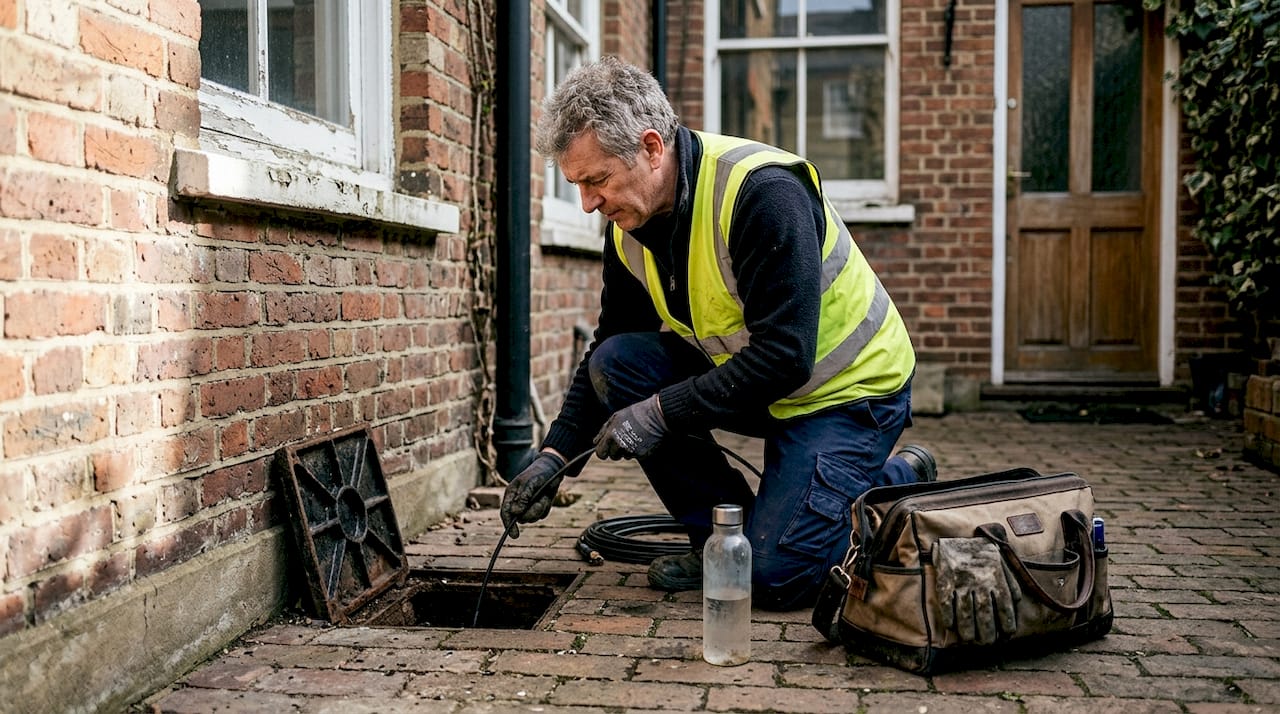
- A CCTV camera is sent through the drain to identify the exact location and nature of the damage
- High-pressure water jetting clears any blockages, grease, or debris from the pipe walls
- A resin-saturated liner is inserted and positioned precisely over the damaged section
- The liner is inflated and left to cure, hardening into a smooth, seamless new pipe surface
- A final CCTV check confirms the repair is complete and the flow is restored
The drain relining steps are typically completed within a single working day. For London’s older Victorian and Edwardian properties, where clay pipes run beneath tiled floors, extensions, and mature gardens, this approach is particularly valuable. Excavating those areas would be enormously costly and disruptive.
Relined drains routinely carry manufacturer and installer warranties of 25 to 50 years, and how relining compares to full replacement shows it is both faster and more cost-effective in the majority of cases.
Top benefits of drain relining for London properties
Understanding the process paves the way for a close look at why so many Londoners now opt for relining instead of traditional dig-and-replace solutions. The advantages are practical, measurable, and directly relevant to urban property ownership.
The drain relining benefits stack up quickly when you compare them side by side with conventional excavation repairs:
- No excavation under driveways, garden paths, tiled floors, or extensions
- Fast turnaround of four to eight hours in most cases, meaning minimal disruption to your household or tenants
- Long service life of 50 years or more, comparable to brand-new pipework
- Eco-friendly process that generates far less waste and uses fewer materials than full replacement
- Root intrusion prevention because the smooth resin surface gives tree roots nothing to grip
- Suitable for emergencies as well as planned preventive maintenance
Relining costs 30 to 50% less than full pipe replacement and typically lasts more than 50 years, making it one of the most cost-effective repairs available to property owners.
| Repair method | Average cost (London) | Disruption level | Typical lifespan |
|---|---|---|---|
| Drain relining | £800 to £2,500 | Very low | 50+ years |
| Excavation and replacement | £2,500 to £6,000+ | High | 50+ years |
| Patch repair only | £300 to £800 | Low | 5 to 15 years |
As no-dig repairs become more widely available, the cost gap between relining and replacement continues to favour relining, especially once you factor in reinstatement of surfaces like block paving or tiling.
Pro Tip: Always ask your installer for the warranty period in writing before work begins. Reputable contractors offer between 25 and 50 years on relined drains. If a company cannot provide a written guarantee, treat that as a warning sign.
Knowing why it matters for homes goes beyond cost. Relining also protects the structural integrity of your property by avoiding unnecessary ground disturbance near foundations.
When is drain relining suitable and when isn’t it?
While relining offers rapid, effective solutions, it is not the answer for every problem. Here is how to judge when it is the right choice.
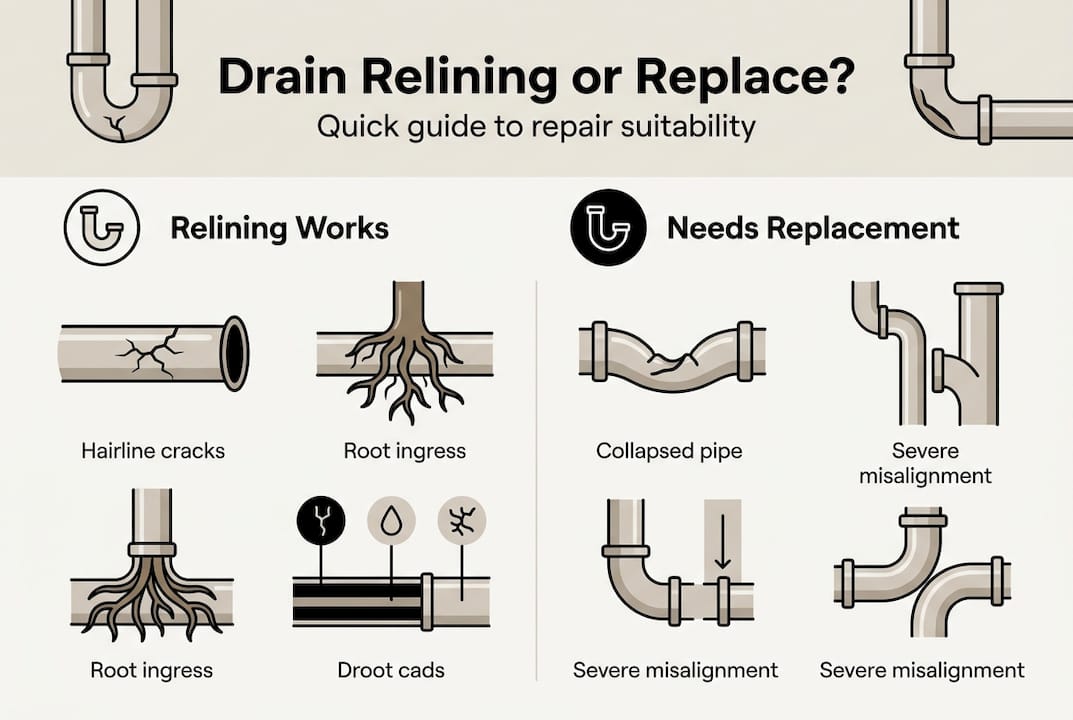
Relining works well for:
- Cracked or fractured pipes caused by ground movement or age
- Root intrusion where roots have penetrated joints but the pipe still holds its shape
- Leaking joints between pipe sections
- Minor misalignment that has not caused a full collapse
- Recurring blockages caused by rough or deteriorating pipe walls
However, collapsed or seriously misaligned pipes cannot be relined. If the pipe has lost its shape entirely, there is no structure for the liner to bond to, and replacement becomes the only viable option.
| Pipe condition | Relining suitable? |
|---|---|
| Hairline cracks | Yes |
| Root intrusion (pipe intact) | Yes |
| Leaking joints | Yes |
| Partial collapse | No |
| Full collapse | No |
| Severe misalignment | No |
| Incorrect gradient | No |
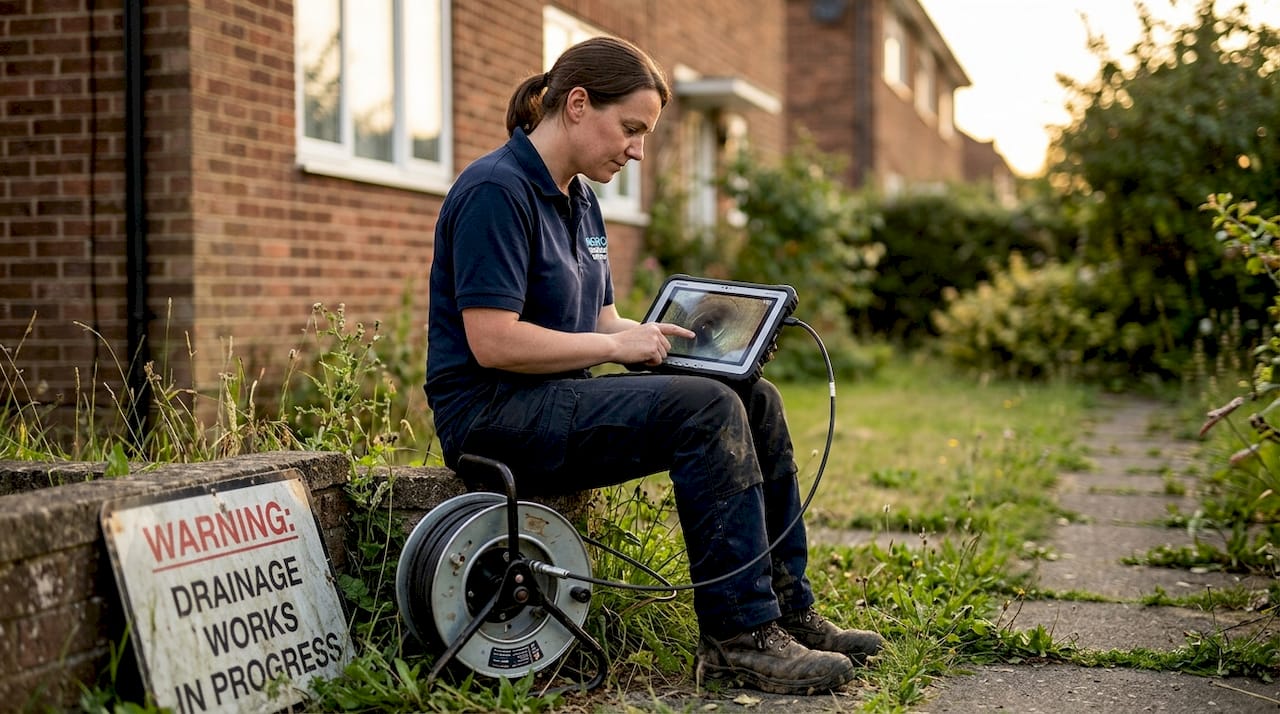
A professional CCTV survey is essential before any relining work begins. Without it, you are guessing. The survey confirms the pipe’s condition, identifies the precise fault, and rules out any structural issues that would make relining unsuitable. You can find more detail in our emergency relining guide and in our drain repair examples from real London properties.
Pro Tip: Relining is often possible even inside buildings, under extensions, or beneath concrete slabs. If a contractor tells you excavation is the only option without first conducting a CCTV survey, get a second opinion.
When diagnosing pipe issues early, relining a small crack costs a fraction of what a full collapse repair would set you back later.
Real London case studies and preventive insights
Knowing when relining is possible, it is useful to see how it is already helping properties around London and how it is used for both emergencies and planned prevention.
Case studies from across London show the range of situations where relining has delivered results:
- A Victorian terrace in Battersea had a cracked clay drain running beneath a newly fitted kitchen floor. Relining avoided a full kitchen strip-out and was completed in under six hours.
- A Wimbledon property required sliplining to restore a larger-diameter drain that had suffered significant joint deterioration over decades.
- A West London landlord managing multiple flats used relining as a preventive measure after a CCTV survey revealed early-stage cracking across several shared drains.
- A ground-floor flat in Amersham had recurring blockages traced to a rough, deteriorating pipe interior. Relining resolved the issue permanently by creating a smooth new surface.
- An underslab drain in a North London extension was relined without any floor removal, saving the homeowner an estimated £4,000 in reinstatement costs.
Prevention is where relining really earns its value. Fixing a small crack before it becomes a collapse can save thousands. Our maintenance insights explain how regular inspections combined with early relining keep drainage systems running reliably for decades. As shown in prevention in action examples, proactive relining is increasingly common among property managers who want to avoid emergency call-outs.
What most people get wrong about drain relining
Despite its popularity, relining is still clouded by myths. Let us break down what the evidence and experts actually show.
- Myth: Relined pipes do not last as long as new ones. Reality: warranties run 25 to 50 years, matching the lifespan of brand-new pipework in most cases.
- Myth: Relining blocks the pipe. Reality: There is a slight reduction in internal diameter, but professional installation keeps water flow virtually unaffected in domestic drains.
- Myth: Any damaged drain can be relined. Reality: Collapsed or severely misaligned pipes require replacement. Relining a structurally compromised pipe without proper assessment can mask deeper problems.
- Myth: Relining is a temporary fix. Reality: When installed correctly, it is a permanent repair with a long service life and a written guarantee.
Beware of any company that offers relining without first conducting a CCTV survey. That is a shortcut that can lead to a failed repair and additional costs down the line. Understanding drain lifespan explained helps you ask the right questions before committing to any repair.
Even quality relining reduces pipe diameter slightly, but flow is rarely affected and warranties can run 25 to 50 years, making it a genuinely durable solution for most residential drains.
The key takeaway is this: relining is not a workaround. It is a proven, engineered repair method that has been used successfully across London and the wider UK for many years.
How to book a drain relining or survey in Greater London
Armed with new insight, taking the first practical step should be simple and stress-free.
At RSJ Drains, we always begin with a professional CCTV survey to confirm whether relining is the right solution for your drain. There is no guesswork and no unnecessary work recommended. If relining is suitable, our team can often complete the repair the same day. If replacement is needed, we will tell you clearly and explain why.
You can read through our drain relining explained guide for a full breakdown of the process, or follow our drain relining step by step walkthrough to understand exactly what happens on the day. To get started, book a CCTV drain survey and we will assess your drain, give you an honest recommendation, and get your drainage system back to full working order with as little disruption as possible.
Frequently asked questions
How long does drain relining last?
A high-quality relined drain should last 50 years or more. Warranties typically run between 25 and 50 years, which mirrors the expected lifespan of brand-new pipework.
Can drain relining fix collapsed pipes?
No. Relining only works on pipes that still hold their shape. Collapsed or misaligned pipes require full replacement, which a CCTV survey will confirm before any work begins.
Is relining more affordable than traditional drain repairs?
Yes. Relining is 30 to 50% cheaper than full replacement, particularly because it avoids excavation and the cost of reinstating surfaces like paving or flooring.
Will relining reduce the flow of my drain?
There is a very slight reduction in pipe diameter, but flow is rarely affected in household drains when relining is carried out professionally and to the correct specification.