TL;DR:
- London’s older pipes and dense tree roots increase the risk of drain blockages.
- Daily habits like avoiding pouring grease and installing drain guards prevent common clogs.
- Regular professional inspections and maintenance are essential to avoid costly emergency repairs.
Blocked drains are one of the most common and frustrating property problems faced by London homeowners and property managers. The capital’s older housing stock, dense tree cover, and shared drainage infrastructure make blockages far more likely here than in newer developments elsewhere in the UK. The good news is that the vast majority of call-outs are entirely preventable. With the right daily habits, seasonal routines, and occasional professional support, you can keep your drains flowing freely and avoid the expense and stress of emergency repairs. This guide walks you through exactly how to do that.
Table of Contents
- Know what causes blockages: Main offenders in London drains
- Daily and weekly habits that keep drains clear
- Monthly and seasonal drain maintenance: Set-and-forget strategies
- When to call in the pros: Inspections, surveys, and specialist cleaning
- Why prevention pays off: A London drainage expert’s view
- Get expert help for your London drains
- Frequently asked questions
Key Takeaways
| Point | Details |
|---|---|
| Identify main culprits | Most drain blockages are caused by fat, oil, wipes, and hair—knowing this makes prevention easier. |
| Adopt smart routines | Quick daily and monthly habits cut the risk of emergency call-outs and expensive repairs. |
| Book an annual inspection | An annual CCTV survey or drain check can detect hidden issues before they escalate. |
| Know when to get help | Persistent or recurring blockages signal it’s time for a drainage professional. |
| Prevention is cost-effective | Consistent maintenance routines save property owners time, money, and stress in the long run. |
Know what causes blockages: Main offenders in London drains
Understanding the enemy is half the battle. Most drain blockages don’t happen overnight. They build slowly, layer by layer, until something gives. Knowing what to avoid is the single most effective step you can take.
In kitchens, fat, oil, and grease (FOG) are the primary villains. When hot cooking fat is poured down the sink, it cools and solidifies on the inside of your pipes. Over time, this coating traps food particles and soap residue, narrowing the pipe until water can barely pass through. It’s a gradual process that many homeowners don’t notice until the sink is already backing up.
In bathrooms, the usual suspects are:
- Flushed wet wipes (even those labelled “flushable”)
- Sanitary products and cotton buds
- Hair, which tangles around pipe joints and catches soap scum
- Excessive amounts of toilet paper
Outdoor drains face their own challenges. London’s mature street trees shed enormous quantities of leaves each autumn, and heavy rainfall washes silt, grit, and debris directly into gullies. If you’ve ever noticed signs of sewer line clogs such as pooling water on your patio or a gurgling sound from an outside drain, autumn leaf accumulation is often to blame.
Worth knowing: London’s Victorian-era pipes are narrower than modern standards and far more vulnerable to FOG build-up. A blockage that might take years to develop in a newer property can form in months in an older terrace or flat.
For property managers and landlords, there’s a legal dimension too. Under UK landlord legislation, landlords are responsible for structural drain maintenance. This means it’s not just good practice to educate your tenants about proper waste disposal — it’s part of your duty of care. Sharing a simple list of what not to flush or pour away costs nothing and can prevent significant damage.
Familiarising yourself with common drain maintenance tasks and actively preventing drain issues before they escalate is always the smarter route.

Daily and weekly habits that keep drains clear
Now that you know what’s clogging your drains, here’s how to stop those culprits in their tracks, every day.
Small, consistent habits make the biggest difference. None of the following take more than a few minutes, but together they dramatically reduce your risk of a blockage.
- Never pour FOG down the sink. Let cooking fat cool in the pan, then scrape it into an old container or your food waste bin. Even a small amount of grease adds up quickly.
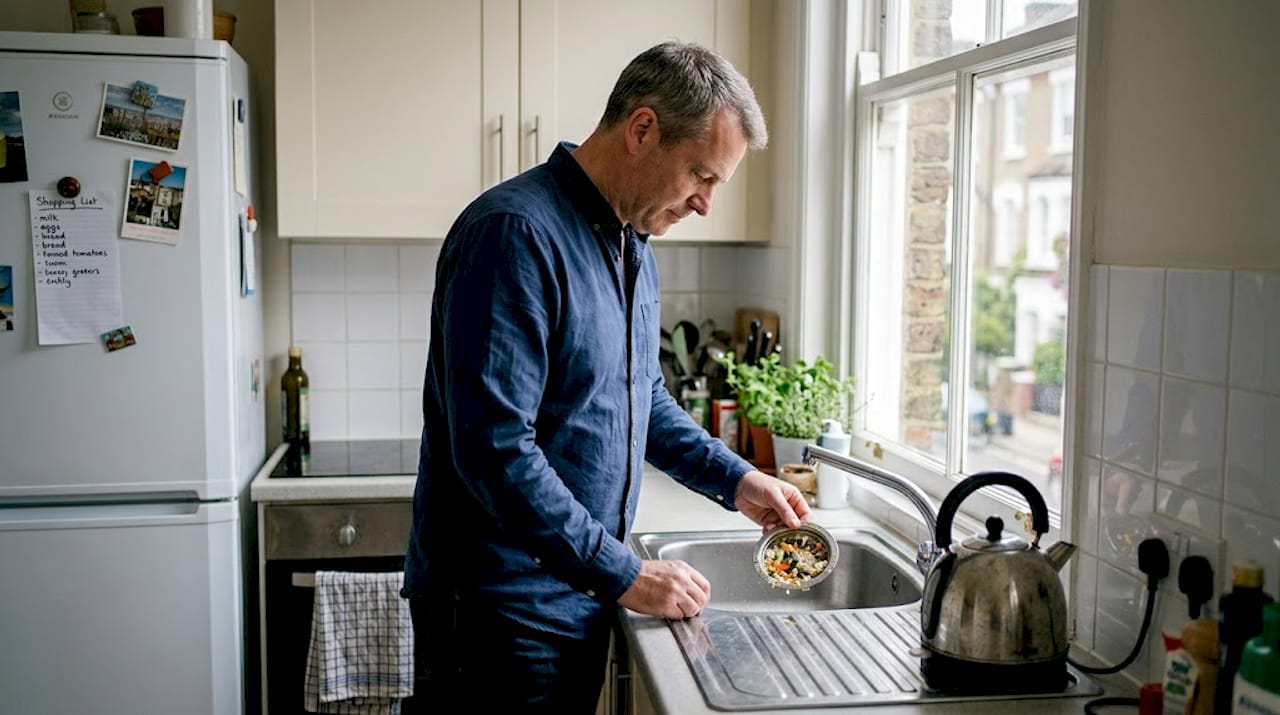
- Install drain guards in every plughole. A simple mesh filter in your kitchen sink and shower costs less than a pound and catches the debris before it enters the pipe. Empty it into the bin after each use.
- Remove hair from the plughole weekly. Hair is one of the most common causes of blockages in bathrooms. Pull it out before it works its way deeper into the system.
- Sweep patios and outdoor areas before rain. London rain is frequent, and it pushes surface debris directly into your gullies. A quick sweep takes two minutes and can prevent a soggy garden.
- Run hot water after using the kitchen sink. After washing up, run the hot tap for thirty seconds to flush residual soap and food particles further down the pipe.
- Bin it, don’t flush it. Wipes, cotton pads, and sanitary products should always go in the bin. There is no exception to this rule.
Pro Tip: For shared houses or busy families, set a recurring calendar reminder every Sunday for a two-minute plughole check. It takes less time than making a cup of tea and will save you far more than that in call-out fees.
For those managing multiple properties, pairing these habits with regular drain cleaning and clear tenant guidance on preventing drain blockages is a practical, scalable approach.
Annual professional inspections are also worth building into your calendar. CCTV surveys for early detection are especially valuable in older London properties where hidden deterioration can go unnoticed for years.
Monthly and seasonal drain maintenance: Set-and-forget strategies
Daily habits go a long way, but monthly and seasonal upkeep is your safety net, especially in London’s weather.
Think of monthly maintenance as topping up your protection. It doesn’t need to be complicated. Here are the key tasks:
- Monthly flush with vinegar and hot water. Pour half a cup of bicarbonate of soda down the drain, follow it with half a cup of white vinegar, wait fifteen minutes, then flush with boiling water. This helps break down light grease and soap build-up before it hardens. Explore more natural remedies for drains if you prefer chemical-free solutions.
- Check gutters and downpipes after autumn leaf fall. Blocked gutters overflow and can overwhelm your drainage system at ground level. Clear them in October and again in early spring.
- Inspect for slow drainage at the end of each season. Slower than usual drainage is an early warning sign. Catching it in September is far cheaper than dealing with a full blockage in January.
- Clear outdoor gullies of silt and debris. Particularly important after heavy rain or a windy spell, which are both common in London throughout the year.
Pro Tip: For shared or rented properties, draw up a simple quarterly maintenance rota and share it with all occupants. Assign specific tasks to specific people. When everyone knows their role, nothing gets missed and no one person carries the burden.
Key stat: Blocked drains account for thousands of emergency call-outs across Greater London each year, and the majority are caused by issues that routine maintenance would have caught early. Investing a few minutes each month is genuinely the most cost-effective drain strategy available.
The importance of routine cleaning cannot be overstated. Combining that with a clear schedule of essential drain maintenance ensures nothing slips through the cracks. As part of your seasonal plan, annual professional surveys are particularly beneficial for older London homes.
When to call in the pros: Inspections, surveys, and specialist cleaning
If you’ve kept up with routine care but issues still emerge, here’s when a professional touch is essential.
Some problems simply can’t be resolved with a drain guard and a kettle of hot water. Knowing when to escalate is just as important as knowing how to prevent.
Call a drainage professional when you notice:
- Recurring slow drainage that returns within days of DIY treatment
- Gurgling sounds from multiple drains simultaneously
- A persistent sewage smell indoors or in the garden
- Water backing up into a bath or shower when you flush the toilet
- Repeated DIY failures despite following best practice
These are signals that the problem is deeper in the system and requires specialist equipment. Annual professional surveys using CCTV cameras are particularly valuable for London’s older properties, where root ingress, pipe collapse, and corrosion are common but invisible to the naked eye. A CCTV drain survey gives you a precise picture of what’s happening inside your pipes before a small issue becomes a structural one.
| Task | DIY approach | Professional service |
|---|---|---|
| Minor grease build-up | Hot water and vinegar flush | High-pressure water jetting |
| Hair and debris | Drain guard and manual removal | Drain rod or jet cleaning |
| Slow drainage | Natural enzyme treatments | CCTV survey and targeted clearing |
| Root ingress | Not suitable for DIY | Specialist removal and relining |
| Collapsed pipe | Not suitable for DIY | Drain relining or excavation |
For landlords, UK law is clear: structural maintenance and repair of drainage is your responsibility, not your tenant’s. The advantages of professional cleaning go beyond convenience — they protect you legally and financially.
A note on drain relining: This is a no-dig repair method where a new lining is inserted into a damaged pipe from the inside, restoring its structure without breaking up your garden or driveway. It’s increasingly common in London where excavation is disruptive and expensive.
Why prevention pays off: A London drainage expert’s view
The standard advice about not pouring fat down the drain is correct, but it barely scratches the surface of what London homeowners actually need to know. The capital’s drainage challenges are genuinely different from the rest of the country.
London’s Victorian infrastructure, its thousands of mature trees with root systems that probe aggressively into old clay pipes, and its pattern of densely shared drainage systems mean that one household’s bad habits can affect an entire terrace. We see this constantly. A blockage that appears to be your problem often has its origins two or three doors down.
The biggest blockages we attend are never sudden events. They are the result of months of skipped basics. A drain guard not emptied. A rota not followed. A slow drain dismissed as “probably fine.” The build-up is quiet and invisible until it isn’t.
The true cost savings from maintenance are not just financial. Emergency call-outs at midnight or over Christmas are stressful in a way that a quarterly flush with bicarbonate of soda simply is not. Investing in prevention, including an annual inspection, is always cheaper in both money and peace of mind than dealing with the aftermath. We’ve never met a homeowner who regretted being proactive.
Get expert help for your London drains
If you want complete confidence your drains are in top shape, here’s how to take the next step.
Putting these habits into practice makes a real difference, but there are times when you need a professional assessment to be truly certain. RSJ Drains provides drain inspection services and CCTV surveys across Greater London, giving you a clear picture of your drainage system’s condition before problems escalate.
Whether you manage a single property or a portfolio, our team offers routine maintenance visits, high-pressure jetting, and emergency response within two hours, around the clock. Explore the full range of drainage services available and book a survey today. A small investment now protects your property from far costlier disruption down the line.
Frequently asked questions
What is the most common cause of drain blockages in London homes?
Fat, oil, and grease poured down kitchen drains are the leading cause of blockages, closely followed by wet wipes and hair in bathrooms.
How often should London property owners book drain inspections?
An annual CCTV survey is recommended for most London properties, and more frequently for older buildings or those with a history of recurring issues.
Are landlords responsible for blocked drains?
Yes. Under UK landlord legislation, landlords must maintain structural drains and are also expected to inform tenants about proper disposal habits to share the prevention load.
What should I do if a blocked drain smells or backs up suddenly?
Contact a drainage professional immediately, as sudden smells or sewage backup typically signal a deeper issue that requires specialist intervention rather than DIY remedies.
Recommended
- Preventing drain blockages: complete guide for London homes
- Top ways to prevent blocked drains in London homes
- How to spot drain blockages: A guide for London homes
- Understanding drain blockages: causes and prevention
- Drain Cleaning for Common Drain Line Issues Made Easy – Home Therapist Cooling, Heating, and Plumbing