TL;DR:
- Routine drain maintenance can prevent 90% of London drainage disasters, saving significant costs.
- Annual inspections and professional methods like CCTV surveys and jetting protect property value.
- DIY efforts are limited; underground issues require a qualified professional to avoid costly damage.
Blocked drains cause over £3 billion in annual UK property damage, yet 68% of emergency callouts are entirely preventable with routine maintenance. For London homeowners and property managers, that statistic should be alarming. The capital’s ageing pipe network, clay-heavy soils, and tree-lined streets create a perfect environment for drainage problems to develop quietly and expensively. Most people only think about their drains when something goes wrong. By then, the damage is already done. This guide will show you exactly what’s at risk, what routine maintenance actually involves, and how a small investment in prevention can save you thousands.
Table of Contents
- The real cost of neglected drainage systems
- How effective maintenance prevents disaster
- Essential maintenance methods for London drains
- DIY versus professional drainage maintenance: what’s safe for you to do?
- A London expert’s perspective: the real reason prevention pays off
- Book reliable drainage maintenance – protect your property today
- Frequently asked questions
Key Takeaways
| Point | Details |
|---|---|
| Prevent costly emergencies | Routine maintenance cuts the risk of expensive drainage disasters by up to 90%. |
| Save thousands in repairs | Preventative checks cost a fraction of emergency repairs, saving up to £4,000 or more. |
| Protect property value | Well-maintained drains prevent water damage and safeguard your home’s worth. |
| DIY is limited | Basic cleaning is safe, but London’s underground pipework needs expert care. |
The real cost of neglected drainage systems
When drainage is ignored, the financial consequences can be severe. Many London property owners are surprised to learn that repair costs for unmaintained drains can reach £4,000 or more for a single collapsed pipe. That figure doesn’t include secondary damage to foundations, flooring, or gardens. Emergency callouts also carry premium rates, often charged at nights or weekends when problems tend to surface.
Here’s a quick comparison of planned maintenance versus emergency repair costs:
| Service | Planned maintenance | Emergency repair |
|---|---|---|
| CCTV drain survey | £150–£350 | £300–£600+ |
| High-pressure jetting | £100–£300 | £250–£500+ |
| Collapsed drain repair | N/A (prevented) | £1,000–£4,000+ |
| Root cutting | £200–£400 | £500–£1,500+ |
The numbers speak clearly. Planned work costs a fraction of reactive fixes. And the £3 billion in annual damage caused by blocked drains across the UK is a figure that reflects real losses in real homes, many of them in Greater London.
Beyond the direct repair bill, neglected drainage creates a cascade of indirect costs that property owners rarely factor in:
- Tenant complaints and potential rental voids
- Insurance claim complications or premium increases
- Structural damage to walls, floors, and garden areas
- Pest infestations entering through cracked pipes
- Legal liability if shared drainage affects neighbouring properties
Property value is also at stake. Surveyors routinely flag drainage issues during valuations, and mortgage lenders can refuse applications where drainage defects are identified. Understanding the common causes of blockages is the first step towards avoiding these scenarios. Taking steps to prevent blocked drains in London homes protects both your finances and your property’s long-term value.
How effective maintenance prevents disaster
Prevention is not just cheaper than emergency response. It’s also far less disruptive. An annual inspection takes a few hours and causes minimal inconvenience. A collapsed drain beneath a driveway can mean days of excavation, temporary loss of access, and weeks of repair work.
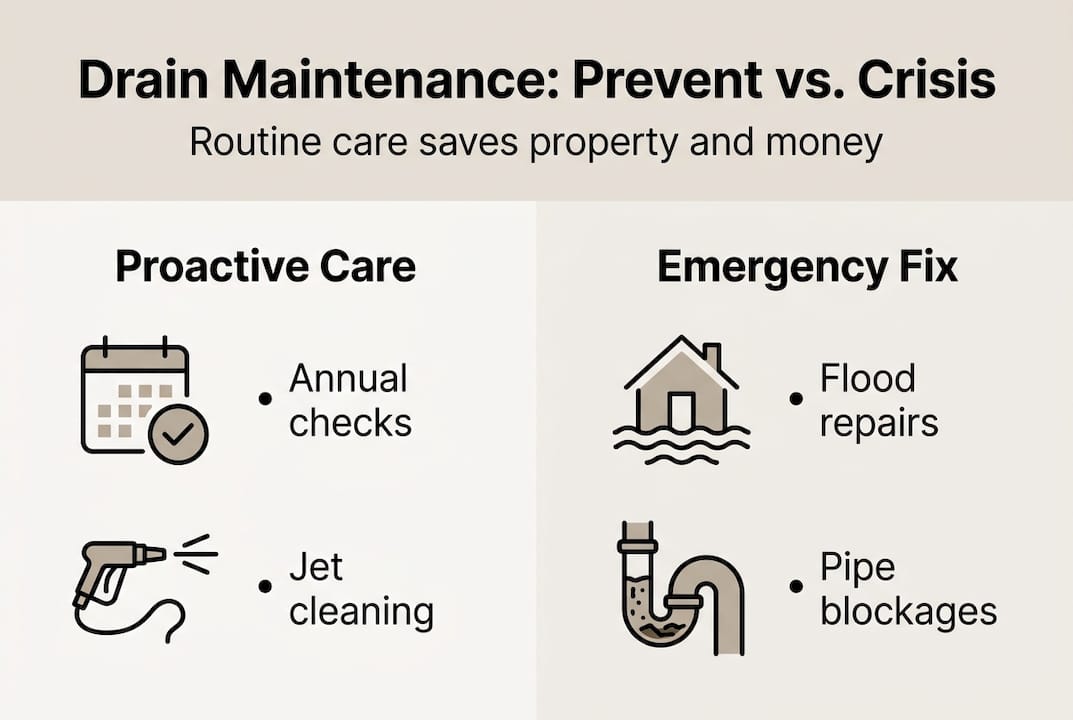
Scheduled CCTV and jetting prevent 9 out of 10 drainage disasters, making them dramatically more cost-effective than waiting for a crisis. Here are the core routine methods every London property should rely on:
- Annual CCTV drain survey to identify cracks, root intrusion, and build-up before they worsen
- High-pressure water jetting to clear grease, silt, and debris from pipe walls
- Surface and gully checks to spot early signs of blockage or collapse
- Root cutting for properties near trees, which is especially relevant in London’s leafy boroughs
- Drain relining assessment to evaluate whether ageing pipes need structural reinforcement
Annual inspections are recommended as best practice, with CCTV surveys and jetting forming the backbone of any sound maintenance programme. Following a solid drain maintenance checklist helps property owners stay on top of each of these steps throughout the year.
Here’s how proactive maintenance compares to reactive fixes across key factors:
| Factor | Proactive maintenance | Reactive emergency fix |
|---|---|---|
| Average cost | £150–£500 per year | £500–£4,000+ per incident |
| Disruption | Minimal, planned | High, unplanned |
| Risk of further damage | Low | High |
| Impact on property value | Positive | Negative |
Pro Tip: London’s drainage network is one of the most complex in the world, with Victorian-era infrastructure still in active use beneath many streets and gardens. DIY methods simply cannot account for what lies underground. Always use a qualified professional who understands the local network. A good drain maintenance guide tailored to London properties will always recommend professional involvement for anything beyond surface-level checks.
Essential maintenance methods for London drains
London’s drainage systems present unique challenges. Many properties, particularly in inner boroughs, sit above Victorian clay pipes that are over 100 years old. Tree roots from London’s extensive street planting regularly invade pipe joints. Grease from dense urban living accumulates faster than in rural areas. Each of these factors demands a specific maintenance approach.
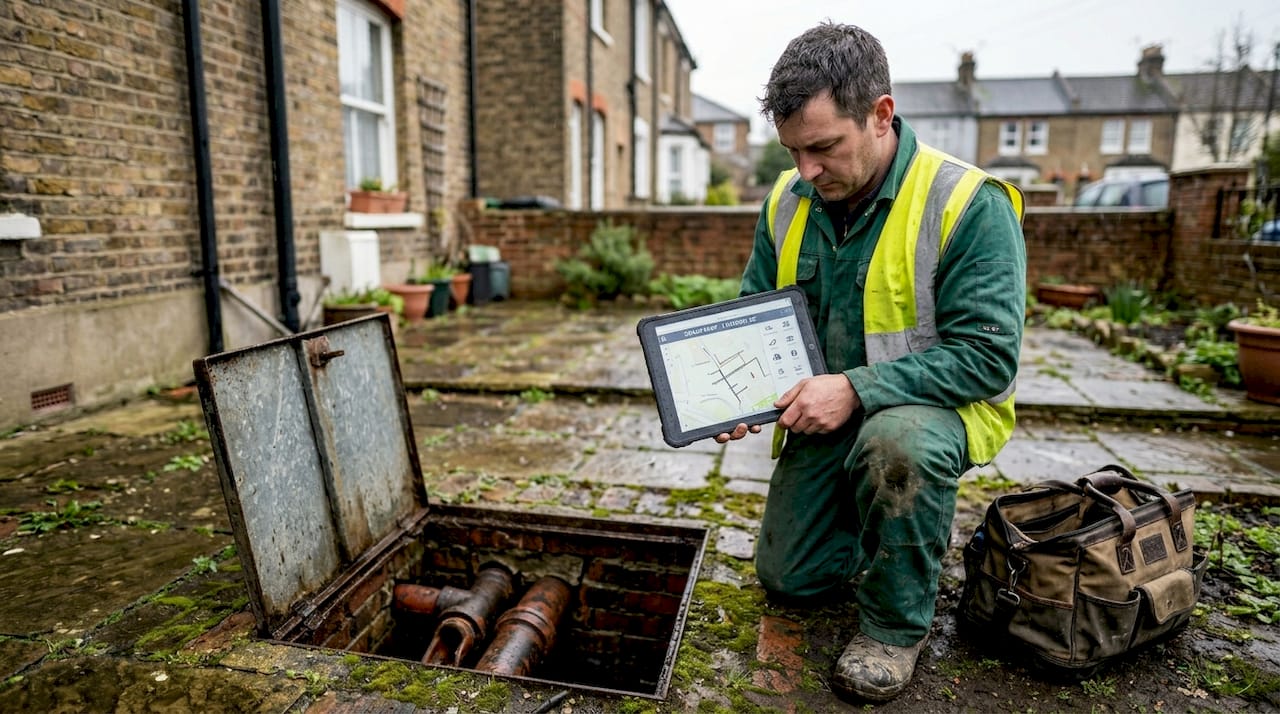
CCTV drain surveys involve inserting a small camera into the drain to produce a live video feed of the pipe’s interior. CCTV surveys detect issues early, while jetting removes debris and grease, and root cutting is essential for tree-lined streets. You can learn more about how these approaches differ by reviewing drain inspection methods in detail.
High-pressure water jetting uses a powerful water stream to blast through accumulated grease, scale, and debris. It’s safe for most pipe materials when operated correctly and is far more effective than any chemical product on the market.
Root cutting uses rotating mechanical cutters fed through the pipe to sever tree roots that have penetrated joints or cracks. In areas like Hampstead, Islington, or Richmond, this is not an occasional service. It’s a regular necessity. A drain camera survey will confirm whether root intrusion is present before cutting begins.
Signs that you need a professional maintenance check right away:
- Water draining slowly in sinks, baths, or toilets
- Gurgling sounds from pipes after water use
- Unpleasant smells from drains or manholes
- Damp patches appearing on walls or ceilings near pipes
- Visible subsidence or soft ground near drainage runs
London’s older clay pipe systems are particularly vulnerable to root intrusion and ground movement. A professional CCTV drain survey is the only reliable way to assess what’s happening underground without unnecessary excavation.
Pro Tip: Never pour chemical drain cleaners into an underground drainage system. They may partially dissolve a surface blockage, but they cannot address root intrusion, pipe collapse, or structural build-up. Worse, they can corrode older pipe materials and create a bigger problem than the one you started with.
DIY versus professional drainage maintenance: what’s safe for you to do?
There is a clear boundary between what homeowners can safely manage and what requires professional expertise. Knowing where that line sits can save you both money and serious damage.
DIY is limited to surface checks and flushing with water. Professionals are essential for underground or persistent issues. Here are the tasks you can safely carry out yourself:
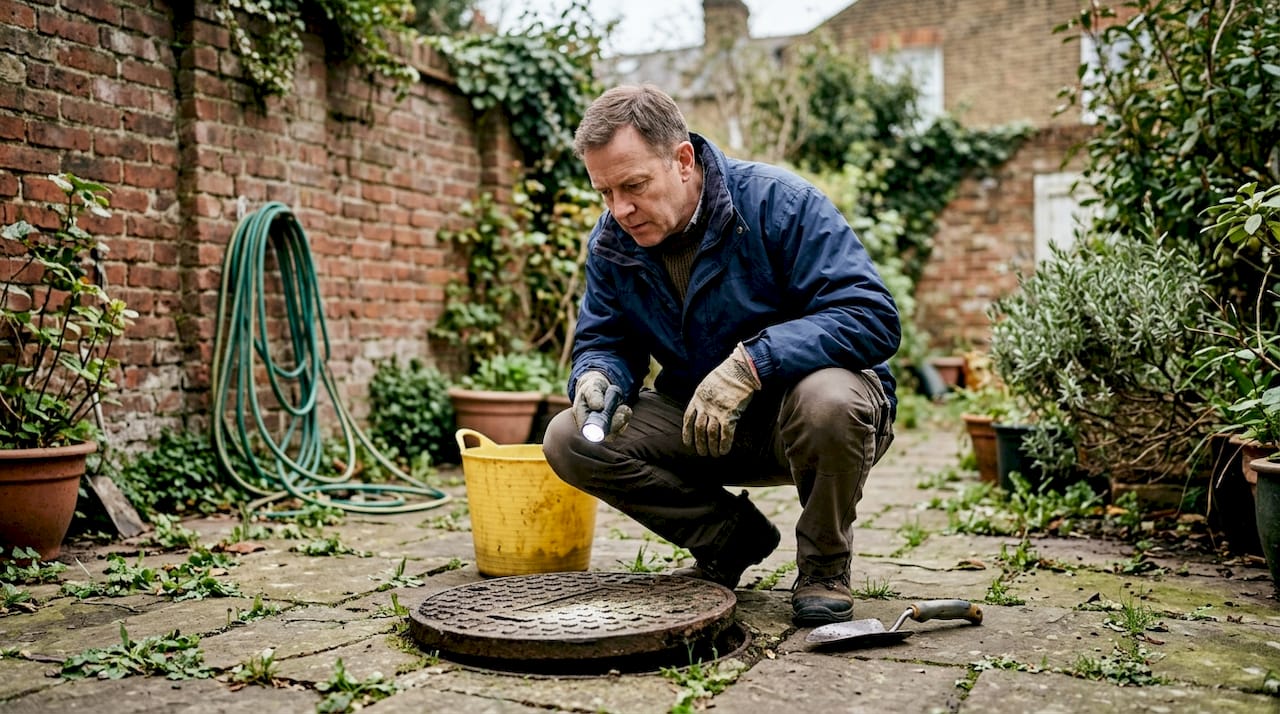
- Flush outdoor gullies with a garden hose to clear surface debris and leaf matter
- Remove visible blockages from gully grids and surface drain covers
- Run hot water through kitchen sinks weekly to reduce minor grease build-up
- Check visible pipework under sinks for leaks or slow drainage
- Keep records of any changes in drainage performance to share with a professional
Minor grease build-up can be managed by flushing with hot water, but you should avoid using chemicals or drain rods for anything involving roots or underground pipe faults. Understanding the types of drain maintenance every London property needs helps you decide what’s within your scope and what isn’t.
Warning signs that require a professional immediately:
- Recurring blockages that keep returning within weeks
- Foul odours that persist even after surface cleaning
- Multiple fixtures draining slowly at the same time
- Water backing up into baths or toilets
- Any sign of ground movement near drainage runs
Attempting to rod or jet underground drains without professional training risks pushing blockages deeper, damaging pipe joints, or missing the root cause entirely. In London’s older properties, amateur intervention frequently turns a £200 maintenance job into a £2,000 repair.
The safest rule is simple: surface-level maintenance is yours to manage. Anything underground belongs to a qualified drainage professional.
A London expert’s perspective: the real reason prevention pays off
After years of working across Greater London, one pattern stands out above all others. The properties that end up with the most expensive drainage problems are almost never the ones with the oldest pipes or the worst ground conditions. They’re the ones where the owner delayed a routine check for just one more year.
A small crack in a clay pipe beneath a Victorian terrace in Hackney or Lewisham will not fix itself. It will slowly allow root ingress, then soil movement, then partial collapse. What would have cost £250 to identify and reline becomes a £3,500 excavation job. We see this regularly.
The uncomfortable truth is that many London property owners treat drainage as invisible infrastructure. Out of sight, out of mind. But the full drain maintenance guide for London properties makes one thing very clear: annual professional checks are not a luxury. They are the cheapest insurance you can buy for a property sitting above a century-old pipe network.
Local knowledge matters enormously here. A drainage professional who works regularly in your borough understands the specific soil conditions, tree species, and pipe ages in your area. That context shapes every recommendation they make.
Book reliable drainage maintenance – protect your property today
Ready to safeguard your property and avoid expensive callouts? Acting now costs far less than waiting for a crisis to force your hand.
RSJ Drains provides professional London drainage services across Greater London, from routine annual inspections to urgent repairs. Whether you need to book a CCTV drain survey to see exactly what’s happening underground, or you’re looking for thorough high pressure water jetting to clear years of build-up, our experienced team is ready to help. We respond within two hours for emergencies and cover the full Greater London area. Don’t wait for a blocked or collapsed drain to disrupt your property. Get in touch today and let us protect what matters.
Frequently asked questions
How often should I have my drains professionally inspected?
London drains should be professionally inspected at least once a year, or sooner if you notice warning signs such as slow drainage, gurgling sounds, or persistent odours.
What is the average cost difference between emergency drain repair and routine maintenance?
Emergency repairs cost £1,000–£4,000+ for serious faults, while routine CCTV surveys cost £150–£350, making prevention significantly cheaper than reactive fixes.
Is it safe to use chemical drain cleaners on blockages?
Chemical drain cleaners are not recommended for underground drainage problems. They can corrode older pipes and worsen issues caused by roots, making professional assessment the far safer option.
What signs suggest I need a professional drainage service?
Recurring blockages, bad smells, slow emptying, or water backing up are all clear signals, particularly in older London properties where pipe condition is harder to assess without a camera.
Can regular drain maintenance improve my property value?
Yes. Preventing water damage and structural issues through routine maintenance helps retain and protect property value, and avoids the negative flags that drainage defects raise during surveys and mortgage applications.