TL;DR:
- From April 2026, SuDS become mandatory for new developments in England, signaling rapid changes in drainage standards. Property managers must adopt digital tools, sustainable materials, and proactive maintenance strategies to stay compliant and avoid costly failures. Investing in smart diagnostics and durable materials ensures long-term asset protection and operational efficiency, ahead of evolving regulations.
From April 2026, Sustainable Drainage Systems (SuDS) became mandatory for new developments across England, and the global SuDS market is already valued at USD 4.97 billion this year, driven by urbanisation, climate risk, and new regulation. For property owners and managers in Greater London, that is not a distant policy headline. It is a direct signal that drainage requirements, costs, and service standards are shifting faster than most realise. This article breaks down the biggest trends reshaping drainage services in 2026, from smart technology and material choices to realistic cost benchmarks, so you can manage compliance, protect asset value, and stay well ahead of expensive surprises.
Table of Contents
- Why 2026 is a turning point for drainage services
- Smart technologies: How digital tools transform service reliability
- Cost trends and what to budget for in 2026
- Materials and methods: Sustainable choices for longevity
- Preparing your property: Practical steps to stay ahead
- Why future-proofing drainage means more than ticking the compliance box
- Stay ahead with trusted drainage experts
- Frequently asked questions
Key Takeaways
| Point | Details |
|---|---|
| SuDS compliance essential | Sustainable Drainage Systems are required for new London projects, making early planning vital. |
| Digital tools cut cost and downtime | AI, IoT, and CCTV tech reduce emergencies and improve service reliability in 2026. |
| Modern materials extend system life | Vitrified clay offers unmatched longevity and life-cycle savings over thermoplastics. |
| Budget for rising service prices | Expect higher costs for emergency callouts—plan scheduled maintenance to save money. |
| Proactive steps protect property | Stay ahead by integrating compliance, smart tech, and scheduled checks in property management. |
Why 2026 is a turning point for drainage services
Several forces have converged this year to make drainage a genuine strategic concern rather than a reactive maintenance task. Understanding them gives you a clearer picture of why acting now costs far less than acting later.
The SuDS mandate is the most visible change. Mandatory for new developments from 2026, SuDS requirements mean that any significant construction or redevelopment in London must now incorporate permeable surfaces, attenuation tanks, swales, or similar solutions. If you are managing a development project or planning refurbishments that touch the drainage system, you need to factor this into your planning submissions and contractor briefs from day one. Missing this step risks planning rejections and costly retrofits.
The infrastructure challenge compounds the problem. UK infrastructure investment needs to double to address deterioration, with local road and drainage backlogs alone estimated at £14 billion. Much of London’s drainage network dates back to Victorian-era construction, and that ageing infrastructure is showing its age in increasingly frequent blockages, collapses, and infiltration failures. Property managers who inherit older stock are especially exposed.
The triggers most commonly driving urgent drainage failures today include:
- Urbanisation: More impermeable surfaces mean more surface water overloading older sewer systems.
- Climate change: Heavier, more intense rainfall events push drainage systems beyond their design capacity.
- Neglected maintenance: Routine inspections are deferred, small defects grow into structural failures.
- Root ingress and grease build-up: Particularly common in residential and food-service properties across inner London.
Understanding drainage compliance in London is no longer optional background knowledge. It is a practical operational requirement for anyone responsible for a London property.
Smart technologies: How digital tools transform service reliability
Beyond regulation, technology is setting a new baseline for what good drainage service looks like. The change is tangible and measurable.
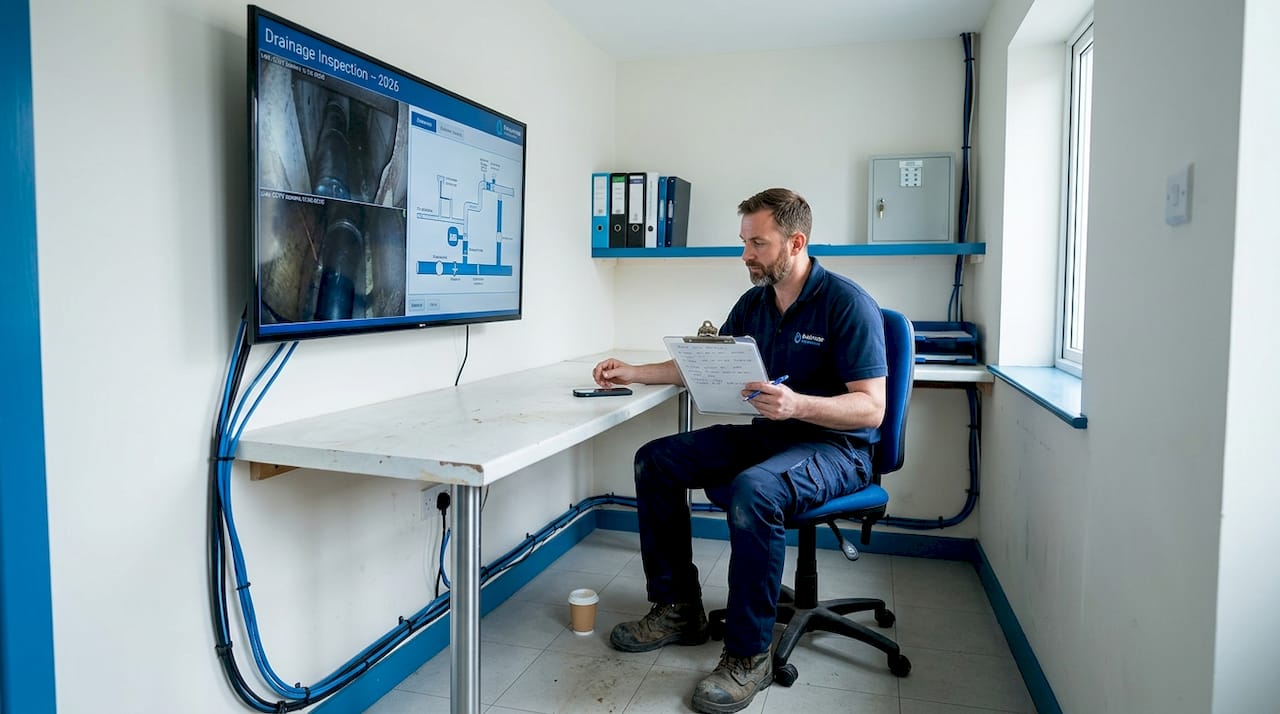
CCTV drainage surveys are the most significant diagnostic advancement available to London property owners right now. A high-definition camera is passed through your drainage system, transmitting real-time footage of internal conditions. Engineers can identify hairline cracks, root intrusion, joint displacement, and grease accumulation before any of these become structural failures. For properties with older pipework, this kind of survey is arguably the most cost-effective inspection you can commission.
The integration of digital tools into drainage services, including IoT sensors, AI-powered analytics, and remote monitoring platforms, is enabling a genuinely predictive approach to maintenance. Instead of waiting for a blocked drain to cause flooding or a slow drain to escalate into a sewage backup, sensors can flag abnormal flow rates or pressure changes before a problem surfaces. That shift from reactive to proactive is where property managers save the most money.
| Technology | Primary benefit | Typical use case |
|---|---|---|
| CCTV surveys | Precise defect location | Pre-purchase inspections, fault diagnosis |
| IoT flow sensors | Real-time anomaly detection | Commercial and multi-unit buildings |
| AI analytics | Predictive failure modelling | Portfolio-level maintenance planning |
| High-pressure jetting | Non-invasive deep cleaning | Blockages, grease removal, scale build-up |
Pro Tip: If you manage multiple properties across London, schedule CCTV surveys on a rolling annual basis rather than waiting for problems to appear. You will spend less per property and face far fewer emergency call-outs.
Sewer scope inspections have become a standard part of property due diligence in progressive markets, and London is rapidly following suit. Knowing how to handle responding to drainage issues quickly remains critical, but the goal should always be early detection through digital inspection rather than crisis management after the fact.
The practical benefits of digital-enabled drainage services include faster fault resolution, more accurate repair scoping (so you are not paying for guesswork), and a documented maintenance record that supports asset valuations and insurance claims.
Cost trends and what to budget for in 2026
Understanding what services actually cost in London this year removes one of the biggest sources of anxiety for property managers. Here is a realistic picture.
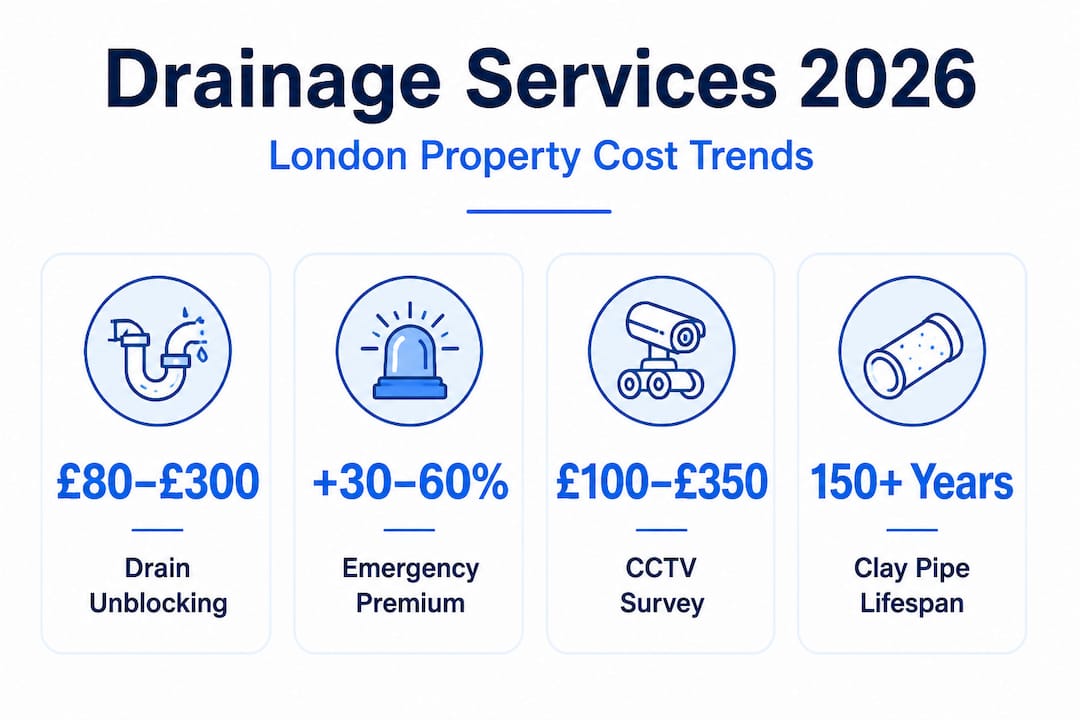
London service benchmarks for 2026:
| Service | Standard cost range | Emergency premium |
|---|---|---|
| Drain unblocking | £80 to £300 | +30 to 60% |
| High-pressure jetting | £150 to £400 | +30 to 60% |
| CCTV drain survey | £100 to £350 | Higher for complex sites |
| Drain relining (per metre) | £80 to £150/m | Varies by access |
| Excavation (per metre) | £150 to £500/m | Significantly higher |
These cost benchmarks for London reflect the genuine range you should expect to encounter in 2026. The emergency premium of 30 to 60% above standard rates is the figure most property managers underestimate. A drain unblocking job that costs £150 during business hours becomes £240 at 10pm on a Sunday. That premium adds up sharply for portfolios with reactive-only maintenance strategies.
The right approach to budgeting follows a clear hierarchy:
- Prioritise preventative spending first. An annual CCTV survey at £150 to £350 is far cheaper than the excavation costs it can prevent.
- Build an emergency reserve into your maintenance budget. A minimum of 20% contingency above your planned spend accounts for unplanned call-outs without breaking your budget.
- Compare quotes based on scope, not just price. A cheaper quote that does not include jetting before relining, or that skips a post-repair CCTV check, is likely to cost more in repeat visits.
Saving money on drain services is less about finding the lowest quote and more about eliminating the conditions that lead to expensive emergencies. Regular jetting, annual inspections, and prompt repairs are consistently the most cost-effective strategy over a three to five year cycle.
A useful comparison from across the drainage system cost landscape confirms that proactive maintenance investment routinely delivers a return of two to four times its cost in avoided emergency repairs and structural interventions.
Pro Tip: Ask your drainage contractor to provide a post-survey report with condition grading. This gives you a documented baseline to justify maintenance budget requests to landlords or management boards, and it protects you professionally if a failure is later attributed to negligence.
Materials and methods: Sustainable choices for longevity
Cost and technology only tell part of the story. The materials used in your drainage system have a profound effect on long-term performance, sustainability credentials, and lifecycle costs.

Vitrified clay pipes are experiencing a genuine revival, and with good reason. These pipes offer a service life exceeding 150 years, outstanding chemical resistance to the full range of household and commercial effluents, and full recyclability at end of life. Life-cycle cost savings compared to thermoplastic alternatives can reach 65% over a 40-plus year period. For any property where you are planning drainage upgrades, that is a figure worth examining carefully.
The main materials in current use compare as follows:
- Vitrified clay: 150-plus year lifespan, chemically inert, recyclable, higher upfront cost but lowest lifecycle cost.
- uPVC and thermoplastics: Lower upfront cost, faster installation, but more susceptible to ground movement, root intrusion, and chemical attack over time.
- Resin lining (CIPP): Excellent for in-situ rehabilitation of existing pipes without excavation, extends pipe life by 50-plus years, minimal disruption.
- GRP (glass-reinforced plastic): Used for large-diameter commercial drainage, good structural performance, moderate environmental profile.
“The cheapest pipe to install is rarely the cheapest pipe to own. Over a 40-year period, clay drainage consistently outperforms thermoplastic alternatives on maintenance cost, integrity, and recyclability.”
For properties facing regulatory scrutiny under the new SuDS requirements, material choices also carry sustainability implications. Specifying recyclable, long-life materials signals a commitment to responsible asset management, which increasingly matters to insurers, investors, and local planning authorities.
Exploring drain relining techniques as an alternative to full replacement is particularly relevant for London’s older property stock, where excavating Victorian-era drainage beneath established buildings and hard landscaping can be disruptive and extremely expensive. Relining from the inside, using CIPP or structural patch repairs, preserves the host pipe and avoids the disruption of open-cut works.
Preparing your property: Practical steps to stay ahead
With the landscape now clearly mapped, here is how to translate these trends into practical action for your properties.
- Conduct a compliance audit. Check whether any recent or planned works on your property trigger SuDS requirements. If you are unsure, a drainage consultant can review your planning history and advise on compliance obligations before you receive a formal query.
- Schedule a baseline CCTV inspection. If you do not have a drainage survey on file from the last two years, commission one. The integration of digital tools into these surveys means you get a far more detailed and actionable report than was possible even five years ago.
- Establish a maintenance calendar. Annual jetting and inspection cycles are the single most effective thing you can do to reduce unplanned emergency spend. Set fixed dates so inspections happen before peak rainfall seasons, typically late summer and early autumn.
- Review your contractor agreements. Ensure your drainage contractors are committed to response times that work for your properties. For emergencies, a two-hour response window is the standard you should require.
- Plan material upgrades strategically. When relining or replacement is needed, use the drainage compliance steps framework to select materials that align with both performance and sustainability requirements.
- Know your emergency options. Understanding the emergency drainage advantages of having a pre-agreed contractor relationship means you are not scrambling to find help at 2am with a flooded basement.
Pro Tip: Build your drainage contractor relationship before you need it urgently. Contractors who already know your property layout, pipework history, and access arrangements respond faster and resolve problems more efficiently in an emergency.
Avoiding common pitfalls when outsourcing drainage services is equally important. The most frequent mistakes property managers make include accepting the lowest quote without verifying qualifications, failing to request post-work CCTV verification, and deferring minor repairs until they become major structural failures.
Why future-proofing drainage means more than ticking the compliance box
Here is an uncomfortable truth that the industry rarely states directly. Most property owners treat drainage compliance as a threshold to clear, not a standard to exceed. And that mindset consistently produces the worst outcomes.
Compliance is the legal floor. The property managers who genuinely protect their assets are the ones who treat it as a starting point. We have seen this play out in practice countless times. A property that meets the minimum SuDS requirement on paper but has a clay network dating to the 1930s and no inspection history is not future-proofed. It is a liability waiting to be activated.
The real value of investing in smart diagnostics, durable materials, and reliable contractor relationships is not just avoiding fines or planning rejections. It is the cumulative advantage of fewer emergency call-outs, lower insurance premiums, better survey results when selling or refinancing, and tenants who do not call you about sewage backing up into their bathrooms.
The drain maintenance fundamentals have not changed, but the tools available to deliver them have become dramatically more effective. Property managers who embrace those tools now will spend less and worry less over the next decade. Those who wait for a crisis to prompt action will spend significantly more and face the same problems on a compressed timeline.
The pay-now-or-pay-more-later principle is not a slogan. In drainage, it is a financial reality we have watched play out across London properties of every type and tenure.
Stay ahead with trusted drainage experts
London’s drainage landscape is changing faster than ever, and staying compliant, efficient, and protected means working with a team that understands every dimension of that change.
RSJ Drains provides London property owners and managers with the full range of drainage services they need to stay ahead, from CCTV drain surveys that give you a precise picture of your system’s condition, to efficient drain relining that rehabilitates ageing pipework without costly excavation. Our 24-hour emergency response, local presence across Greater London, and deep familiarity with the 2026 compliance landscape make us the partner you want before a problem develops, and the team you need when one does. Contact RSJ Drains today to book an inspection or discuss a maintenance programme tailored to your portfolio.
Frequently asked questions
What is SuDS and why is it mandatory in 2026?
SuDS stands for Sustainable Drainage Systems, which manage surface water through natural processes rather than routing it directly to sewers, and they are now required for new developments in England from 2026 to reduce flood risk and improve water quality.
How much does a CCTV drain survey cost in London in 2026?
A standard CCTV drain survey in London typically costs between £100 and £350, with emergency or complex-access situations attracting a premium of 30 to 60% above standard rates.
What are the benefits of using AI and IoT for drainage maintenance?
AI and IoT sensors provide real-time anomaly detection across your drainage system, enabling predictive maintenance that reduces the frequency and cost of emergency repairs by identifying faults before they escalate.
Which drainage materials last longest and are most sustainable?
Vitrified clay pipes offer the longest service life at 150-plus years, with full chemical resistance, recyclability, and lifecycle cost savings of up to 65% compared to thermoplastic alternatives over a 40-year period.
What should London property managers prioritise for drainage in 2026?
Focus on scheduling a baseline CCTV inspection, establishing a compliance audit for SuDS obligations, and setting up a predictive maintenance programme to reduce emergency spend across your portfolio.
Recommended
- Why drain inspections matter for Greater London owners
- Drainage surveys explained: A clear guide for London property owners
- Drainage industry terms explained for London property owners
- Drainage compliance explained: a clear guide for London homes
- Drain maintenance guide: prevent costly plumbing issues at home