TL;DR:
- Drain mapping creates an accurate visual plan of underground drainage routes, preventing recurring issues.
- Modern CCTV technology allows quick, non-invasive inspections that produce detailed drainage maps.
- Having a current drain map supports faster repairs, planning compliance, and reduces costly disputes in London.
Clearing a blocked drain feels like a complete fix, but if you don’t know where your underground pipes actually run, the same problems keep coming back. Many homeowners and property managers in Greater London make the mistake of treating drainage issues as one-off events, never questioning the hidden network beneath their feet. Drain mapping changes that entirely. This guide explains what drain mapping is, how the process works, the genuine benefits for residential and commercial properties, and exactly when you should be calling in a professional to get it done.
Table of Contents
- What is drain mapping and why does it matter?
- How does the drain mapping process work?
- Benefits of drain mapping for properties in Greater London
- When to consider drain mapping and how to choose a professional
- Our perspective: why mapping your drains now is a game-changer for London properties
- Book your professional drain mapping or inspection
- Frequently asked questions
Key Takeaways
| Point | Details |
|---|---|
| Drain mapping explained | Mapping shows the exact layout of your underground drainage system, helping solve and prevent issues. |
| Process at a glance | Modern mapping uses CCTV surveys and provides a clear report with minimal disruption to your property. |
| When to map drains | Order mapping before building works, property transactions, or after persistent blockages. |
| Choose qualified help | Professional mapping ensures accurate results and supports insurance and compliance needs. |
What is drain mapping and why does it matter?
Drain mapping is the process of creating an accurate, visual plan of all the underground drainage routes beneath or around your property. Think of it as a blueprint for your drains, showing where each pipe runs, how they connect, where the access points sit, and which sections join the public sewer. Without this information, any repair or maintenance work is essentially guesswork.
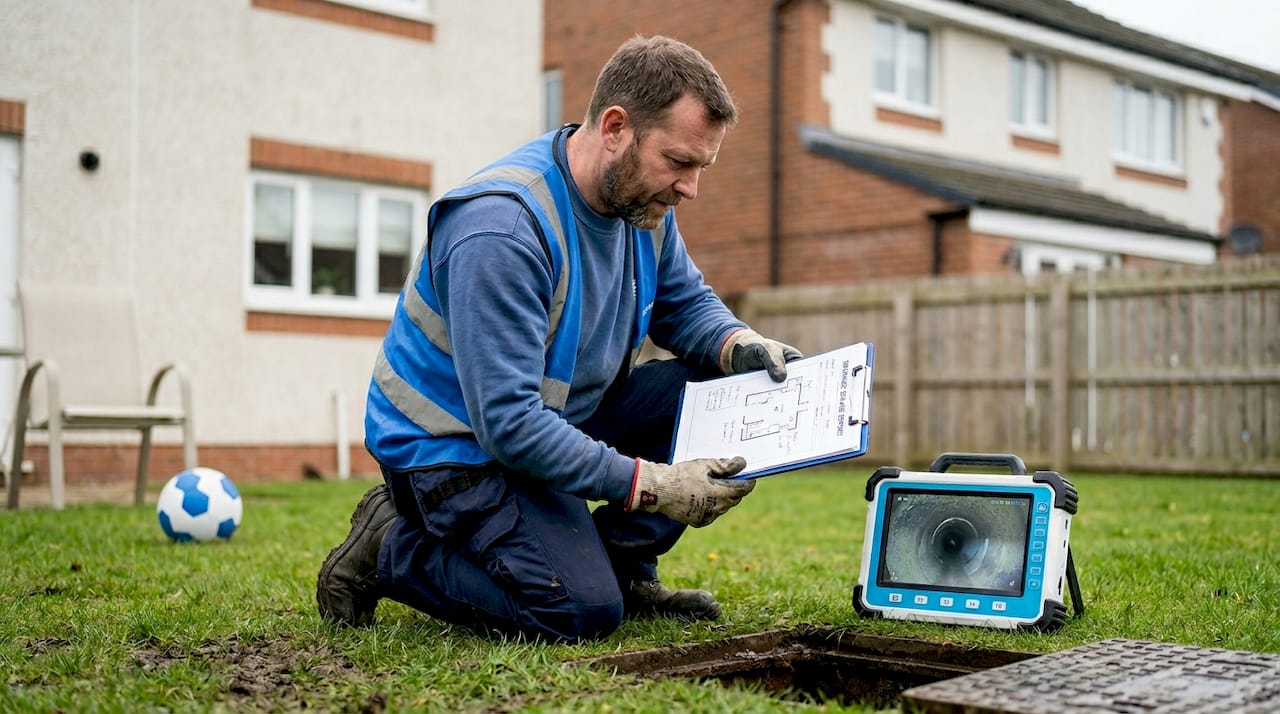
The technology behind modern drain mapping is genuinely impressive. CCTV drain survey basics form the backbone of most mapping projects, using small cameras pushed through the pipework to relay live footage back to a technician above ground. Additional methods include sonar profiling for larger pipes, dye testing to trace water flow through shared systems, and ground-penetrating radar for exceptionally complex sites. Modern drain mapping uses CCTV technology for quick, non-invasive inspection, meaning your garden and driveway stay untouched throughout.
Understanding how camera inspections work helps you appreciate why this approach is so much more reliable than older methods, which often meant digging trial holes to locate pipes manually. CCTV-based mapping cuts that time dramatically and produces far more precise results.
Drain mapping supports your property in several practical ways:
- Before buying or selling: Buyers increasingly request drain mapping as part of their due diligence, since inherited drainage problems can result in substantial unexpected costs.
- Planning extensions or renovations: Building near or over unmarked drains without permission can breach regulations and delay your project.
- Managing repeat blockages: A map reveals the full drainage route, making it far easier to identify where debris accumulates or where root intrusion is likely.
- Shared drain disputes: Many terraced and semi-detached properties in London share lateral drains with neighbours. A map makes ownership and responsibility clear before disputes arise.
“Knowing exactly where your drains run is not a luxury — it is the foundation of responsible property management in a city as densely built as London.”
The value of drain mapping scales with the age and complexity of your property. Victorian and Edwardian homes, which make up a significant portion of London’s housing stock, were built with clay pipework that can shift, crack, and misalign over decades. Without a current map, even experienced plumbers can spend hours locating the source of a persistent problem.
How does the drain mapping process work?
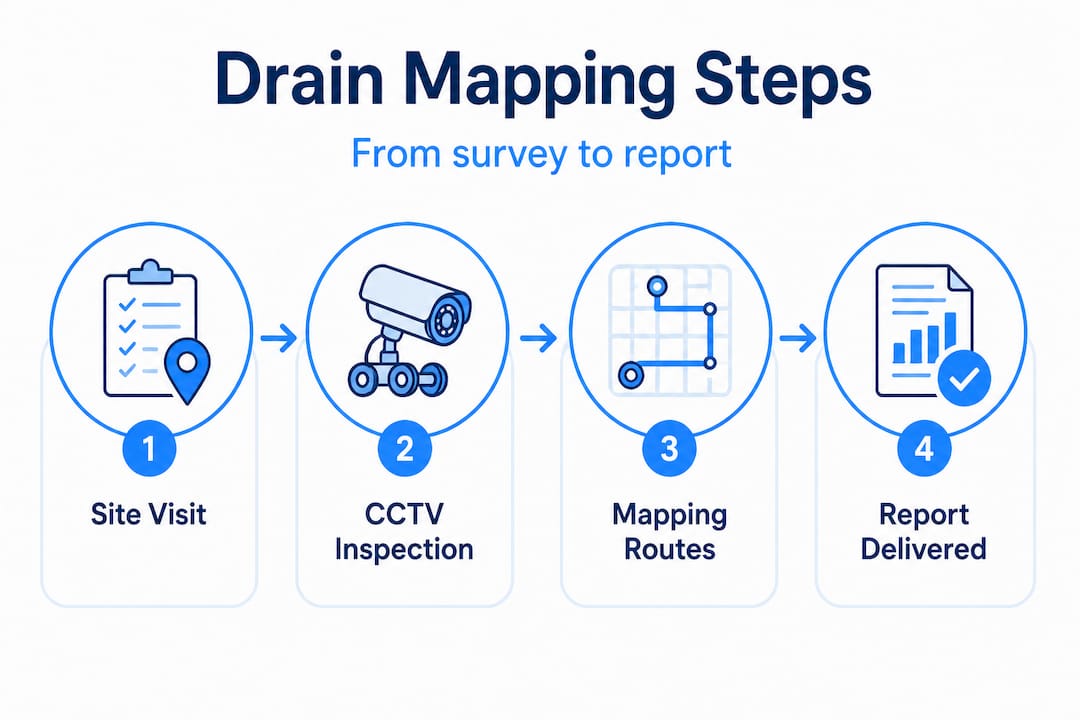
Knowing what drain mapping achieves is one thing. Understanding the process helps you prepare for a survey and reduce surprises on the day. Here is what a professional mapping project typically involves:
- Initial site assessment: The surveyor reviews any existing drainage records, consults local authority sewer maps, and walks the site to identify visible inspection chambers (manholes or access covers).
- Locating access points: All entry points into the drainage system are identified and opened. This includes rodding eyes (small circular access caps), inspection chambers, and stack pipe bases.
- CCTV inspection: A flexible push-rod camera or self-propelled crawler is fed through the pipework. CCTV surveys are often the starting point for detailed and accurate drain mapping, providing live visual data on pipe condition, diameter, direction, and depth.
- Route tracing: A signal transmitter attached to the camera head allows a technician above ground to track the precise route using a locating device. Depth and direction are recorded at regular intervals.
- Data compilation and reporting: All data is compiled into a finalised drainage map, usually delivered as a scaled drawing, annotated with pipe materials, gradients, and any defects found.
What is included in your final drain mapping report? A thorough report will contain a scaled plan view of your drainage system, pipe material specifications, flow directions, connection points to the public sewer, locations of all access covers, and a photographic or video log from the CCTV footage. If defects are spotted, these are classified using standard drainage condition codes so you can prioritise any repair work.
| Stage | Typical duration | Disruption level |
|---|---|---|
| Site assessment | 30 to 60 minutes | Minimal |
| CCTV inspection | 1 to 3 hours | Low |
| Route tracing | 1 to 2 hours | Low |
| Report production | 1 to 2 working days | None |
For a standard three-bedroom residential property, the full on-site process usually takes between two and four hours. Commercial sites with larger or more complex networks can take a full day. One of the most common reasons surveys run long is blocked or inaccessible inspection chambers, which the drain inspection process documentation highlights as a frequent but easily avoidable delay.
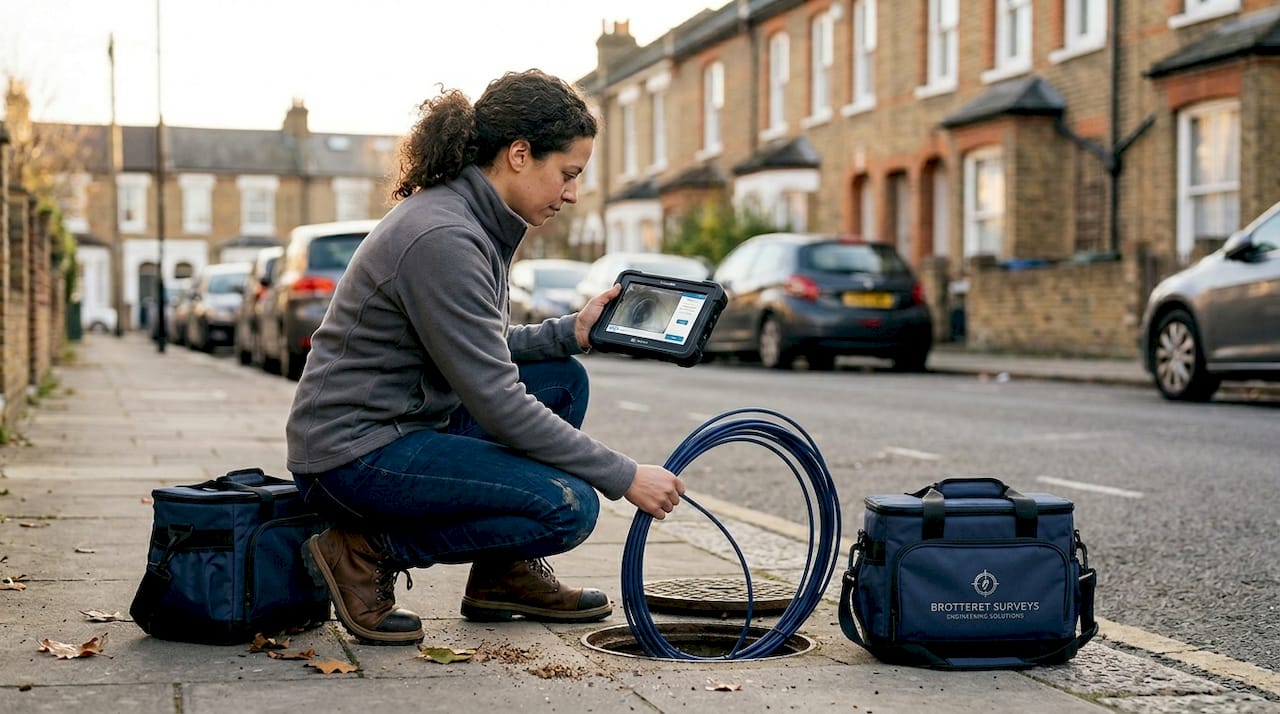
Pro Tip: Before your survey date, clear any garden furniture, compost bins, or stored items sitting over drain covers. Locate your manhole lids in advance and flag them clearly. This simple preparation can shave an hour off the surveyor’s time and keep costs down.
Benefits of drain mapping for properties in Greater London
With the process laid out, let’s see what the real-world benefits look like for property owners and managers across London.
The most immediate benefit is preventing repeat blockages. A mapped drainage network allows for targeted, less costly repairs if problems arise, because your drainage contractor knows exactly where to look. Rather than jetting the accessible section of a pipe and hoping for the best, a technician with a map can trace the blockage to its precise location and address the actual cause, whether that is a collapsed pipe joint, a tree root intrusion, or a section where the gradient has reversed due to ground movement.
Accurate maps also support faster, cheaper repairs. Without mapping, contractors sometimes excavate in the wrong location, which adds unnecessary cost and disruption. With a current map, the right trench is dug in the right place, first time.
For those dealing with planning authorities, the compliance benefit is significant. Many London boroughs require drainage maps as part of planning applications, particularly for:
- Loft conversions that add a bathroom
- Rear extensions over or near a drain
- Garden developments and outbuildings
- Change of use applications for commercial properties
Failing to provide accurate drainage information at the planning stage can result in delays, refusal, or costly post-approval modifications.
The camera inspection advantages extend beyond mapping itself. During the CCTV process, surveyors often identify issues that have been developing silently for years, such as root intrusion, partial collapses, or displaced joints. Catching these early means you deal with a maintenance task rather than an emergency repair.
Here is how drain mapping benefits differ across property types:
| Benefit | Residential properties | Commercial properties |
|---|---|---|
| Prevents recurring blockages | Yes, particularly in older clay pipe systems | Critical for high-usage sites (restaurants, offices) |
| Compliance with planning rules | Required for extensions and conversions | Required for development and change of use |
| Reduces repair costs | Accurate fault location saves excavation expense | Minimises business downtime during works |
| Supports property sale/purchase | Increasingly requested by solicitors and surveyors | Required for commercial property transactions |
| Identifies shared drain responsibilities | Clarifies liability with neighbours | Defines responsibilities between tenants and landlords |
Pro Tip: Always retain a copy of your drain map in your property records, whether you are a landlord, owner-occupier, or facilities manager. When you sell or let the property, a current drain map is a genuine selling point and can reduce the time it takes to complete conveyancing.
When to consider drain mapping and how to choose a professional
Understanding the benefits is only part of the picture. Knowing exactly when to order a drain map, and who to trust with the job, is just as important.
The clearest triggers for commissioning a drain map include:
- Purchasing a property: Particularly older London homes where original drainage records may be lost or inaccurate.
- Persistent or repeated blockages: If the same section of drain blocks more than twice a year, there is almost certainly an underlying structural issue that a map will help locate.
- Planning major works: Any extension, basement conversion, or significant landscaping project that could disturb underground drainage.
- Legal or planning requirements: Your local authority or solicitor may specifically request drainage mapping documentation.
- Unusual odours or slow drainage: These symptoms often point to partially collapsed or misaligned pipes that are invisible without a camera inspection.
- Rat activity: Drainage defects and open pipe joints are a common entry route for rats into London properties. A map helps locate vulnerable sections.
Professional inspections spot problems invisible to the naked eye, supporting rapid, cost-effective solutions. This is why choosing the right contractor matters enormously.
When selecting a drain mapping professional, check the following before you agree to anything:
- Full public liability insurance and professional indemnity cover: Essential in London where dense property layouts mean any mistake can affect neighbouring properties.
- CCTV camera equipment: Ask specifically whether they use push-rod cameras, self-propelled crawlers, or both. Larger properties need self-propelled kit for accurate mapping.
- Condition coding standards: Reports should use the Water Research Centre (WRc) system for classifying defects so that findings are comparable and understood by planning authorities.
- Digital report format: A report that includes a scaled digital drawing, not just photographs, is far more useful for planning and legal purposes.
- Clear, itemised quotes: Reputable inspectors provide written quotes that separate the survey cost from any recommended repair costs. This prevents inflated bundled pricing.
Before hiring anyone, ask them how many drain mapping projects they complete per month in your area, what equipment they bring to site, and whether they can provide sample reports. A confident, experienced contractor will answer all of these without hesitation.
Our perspective: why mapping your drains now is a game-changer for London properties
Here is something that rarely gets said plainly: the cost of a professional drain mapping survey is almost always less than the cost of a single emergency callout to deal with a collapsed pipe or a flooded basement. Yet most London homeowners only think about their drains when something goes catastrophically wrong. That reactive mindset is genuinely expensive.
London’s drainage infrastructure is uniquely challenging. The city sits on a network of Victorian sewers, many over 150 years old, overlaid with more recent additions that were often installed without centralised records. Many properties in areas like Hackney, Lewisham, Islington, and Hammersmith share lateral drains with three, four, or even five neighbouring homes. When one property’s pipe fails, it can affect everyone connected to it, and disputes over responsibility can drag on for months without clear mapping evidence.
We have seen situations where homeowners paid several thousand pounds in legal costs to resolve drain responsibility disputes that a drain map costing a fraction of that amount would have settled in minutes. Proactive mapping is not just good practice. It is genuinely protective.
There is also the matter of drain maintenance guidance that most property owners never consult until they are already in trouble. A drain map makes that guidance actionable. You know which sections need annual jetting, where to watch for root ingress, and which access points allow rapid intervention if something blocks.
The conventional wisdom says “if it ain’t broke, don’t fix it.” With underground drainage in London, that approach has a consistent and costly outcome. Mapping your drains is not overcaution. It is the kind of forward-thinking property management that prevents the truly unpleasant surprises.
Book your professional drain mapping or inspection
Ready to future-proof your property? RSJ Drains provides professional drain mapping and survey services across Greater London, with rapid response times and detailed reports that meet planning authority and legal requirements.
Whether you manage a residential property or a busy commercial site, our team arrives equipped with the latest CCTV camera technology and produces clear, scaled drainage maps that you can rely on for years. Every survey is fully insured and compliant with London standards. You can book a CCTV survey online or call our team directly for a no-obligation quote. For properties with more complex requirements, simply request a professional inspection and we will assess your site, advise on the right approach, and deliver a report you can actually use. Do not wait for a blockage to find out what is running beneath your home or business.
Frequently asked questions
How is drain mapping different from a standard CCTV survey?
Drain mapping creates a visual plan of your entire drainage system, while a CCTV survey inspects the inside of specific pipes for blockages or damage. Mapping uses survey data to produce a scaled diagram, whereas a standard CCTV survey typically produces a condition report.
Is drain mapping disruptive or messy?
Drain mapping is minimally disruptive because modern CCTV technology allows cameras to be inserted through existing access points without any digging. Most residential surveys are completed within a few hours with no mess left behind.
When should I consider drain mapping for my property?
It is best to arrange mapping before major works, when planning an extension, during a property purchase or sale, or when facing repeat blockages. Professional inspections can also uncover hidden problems that are not yet causing obvious symptoms.
What does a drain mapping report include?
A typical report includes a scaled diagram of all drain routes, connections, access point locations, pipe materials, flow directions, and any defects found. Reports are usually accompanied by a photographic or video log from the CCTV inspection.
Is drain mapping required for planning permission?
Many planning authorities in Greater London require accurate drainage mapping before approving extensions, basement conversions, or changes of use. Always check with your local borough’s planning department at the earliest stage of your project to confirm what drainage documentation they expect.
Recommended
- How drain maintenance protects and boosts property value
- Drainage industry terms explained for London property owners
- Drain maintenance workflow: step-by-step for London homes
- Drain Inspection Methods: Choosing the Right Approach
- Drain Cleaning Benefits 2026: Cut Emergencies by 3X – AG-Plumbing
- Drain maintenance guide: prevent costly plumbing issues at home