

A crack in your drain pipe might seem like a minor inconvenience, but the reality is far more serious. Many London homeowners dismiss early warning signs, assuming drainage issues will resolve themselves or that a quick pour of chemical cleaner will do the job. It won’t. Overlooked cracked drains can quickly lead to property damage, flooding, and repairs that cost thousands of pounds. This article walks you through what cracked drains actually are, how to recognise them, why ignoring them is a costly gamble, and the professional solutions that genuinely work.
Table of Contents
- What exactly are cracked drains?
- How to identify cracked drains in your property
- Cracked drain risks: what’s at stake if you ignore them?
- How contractors fix cracked drains: patch lining, full lining, or replacement
- Why most London drain problems spiral: the real-world truth about cracked drains
- Next steps: protect your home with expert drain solutions
- Frequently asked questions
Key Takeaways
| Point | Details |
|---|---|
| Early action prevents damage | Addressing cracked drains straight away stops leaks and costly structural problems before they begin. |
| Professional inspection matters | Specialist tools like CCTV surveys are essential for accurate diagnosis of hidden cracks. |
| Repair method must fit the damage | Patch linings suit localised cracks, but widespread damage needs full lining or replacement. |
| DIY rarely solves cracked drains | Hidden or complex cracks typically require expert repair for lasting results. |
What exactly are cracked drains?
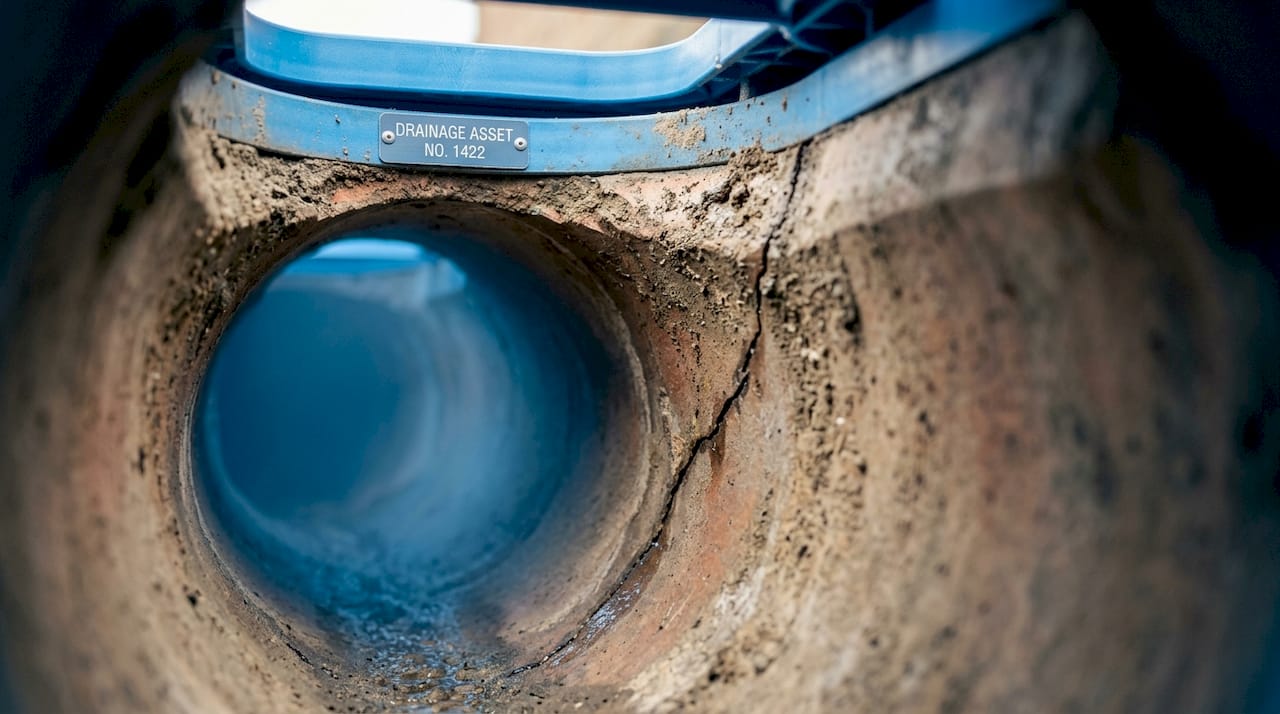
A cracked drain is any structural break, fracture, or split in the wall of a drain pipe. It does not need to be a dramatic collapse to cause serious trouble. Even a hairline fracture allows wastewater, soil, and groundwater to cross the pipe boundary, setting off a chain of problems beneath your property.
Drains crack for several reasons, and London properties face a particularly demanding set of conditions. The city’s notorious clay soil shrinks in dry summers and expands dramatically in wet winters, placing enormous stress on buried pipes. Ground movement from nearby construction, heavy vehicles on residential streets, and the sheer age of older Victorian drainage infrastructure all contribute. Tree roots are another major culprit. They are drawn to moisture and will exploit the tiniest gap, forcing cracks wider over months and years. Even repeated blockages play a role: when water backs up and pressure builds inside the pipe, it accelerates stress fractures in already weakened sections.
Common warning signs that a crack may be present include:
- Persistent foul odours rising from drains or garden areas
- Recurring blockages that return shortly after clearing
- Damp patches on walls, floors, or ceilings near drainage routes
- Sunken or soft ground above where pipes are buried
- Unexplained increase in pest activity, particularly rats
“Even isolated cracks can result in water ingress and leakage, or drain collapse if left untreated.”
It is worth emphasising that cracks rarely stay small. The moment a fracture forms, surrounding soil begins to shift, water begins to escape, and conditions worsen with every flush. Exploring cracked drain repair options early is always the smarter path, and reviewing drainage repair case examples can help you understand what contractors typically encounter on London properties.
How to identify cracked drains in your property
Here is the frustrating truth: you almost certainly cannot see a cracked drain from above ground. The vast majority of residential drains run beneath garden paths, driveways, or internal floors, making visual inspection impossible without specialist equipment. By the time visible damage appears at surface level, such as cracking in paving or sinkholes, the underlying problem has usually been developing for months.
Knowing what to watch for makes a significant difference. Here are the five most telling signs that your drains may be cracked:
- Slow drainage across multiple fixtures. When sinks, baths, and toilets all drain slowly at the same time, the problem is rarely a simple blockage. It often points to a compromised pipe somewhere further down the system.
- Persistent bad smells. Sewer gases escaping through cracks produce a sulphurous, rotten odour. If the smell returns within days of a drain clean, a crack is a likely cause.
- Wet or unusually lush patches in the garden. Leaking wastewater acts as fertiliser. Suspiciously green or soggy sections of lawn above your drain run deserve investigation.
- Rodent sightings near drainage. Rats access properties through compromised drains more often than most homeowners realise. A crack is a direct entry point.
- Repeated blockages. A drain that blocks every few weeks, despite professional cleaning, may be cracked or collapsed further along the pipe, creating a collection point for debris.
When these signs appear, the most reliable next step is a CCTV drain survey. A camera is fed through the drain pipe to provide clear, real-time footage of exactly what is happening inside. There is no guesswork involved. Professional CCTV surveys can accurately detect hidden cracks and defects that no other method can reliably locate without excavation.
If you are unsure which approach suits your situation, reading up on the drain camera inspection process or comparing available drain inspection methods will give you a clearer picture before you call.
Pro Tip: If you are buying a property in London, always insist on a CCTV drain survey as part of your pre-purchase checks. Drain defects are rarely flagged in standard surveys, and inheriting a cracked drain can mean thousands of pounds in repairs shortly after moving in.
Cracked drain risks: what’s at stake if you ignore them?
Once you’ve identified that a crack is likely, the instinct for some homeowners is still to wait and see. That approach is expensive. Untreated cracked drains can cause serious leaks, foul odours, mould growth, and even foundation damage if wastewater continues to saturate surrounding ground.
The risks compound over time in a predictable pattern:
- Ground subsidence. Escaping water erodes the soil beneath your property. As the ground loses integrity, pathways sink, walls crack, and in severe cases, structural foundations are undermined.
- Internal damp and mould. Persistent moisture from a leaking drain can penetrate walls and floors, leading to mould that is both a health risk and a cosmetic nightmare to remediate.
- Drain collapse. A cracked pipe that continues to bear loading without repair will eventually fail entirely, requiring full excavation and replacement at considerably greater cost.
- Structural damage to the building. This is the worst-case outcome. When subsidence or prolonged moisture ingress affects load-bearing structures, you enter a category of repair that routinely runs into tens of thousands of pounds.
What about insurance? Many homeowners assume their buildings insurance will cover the consequences of a failed drain. In practice, insurers often dispute claims where they can demonstrate that the damage was gradual and that the homeowner failed to act on visible warning signs. Waiting too long is not just a maintenance mistake; it can invalidate your claim entirely.
The financial logic is clear. Addressing a cracked drain early, through methods described in our cracked drain repair guide, typically costs a fraction of what full structural remediation demands. Acting promptly protects your property value, keeps your insurance position solid, and avoids the significant disruption of major excavation work.
Cost perspective: A patch lining repair for a localised crack might cost a few hundred pounds. A full pipe replacement following collapse, combined with repairing subsidence damage to your driveway and internal damp, can exceed £10,000. The maths are not complicated.
How contractors fix cracked drains: patch lining, full lining, or replacement
Understanding the risks, you will want to know the most effective ways professionals fix cracked drains. There is no single approach that suits every situation, and a reputable contractor will always base their recommendation on what the CCTV survey reveals, rather than defaulting to the most expensive option.
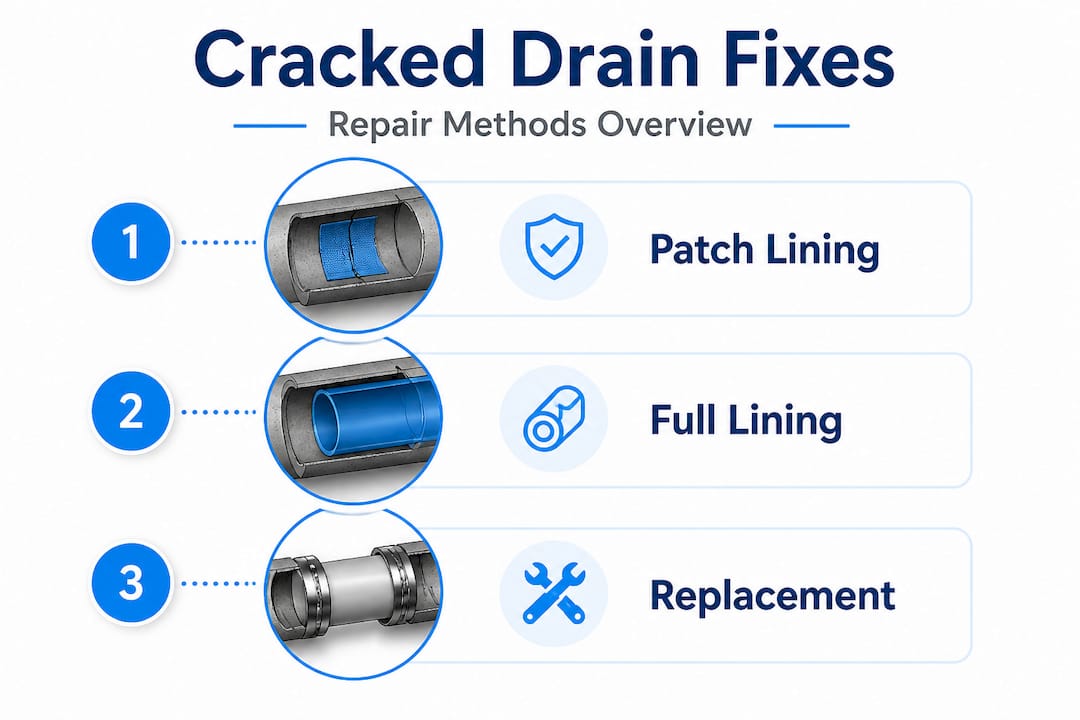
The three main repair methods are:
| Method | Best suited for | Typical disruption | Approximate duration |
|---|---|---|---|
| Patch lining | Localised cracks, one or two sections | Minimal, no dig | Several hours |
| Full pipe lining | Widespread but structurally sound pipe | Low, no dig | One to two days |
| Full pipe replacement | Collapsed, severely deformed, or root-damaged pipe | High, excavation required | One to several days |
Patch lining involves inserting a resin-saturated liner into the specific damaged section of pipe. Once cured, it forms a smooth, jointless repair that effectively creates a new pipe within the old one. It is quick, cost-effective, and avoids any digging. It works very well when damage is confined to one or two clearly defined locations.
Full pipe lining uses the same resin technology but runs the liner along the entire length of the pipe. This suits situations where multiple hairline cracks exist throughout the run, or where the pipe is ageing and likely to develop further problems. It is still a no-dig solution and restores the structural integrity of the whole system.
Full replacement is necessary when a pipe has collapsed, is severely deformed, or when root intrusion has caused damage too extensive for lining to be effective. This requires excavation and is considerably more disruptive and costly, but sometimes it is the only durable solution.
Pro Tip: Ask your contractor to show you the CCTV footage before agreeing to any repair quote. A reputable professional will always want you to see exactly what they found. If a contractor recommends full replacement without showing you footage of the damage, that is a red flag.
If damage is localised to one or two spots, patch lining is often the right choice. However, if multiple sections are compromised or the pipe shows severe deformation, experienced contractors will shift to full lining or replacement rather than applying multiple spot repairs that may fail independently. Reviewing common drain repair examples and reading about detailed cracked drain repairs will help you understand what your specific situation might require.
Why most London drain problems spiral: the real-world truth about cracked drains
After years of attending drainage jobs across Greater London, a clear pattern emerges: the homeowners who face the biggest repair bills are almost never the ones with the worst initial damage. They are the ones who waited.
London’s clay soil is unforgiving. It moves with the seasons in a way that few other parts of the country experience as intensely. A small crack that forms in August, when the ground is dry and contracted, will be a significantly larger problem by February after months of clay expansion. What starts as a minor fracture becomes a structural gap with alarming speed. Most homeowners genuinely do not appreciate how quickly this progression happens.
There is also the DIY issue. Every year, people attempt to seal cracked drains with waterproof putty, flexible tape, or drainage compounds bought from a hardware shop. These fixes almost never last more than a few months. The pipe is under constant stress, constantly wet, and frequently under pressure. Surface-level patches cannot address the underlying cause of the crack, whether that is ground movement, root intrusion, or pipe fatigue. In many cases, a failed DIY repair delays the point at which a homeowner calls a professional, and conditions worsen throughout that delay.
The real-world cost curve is not linear. Waiting an extra three months does not mean costs rise by 10%. In our experience, delayed repairs can triple or quadruple total remediation costs because subsidence, damp, and structural concerns compound quickly. An early professional drain inspection is the one investment that consistently delivers value, because it tells you exactly what you are dealing with before the situation escalates.
And contractors often shift their repair approach when damage proves more severe than first thought on arrival. This is not a con; it is the reality of underground defects. But getting a thorough survey upfront means there are far fewer surprises, and quotes are far more accurate. Spend on knowledge first, and you save on remediation later.
Next steps: protect your home with expert drain solutions
If any of the warning signs in this article sound familiar, the safest course of action is a fast professional assessment rather than continued observation. RSJ Drains responds to London drainage calls within two hours, day or night, providing immediate peace of mind when you need it most.
Our drain repairing services cover every method discussed in this article, from targeted patch lining through to full pipe replacement, all carried out by experienced, local engineers with deep knowledge of London’s drainage infrastructure. For conclusive diagnosis, our CCTV drain survey service delivers clear footage and a professional report, giving you the full picture before any repair decision is made. To see the full range of what we offer, explore our complete drainage services and find the right solution for your property today.
Frequently asked questions
Are cracked drains always an emergency?
Not always, but even isolated cracks can lead to water ingress, drain collapse, and serious property damage if left unaddressed. Booking an inspection promptly is always the right call.
Can I repair a cracked drain pipe myself?
DIY repairs are rarely adequate for long-term results. Professional CCTV surveys accurately detect the true extent of damage, which is essential before any repair work begins, and trained engineers apply solutions that last.
How do I know if my drains are cracked?
Watch for persistent blockages, foul smells, damp patches on walls or floors, and soft ground above drain runs. Most cracks are not visible at surface level and require specialist inspection to locate with certainty.
What is patch lining and when is it used?
Patch lining is a no-dig repair technique using a resin liner applied to a specific damaged section of pipe. When damage is localised to one or two spots, it is often the most cost-effective and least disruptive solution available.