Cracked drains create serious risks for Greater London properties, from persistent blockages and foul odours to structural damage and costly emergency repairs. Many homeowners delay action, allowing small cracks to worsen into complete failures that disrupt daily life and drain budgets. This guide delivers practical, proven methods to identify, repair, and maintain your drainage system effectively. You’ll learn how to spot warning signs early, choose the right repair approach, and implement maintenance strategies that protect your property for years to come.
Table of Contents
- Identifying Cracked Drains: Signs And Preliminary Checks
- Preparing To Repair Cracked Drains: Tools, Safety And Materials
- Step By Step Guide To Repairing Cracked Drains
- Post Repair Checks And Maintenance For Lasting Results
- Expert Drain Repair Services In Greater London
- Frequently Asked Questions About Fixing Cracked Drains
Key takeaways
| Point | Details |
|---|---|
| Early detection saves money | Spotting cracks before they worsen prevents expensive emergency repairs and property damage. |
| Professional inspection ensures accuracy | CCTV surveys reveal hidden damage that visual checks miss, guiding effective repair decisions. |
| Proper materials matter | Using compliant uPVC piping and correct installation techniques ensures long lasting drainage performance. |
| Regular maintenance prevents recurrence | Scheduled cleaning and inspections extend drain life and catch problems before they escalate. |
Identifying cracked drains: signs and preliminary checks
Catching drainage problems early protects your property from escalating damage and repair costs. Recognising early warning signs of a collapsed drain can save thousands of pounds, making vigilant monitoring essential for every property owner.
Foul odours near drains or in your garden signal potential cracks allowing sewage to escape. Slow drainage across multiple fixtures suggests partial blockages caused by cracked pipes collecting debris. Ground subsidence, damp patches, or unusually lush grass growth indicate leaking wastewater saturating the soil beneath.
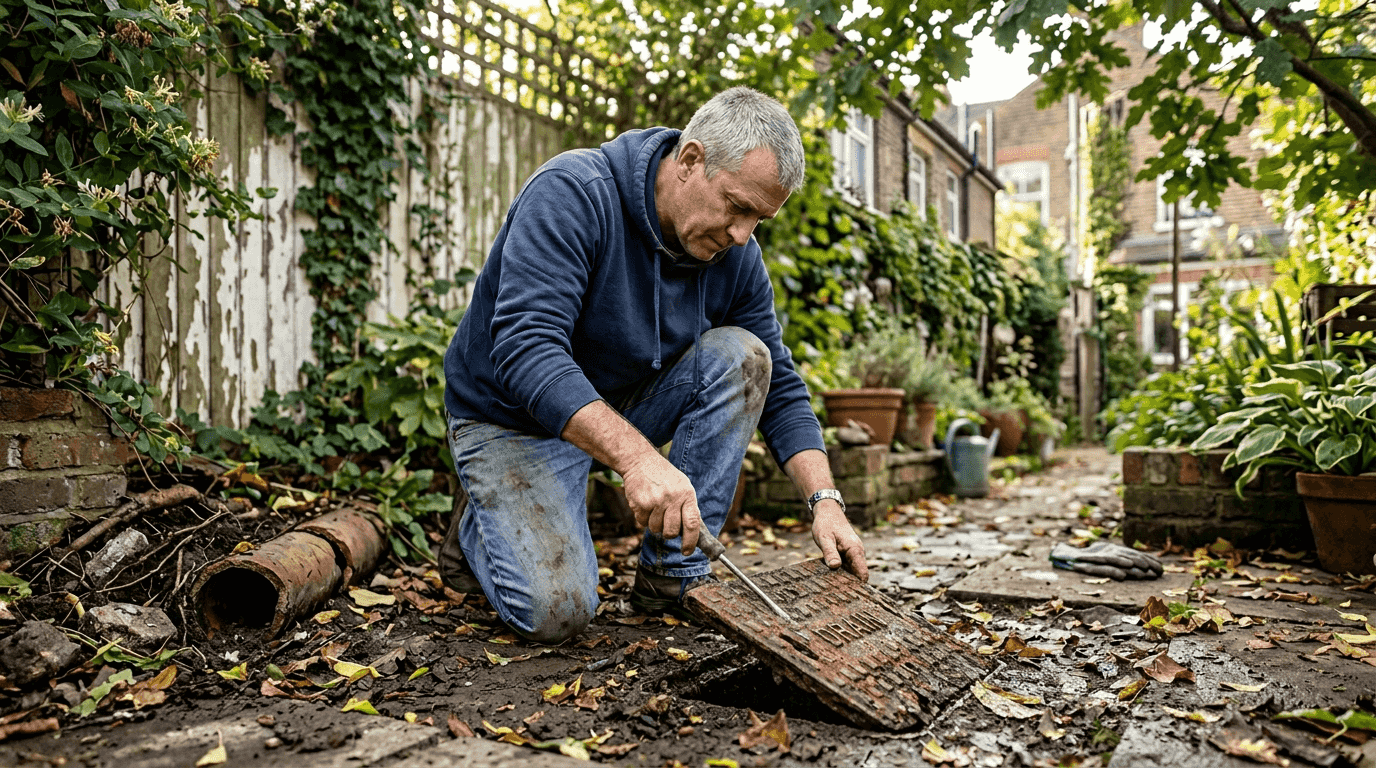
Visual inspections around manholes and external drains reveal surface level problems. Check for standing water, cracked concrete surrounds, or visible pipe damage during dry weather. Look for settlement or sinking ground near drainage runs, which often indicates collapsed sections below.
Simple water flow tests help identify partial blockages linked to cracks. Run taps and flush toilets whilst observing drain behaviour. Gurgling sounds, slow emptying, or water backing up point to restricted flow caused by damaged pipes.
Pro Tip: Professional drain inspection services in north London use CCTV cameras to map your entire drainage system, revealing cracks, root intrusion, and structural defects invisible to surface checks. This diagnostic accuracy prevents guesswork and targets repairs precisely where needed.
- Persistent bad smells near drains or outdoor areas
- Multiple slow draining fixtures throughout the property
- Unexplained damp patches or subsidence in gardens
- Gurgling noises when water drains away
- Rodent activity near drainage points
Don’t ignore subtle signs hoping they’ll resolve themselves. Small cracks expand rapidly under pressure from tree roots, ground movement, and temperature changes common in London’s clay soils. Early intervention through proper inspection prevents minor issues becoming major emergencies.
Preparing to repair cracked drains: tools, safety and materials
Successful drain repairs require proper equipment, safety measures, and quality materials that meet current standards. Preparation prevents delays and ensures work proceeds safely and effectively.
Essential tools include excavation equipment like shovels and picks for accessing buried pipes. Drain rods help clear blockages before repair work begins. Inspection cameras let you assess damage extent and verify repairs afterwards. Spirit levels ensure correct pipe gradients for proper flow.
Safety equipment protects you from hazardous conditions. Heavy duty gloves prevent cuts and contamination. Face masks and eye protection guard against sewage pathogens and debris. High visibility clothing matters when working near roads. Proper ventilation equipment is critical when entering confined spaces like manholes.
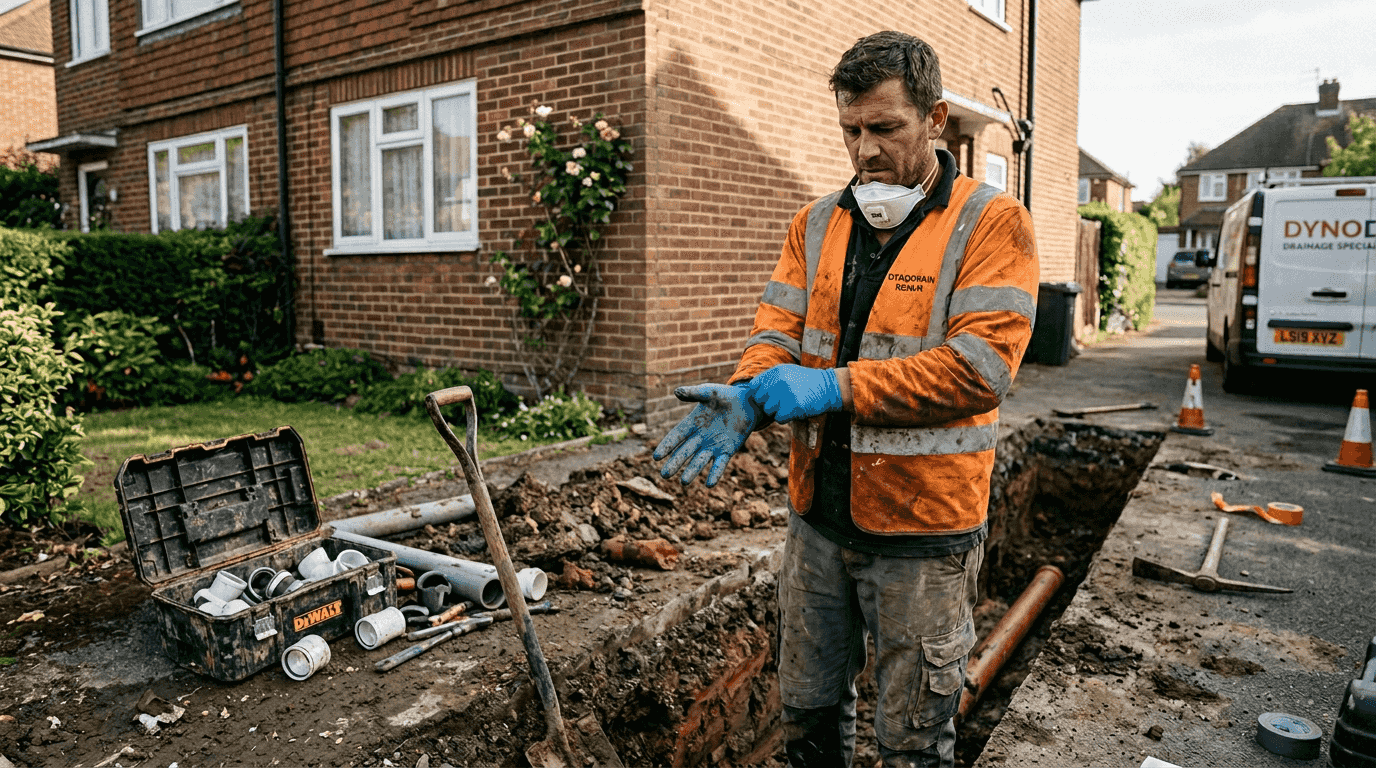
| Safety Item | Purpose | Standard |
|---|---|---|
| Nitrile gloves | Chemical and sewage protection | EN 374 |
| Respiratory mask | Pathogen and gas protection | FFP3 rated |
| Safety boots | Foot protection and grip | EN ISO 20345 |
| High vis vest | Visibility in work areas | EN ISO 20471 |
Material selection impacts repair longevity and compliance. UPVC piping offers excellent durability, chemical resistance, and meets Building Regulations for underground drainage. Pipe diameter must match existing systems, typically 100mm for domestic waste and 150mm for shared or commercial drains. Couplings, seals, and jointing compounds must be compatible and rated for below ground use.
Understanding types of drain maintenance for London properties helps you choose between DIY fixes and professional intervention. Simple crack repairs suit confident DIYers with proper tools. Complex damage involving multiple pipe sections, deep excavations, or structural issues requires licensed contractors familiar with London’s drainage regulations.
Pro Tip: Always notify your local authority before excavating near public sewers or roads. London boroughs require permits for work affecting highways or shared drainage infrastructure. Failing to obtain proper permissions can result in fines and mandatory reinstatement costs.
- Check utility maps to avoid damaging gas, water, and electric services
- Arrange skip hire for excavated soil and broken pipe disposal
- Inform neighbours about potential disruption and access needs
- Verify insurance coverage for accidental damage during DIY work
Gather everything before starting work. Missing tools or materials mid project extends timelines and increases costs. Quality preparation makes repairs smoother and results more reliable.
Step by step guide to repairing cracked drains
Executing drain repairs correctly ensures lasting results and prevents recurring problems. Follow these proven methods tailored for Greater London properties.
-
Excavate carefully to expose damaged sections. Mark utility locations first to avoid accidental strikes. Dig wider than the pipe diameter to allow working room. Shore trench sides if depth exceeds 1.2 metres. Remove soil in manageable quantities and store separately from subsoil for proper reinstatement.
-
Assess damage extent to choose the right repair method. Minor cracks in accessible sections suit patch repairs or short pipe replacement. Extensive damage, multiple cracks, or difficult access locations benefit from trenchless relining. Installation of 150mm uPVC pipework restores drainage flow and meets current specifications, making it the preferred choice for permanent repairs.
-
Choose between traditional replacement and modern relining. Pipe replacement involves cutting out damaged sections and installing new uPVC pipes with proper couplings. Trenchless relining inserts a resin coated liner that hardens inside existing pipes, creating a new pipe within the old one without excavation. The drain relining guide for London 2026 explains when each method works best.
-
Install new pipework maintaining correct gradients. Drainage pipes require minimum 1:40 fall for proper flow, steeper for longer runs. Use a spirit level and laser level for accuracy. Ensure joints are clean, properly sealed, and face downstream. Bed pipes on compacted granular material, never directly on clay or unstable ground.
-
Rebuild access points for future maintenance. Cracked Buchan trap replacement with a new manhole in London addresses drainage issues, restoring functionality and providing future maintenance access. Install new manhole covers at grade, ensuring they’re trafficable if located in driveways or paths.
| Repair Method | Typical Cost | Disruption Level | Expected Lifespan |
|---|---|---|---|
| Patch repair | £200 to £500 | Low | 5 to 10 years |
| Pipe replacement | £800 to £2,500 | High | 50+ years |
| Trenchless relining | £1,200 to £4,000 | Minimal | 50+ years |
| Full system upgrade | £3,000 to £8,000 | Very high | 50+ years |
Pro Tip: Photograph every stage of your repair work, especially pipe connections and gradient measurements. These records prove invaluable if problems recur or when selling your property. They also help future contractors understand your drainage layout.
Common errors undermine repair success. Incorrect pipe slope causes standing water and blockages. Rushing joint sealing leads to leaks. Inadequate backfill compaction allows ground settlement and pipe stress. Poor reinstatement creates surface water pooling that saturates surrounding soil.
Test your work before final backfill. Run water through the system whilst observing for leaks at joints. Check flow rates match pre damage performance. Verify no standing water remains in pipes. Only backfill once you’re confident repairs are watertight and effective.
Quality repairs from drain repairing services in north London include warranties and compliance certification. Professional contractors carry liability insurance protecting you from accidental damage during works. They also handle permit applications and building control notifications required for significant drainage alterations.
Post repair checks and maintenance for lasting results
Verifying repair success and implementing ongoing maintenance protects your investment and prevents future failures. Systematic checks catch problems before they escalate.
Test flow rates immediately after completing repairs. Run multiple taps simultaneously and flush toilets to simulate peak demand. Water should drain quickly without gurgling or backing up. Check all manholes for proper flow and no standing water. Installation of 150mm uPVC pipework restores drainage flow and meets current specifications when installed correctly.
Schedule regular CCTV inspections to monitor drain condition. Annual surveys for older properties or those with tree roots nearby catch developing issues early. Bi annual checks suit newer systems or properties without known risk factors. Professional surveys create baseline records tracking your drainage system’s condition over time.
Maintain clear manhole access for inspection and maintenance crews. Keep covers visible and operable, never paving over or landscaping around them. Ensure covers seal properly to prevent surface water ingress and odour escape. Replace damaged or missing covers immediately.
- Avoid flushing wipes, sanitary products, or cooking fats that damage pipes
- Clear gutters and yard gullies regularly to prevent debris buildup
- Trim tree roots near drainage runs before they penetrate pipes
- Arrange professional jetting every 18 to 24 months for preventive cleaning
- Monitor for early warning signs like slow drainage or unusual odours
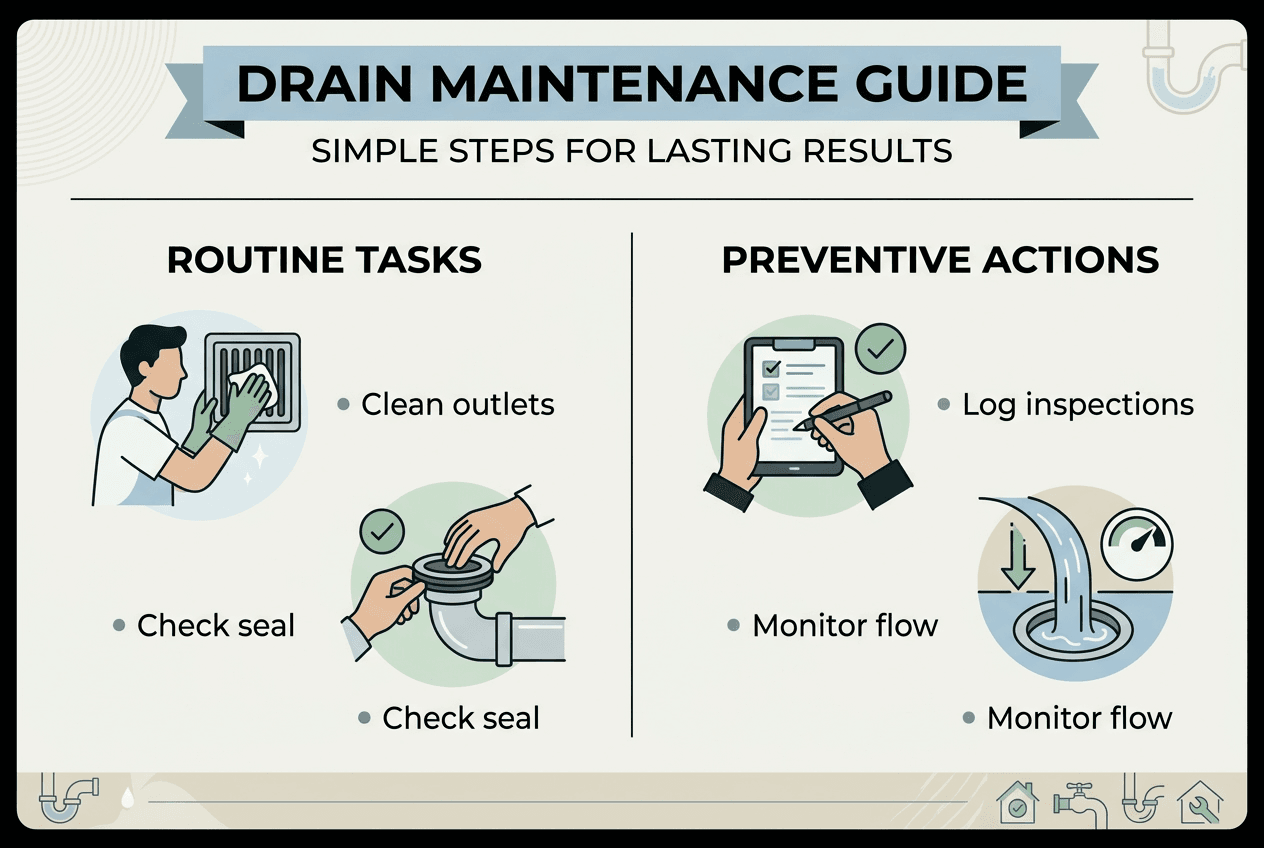
The drain maintenance guide for London properties details seasonal tasks that extend system life. Winter preparations prevent freeze damage. Spring checks clear debris accumulated during storms. Autumn maintenance removes leaf buildup before winter rains.
Pro Tip: Keep a drainage logbook recording inspection dates, maintenance work, and any problems encountered. This history helps identify patterns and proves invaluable when diagnosing future issues or instructing contractors.
Preventive maintenance costs far less than emergency repairs. Regular cleaning removes scale and debris before they cause blockages. Early crack detection through inspections allows planned repairs during convenient times rather than crisis situations. Understanding how to unblock drains safely in London prevents damage from aggressive clearing methods.
Document your drainage system layout including pipe materials, depths, and connection points. Update records after any repair or modification work. Share this information with future owners, ensuring continuous proper maintenance.
Expert drain repair services in Greater London
Whilst DIY repairs suit minor damage, professional services deliver superior results for complex drainage problems. Expert contractors combine specialist equipment, technical knowledge, and regulatory compliance that DIY approaches cannot match.
Professional drain repairing services provide comprehensive diagnostics using advanced CCTV technology. High resolution cameras reveal crack locations, severity, and contributing factors like root intrusion or ground movement. This precision targets repairs exactly where needed, avoiding unnecessary excavation and expense.
Licensed contractors ensure compliance with Building Regulations and London drainage standards. They handle permit applications, notify building control, and provide certification for insurance and property sale purposes. Their work carries warranties protecting you from defects and premature failures.
Drain inspection services offer regular monitoring programmes that catch problems early. Scheduled surveys track drainage condition over time, identifying deterioration before it causes failures. This proactive approach prevents emergency situations and allows planned repairs during convenient periods.
Professional maintenance through the drain maintenance guide extends system life significantly. Regular jetting removes buildup that accelerates pipe deterioration. Preventive root cutting stops vegetation damaging pipes. Expert advice on usage patterns prevents problems caused by inappropriate disposal practices.
Frequently asked questions about fixing cracked drains
How long does repairing a cracked drain typically take?
Simple patch repairs or short pipe replacements take one to two days including excavation and reinstatement. Complex repairs involving multiple sections or difficult access may require three to five days. Trenchless relining often completes within one day with minimal disruption, though curing time adds 24 hours before full use.
When should I call for professional drain inspection rather than attempting DIY?
Contact professionals for CCTV drain surveys when you cannot locate damage sources, suspect multiple problem areas, or face recurring blockages despite clearing attempts. Deep pipe damage, cracks near property foundations, or shared drainage systems always require expert assessment. Licensed contractors provide accurate diagnosis preventing costly trial and error repairs.
What costs are involved in fixing cracked drains and how can I reduce them?
Repair costs range from £200 for simple patches to £4,000 for extensive relining work. Factors include damage extent, access difficulty, and chosen repair method. Reduce costs by catching problems early through regular inspections, maintaining clear access to drains, and preventing root intrusion with barrier installations. Professional drain repairing services often cost less than failed DIY attempts requiring remedial work.
What signs indicate a cracked drain needs complete replacement rather than patching?
Multiple cracks along pipe lengths, extensive root penetration, collapsed sections, or pipes beyond their design life require replacement. Recurring leaks after previous repairs, widespread corrosion in metal pipes, or structural damage to surrounding property also necessitate full renewal. Modern uPVC replacement offers 50 plus year lifespans versus temporary patch repairs lasting 5 to 10 years.