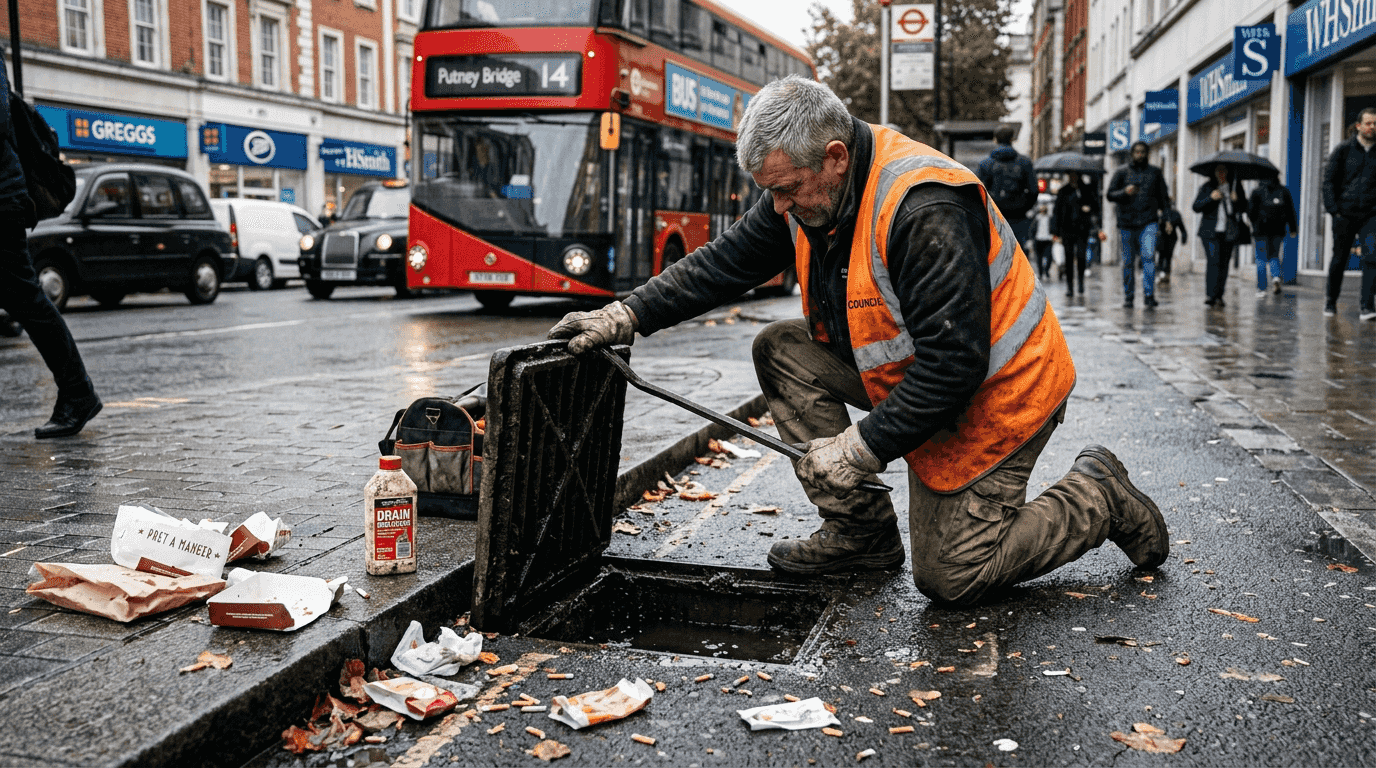
Thames Water clears 75,000 drain blockages annually, costing £18 million per year. These blockages disrupt London properties daily, causing expensive repairs and operational headaches for owners and managers. The main culprits include fats, oils, grease, inappropriate items like wet wipes, and structural issues such as tree root intrusion. Understanding how these blockages form empowers you to prevent them through targeted maintenance and proper waste disposal practices.
Table of Contents
- Common Causes Of Drain Blockages In London
- Detailed Explanation Of Fats, Oils, Grease And Blockages
- The Impact Of Inappropriate Items Flushed Down Drains
- Structural And Environmental Factors Causing Blockages
- Prevent Blockages With Expert Drainage Services In London
- How Drain Blockages Occur: Frequently Asked Questions
Key takeaways
| Point | Details |
|---|---|
| Fats, oils and grease dominate | 37.5% of blockages in 2025 stemmed from FOG accumulation on pipe walls. |
| Wet wipes cause massive damage | Thames Water removes 3.8 billion wet wipes annually, creating costly blockages and fatbergs. |
| Structural factors rising | Misaligned pipes increased to 12.5% of blockages, whilst tree roots caused 8.3% in 2025. |
| Prevention saves thousands | Regular maintenance and proper disposal habits dramatically reduce blockage frequency and repair costs. |
Common causes of drain blockages in London
London’s drainage system faces constant pressure from multiple blockage sources. Fats, oils and grease caused 37.5% of all blockages in 2025, making FOG the single largest contributor. These substances solidify inside pipes, gradually narrowing the passage until water cannot flow properly. Property owners often underestimate how quickly cooking grease accumulates, especially in commercial kitchens and multi-unit buildings.
Inappropriate items represent another major threat to drainage infrastructure. Inappropriate items caused 33.3% of blockages in 2025, with wet wipes being the primary offender. Thames Water’s teams remove 3.8 billion wet wipes from London’s drains each year at a staggering cost of £18 million annually. These products do not break down like toilet paper, instead binding with grease to form concrete-like masses.
Structural and environmental factors also contribute significantly:
- Misaligned or broken pipes allow debris accumulation at joints
- Tree roots penetrate cracks seeking moisture, expanding inside pipes
- Ageing Victorian-era infrastructure develops weakness points over time
- Sewer back-ups from public systems affect private drainage networks
The scale of London’s blockage problem becomes visible through extreme examples. A 100-tonne fatberg removed in west London measured 125 metres long, composed entirely of wet wipes held together by solidified fats. Clearing such blockages requires specialist equipment and weeks of work, disrupting services for thousands of properties.

| Blockage cause | 2024 percentage | 2025 percentage | Trend |
|---|---|---|---|
| Fats, oils, grease | 34.6% | 37.5% | Rising |
| Inappropriate items | 40.7% | 33.3% | Falling |
| Misaligned pipes | 8.5% | 12.5% | Rising |
| Tree roots | 6.8% | 8.3% | Rising |
Understanding these common causes of blocked drains helps property managers prioritise prevention strategies. The data shows public awareness campaigns are working to reduce inappropriate flushing, but FOG and structural issues require more targeted intervention. You can explore detailed NADC blockage statistics to track ongoing trends and regional variations.
Detailed explanation of fats, oils, grease and blockages
FOG creates blockages through a deceptively simple process. When hot grease enters drains, it flows easily at first. As it cools, grease solidifies on pipe walls, reducing the internal diameter with each pouring. Over months and years, these layers build into thick deposits that trap other debris, eventually blocking water flow completely.

The chemistry behind fatberg formation makes them particularly dangerous. FOG does not simply harden alone; it acts as an adhesive binding agent. Wet wipes, sanitary products, cotton buds and food particles stick to the greasy surface, creating composite blockages far stronger than their individual components. The 125-metre, 100-tonne fatberg discovered in Feltham demonstrated this binding effect, with wet wipes forming a structural matrix held together by congealed fats.
Commercial kitchens present the highest FOG risk due to volume and temperature. Restaurants, hotels and catering facilities pour litres of hot oil and grease down sinks daily. Even with grease traps installed, many systems fail through poor maintenance or inadequate capacity. Residential properties contribute too, particularly during holiday cooking periods when roasting tins get rinsed directly into sinks.
Prevention requires changing disposal habits fundamentally:
- Scrape plates into bins before washing, removing all visible grease
- Pour cooled cooking oil into sealed containers for proper disposal
- Wipe greasy pans with paper towels before rinsing
- Install and maintain grease traps in commercial properties
- Never pour fat or oil down any drain, regardless of temperature
Pro tip: Use enzymatic or microbial drain treatments monthly to break down grease before it solidifies. These biological solutions digest FOG naturally without damaging pipes, providing ongoing protection between professional cleanings.
The cost implications extend beyond clearance fees. FOG blockages corrode pipes through chemical reactions, shortening infrastructure lifespan significantly. Properties experiencing repeat blockages often need complete pipe replacement rather than simple cleaning. Understanding proper drain unblock methods helps you address problems early before permanent damage occurs.
London’s west London fatberg removal required three weeks of continuous work by specialist teams using high-pressure water jets and manual excavation. The blockage had grown for years undetected, demonstrating how FOG problems develop gradually until reaching crisis point. Regular inspection prevents such extreme scenarios.
The impact of inappropriate items flushed down drains
Wet wipes dominate the inappropriate flushing category despite widespread awareness campaigns. Inappropriate items caused 33.3% of blockages in 2025, down from 40.7% in 2024, showing education efforts are making progress. However, Thames Water still cleared 29,000 rag blockages this year, predominantly composed of wet wipes marketed as flushable.
The flushable label misleads consumers fundamentally. Whilst these wipes may disappear down toilets initially, they do not break down like toilet paper. Instead, they travel through pipes intact, snagging on any irregularity and accumulating at bends. Combined with FOG, they form the structural core of fatbergs that can take months to develop and weeks to remove.
Common inappropriate items causing blockages include:
- Wet wipes, including those labelled flushable
- Sanitary products and tampons
- Cotton buds and cotton wool pads
- Dental floss and hair
- Condoms and nappies
- Food waste and coffee grounds
- Medication and razor blades
The consequences ripple beyond immediate blockages. Sewage backups into properties create health hazards requiring specialist cleaning and decontamination. Insurance claims for water damage often exclude blockages caused by inappropriate flushing, leaving property owners facing four-figure bills. Shared drainage systems in blocks of flats mean one resident’s poor habits affect multiple households.
Public awareness campaigns are changing behaviours gradually. Water companies distribute educational materials highlighting proper disposal methods. Schools teach children about drainage system protection. Social media campaigns share shocking fatberg images to drive home the message. These efforts explain the 7.4 percentage point decrease in inappropriate item blockages between 2024 and 2025.
Pro tip: Place small bins with lids in every bathroom to make proper disposal convenient. Residents default to flushing inappropriate items when bins are absent or inconvenient to access, so removing this barrier changes behaviour effectively.
Property managers should communicate disposal guidelines clearly to tenants and residents. Simple signage near toilets and sinks reinforces good habits. Lease agreements can specify expectations around drain care, creating accountability. Understanding safe drain unblocking techniques helps you respond quickly when problems do occur despite prevention efforts.
The financial motivation for prevention is compelling. Professional drain clearance costs £150-£400 per incident, whilst replacement of damaged pipes runs into thousands. Multiplied across multiple annual blockages, prevention measures deliver substantial returns on investment through avoided costs and reduced disruption.
Structural and environmental factors causing blockages
Physical infrastructure condition plays an increasingly important role in London’s drainage problems. Misaligned pipes rose to 12.5% of blockages in 2025, up from 8.5% in 2024, reflecting ageing systems reaching failure points. Pipe joints separate over time due to ground movement, creating lips and gaps where debris accumulates. These structural weak points act as collection points, turning minor drainage issues into complete blockages.
Tree root intrusion represents nature’s persistent assault on drainage systems. Roots seek moisture sources aggressively, detecting even tiny amounts of water vapour escaping through pipe cracks. Once inside, roots caused 8.3% of blockages in 2025, expanding rapidly as they access unlimited water supplies. Mature London plane trees and willows pose particular risks due to extensive root systems reaching 20 metres from trunks.
Older pipes demonstrate vulnerability through multiple failure modes. Victorian-era clay pipes crack from freeze-thaw cycles, ground settlement, and simple age deterioration. Cast iron pipes corrode from inside, developing rough surfaces that catch debris. Even concrete pipes deteriorate through chemical erosion from acidic wastewater. Properties built before 1970 face higher structural blockage risks requiring proactive maintenance.
| Structural cause | Symptoms | Solutions |
|---|---|---|
| Misaligned pipes | Recurring blockages at same location | CCTV survey to locate, then excavation repair or relining |
| Tree root intrusion | Seasonal blockages, slow drainage | Root cutting, pipe relining, or tree removal |
| Cracked pipes | Persistent dampness, ground subsidence | Patch repair for small cracks, full replacement for extensive damage |
| Sewer back-ups | Multiple properties affected simultaneously | Check public system, install non-return valves |
Preventing structural blockages requires systematic maintenance:
- Schedule annual CCTV drain surveys to identify developing problems early
- Document pipe locations and materials for targeted monitoring
- Remove or prune trees near drainage runs, especially willows and poplars
- Install root barriers during landscaping to protect vulnerable pipe sections
- Replace clay and cast iron pipes proactively before failure occurs
- Consider trenchless relining for pipes showing early deterioration signs
Relining technology offers cost-effective solutions for structurally compromised pipes. This process inserts a resin-impregnated liner into existing pipes, creating a smooth, jointless interior surface resistant to root penetration and corrosion. Relining costs significantly less than excavation and replacement whilst extending pipe life by 50 years. Older pipes benefit particularly from this preventative approach.
Following a comprehensive drain maintenance checklist helps property managers stay ahead of structural issues. Regular inspection reveals problems whilst they remain manageable and affordable to fix. Waiting until complete failure occurs multiplies costs through emergency callouts, extensive repairs, and consequential damage to buildings and landscaping.
Prevent blockages with expert drainage services in London
Understanding blockage causes empowers prevention, but professional expertise ensures your drainage system remains clear and functional year-round. RSJ Drains delivers comprehensive solutions tailored to London properties, addressing the specific challenges Greater London’s infrastructure faces.
Our drainage services cover the complete spectrum from emergency clearance to preventative maintenance programmes. We respond within two hours for urgent blockages, minimising disruption to your property operations. Regular maintenance contracts provide scheduled inspections and cleaning, catching problems before they escalate into costly emergencies.
Key services addressing common blockage causes:
- CCTV drain inspection services identify structural issues, root intrusion and developing blockages
- High-pressure water jetting removes FOG deposits, scale and debris without damaging pipes
- Drain relining repairs cracks and misalignments, preventing future root intrusion
- Preventative maintenance programmes include scheduled cleaning and monitoring
Property managers benefit from our detailed reporting and documentation. Following each inspection, you receive comprehensive footage and condition assessments highlighting any concerns. This transparency helps you budget for repairs, prioritise urgent work, and demonstrate proper maintenance to tenants and stakeholders. Our family-run business takes pride in building long-term relationships with London property owners through reliable, professional service.
How drain blockages occur: frequently asked questions
What distinguishes fat blockages from inappropriate item blockages?
Fat, oil and grease blockages develop gradually as cooking residue solidifies on pipe walls, narrowing the passage over months. Inappropriate item blockages form suddenly when objects like wet wipes lodge in pipes, often combining with FOG to create composite blockages called fatbergs that require professional removal.
How do tree roots damage drainage systems?
Roots detect moisture escaping through tiny cracks in pipes and grow towards these water sources. Once inside, they expand rapidly, breaking pipes further and creating dense mats that trap debris. Root blockages recur seasonally as growth accelerates in spring, requiring cutting and often pipe relining to prevent future intrusion.
What reduces sewer back-up risks in London homes?
Install non-return valves on properties connected to combined sewers vulnerable to surcharge during heavy rainfall. Maintain your private drainage properly so blockages do not contribute to system overload. Report persistent sewer odours or slow drainage to Thames Water, as public system problems affect private properties downstream.
Why should property owners invest in regular drain maintenance?
Preventative maintenance costs a fraction of emergency repairs whilst catching problems early. Annual CCTV surveys identify developing blockages, structural damage and root intrusion before they cause failures. Regular high-pressure jetting removes FOG accumulation and debris, extending pipe life and preventing the costly damage that blocked drains in London properties commonly experience.
Can old pipes be repaired without excavation?
Modern relining technology inserts resin liners into existing pipes, creating a smooth, jointless interior surface. This trenchless method repairs cracks, seals joints against root intrusion, and extends pipe life by 50 years at a fraction of excavation costs. Properties with Victorian-era clay or corroded cast iron pipes benefit particularly from this approach.
How quickly do FOG deposits form blockages?
Commercial kitchens pouring daily grease can develop significant deposits within 6-12 months. Residential properties typically take 2-3 years for FOG accumulation to restrict flow noticeably. The rate depends on grease volume, water temperature, pipe diameter and existing roughness. Regular cleaning every 12-18 months prevents buildup reaching critical levels.