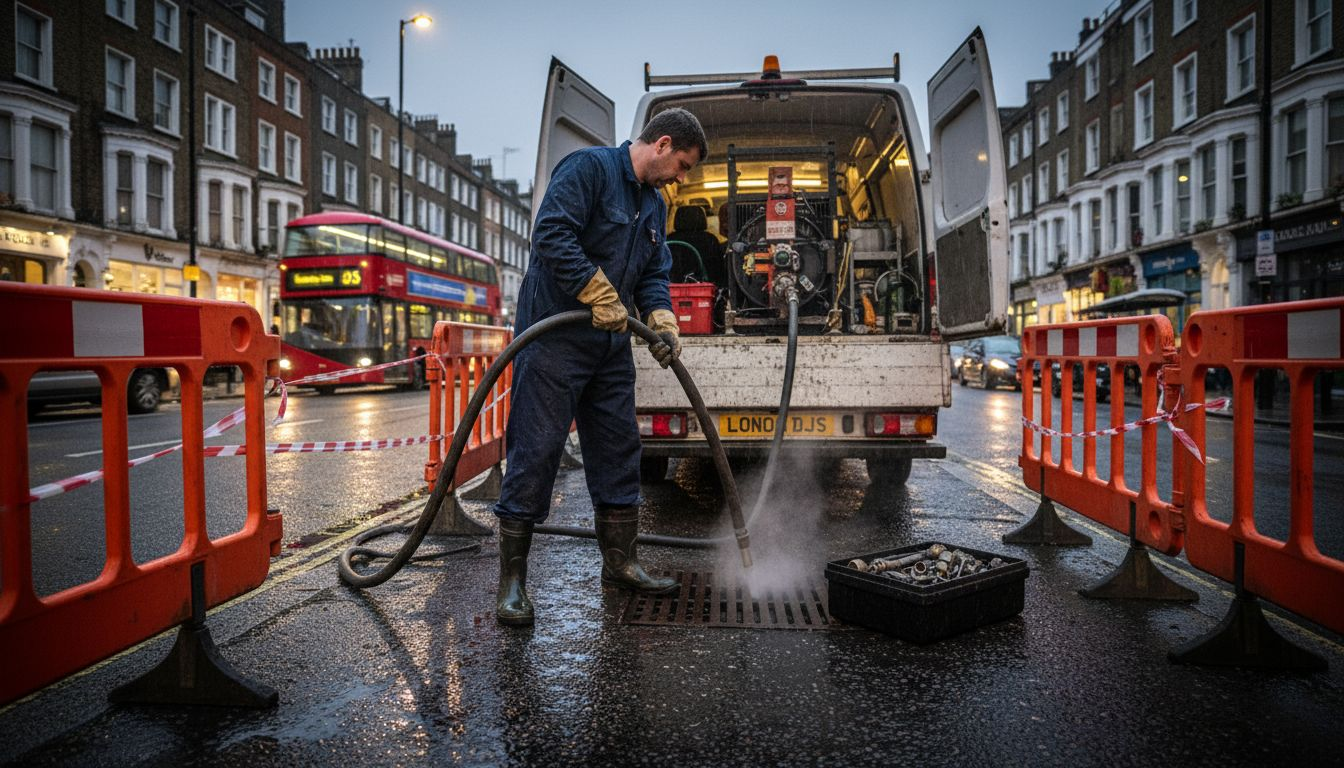
When a drainage blockage strikes your Greater London property, every minute counts. Drain jetting clears serious blockages in as little as 15 minutes, significantly faster than traditional rodding or chemical treatments. This guide explains what drain jetting is, how it works, and why property owners and managers across London trust it for emergency drainage clearing. You’ll learn when to choose this method, what it can handle, and how professionals ensure safe, effective results.
Table of Contents
- Understanding Drain Jetting: What It Is And How It Works
- Why Drain Jetting Is Essential For Emergency Drain Blockages
- Safety And Pipe Integrity: What Property Owners Should Know
- Types Of Blockages And Problems That Drain Jetting Can Effectively Handle
- Common Misconceptions About Drain Jetting
- Real-World Applications: Drain Jetting Success Stories In Greater London
- Explore Expert Drain Jetting And Emergency Drainage Services
- Frequently Asked Questions About Drain Jetting
Key Takeaways
| Point | Details |
|---|---|
| Speed | High-pressure water jetting clears blockages in 15-30 minutes, 40% faster than alternatives. |
| Safety | Professional application protects pipes including PVC, clay, and cast iron common in London properties. |
| Effectiveness | Removes grease, roots, silt, and debris but doesn’t repair structural damage. |
| Emergency Use | Ideal rapid response solution for urgent blockages minimizing property downtime. |
| Professional Assessment | Pre-jetting CCTV inspection prevents damage and ensures appropriate pressure settings. |
Understanding Drain Jetting: What It Is and How It Works
Drain jetting uses specialized equipment to deliver water at 1,500-4,000 psi directly into your drainage system. This powerful stream mechanically cuts through stubborn blockages, breaking apart debris that gravity alone cannot shift. The method suits most urban drainage systems found throughout Greater London.
The core principle is straightforward. High-pressure water acts like a precision tool, slicing through grease buildup, root intrusions, hardened silt, and other common obstructions. Unlike chemical cleaners that dissolve some materials slowly, or rodding that merely punches holes through blockages, jetting thoroughly clears the entire pipe diameter.
The equipment includes:
- A high-pressure pump generating controlled water pressure
- Flexible hoses reaching deep into drainage networks
- Specialized nozzles directing water jets at optimal angles
- Forward and rear-facing jets for cleaning and propulsion
- Pressure gauges ensuring safe operation within pipe tolerances
Professional operators select appropriate pressure levels based on pipe material, age, and blockage type. The high-pressure water jetting process flushes loosened debris downstream toward main sewers, leaving pipes clean rather than simply creating temporary openings. This comprehensive cleaning reduces the likelihood of rapid re-blocking, a common problem with less thorough methods.
Pro Tip: Always request a pre-jetting camera inspection. This reveals pipe condition and blockage location, allowing technicians to adjust pressure settings and avoid surprises that could damage vulnerable sections.
Why Drain Jetting is Essential for Emergency Drain Blockages
When your kitchen sink backs up during peak service hours or a ground-floor toilet overflows threatening tenant spaces, you need immediate solutions. Drain jetting achieves clearance in 15-30 minutes with 40% faster resolution compared to manual rodding or chemical treatments. This speed difference directly translates to reduced property disruption and lower emergency costs.
The method excels against tough blockages that defeat other techniques. Grease accumulation in commercial kitchens, root intrusions from street trees, and compacted silt in older Victorian-era drains all respond effectively to high-pressure water. Where rodding might push debris aside temporarily, jetting removes it completely.
Key advantages for emergency scenarios include:
- No chemical exposure risks to occupants or technicians
- Works in all weather conditions without environmental delays
- Immediate verification possible via post-jetting CCTV inspection
- Minimal equipment footprint suitable for tight urban access
- Effective from first application without multiple treatment cycles
Local emergency drainage services in London rely on jetting as their primary rapid response tool. Professional operators arrive with mobile units capable of handling most residential and commercial blockages on first visit. This reliability matters when you’re managing multiple properties or facing health and safety obligations to restore sanitation quickly.
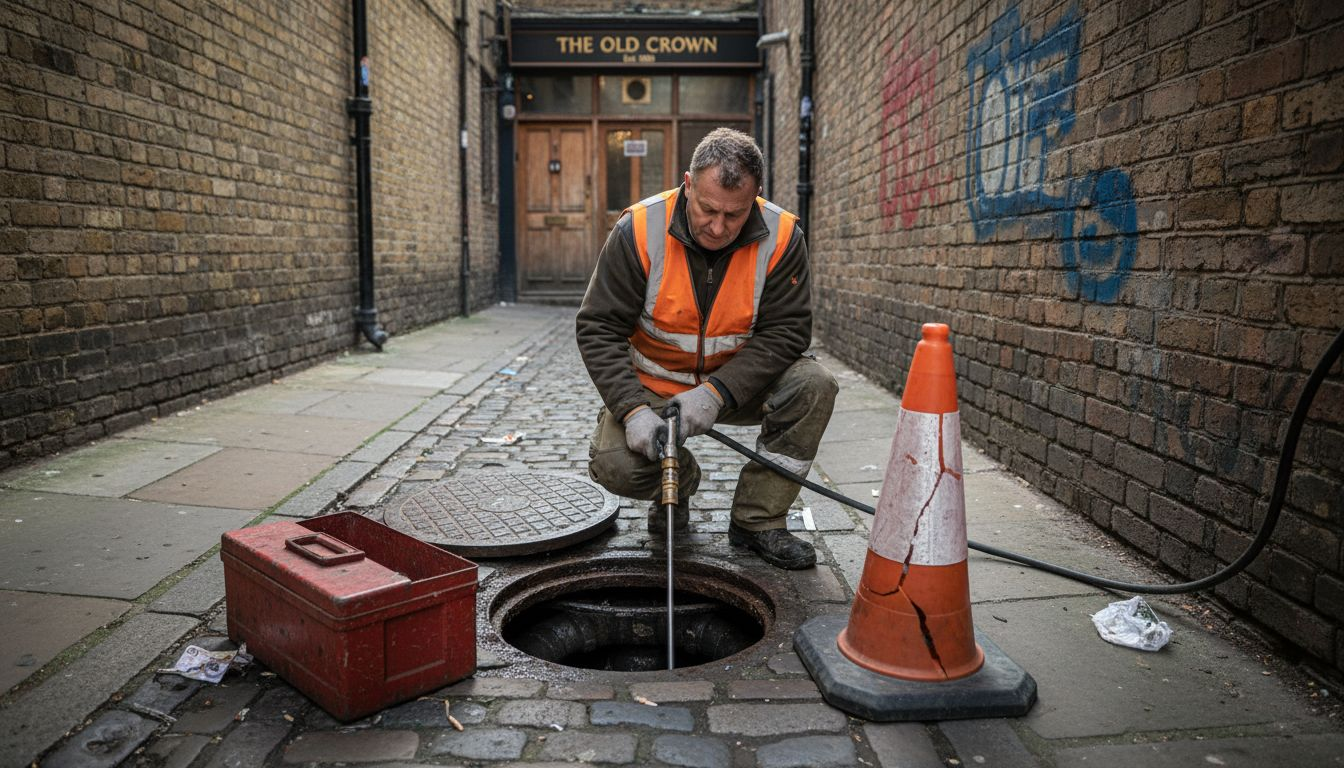
The drain jetting procedure begins with assessment and ends with verification. Technicians don’t simply blast water and leave. They confirm clearance, check for underlying damage, and advise on prevention measures specific to your property’s drainage characteristics.
Pro Tip: Keep your drain access points clearly marked and accessible. Emergency teams save valuable minutes when they can locate and open inspection chambers immediately upon arrival.
Safety and Pipe Integrity: What Property Owners Should Know
You might worry that powerful water pressure could damage aging pipes. This concern is valid but manageable. Properly applied pressures prevent damage and jetting is safe for common UK pipe materials including PVC, clay, and cast iron found throughout London properties. The key lies in professional assessment and appropriate pressure selection.
Trained technicians don’t use maximum pressure on every job. They adjust based on several factors: pipe material and age, visible condition from CCTV inspection, blockage type and severity, and manufacturer specifications for pressure tolerances. A Victorian clay drain receives gentler treatment than modern PVC, while maintaining full effectiveness.
Critical safety practices include:
- Pre-jetting CCTV surveys identifying weak points or existing damage
- Graduated pressure testing starting low and increasing only as needed
- Continuous monitoring during jetting operations
- Post-clearance inspection confirming no new damage occurred
- Documentation of pipe condition before and after treatment
Avoid DIY jetting equipment rental. Rental units often lack pressure regulation and safety features. More importantly, you lack the diagnostic skills to identify vulnerable pipe sections. What seems like a cost-saving measure can result in burst pipes, flooding, and repair bills far exceeding professional service costs.
The drain jetting procedure used by reputable contractors includes insurance coverage and guarantees. If damage occurs despite proper technique, you have recourse. Home jetting attempts leave you fully liable for any consequences.
Pro Tip: Request a condition report with your jetting service. This documents your drainage system’s state and highlights areas needing future attention before they become emergencies.
Types of Blockages and Problems That Drain Jetting Can Effectively Handle
Drain jetting removes grease, food waste, silt, roots, and stones effectively but cannot repair structural failures. Understanding this distinction helps you choose the right solution and set realistic expectations for service outcomes.
The method excels against accumulated materials that restrict flow. Commercial kitchens generate grease buildup that solidifies in cooler underground pipes. Tree roots seeking moisture infiltrate through joints and cracks. Silt and sediment gradually reduce pipe capacity in areas with poor gradient or ground movement.
| Blockage Type | Jetting Effective? | Notes |
|---|---|---|
| Grease and fats | Yes | Cuts through buildup completely |
| Tree roots | Yes | Removes intrusions but not entry points |
| Silt and sediment | Yes | Flushes accumulated material efficiently |
| Foreign objects | Partial | Small items clear, large objects need removal |
| Collapsed pipes | No | Requires excavation and replacement |
| Cracked pipes | No | Needs relining or repair, jetting clears only |
Proper blockage identification matters. CCTV surveys reveal whether your problem is removable debris or structural failure. Jetting a collapsed pipe wastes time and money while your property remains out of service. This diagnostic step, though adding upfront cost, prevents misapplied solutions.
The relationship between high-pressure water jetting benefits and inspection services is complementary. Cameras show what blocks your drain, jetting removes it, then cameras verify success and reveal any underlying damage needing attention. This complete approach addresses both immediate blockages and long-term system health.
Common types of drain blockages in London properties vary by building use and age. Residential drains typically face hair, soap, and occasional foreign objects. Commercial premises deal with food waste and grease. Period properties contend with root intrusion and silt accumulation in aging clay pipes.
Blocking scenarios requiring alternative solutions:
- Collapsed pipe sections preventing water flow
- Major cracks allowing soil infiltration
- Offset joints from ground settlement
- Severe root damage compromising pipe integrity
- Foreign objects too large to flush downstream
These situations need relining, excavation, or targeted repairs before or instead of jetting. Honest contractors tell you when jetting isn’t appropriate, saving you money and delivering actual solutions.
Common Misconceptions About Drain Jetting
Several persistent myths about drain jetting lead property owners to avoid this effective method or apply it inappropriately. Let’s address the most common misunderstandings with factual evidence.
Myth: High-pressure water always damages pipes. Reality: Drain jetting is safe for over 90% of urban UK pipes when operated by professionals. Damage occurs from improper pressure selection or operator error, not from the method itself. Reputable contractors assess your specific pipes and adjust accordingly.
Myth: Jetting repairs cracks and structural problems. Reality: Jetting cleans only. It removes blockages brilliantly but cannot fix breaks, collapses, or joint separation. These require relining or replacement. Claiming jetting repairs damage misleads property owners into delaying necessary structural work.
Myth: Chemical drain cleaners are more environmentally friendly. Reality: Mechanical jetting uses only water, eliminating chemical discharge into waterways. Chemical cleaners containing caustic substances or acids harm aquatic ecosystems and corrode pipes over time. Jetting’s environmental impact is minimal.
“Professional drain jetting reduces chemical cleaner use by over 80% while achieving faster, more complete blockage removal with zero toxic discharge into London’s water systems.”
These misconceptions matter because they influence decisions. Property owners avoiding jetting due to damage fears may rely on repeated chemical treatments that cost more over time and harm their drainage systems. Those expecting jetting to fix cracks waste money when they need repairs.
Understanding what drain jetting actually accomplishes helps you make informed choices. It’s a cleaning method, not a repair technique. It’s safe when done properly, not inherently damaging. It’s environmentally superior to chemicals, not equivalent or worse.
Another common confusion involves pressure requirements. Property owners sometimes believe maximum pressure always works best. Actually, optimal pressure varies by situation. Too much pressure on vulnerable pipes causes damage, while too little fails to clear stubborn blockages. Professional judgment makes the difference.
Real-World Applications: Drain Jetting Success Stories in Greater London
London case studies show a 40% reduction in emergency blockage resolution times using drain jetting with measurably improved client satisfaction. Real outcomes from local properties demonstrate practical benefits you can expect.
Recent emergency responses across Greater London highlight the method’s effectiveness. A Southwark restaurant facing complete kitchen drain failure during dinner service received clearance in 22 minutes, avoiding closure and protecting revenue. A Hackney residential block with recurring ground-floor backups achieved permanent resolution after jetting removed decades of accumulated grease and silt.
Documented performance metrics include:
- Average emergency clearance time: 18-25 minutes from arrival
- First-visit success rate: 94% for non-structural blockages
- Customer satisfaction scores: 92% rating service as excellent
- Re-blocking within 6 months: Less than 8% when combined with maintenance
- Cost savings versus excavation: 60-75% for suitable blockages
| Method | Average Clearance Time | Thoroughness | Re-blocking Rate | Environmental Impact |
|---|---|---|---|---|
| Drain Jetting | 15-30 minutes | Complete | 8% within 6 months | Minimal (water only) |
| Manual Rodding | 45-90 minutes | Partial | 35% within 6 months | Low |
| Chemical Cleaners | 2-12 hours | Variable | 40% within 6 months | High (toxic discharge) |
Property managers overseeing multiple London buildings report significant operational improvements after switching to regular jetting maintenance. Predictable scheduling reduces emergency callouts, tenant complaints drop, and total annual drainage costs decrease despite increased preventive service.
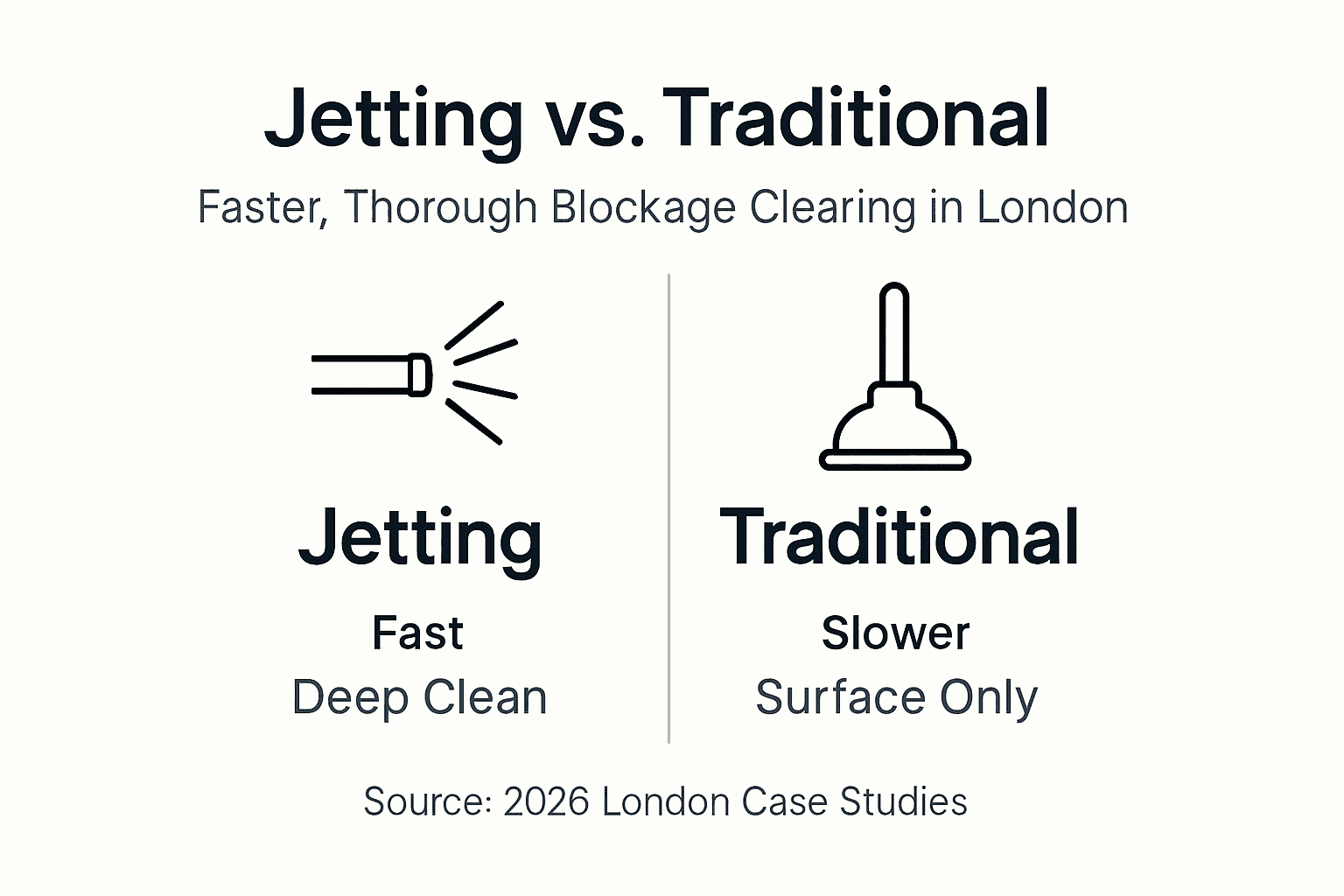
The London drain jetting case studies compiled from local service records reveal patterns. Commercial kitchens benefit from quarterly preventive jetting. Residential properties with mature trees need annual root removal. Period buildings with clay drains see best results from bi-annual maintenance combining inspection and jetting.
Practical insights for property owners considering local services:
- Emergency jetting costs less than lost business revenue or tenant compensation
- Preventive maintenance schedules reduce total annual drainage expenditure
- Combined CCTV and jetting services provide better value than separate visits
- Local contractors familiar with London’s drainage infrastructure work more efficiently
- Response time guarantees matter when managing urgent tenant or business needs
Client testimonials consistently emphasize three factors: speed of response, thoroughness of work, and clear communication about findings. Properties facing recurring issues appreciate contractors who explain underlying causes and recommend appropriate prevention strategies rather than just clearing immediate blockages.
Explore Expert Drain Jetting and Emergency Drainage Services
When drainage blockages threaten your Greater London property, professional intervention restores function quickly and safely. Experienced technicians combine diagnostic precision with effective clearing techniques, ensuring results without risking your infrastructure.
Comprehensive drainage services address both immediate blockages and long-term system health. Emergency teams equipped with camera inspection technology identify problems accurately before applying targeted solutions. This approach prevents wasted effort and delivers reliable outcomes.
Round-the-clock availability matters when blockages occur outside business hours. Emergency drainage services in London provide rapid response across all boroughs, minimizing property disruption and protecting occupant wellbeing. Professional operators arrive prepared with equipment suitable for most residential and commercial situations.
Detailed guidance on methods, applications, and maintenance appears in the high-pressure water jetting guide, helping property owners understand options and make informed decisions. Knowledge empowers you to choose appropriate services and maintain drainage systems effectively between professional visits.
Frequently Asked Questions About Drain Jetting
When should I choose drain jetting over other clearing methods?
Choose jetting for recurring blockages, grease accumulation, root intrusions, or when you need rapid emergency clearing. It’s most effective when blockages involve materials that build up over time rather than single foreign objects. CCTV inspection beforehand confirms jetting is appropriate for your specific situation.
Is high-pressure jetting safe for old clay or cast iron pipes?
Professional jetting is safe for most aging pipes when operators adjust pressure appropriately. Pre-treatment inspection identifies vulnerable sections requiring gentler treatment or repair before cleaning. Reputable contractors document pipe condition and refuse to jet structurally compromised drains that need replacement.
What signs indicate I need professional drain jetting services?
Slow drainage throughout your property, recurring blockages despite clearing attempts, gurgling sounds from multiple fixtures, or foul odors from drains all suggest accumulated buildup. Emergency signs include complete blockage, overflow, or sewage backup requiring immediate professional intervention.
How does drain jetting compare environmentally to chemical cleaners?
Jetting uses only water under pressure, creating no chemical discharge or toxic residue. Chemical cleaners release harmful substances into waterways and corrode pipes gradually. Mechanical cleaning eliminates environmental impact while achieving more thorough, longer-lasting results than chemical alternatives.
How quickly can emergency jetting services respond in London?
Most reputable London drainage contractors guarantee response within two hours for emergencies. Actual clearance typically takes 15-30 minutes once equipment is positioned and assessment is complete. Total resolution from initial call to restored function averages under 90 minutes for straightforward blockages.
Can drain jetting prevent future blockages completely?
Jetting removes existing buildup thoroughly but cannot prevent new accumulation. Regular maintenance schedules based on your property’s specific risk factors significantly reduce blockage frequency. Commercial kitchens need quarterly service while residential properties may require only annual preventive jetting combined with good disposal practices.