TL;DR:
- Drain problems often start silently with minor inconveniences that can escalate into severe damage if neglected. Factors like age, blockages, root intrusion, and ground shifts make London’s older pipes vulnerable, risking flooding and structural issues. Regular maintenance, timely professional inspections, and preventive habits can protect property value and save significant repair costs.
A slow drain today can become a flooded basement tomorrow. Drain problems rarely announce themselves loudly. They start quietly, with a slightly longer draining time or a faint smell near the kitchen sink, and then compound over months until a minor inconvenience becomes a repair bill running into thousands of pounds. For London homeowners and property managers, the stakes are particularly high. Older housing stock, dense urban tree cover, and ageing underground pipe networks all increase the risk. The good news is that most serious drain damage is entirely preventable with the right habits and timely professional support.
Table of Contents
- Why drains get damaged and what’s at stake
- What you’ll need to prevent drain damage
- Step-by-step: Preventative measures for healthy drains
- Common mistakes: What not to do with household drains
- How to spot early signs and when to call in professionals
- What most people get wrong about drain damage prevention
- Get expert help to safeguard your drains
- Frequently asked questions
Key Takeaways
| Point | Details |
|---|---|
| Routine upkeep matters | Regular maintenance and sensible disposal habits prevent most drain damage. |
| Spot problems early | Recognising minor warning signs helps avoid expensive repairs later. |
| Professional help is vital | Expert inspection is necessary when DIY methods fail or signs persist. |
| Avoid common mistakes | Do not flush wipes, oils, or non-degradable materials down your drains. |
Why drains get damaged and what’s at stake
Understanding the threats to your drainage system is the first step towards protecting your property. In Greater London, several factors combine to put drains under constant pressure. The city’s vast stock of Victorian and Edwardian terraced housing means many properties are sitting above pipes that are over a century old. Age alone makes them fragile, but they also face modern stresses those pipes were never designed to handle.
The most common causes of drain damage include:
- Blockages from flushed wipes, food debris, and sanitary products
- Fat and oil build-up that hardens inside pipes over time, narrowing flow capacity
- Tree root intrusion, particularly in properties with mature street trees or large garden trees nearby
- Ground movement and subsidence, which can crack or misalign pipe joints
- Ageing materials such as clay or cast iron pipes that become brittle and collapse
The consequences of neglect are serious. Blocked, cracked or collapsed drains can lead to property flooding and structural issues, meaning what starts as a slow drain can end with water penetrating foundations or causing damp that spreads through walls. In London’s dense terraced streets, drain problems in one property can quickly affect neighbouring homes, creating disputes and shared liability.
Drain issues in older London properties rarely come alone. One failing pipe section can put stress on surrounding pipes, accelerating the collapse of the entire run.
Knowing the symptoms of drain issues specific to London homes helps you act before damage becomes severe. The sooner you spot the signs, the more options you have for a simple, affordable fix.
What you’ll need to prevent drain damage
Prevention requires both the right tools and the right habits. Before you start any maintenance routine, it helps to gather the essentials and understand what role each one plays.
| Item | Purpose | Frequency of use |
|---|---|---|
| Rubber gloves | Safe handling of drain covers and debris | Every clean |
| Drain rods | Clearing accessible blockages manually | As needed |
| Enzyme-based drain cleaner | Breaks down fat, oil, and organic build-up | Monthly |
| Drain guard or strainer | Catches food and debris before it enters the pipe | Continuous |
| Garden hose with jet attachment | Flushing outdoor gulleys and grates | Seasonally |
| CCTV inspection service contact | Professional assessment of hidden issues | Annually |
Equipping yourself with even the basics makes a genuine difference. A simple drain strainer over your kitchen sink costs under a pound and prevents years of grease build-up. Simple routine maintenance and early action are the best ways to avoid costly repairs, which is why starting with these everyday tools matters so much.
Beyond tools, build these habits into your household routine:
- Never pour cooking oil or fat directly down the sink. Allow it to cool and dispose of it in the bin.
- Run hot water for 30 seconds after washing dishes to push grease residue through the pipe.
- Check outdoor drain grates monthly for leaves, soil, and debris, especially in autumn.
- Monitor for slow drainage after rain, which can indicate a partially blocked underground pipe.
- Avoid planting fast-growing trees near drain runs.
Use your drain maintenance checklist to keep track of what’s been done and when, and align your schedule with seasonal maintenance tips to stay ahead of weather-related risks throughout the year.
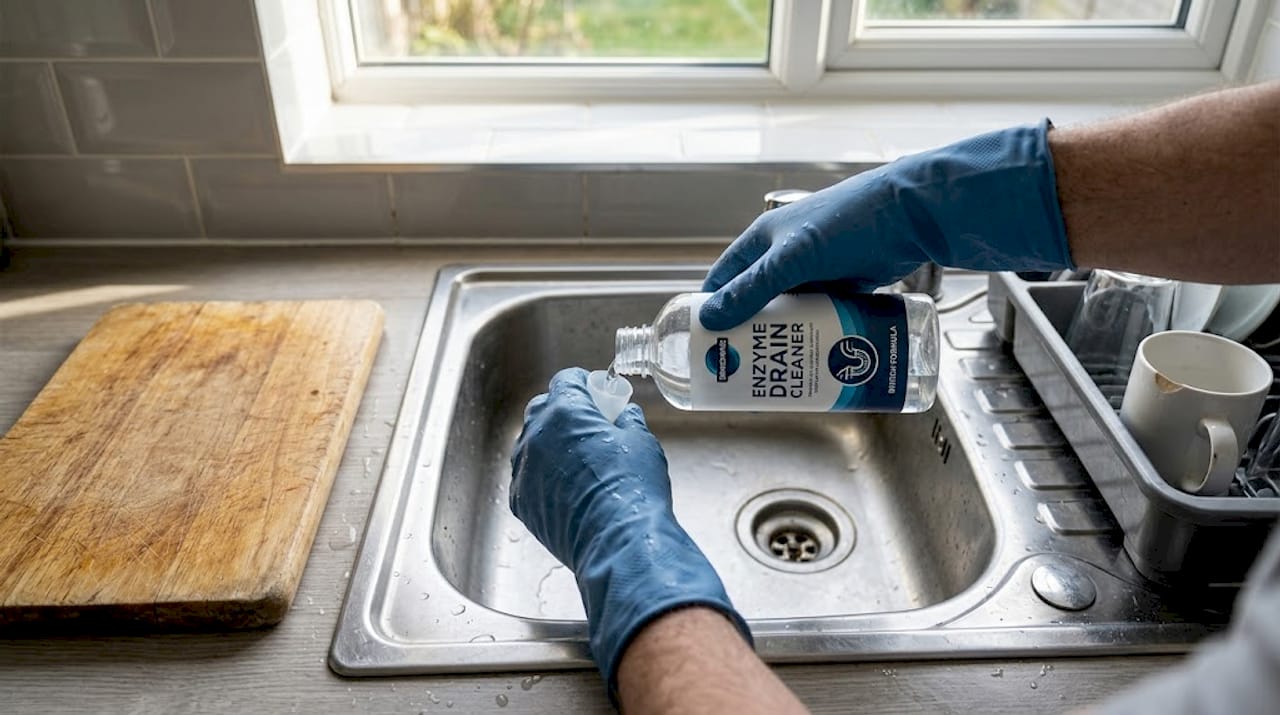
Pro Tip: Enzyme-based drain cleaners are far safer and more effective for regular use than harsh chemical alternatives. They work by breaking down organic matter such as fat, food particles, and soap scum without corroding your pipework. Use one monthly in kitchen and bathroom drains as a genuinely preventative measure rather than waiting until a blockage forms.
Step-by-step: Preventative measures for healthy drains
With your tools gathered and habits mapped out, put them into practice with this ordered approach.
-
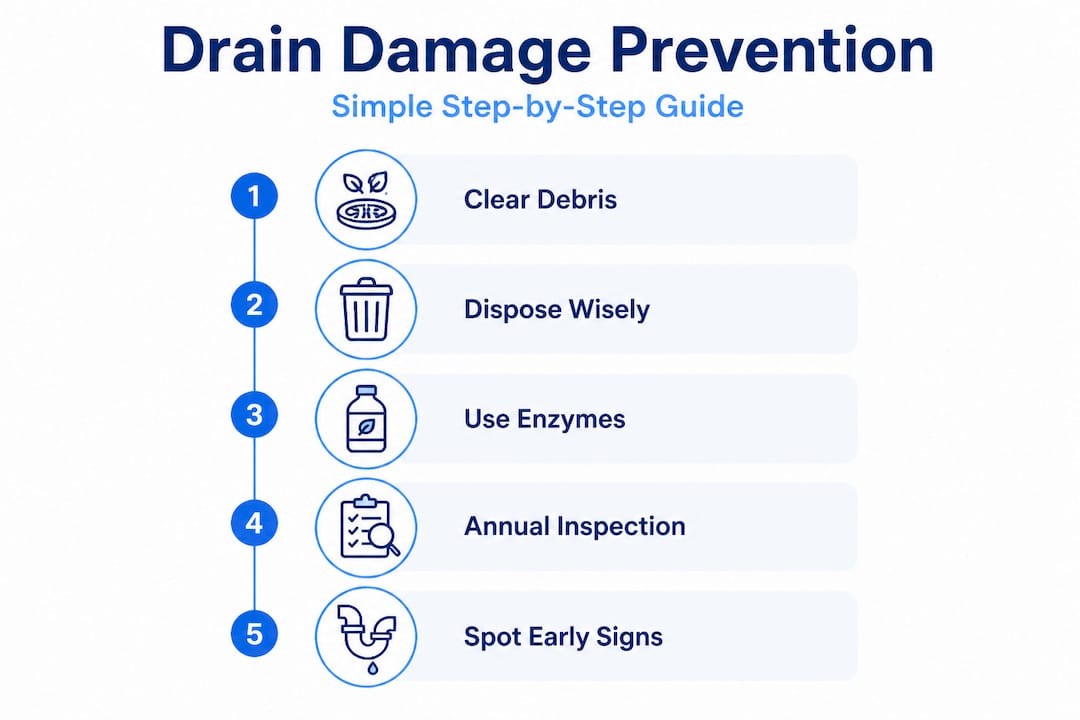
Fit drain guards to every plughole. Kitchen, bathroom, and shower drains should all have a physical barrier to catch debris. Empty and clean them weekly.
-
Dispose of grease and oil correctly. Pour cooled fat into a sealed container and put it in your household waste. Even small amounts flushed regularly will build up into solid blockages over time.
-
Flush outdoor drains monthly. Use a garden hose to clear garden gulleys and yard drains of leaf litter and sediment. In autumn, do this fortnightly.
-
Run enzyme cleaner down kitchen and bathroom drains monthly. Follow the product instructions, but typically this means pouring the cleaner in at night and letting it work while the drain is not in use.
-
Check for slow drainage throughout the property. If any sink, bath, or toilet is slower than usual, investigate promptly rather than hoping it improves.
-
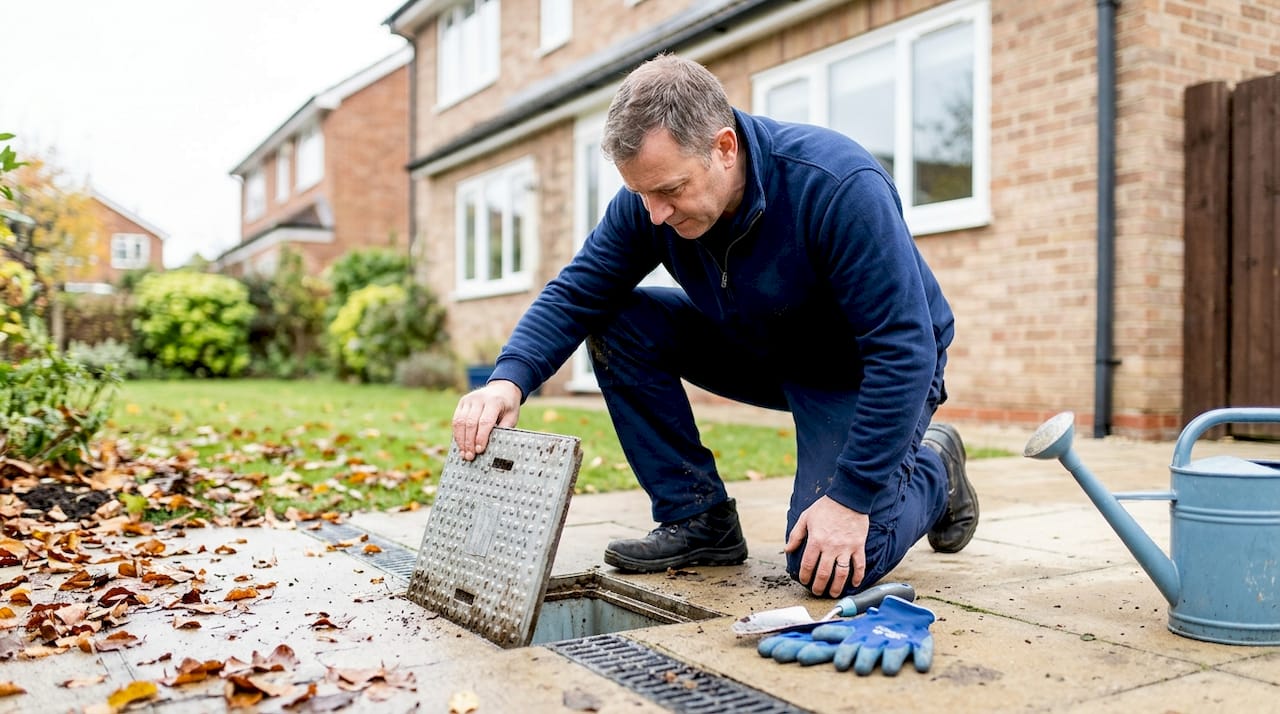
Inspect external gully pots and manhole covers twice a year. Lift the cover (wearing gloves) and check for silt build-up, standing water, or visible cracks.
-
Clear leaves and debris from flat roof outlets before winter. This prevents backed-up water entering the building structure rather than draining away safely.
-
Note any new damp patches on walls or floors. These can indicate a slow underground leak rather than a surface spill.
Regular cleaning and maintenance can protect your home and avoid costly emergency repairs, particularly in older London properties where small issues can escalate quickly.
Catching a partial blockage early typically costs a fraction of the price of clearing a full collapse. A 30-minute annual inspection can save you thousands.
Pro Tip: Book a visual or CCTV drain inspection annually, particularly if your property is over 30 years old or has mature trees nearby. A camera survey will reveal cracks, root intrusion, and misaligned joints that are completely invisible from above ground. It is the single most reliable way to know exactly what condition your drains are in. Check the tips to prevent drain blockages page for guidance on what to look for between professional visits, and review maintenance for London homes to understand what a full routine should cover.
Common mistakes: What not to do with household drains
Prevention is only effective if you also avoid the classic pitfalls. Many drain problems are not caused by bad luck but by habits that are easy to change once you know better.
| Common mistake | Damage caused | Safer alternative |
|---|---|---|
| Pouring grease or fat down the sink | Hardens into solid blockages over time | Collect in a jar and bin it |
| Flushing wet wipes (even “flushable” ones) | Causes blockages and fatberg formation | Bin all wipes without exception |
| Neglecting garden gulleys and grates | Soil and leaf build-up blocks flow | Clear monthly, especially in autumn |
| Using chemical drain cleaner routinely | Corrodes older clay or cast iron pipes | Switch to enzyme-based alternatives |
| Ignoring slow drainage for weeks | Partial blockage becomes full blockage | Investigate and act within days |
| Planting hedges or trees over drain runs | Root intrusion cracks pipe joints | Check drain routes before planting |
Flushing unsuitable substances like wipes and fats causes most household blockages, yet both remain among the most commonly reported problems drainage engineers encounter across London every single week. Changing these two habits alone will dramatically reduce your risk.
If you have accidentally made one of these mistakes and suspect a partial blockage, here is what to do immediately:
- Pour a full kettle of just-boiled water slowly down the affected drain to help soften grease.
- Follow up with an enzyme-based cleaner and leave overnight.
- If drainage does not improve within 24 hours, use a drain rod to check for a reachable blockage.
- If the blockage is not accessible or the problem persists, call a professional rather than adding more chemical products.
Changing your habits has long-term financial value too. Reviewing how proactive maintenance saves money shows that the cumulative cost of prevention is consistently far lower than even a single emergency call-out, let alone structural repairs.
How to spot early signs and when to call in professionals
Even the most careful prevention can miss early warning signs, so stay vigilant and trust what you observe. Your drains will usually give you signals before a serious problem develops. The challenge is knowing which signals deserve immediate action.
Key warning signs to watch for:
- Persistently slow draining in any sink, bath, or toilet that does not clear after basic cleaning
- Gurgling sounds coming from drains when water empties elsewhere in the property
- Unpleasant smells from drains that return after cleaning, suggesting a blockage deeper in the system
- Puddles or wet patches in the garden that appear without rainfall, indicating an underground leak
- New damp patches on internal walls or floors, particularly at ground level
- Visible subsidence or cracking near drain inspection covers
Most major drainage repairs begin as undetected minor issues. A small root intrusion into a pipe joint, if left unchecked, will widen as the root grows and eventually cause the pipe wall to crack or collapse entirely. Similarly, a partial fat blockage that restricts flow by 30 percent will continue to accumulate and will become a complete blockage within weeks.
Prompt action when you suspect a problem often makes the difference between simple fixes and large-scale drain repairs. This is not an exaggeration. A CCTV survey carried out at the first sign of trouble can identify whether a partial repair is sufficient or whether a full relining is needed, and that distinction can be the difference between a few hundred pounds and several thousand.
Knowing when to call professionals is important. Seek expert assessment if you experience:
- Recurring blockages in the same drain despite repeated clearing
- Multiple drains backing up simultaneously, which suggests a main drain issue
- Any visible sewage or foul water appearing at surface level
- A drain that has been cleared but the problem returns within days
Proactive maintenance also protects property value when it comes to selling or letting. Buyers and surveyors now routinely request drainage reports, and an undiscovered problem found at that stage can delay a sale or reduce the price significantly.
What most people get wrong about drain damage prevention
After years of working on drainage systems across Greater London, the pattern we see most consistently is not ignorance of the problem. It is a fundamental misunderstanding of what prevention actually means.
Most homeowners treat drain maintenance as a one-off task. They clear a blockage, pour some cleaner down the sink, and consider the job done for another year or two. The issue is that drainage is a system under constant stress from daily use, seasonal ground movement, tree growth, and the gradual ageing of materials. Treating it as done once cleared is like changing your car’s oil once and assuming the engine will manage indefinitely.
The hidden costs of ignoring subtle warning signs are significant. A slow drain that is shrugged off for six months is not just inconvenient. It represents six months of additional organic build-up, six months of root growth if intrusion is present, and six months of slow water pressure against a cracked pipe joint. The longer a minor issue runs, the more expensive the eventual repair becomes.
What separates property owners who rarely face serious drain emergencies from those who face them repeatedly is almost always mindset. The first group sees maintenance as an ongoing system. They have a routine, they notice changes in drain behaviour, and they act early. The second group reacts to problems rather than preventing them.
Adopting a maintenance mindset is genuinely worth it in London. Property values are high, repair costs are high, and disruption from drainage emergencies is substantial. Reviewing the essential steps for London homes is a practical starting point for anyone who wants to move from reactive to proactive.
Get expert help to safeguard your drains
If reading through this guide has made you realise your drains have not had professional attention in a while, now is the right time to act. Prevention works best before problems develop, and a professional inspection can tell you exactly what condition your system is in.
At RSJ Drains, we provide drainage services across Greater London for residential and commercial properties, from routine maintenance to urgent repairs. A CCTV drain inspection gives you a clear, camera-verified picture of your pipe condition, identifying any hidden cracks, root intrusion, or build-up before it becomes an emergency. If issues are found, our drain repairs team can address them quickly, with 24-hour emergency availability and a two-hour response guarantee across London. Get in touch today for honest, professional advice on protecting your property.
Frequently asked questions
What household items cause the most drain damage?
Wipes, oils, fats, and food scraps flushed down sinks or toilets are the leading culprits, as they accumulate inside pipes and form solid blockages that restrict or completely stop water flow.
How can I tell my drain is starting to fail?
Slow draining, gurgling noises, and persistent smells are early warning signs, and as cracked or collapsed drains can lead to flooding and structural issues, you should investigate these symptoms without delay.
Is professional maintenance always necessary?
Routine DIY care is sufficient for minor upkeep, but prompt action on suspected problems often makes the difference between simple fixes and large-scale repairs, so recurring or worsening issues always warrant professional inspection.
How often should I clean my drains to prevent damage?
Monthly light cleaning combined with a yearly professional check is a reliable standard, as regular cleaning and maintenance can protect your home and prevent the costly emergency repairs that neglect inevitably leads to.