
TL;DR:
- Different drain blockages require specific solutions to prevent worsening damage and recurring issues.
- Common causes include FOG build-up, non-flushable items, and structural pipe damage.
- Professional CCTV surveys are essential for accurate diagnosis and effective long-term solutions.
A blocked drain rarely gives you warning. One morning the sink drains slowly, the next it refuses to drain at all, and suddenly your property faces water damage, foul odours, and costly disruption. For London homeowners and property managers, drain blockages are a daily reality, driven by older infrastructure, dense urban living, and habits that pile pressure on ageing pipes. Not every blockage is the same, though, and treating them as if they are is where most people go wrong. This article walks through the main types of drain blockages, what causes each one, how to spot them early, and what actually works to fix them properly.
Table of Contents
- Why identifying drain blockage types matters
- Fat, oil and grease blockages (FOGs)
- Foreign objects and non-flushable items
- Structural and environmental blockages
- Why most DIY fixes fail — and what property managers miss
- Solve drain blockages fast with expert support
- Frequently asked questions
Key Takeaways
| Point | Details |
|---|---|
| Wet wipes lead blockages | Non-flushable items, especially wet wipes, are the top cause of blocked drains in London homes. |
| FOGs create fatbergs | Cooking oil and grease solidify and trap debris, requiring specific prevention methods. |
| Structural issues need experts | Cracked, misaligned, or scaled pipes—common in older London properties—often demand professional inspection. |
| Early identification is key | Knowing the type of blockage enables quicker, more effective solutions and prevents recurring problems. |
Why identifying drain blockage types matters
When your drain stops working, the instinct is to reach for a plunger or pour a bottle of chemical unblocker down the sink. That might clear a minor clog, but if the underlying cause is structural damage or a growing fatberg, you have simply bought yourself a few extra days before the problem returns, usually worse than before.
Different blockage types demand different responses. A grease build-up responds well to hot water jetting. Tree roots require specialist cutting equipment and possibly pipe relining. A collapsed section of pipe needs professional repair, full stop. Using the wrong approach does not just waste time and money. In some cases, it makes structural issues significantly worse.
Knowing what type of blockage you are dealing with helps you:
- Choose the right solution immediately rather than trial and error
- Avoid causing further damage to already weakened pipework
- Understand whether the issue is a one-off or a recurring risk
- Make an informed decision about when to call professionals
This is not just good advice for homeowners. Property managers overseeing multiple London properties face the real cost of recurring blockages across several units. Quick, accurate identification of the blockage type is the fastest route to resolving issues and preventing them from spreading through shared drainage systems.
Hydraulic engineering explains the compounding nature of blockages clearly. As debris gradually reduces pipe diameter, flow velocity drops below the threshold required for self-scouring, which means the pipe can no longer clean itself. Once that point is reached, further build-up accelerates rapidly, turning a small restriction into a full blockage in a surprisingly short time.
Pro Tip: If you notice a drain running slowly, do not wait. Slow drainage is the earliest warning sign. Catching blockages at this stage is far cheaper and simpler than dealing with a fully blocked or damaged pipe later. Learning to identify drain problems early is one of the most practical skills a London property owner can develop.
“Recurring blockages in the same location are almost never a coincidence. They point to an underlying cause that a temporary fix cannot address. Proper diagnosis is the only route to a lasting solution.”
Fat, oil and grease blockages (FOGs)
Fat, oil, and grease are responsible for a significant proportion of kitchen drain blockages across London. The mechanism is deceptively simple. You wash a greasy pan, the liquid fat travels down the drain with hot water, then cools as it moves through the pipe. As it cools, it solidifies, sticks to the pipe walls, and begins attracting other debris.
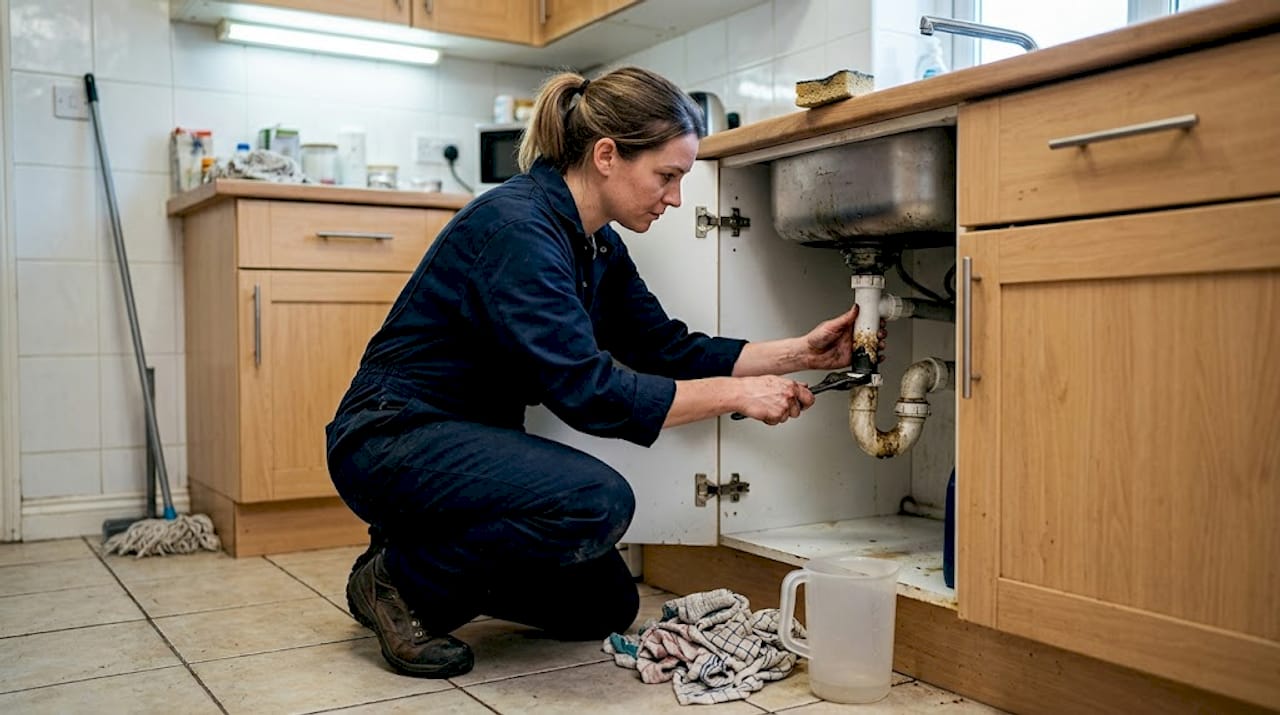
Over weeks and months, that sticky coating builds into a thick, waxy lining that progressively narrows the pipe. Understanding the causes of blockages like FOGs is essential because London’s love of takeaways, combined with older Victorian-era drainage systems that were never designed for modern volumes, creates ideal conditions for FOG build-up.
When FOGs combine with non-flushable items such as wet wipes, the result can be a fatberg, a solid, concrete-like mass that can span metres of pipework and requires industrial-grade equipment to remove. Thames Water has retrieved fatbergs weighing several tonnes from London’s sewers, some longer than a double-decker bus.
Common sources of FOG blockages in London kitchens:
- Cooking oils poured directly down the sink
- Residue from greasy pans rinsed without wiping first
- Takeaway containers scraped into the sink
- Butter, lard, and dairy fat from baking
| Prevention method | Effectiveness | Cost |
|---|---|---|
| Sink strainer | High for solids | Low |
| Bin disposal for fats | Very high | None |
| Hot water flush (alone) | Low, temporary | Low |
| Professional jetting | Very high | Moderate |
Pro Tip: Let cooking fat cool in the pan, then wipe it into the bin with kitchen roll before washing up. This single habit eliminates the majority of FOG risk from your kitchen drain. The NADC survey data consistently shows kitchens as the primary source of grease-related blockages in residential properties.
Foreign objects and non-flushable items
If FOGs are a slow, creeping threat, non-flushable items are a more immediate one. They are also the single biggest category of blockages in London homes, and the statistics are striking.
Non-flushable items cause 33.3% of all drain blockages according to the NADC 2025 survey, with some studies placing that figure as high as 94% when accounting for combined blockages where wipes and similar items form the structural backbone of a clog.
Wet wipes are the most problematic offender. Unlike toilet paper, which is designed to disintegrate within seconds of contact with water, wet wipes are made with plastic fibres that resist breakdown entirely. They pass through the toilet, travel a short distance down the pipe, then snag on a rough surface or pipe joint and begin catching everything else that follows.
How common items compare in drain breakdown:
| Item | Breaks down in water? | Blockage risk |
|---|---|---|
| Toilet paper | Yes, within 30 seconds | Very low |
| Wet wipes | No | Very high |
| Cotton buds | No | High |
| Sanitary products | No | Very high |
| Nappies | No | Extreme |
The marketing of many wet wipes as “flushable” has created genuine confusion among consumers. The reality is that no wet wipe currently on the market breaks down at a rate comparable to toilet paper. Homeowners and property managers should treat every wipe, regardless of labelling, as non-flushable.
Changing disposal habits in a household with children or elderly residents can be challenging. Placing a small lidded bin next to every toilet makes the correct disposal option as easy as the wrong one. If you manage multiple units, clear signage in bathrooms and kitchens reduces incidents significantly. You can also learn to spot drain blockages before they escalate by checking for slow flushing and gurgling sounds regularly.
Structural and environmental blockages
Beyond what enters your drains, London’s ageing infrastructure creates blockage risks that have nothing to do with what you pour or flush. These are the blockages that catch property owners most off guard, because there are often no obvious warning signs until the problem is already serious.
Structural defects and hard water scale account for 12.5% of blockages according to NADC data, and that figure is rising as older properties age further and as awareness campaigns successfully reduce non-flushable blockages in new developments.
Common structural and environmental causes:
- Tree roots infiltrating clay pipes through hairline cracks
- Pipe misalignment caused by ground movement or poor original installation
- Corroded or cracked cast iron pipes in Victorian-era properties
- Calcium and limescale build-up from London’s notoriously hard water
- Partial pipe collapses from ground settlement
London’s NADC structural blockage data shows that properties built before 1950 are disproportionately affected, which covers a substantial portion of Greater London’s housing stock. Tree roots are a particular issue in areas with mature street trees, where roots can travel several metres through soil to reach the moisture and nutrients inside a pipe.
Hard water is a less dramatic but equally persistent problem. London’s water supply carries high levels of dissolved calcium and magnesium. Over years, this deposits as limescale on pipe walls, gradually narrowing the internal diameter and creating a rougher surface that catches debris more easily.
“Structural blockages are the ones most likely to be misdiagnosed. Without a camera inside the pipe, you cannot know whether you are dealing with root intrusion, a collapsed section, or scale build-up. Each needs a completely different approach.”
A CCTV drain survey is the only reliable way to diagnose structural issues. If your property suffers from repeat blockages that clear but return, or if you are seeing multiple drains affected simultaneously, reviewing the drainage emergencies guide will help you understand when professional inspection is not optional but necessary.
Why most DIY fixes fail — and what property managers miss
Here is the uncomfortable truth that years of drainage work across London has taught us: most DIY drain fixes do not solve the problem. They buy time. That is fine for a minor, isolated clog. It becomes genuinely expensive when the same blockage keeps coming back every two months and each attempt at a fix pushes debris further down the system or masks a structural fault that is quietly worsening.
Property managers are particularly prone to the trap of reactive maintenance. A blockage gets reported, someone fixes it temporarily, and the job is considered closed. But if the same drain blocks three times in six months, the cost of three call-outs already exceeds the price of a single CCTV survey that would have identified the root cause on day one.
Chemical unblockers are another area where the instinct to self-solve can cause harm. Strong caustic products can accelerate corrosion in older cast iron and clay pipes, which are common in London properties. Using them repeatedly on a structurally compromised pipe can turn a hairline crack into a split that requires full pipe replacement.
The smarter approach for any property with a history of blockages is to start with diagnostics, not treatment. A thorough drainage problem checklist will help you assess what you know before committing to any remedial work, and it often reveals that the assumed cause and the actual cause are quite different.
Solve drain blockages fast with expert support
Dealing with a blocked drain in a London property is stressful, especially when you cannot tell whether it is a simple clog or something far more serious beneath the surface. That uncertainty is exactly where professional expertise makes a real difference.
At RSJ Drains, we provide targeted drainage services for all blockage types across Greater London, from FOG removal and non-flushable clearance through to full structural diagnosis and repair. Our CCTV drain survey service gives you a precise picture of what is happening inside your pipes, removing all guesswork and ensuring the right fix is applied first time. For ongoing peace of mind, our drain maintenance solutions keep London properties protected year-round. Get in touch for emergency response or to book a scheduled inspection.
Frequently asked questions
What is the most common cause of drain blockages in London homes?
The leading cause is wet wipes and non-flushable items, which are responsible for 33.3% of blockages according to the NADC 2025 survey. Sanitary products, cotton buds, and nappies contribute significantly to that figure.
How can I prevent fat, oil and grease blockages in my kitchen sink?
Let fat cool and solidify in the pan, then wipe it into the bin before washing up. Remember that FOGs solidify inside cool pipes and begin trapping other debris almost immediately, so prevention is always more effective than treatment.
When do I need a professional drain survey for blockages?
If blockages keep returning or you suspect pipe damage or tree root intrusion, a CCTV drain survey is the safest and most accurate way to identify the cause. Older properties in particular are at higher risk of structural issues that a camera survey will reveal.
Are structural problems a growing cause of blockages?
Yes, particularly in ageing London properties. NADC survey data shows structural defects and hard water scale now account for 12.5% of blockages, a figure that is rising as awareness campaigns reduce non-flushable incidents in newer developments.