Blocked drains can quickly disrupt your entire household, leaving you with costly repairs and foul smells that just won’t go away. In North London properties, hidden issues can build up until it’s too late to act without facing a major headache. What many people miss are the early warning signs and simple habits that can prevent these problems altogether.
This guide shows you highly effective, safe ways to keep your drains clear and protected—without falling into common traps like using harsh chemicals or ignoring warning signals. You’ll discover practical remedies, prevention tips, and smart upgrades that give you peace of mind and save you time and money.
Get ready to learn the crucial steps professionals recommend for reliable drainage. Miss these, and you could face repeated blockages and expensive callouts. With each tip, you’ll gain smarter, safer control over your home’s drains and avoid the most frustrating pitfalls of property ownership.
Table of Contents
- 1. Identify Early Signs of Drain Blockages
- 2. Use Safe Household Methods for Minor Clogs
- 3. Avoid Common Mistakes That Damage Drains
- 4. Schedule Regular High-Pressure Water Jetting
- 5. Inspect Drains With CCTV for Hidden Issues
- 6. Install Rat Gates for Added Drain Protection
Quick Summary
| Key Message | Explanation |
|---|---|
| 1. Identify early signs of blockages | Slow drainage, unusual odours, and gurgling sounds indicate potential drain issues needing immediate attention. |
| 2. Use safe methods for minor clogs | Try boiling water, baking soda and vinegar, or plunging before resorting to chemical cleaners to avoid damaging pipes. |
| 3. Avoid common mistakes that damage drains | Prevent damage by not pouring fats down sinks or flushing non-flushable items, while checking for leaks regularly. |
| 4. Schedule regular high-pressure water jetting | Professional jetting removes accumulated debris efficiently, preventing emergency blockages and extending the lifespan of drainage systems. |
| 5. Install rat gates for rodent protection | Rat gates prevent rodents from entering through drains, reducing health risks and structural damage within your home. |
1. Identify Early Signs of Drain Blockages
Caught early, a blocked drain is a minor inconvenience. Ignored, it becomes an expensive nightmare. Spotting the warning signs before water backs up into your home is the first line of defence against serious drainage damage.
Slow drainage is often the earliest clue. Water lingers in your sink, shower, or bath instead of disappearing immediately. This sluggish flow typically means something is narrowing your pipes—hair, soap residue, or accumulated debris gathering silently beneath the surface.
Unusual odours signal trouble brewing. When water sits in blocked sections of pipe, it stagnates and produces unpleasant smells. These aren’t just unpleasant—they indicate bacterial growth and decomposition happening inside your drains.
Listen to your pipes. Gurgling sounds when you flush the toilet or drain water are your plumbing system’s way of alerting you to a problem. Air trapped behind a blockage creates these distinctive noises.
Watch for visible signs around your home:
- Water pooling around floor drains or outdoor gullies
- Damp patches appearing on walls or in cellars without obvious cause
- Multiple drains in your home draining slowly at the same time
- Backs of water in lowest-level fixtures (bathrooms, kitchens)
- Lush grass patches in your garden (often indicates leaking underground drains)
According to research on UK drainage habits, 53% of households experience blocked drains requiring professional intervention. The good news? Many of these blockages could have been prevented or addressed earlier through awareness and action.
Early detection makes the difference between a simple clean and a costly repair. Act on warning signs while they’re still minor.
Common culprits behind North London blockages include fats and oils poured down kitchen sinks, non-flushable items flushed down toilets, and accumulated hair in bathroom drains. Understanding what causes blockages helps you prevent them.
Don’t wait for total blockage before calling for help. When you notice slow drainage or unusual odours lasting more than a day or two, that’s your cue to investigate or contact a professional. Early intervention with professional drain unblocking services prevents minor issues from escalating.
Pro tip: Keep a drain maintenance log noting when you first notice slow drainage or odours—this information helps professionals diagnose persistent problems and recommend preventative solutions tailored to your home.
2. Use Safe Household Methods for Minor Clogs
Before reaching for harsh chemicals, try gentler solutions that actually work. Many minor clogs respond brilliantly to safe household methods that cost pennies and pose no risk to your family or pipes.
Chemical drain cleaners seem like quick fixes, but they carry serious dangers. These products can cause chemical burns, toxic fumes, and poisoning if mishandled, especially in homes with children. The caustic nature of these cleaners also damages older pipes and can harm the environment.
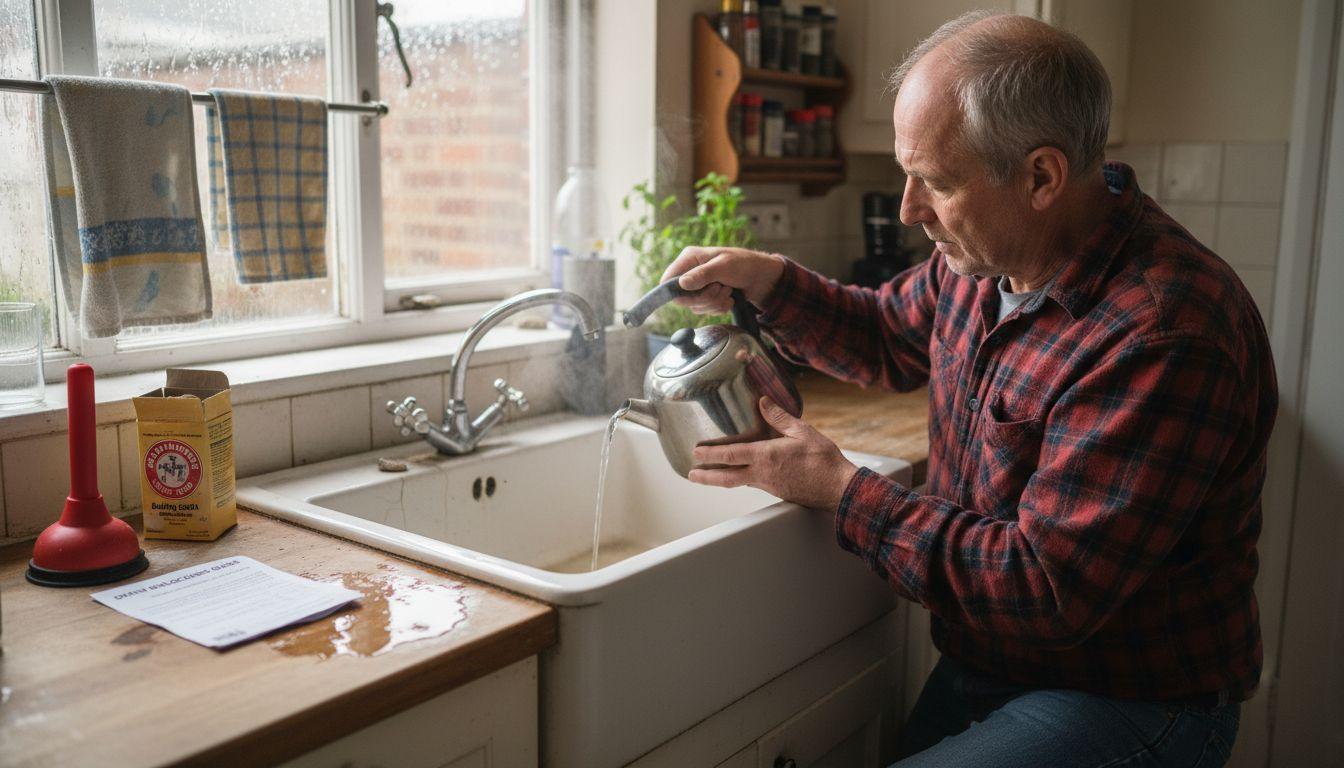
Boiling water is your first weapon against minor blockages. Pour a kettle of boiling water directly down the drain to dissolve grease and soap buildup. This simple method works best for clogs caused by accumulated fats and oils in kitchen drains.
The baking soda and vinegar combination creates a natural reaction that shifts blockages without chemicals. Pour half a cup of baking soda down the drain, follow with half a cup of vinegar, cover the drain, and wait 15 minutes. The fizzing action helps break down debris safely.
A plunger remains one of the most effective tools for minor clogs. Fill your sink or bath with a few inches of water, place the plunger over the drain opening, and pump vigorously for 15 to 20 seconds. This mechanical action often dislodges blockages trapped in the u-bend.
Safe methods to try before calling a professional:
- Boiling water for grease-based blockages
- Baking soda and vinegar for general clogs
- Manual plunging for trapped debris
- Drain snakes or plumbing augers for stubborn blockages
- Enzyme-based drain cleaners that break down organic matter naturally
Avoiding harsh chemicals protects your pipes, your family, and your wallet. Natural methods work for minor clogs without the risks.
When households use these safe drain cleaning approaches, they prevent chemical exposure whilst addressing drainage issues effectively. Prevention is equally important—avoid pouring fats down drains, use drain strainers to catch hair, and flush only toilet paper.
If a clog persists after 24 hours of trying these methods, professional help becomes necessary. Persistent blockages may indicate deeper problems that require specialist equipment to diagnose and repair properly.
Pro tip: Combine boiling water with baking soda and vinegar as a monthly preventative routine rather than waiting for clogs to develop—this maintains clear drains and avoids emergency calls.
3. Avoid Common Mistakes That Damage Drains
Your drains are more fragile than you think. Small mistakes made repeatedly can cause expensive damage that takes years to develop. Understanding what not to do protects your drainage system and saves you thousands of pounds in repairs.
Pouring fats, oils, and grease down the kitchen sink is the number one drain killer. These substances solidify as they cool, coating pipe walls and trapping other debris. Over time, they create blockages that become increasingly difficult to clear.
Flushing non-flushable items destroys pipes silently. Wet wipes, cotton wool, nappies, and sanitary products don’t break down like toilet paper. They accumulate in bends and cause stubborn blockages that often require professional intervention to remove.
Ignoring minor leaks is a costly mistake. Small drips seem insignificant, but they indicate underlying problems. Water seeping around pipes corrodes them and damages surrounding structures, creating much larger problems later.
Common habits that damage your North London drains:
- Pouring cooking fats and oils down sinks
- Flushing anything besides toilet paper
- Using excessive amounts of drain cleaner
- Ignoring slow drainage for weeks
- Allowing tree roots to grow near underground pipes
- Neglecting regular drain inspections
- Disposing of food waste without a strainer
Roots from mature trees seek moisture and can penetrate pipes, causing serious structural damage. If you have large trees near your property, regular drain maintenance becomes even more important.
Most drain damage results from preventable user errors. Small changes in habits protect your system and your investment.
According to proper drainage regulations, maintaining your drainage system requires avoiding common disposal errors and conducting regular inspections. Professional assessments identify problems before they worsen.
Using drain strainers in sinks and showers catches hair and debris before they enter pipes. These inexpensive devices prevent countless blockages and require only periodic emptying.
Pro tip: Keep a simple record of when you last had your drains professionally inspected and what work was done—this helps you spot patterns and plan preventative maintenance before emergencies occur.
4. Schedule Regular High-Pressure Water Jetting
High-pressure water jetting is the professional cleaning method that goes where plungers and chemicals cannot reach. Scheduling this service regularly keeps your drains flowing freely and prevents blockages before they develop into emergencies.
Unlike chemical cleaners, water jetting uses pure pressure to blast away accumulated debris, grease, and mineral deposits coating your pipe walls. The force of the water stream clears blockages completely without damaging pipes or harming the environment.
This method works brilliantly for persistent problems that resist other solutions. Tree roots, calcified deposits, and stubborn grease buildup surrender to high-pressure jets. The cleaning is thorough, leaving your pipes genuinely clean rather than merely clearing a pathway through blockage.
Regular jetting prevents costly emergencies from developing. When scheduled annually or bi-annually depending on your home’s drainage patterns, it removes potential problems before they cause backups or property damage.
Benefits of scheduling regular water jetting:
- Removes accumulated grease and soap residue thoroughly
- Clears tree root intrusions safely
- Breaks down mineral deposits and calcification
- Prevents emergency blockages and backups
- Extends the lifespan of your drainage system
- Reduces odours from decomposing matter
- Environmentally friendly compared to chemicals
Professionals equipped with high-pressure water jetting equipment can identify the exact location and nature of blockages before treatment begins. Many use CCTV cameras to inspect pipes first, ensuring the jetting process targets problem areas accurately.
North London homes built on clay soil often experience root ingress into older drainage pipes. Regular jetting keeps roots from establishing themselves inside your pipes, avoiding expensive relining or replacement work.
Scheduled jetting keeps minor problems from becoming major disasters. Think of it as preventative maintenance for your entire drainage system.
The frequency depends on your home’s age, pipe materials, and drainage usage. Older Victorian properties benefit from annual jetting, whilst modern homes might need it every two to three years. Your drainage professional can recommend an appropriate schedule after assessment.
Pro tip: Schedule your water jetting appointment during spring or autumn when plumbers have shorter waiting times, and plan it for before the autumn leaf season when debris tends to accumulate in outdoor drains.
5. Inspect Drains with CCTV for Hidden Issues
Problems lurking beneath your property cannot be seen with the naked eye. CCTV drainage inspections reveal what’s actually happening inside your pipes, catching serious issues before they demand expensive repairs.
CCTV cameras provide crystal-clear visibility into your entire drainage system. A small waterproof camera travels through your pipes, transmitting live footage to a monitor above ground. This allows technicians to see exactly where blockages, cracks, or damage exist.
Traditional methods require guesswork and often involve unnecessary digging. CCTV eliminates that uncertainty by showing the precise problem location and nature. You know exactly what needs fixing before any work begins.
Cracks in pipes allow water to escape into surrounding soil, causing damp patches, subsidence, and environmental contamination. CCTV detects these cracks whilst they are still small, before they worsen into complete pipe failure.
Root intrusion is a common North London problem that CCTV easily identifies. Tree roots seeking moisture penetrate pipes, creating blockages and structural damage. Knowing whether roots are present determines the best treatment approach.
What CCTV inspection reveals:
- Blockage location and composition
- Pipe cracks, fractures, and collapses
- Tree root intrusions and extent
- Displaced pipe joints and misalignment
- Mineral deposits and calcification
- Structural integrity of pipe walls
- Connection defects and lateral issues
Video pipe inspection technology provides detailed imagery that guides repair decisions. Rather than replacing entire pipe sections, technicians can target repairs to exactly where problems exist, saving you money.
Many North London homes built before 1970 have clay pipes that deteriorate over time. CCTV inspections establish the actual condition of these pipes, informing decisions about whether repairs or replacement is necessary.
CCTV inspection transforms drainage problems from mysteries into solved puzzles. You gain complete knowledge before making expensive decisions.
Property surveys and mortgage applications often require CCTV reports for older homes. Having this documentation prepared demonstrates diligence to lenders and future buyers.
Pro tip: Request a recorded copy of your CCTV inspection findings on USB or digital file—having this visual evidence helps you track your drainage system’s condition over years and plan maintenance strategically.
6. Install Rat Gates for Added Drain Protection
Rodents entering through your drains are more than an inconvenience—they cause damage, carry disease, and contaminate your home. Rat gates provide a simple, highly effective barrier that stops them cold at the source.
Rats and mice use drainage pipes as highways into your property. They squeeze through openings, travel along the pipes, and emerge inside your home seeking food and shelter. Once inside, they cause structural damage, chew through wiring, and contaminate surfaces with droppings.
Rat gates are one-way valves installed on external drains that allow water to flow out but prevent rodents from entering. The mechanism is brilliant in its simplicity—water pushes the gate open, but when water stops flowing, the gate closes, blocking any creatures attempting entry.
North London’s older properties with clay pipes are particularly vulnerable to rodent ingress. The porous nature of these pipes and their frequent cracks provide easy entry points. Rat gates seal these vulnerabilities without requiring expensive pipe replacement.
Installation happens quickly and causes minimal disruption. A professional locates your external drain opening, removes the existing grate or cover, and installs the rat gate in its place. The entire process typically takes under an hour.
Advantages of installing rat gates:
- Prevents rodents from entering drainage system completely
- Stops rats and mice before they reach your home
- Allows water to drain normally without obstruction
- Works with existing drainage infrastructure
- Reduces need for traps, poison, and pest control visits
- Protects against health hazards from rodent contamination
- Provides peace of mind knowing entry points are sealed
Rodent prevention strategies recommend installation of rat guards on drains as an essential exclusion measure. Combined with good sanitation and habitat management, rat gates dramatically reduce infestation risk.
These gates are particularly valuable if you’ve had previous rodent problems. They prevent recurrence by blocking the route rodents used to access your property.
Rat gates stop problems before they start. Prevention is infinitely easier than dealing with an active infestation.
The cost of installation is minimal compared to pest control treatments, structural repairs from rodent damage, or replacing contaminated insulation and materials. It’s one of the most cost-effective home protection measures available.
Pro tip: Install rat gates on all external drain points, including those you rarely see—many properties have multiple drainage outlets, and rodents only need one accessible entry point.
Below is a comprehensive table summarising the strategies and methods discussed in the article for managing and maintaining home drainage effectively.
| Section | Key Points | Benefits |
|---|---|---|
| Identify Early Signs of Blockages | Notice slow drainage; be alert to unusual odours, sounds, and visible water pooling. | Early recognition avoids complex repairs and high costs. |
| Use Safe Methods for Minor Clogs | Employ boiling water, baking soda with vinegar, plungers, enzyme-based cleaners, and drain snakes. | Effective, non-damaging solutions to clear up minor blockages. |
| Avoid Damaging Practices | Refrain from disposing of fats, oils, non-flushable items, or excessive cleaning chemicals in drains. | Reduce risk of pipe damage, blockages, and expensive repairs. |
| Schedule Regular High-Pressure Jetting | Utilise water jetting for persistent issues and as routine preventative maintenance. | Keeps pipes clean and extends system lifespan. |
| Conduct CCTV Drainage Inspections | Use cameras to diagnose hidden issues inside the drainage system for targeted repairs. | Reduces unnecessary digging and ensures long-term functionality. |
| Install Rat Gates for Drain Protection | Fit one-way valves to external drains to prevent rodent ingress. | Prevents health hazards and structural damage caused by infestations. |
Protect Your North London Home with Expert Drain Solutions from RSJ Drains
Blocked drains, persistent odours, and hidden pipe damage can cause serious disruption and expensive repairs if ignored. This article highlights common drainage challenges like slow water flow, root intrusion, and rodent access — all threatening the safety and comfort of your home. At RSJ Drains, we understand these pain points and offer tailored services such as CCTV drain inspections, high-pressure water jetting, and professional rat gate installations to tackle these issues swiftly and effectively.
Take control of your drainage health today with RSJ Drains’ trusted local expertise and rapid response times. Don’t wait for minor blockages to become costly emergencies. Visit RSJ Drains now to schedule your thorough drain inspection and maintenance service. Your home deserves reliable protection from blockages, root damage, and rodents. Act now and enjoy peace of mind all year round.
Frequently Asked Questions
What are the early signs of drain blockages in my home?
Early signs of drain blockages include slow drainage, unusual odours, gurgling sounds, and visible water pooling around drains. To address potential issues, monitor your drainage and investigate further when you notice these warning signs.
How can I safely clear minor clogs in my drains?
Use natural methods like boiling water, a baking soda and vinegar mixture, or a plunger to clear minor clogs. Start by pouring boiling water down the drain, and if that doesn’t work, follow with half a cup of baking soda and half a cup of vinegar.
What common mistakes should I avoid to protect my drains?
Avoid pouring fats and oils down kitchen sinks, flushing non-flushable items, and ignoring slow drainage. Make it a habit to dispose of waste properly and inspect your drains regularly to prevent costly repairs.
When should I schedule professional high-pressure water jetting?
Schedule professional high-pressure water jetting annually or bi-annually to keep your drains functioning properly. This preventative maintenance removes accumulated debris and helps prevent blockages before they become major issues.
How can CCTV inspections help diagnose hidden issues in my drains?
CCTV inspections provide clear visibility into your drainage system, allowing professionals to locate blockages, cracks, and other issues without guesswork. Arrange for a CCTV inspection when you notice persistent drainage problems to identify the root cause accurately.
What benefits do rat gates provide for my drainage system?
Rat gates prevent rodents from entering your drains, which reduces the risk of infestations and related damage in your home. Consider installing rat gates on all external drains to effectively block any potential entry points for pests.