TL;DR:
- Early signs like slow drainage and bad smells can prevent costly drain emergencies.
- Common causes include FOG, flushed items, pipe damage, and tree roots.
- Professional CCTV surveys are recommended for persistent or severe drain issues.
A slow-draining sink is easy to ignore. A flooded kitchen is not. The frustrating truth is that most serious drain blockages in London homes start as minor, easy-to-miss symptoms that gradually worsen until they become expensive emergencies. Knowing how to spot the early signs, check your outdoor drains, and decide when to call in a professional can save you significant money, stress, and disruption. This guide walks you through exactly that, with practical steps tailored to the realities of London’s ageing housing stock and busy households.
Table of Contents
- Common causes of household drain blockages
- Key warning signs of a blocked drain
- How to check outside drains for blockages
- When to diagnose yourself versus calling a professional
- Why proactive spotting of blockages saves money and stress
- Expert help for persistent drain blockages
- Frequently asked questions
Key Takeaways
| Point | Details |
|---|---|
| Know the causes | Fats, wipes, and structural issues are the main causes of blocked drains in London homes. |
| Spot early signs | Watch for slow drainage, smells, and water backing up to act before it worsens. |
| Check inside and out | Inspect both indoor fixtures and outdoor gullies for visible blockages or symptoms. |
| Call experts when needed | Serious or recurring issues should be checked by professionals, especially when multiple areas are affected. |
Common causes of household drain blockages
Before you can spot a blockage, it helps to understand what’s actually causing it. London homes deal with a wide range of drainage problems, and the culprit is not always obvious from the surface.
According to data from the National Association of Drainage Contractors, UK blockages stem primarily from fats, oils, and grease (FOG) at 37.5%, followed by flushed items such as wet wipes and sanitary products at 33.3%, misaligned or damaged pipes at 12.5%, and tree root ingress at 6.8%. Together, FOG and flushed items account for more than two-thirds of all blockages, which means most are entirely preventable.
The type of blockage you’re likely to encounter depends heavily on which drain is affected:
- Kitchen drains: Cooking fats, food scraps, and grease are the primary offenders. FOG cools and solidifies inside pipes, narrowing the channel over time.
- Bathroom drains: Hair, soap scum, and toothpaste residue build up gradually, often going unnoticed until drainage slows significantly.
- Toilets: Non-flushable items including wet wipes, cotton pads, and nappy liners are a leading cause of serious blockages.
- Outdoor drains: Leaves, silt, moss, and debris accumulate in gullies and drain covers, especially during autumn and after heavy rain.
- Underground pipes: Tree roots and structural issues such as cracked or collapsed sections are harder to detect but cause the most damage.
| Drain type | Most common cause | Risk level |
|---|---|---|
| Kitchen sink | Fats, oils, and grease | Medium |
| Bathroom | Hair and soap scum | Low to medium |
| Toilet | Non-flushable items | High |
| Outdoor gully | Debris and silt | Medium |
| Underground pipe | Roots and pipe damage | High |
For a closer look at real-world cases, you can browse examples of blocked drains from London properties to see how these issues present in practice.
Key warning signs of a blocked drain
Understanding the main causes, we can now identify the typical warning signs that mean a blockage is forming. The earlier you catch these, the simpler and cheaper the fix tends to be.
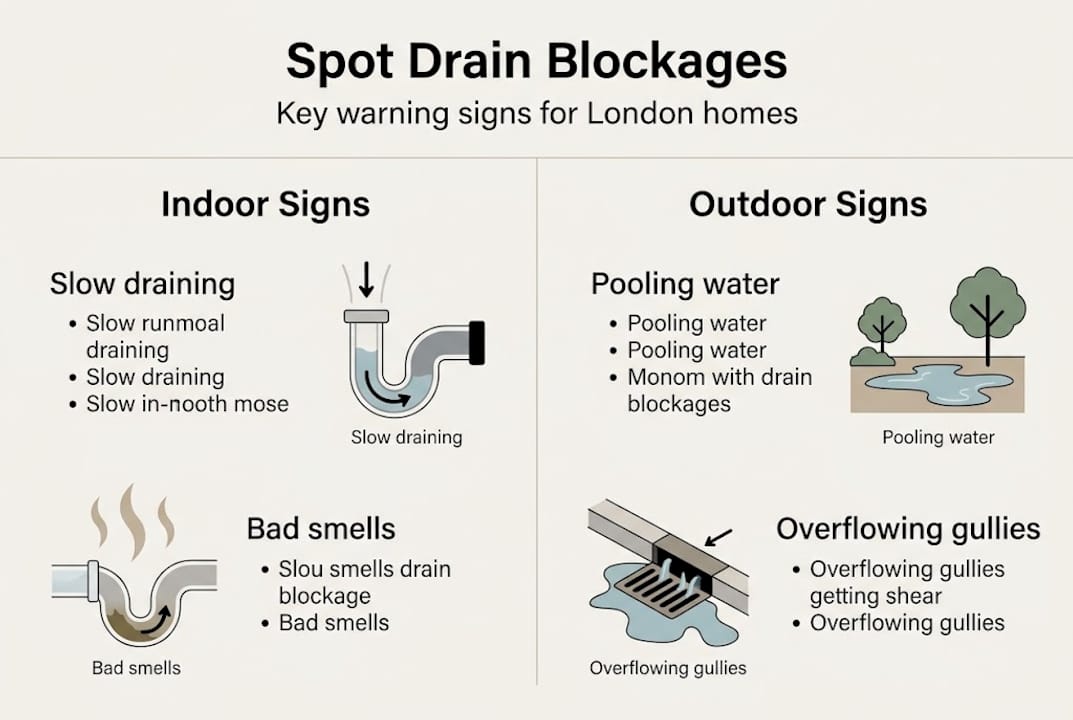
The most common early indicators include:
- Slow drainage: Water taking longer than usual to clear from a sink, bath, or shower is the most reliable early signal.
- Gurgling sounds: Air trapped behind a partial blockage creates a distinctive gurgling noise as water passes through.
- Rising water levels: If water rises before draining, the pipe is already partially obstructed.
- Foul odours: Unpleasant smells rising from plug holes often indicate trapped organic matter or, more seriously, sewage backup.
- Water pooling: Standing water in showers or around outdoor drains after light rainfall is a clear warning.
Some symptoms are more urgent than others. Foul sewage smells indoors, backups occurring in multiple areas simultaneously, or blockages that keep returning despite clearing are signs of a serious underlying problem rather than a simple surface clog.
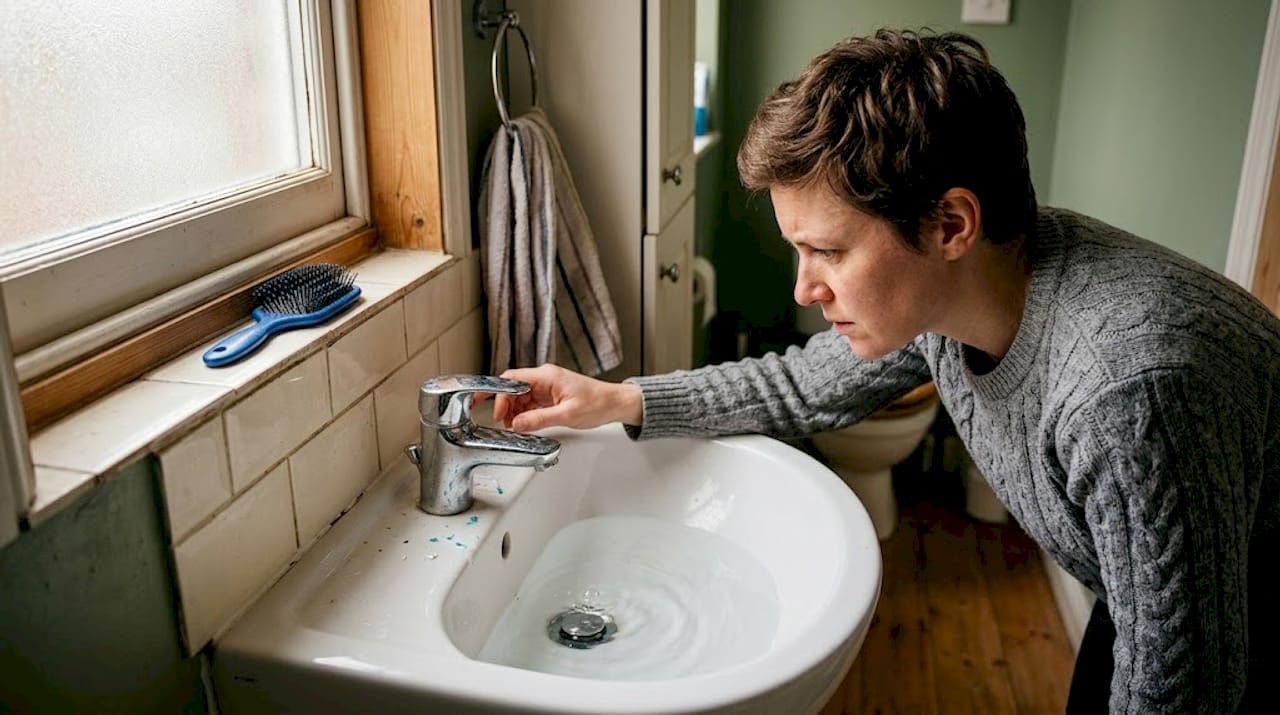
It’s worth distinguishing between a localised surface clog and a deeper blockage. If only one fixture is draining slowly, the issue is likely confined to that branch pipe. If multiple fixtures are affected at the same time, such as a toilet backing up when you run the bath, the problem is probably further down the main drain.
Pro Tip: Pour a bucket of water quickly into a slow drain. If it immediately backs up rather than draining slowly, you likely have a significant obstruction rather than a minor build-up.
You can find more detail on identifying symptoms early by reading about the signs of blocked drains and what each one typically means for the severity of the problem.
How to check outside drains for blockages
With the indoor signs in mind, let’s look at how you can spot outdoor drainage problems before major issues develop. Outdoor drains are often overlooked until they overflow visibly, but a quick regular inspection takes only a few minutes.
As WaterSafe advises, check for overflowing gullies, visible debris around drain covers, or pooling water after rainfall, and lift the cover to inspect whether stagnant water is sitting beneath it.
Here is a safe, step-by-step process for inspecting your outdoor drains:
- Look for pooling water: After rain, check whether water is collecting around gully covers, patio drains, or at the base of downpipes. Persistent pooling suggests the drain beneath cannot cope.
- Check for debris: Leaves, soil, moss, and litter can block the grate itself. Clear any visible surface debris with gloved hands or a stiff brush.
- Lift the cover carefully: Use a flat tool to lift the drain cover. Look inside for stagnant water that isn’t moving, which indicates a blockage further along the pipe.
- Smell the drain: A strong sewage odour from an outdoor drain is not normal and suggests waste is backing up from below.
- Inspect downpipes: Blocked downpipes from guttering can redirect water into drain gullies faster than they can cope, causing overflow that looks like a drain blockage.
Important: Never lean directly over an open drain or insert your hands into a drain chamber without appropriate protective gloves. If you see evidence of sewage or suspect a collapsed pipe, do not attempt to investigate further yourself.
| Outdoor symptom | Likely cause | Action needed |
|---|---|---|
| Pooling after light rain | Blocked gully or silt build-up | Clear debris, monitor |
| Stagnant water under cover | Partial or full blockage | Flush with water, seek help if persistent |
| Sewage smell outdoors | Sewage backup or pipe damage | Call a professional |
| Overflowing gully | Blocked pipe or debris | Clear surface, inspect further |
Pro Tip: Check your outdoor drains at least twice a year, ideally in late autumn after leaves have fallen and in early spring after winter debris has accumulated.
For guidance on what to do once you’ve identified an issue, our advice on resolving drain blockages covers the next steps clearly.
When to diagnose yourself versus calling a professional
After inspecting both inside and outside, it’s crucial to know your limits and seek expertise if symptoms persist. Not every blockage needs a professional, but some absolutely do.
You can reasonably handle these situations yourself:
- A single slow-draining sink with no smell and no other affected fixtures
- A bathroom drain clogged with visible hair that you can remove manually
- A gully blocked with surface debris that clears after cleaning the grate
- Occasional slow drainage that improves after using a plunger
However, the following are clear signals that you need professional help:
- Sewage smells inside your home, particularly from multiple fixtures
- Blockages that return within days of clearing
- More than one drain or toilet affected simultaneously
- Gurgling sounds that persist even after a drain appears to have cleared
- Suspected tree root intrusion or pipe damage based on your outdoor inspection
CCTV confirms roots and pipe collapse; professional intervention is necessary for recurring or serious backups that simple clearing cannot resolve.
| Situation | DIY appropriate? | Professional needed? |
|---|---|---|
| Single slow sink | Yes | No |
| Hair clog in shower | Yes | No |
| Recurring blockage | No | Yes |
| Multiple fixtures affected | No | Yes |
| Sewage smell indoors | No | Urgently |
| Suspected root intrusion | No | Yes |
Pro Tip: If you have cleared a blockage and it returns within two weeks, do not keep clearing it. A recurring blockage is almost always a sign of a structural issue or a build-up too deep for manual clearing.
A CCTV drain survey is the most reliable way to diagnose exactly what is happening inside your pipes without guesswork. It removes all uncertainty and tells you precisely where the problem is and what caused it.
Why proactive spotting of blockages saves money and stress
Having covered the step-by-step process, let’s discuss why this proactive approach matters, especially in London.
In our experience working across Greater London, the most expensive drainage jobs we attend are rarely caused by sudden catastrophic failures. They are caused by slow, ignored problems. A homeowner notices a gurgling sound for three months, assumes it will sort itself out, and eventually calls us when sewage is backing up into the ground floor bathroom. What could have been a straightforward jetting job becomes a full drain excavation.
The honest truth is that most serious blockages give you plenty of warning. The problem is that those early signs are easy to dismiss as minor inconveniences. We’d encourage you to treat a slow drain the same way you’d treat a warning light on your car dashboard. It might be nothing. It might be the start of something expensive. Either way, you check it.
Good habits genuinely make a difference. Keeping FOG out of kitchen drains, never flushing non-flushable items, and clearing outdoor gullies twice a year will prevent the majority of blockages before they start. Pairing those habits with an occasional professional check, particularly if you live in an older London property with ageing pipework, is a smart investment. Our drain maintenance guide covers the practical habits that keep London drains in good condition year-round.
Expert help for persistent drain blockages
If your checks have revealed a persistent, recurring, or severe blockage, it’s time to bring in specialist support. Home inspections are a valuable first step, but they have limits.
At RSJ Drains, we offer CCTV drainage surveys that give you a precise picture of what’s happening inside your pipes, with no guesswork and no unnecessary digging. Our professional drain inspection service covers both residential and commercial properties across Greater London, with emergency response available within two hours. Whether you’ve spotted a warning sign from this guide or you’re dealing with an active overflow, our team is ready to help you resolve it quickly and affordably. Call us or get in touch online to book an inspection.
Frequently asked questions
What are the most common signs my drain is blocked?
Slow drainage, bad smells, gurgling sounds, and water backing up are typical early warning signs. Foul sewage smells indoors, backups in multiple areas, or recurring blockages indicate a more serious underlying issue.
How can I check if my outside drain is blocked?
Look for overflowing gullies, standing water after rain, or debris around covers. Check for stagnant water under the cover after carefully lifting it, as this is a reliable sign of a blockage further along the pipe.
When should I call a professional instead of fixing it myself?
If you notice bad sewage smells, repeated blockages, or problems affecting more than one fixture, get expert help promptly. Sewage smells and recurring backups signal a need for professional intervention, often confirmed by a CCTV survey.
Are tree roots really a problem in London drains?
Yes, roots cause 6.8% of UK blockages, penetrating pipework through small cracks and causing major obstructions if left unchecked. Older London properties with mature trees nearby are particularly at risk.
Can regular cleaning prevent most drain blockages?
Most blockages are avoidable with consistent habits. FOG and flushed items account for over two-thirds of UK drain blockages, meaning avoiding these two habits alone eliminates the majority of risk.