Blocked drains cost the UK an estimated £200 million every year in cleanup and repairs, with around 300,000 sewer blockages occurring annually and roughly 3,000 homes flooded as a direct result. The striking part? Up to 70% of those blockages are entirely preventable. For property owners and managers across Greater London, that figure is not just a national statistic, it is a direct financial and legal risk sitting beneath your feet. Regular drain maintenance is not a luxury or an afterthought. It is the single most effective way to protect your property, your tenants, and your budget.
Table of Contents
- Understanding drain blockages: The hidden risks
- Why regular maintenance matters in Greater London properties
- Economic advantages: Prevention over emergency fixes
- How regular maintenance works: Methods, inspections, and contracts
- Legal compliance and environmental responsibilities
- Professional solutions for regular drain maintenance
- Frequently asked questions
Key Takeaways
| Point | Details |
|---|---|
| Prevention is cheaper | Scheduled drain maintenance is often half the price of a single emergency repair. |
| London sewers are at risk | Victorian systems and dense population make proactive drain care especially urgent in Greater London. |
| Blockages are preventable | Up to 70% of blockages are avoidable with routine cleaning and checks. |
| Legal duties matter | Failing to maintain drains can result in fines or environmental harm according to UK law. |
Understanding drain blockages: The hidden risks
Most blockages do not happen overnight. They build slowly, layer by layer, as everyday materials accumulate inside your pipes. The main offenders are fats, oils, and grease (collectively known as FOG), along with non-flushable wipes, hair, soap scum, and food particles. These materials gradually restrict water flow and place increasing strain on your pipework over weeks and months.
The danger is that this process is largely invisible. By the time you notice slow drainage or a foul smell, the buildup may already be severe. Left unchecked, partial blockages escalate into full pipe bursts, sewage backups, and costly emergency callouts. Understanding the drain maintenance risks for London homes helps you act before the problem reaches that stage.
Here are the most common materials that cause blockages in London properties:
- Fats, oils, and grease (FOG) from cooking and washing up
- Non-flushable wipes, including those labelled “flushable”
- Hair and soap scum from bathrooms and showers
- Food particles from kitchen sinks without strainers
- Sanitary products and cotton buds flushed down toilets
- Tree root ingress into older clay or concrete pipes
A single blocked drain repair in the UK can cost anywhere from £100 to over £500, and that figure climbs sharply when structural damage or flooding is involved.
Blockages are not just a nuisance. Sewage overflows can contaminate soil and waterways, creating environmental and public health hazards. For property managers, a single incident can trigger complaints, insurance disputes, and reputational damage that far outweighs the cost of prevention.
Why regular maintenance matters in Greater London properties
London presents a uniquely challenging environment for drainage. Much of the city’s sewer network was built during the Victorian era, over 150 years ago, using combined systems that carry both surface water and sewage in the same pipes. These ageing Victorian sewers are more susceptible to blockages, root ingress, and structural failure than modern systems.
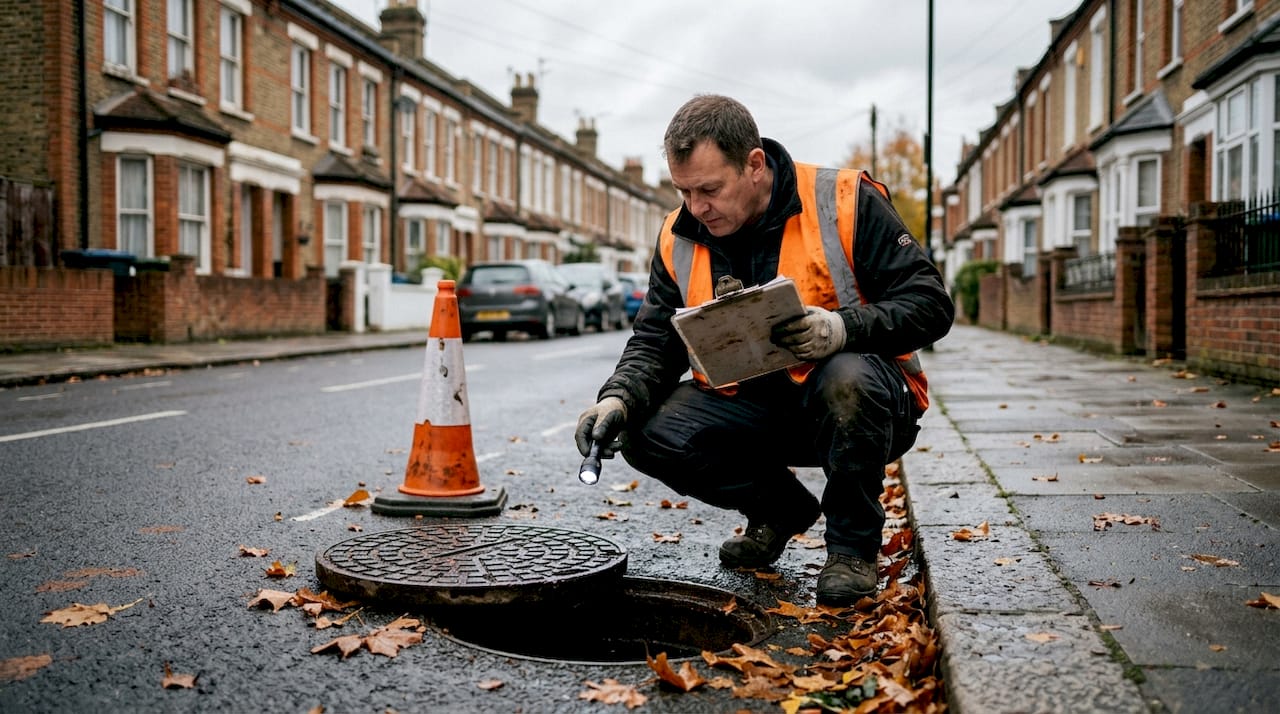
High urban density means that when one property’s drain fails, the impact ripples outward quickly. Add London’s unpredictable rainfall and you have a recipe for rapid overflow and flooding. Local regulations also require property owners and businesses to take proactive steps to prevent FOG and debris from entering the public sewer network. Failure to comply can result in recharges from Thames Water or enforcement action from local authorities.
The table below summarises the key risk factors specific to Greater London:
| Risk factor | Why it matters in London |
|---|---|
| Victorian combined sewers | Narrower, older pipes block more easily |
| High urban density | Failures spread quickly between properties |
| Heavy and unpredictable rainfall | Increases overflow and flooding risk |
| FOG from restaurants and takeaways | Dense food business population adds to sewer load |
| Regulatory compliance requirements | Fines and recharges for non-compliance |
Familiarising yourself with the types of drain maintenance available, and working through a structured drain maintenance checklist, puts you firmly in control of these risks.
Pro Tip: For properties connected to older combined sewers, schedule a CCTV survey at least once a year. It is the most reliable way to catch root ingress, pipe deformation, and grease accumulation before they become emergencies.
Economic advantages: Prevention over emergency fixes
The financial case for regular maintenance is straightforward. Planned maintenance costs typically range from £100 to £300 per visit, while emergency callouts for blocked or damaged drains regularly run from £200 to over £500. That gap widens further when you factor in secondary costs such as property damage, temporary accommodation for tenants, and increased insurance premiums.
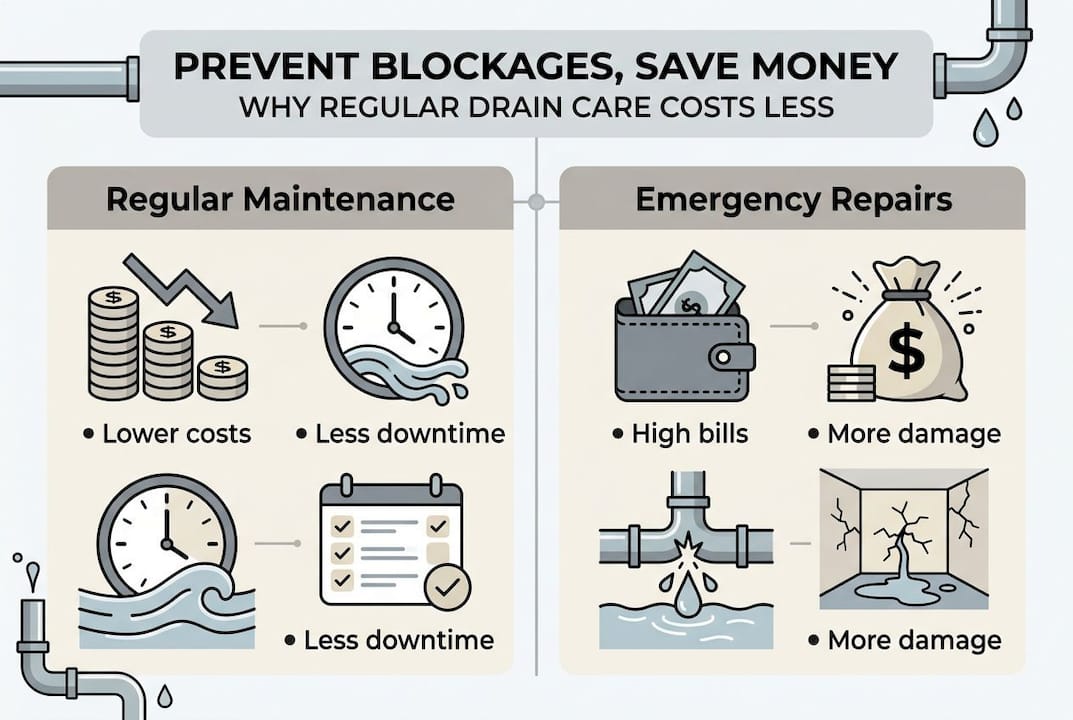
Consider the broader picture for a property manager overseeing multiple units. A single emergency drainage incident can disrupt several tenants simultaneously, trigger formal complaints, and create liability if the blockage was foreseeable. The cost benefits of routine maintenance become even more compelling when you view drainage as part of your overall asset management strategy.
| Scenario | Typical cost | Additional risks |
|---|---|---|
| Planned maintenance visit | £100 to £300 | Minimal disruption |
| Emergency blockage clearance | £200 to £500+ | Tenant disruption, property damage |
| Pipe burst or structural repair | £500 to £2,000+ | Insurance claims, legal liability |
| Sewage backup and cleanup | £1,000+ | Health hazard, reputational damage |
Insurance policies may not pay out if an insurer can demonstrate that a blockage resulted from neglect rather than an unforeseen event. Documented maintenance records are your best protection.
Here is what regular maintenance actively protects:
- Property value: Well-maintained drainage is a genuine selling point and reduces survey red flags
- Tenant relationships: Fewer disruptions mean fewer complaints and lower turnover
- Insurance standing: Documented maintenance reduces the risk of disputed claims
- Legal compliance: Proactive records demonstrate due diligence if disputes arise
How regular maintenance works: Methods, inspections, and contracts
Many property owners assume that pouring a chemical cleaner down the drain or using a plunger counts as maintenance. It does not. Quick fixes like chemicals and plunging typically push the blockage further downstream rather than removing it, which means the problem returns, often worse than before.
Effective drain maintenance follows a structured process:
- Initial inspection: A CCTV drain survey uses a camera fed through the pipe to identify blockages, cracks, root ingress, and structural issues in real time
- Buildup removal: High-pressure water jetting clears accumulated grease, scale, and debris thoroughly from pipe walls
- Structural assessment: The drain camera inspection report identifies any areas requiring repair or relining
- Scheduled review: A maintenance interval is agreed based on property type, usage, and risk level
- Documentation: A written report is issued after every visit, recording findings and any remedial work carried out
For property managers overseeing multiple sites, a PPM contract (planned preventive maintenance) is the most efficient approach. PPM contracts set out scheduled visits throughout the year, ensuring no property is overlooked and giving you a clear audit trail for compliance purposes. You can find detailed guidance in our drain maintenance guide for London properties.
Pro Tip: Always insist on a digital inspection report with timestamped images after every CCTV survey. This protects you legally, satisfies insurance requirements, and gives you a baseline for tracking pipe condition over time.
Legal compliance and environmental responsibilities
Drain maintenance is not simply good practice. For many property owners and businesses in Greater London, it is a legal obligation. The Water Industry Act places a clear duty on property owners to prevent harmful materials from entering the public sewer network. Businesses in the food and hospitality sector face mandatory grease trap requirements and must demonstrate active FOG management to avoid enforcement action.
Here is a summary of the key legal and environmental responsibilities:
- Water Industry Act compliance: You must not allow FOG, wipes, or other debris to enter public sewers
- Grease trap installation: Mandatory for commercial kitchens, cafés, restaurants, and food preparation facilities
- Thames Water recharges: If a blockage in a shared or public sewer is traced back to your property, you may be billed for the clearance
- Local authority enforcement: Persistent non-compliance can lead to formal notices and financial penalties
- Environmental duty of care: Sewer overflows caused by blockages can pollute rivers, streets, and public spaces, creating liability beyond the property boundary
Proactive maintenance is the most reliable way to stay on the right side of all these obligations. A documented PPM programme demonstrates to regulators, insurers, and tenants that you take your responsibilities seriously. It also reduces the likelihood of being held liable when shared infrastructure fails.
Professional solutions for regular drain maintenance
If you manage property in Greater London, the combination of ageing infrastructure, dense urban conditions, and strict regulatory requirements makes professional drain maintenance a sound investment rather than an optional extra.
At RSJ Drains, we work with residential landlords, commercial property managers, and facilities teams across London to deliver planned maintenance programmes that keep drainage systems running efficiently all year round. Our London drainage services include full CCTV drain surveys with detailed digital reports, high-pressure water jetting to clear accumulated grease and debris, and PPM contracts tailored to your portfolio size and risk profile. With a two-hour emergency response guarantee and a family-run team that knows London’s drainage network inside out, we are the practical choice for property owners who want reliable, documented, and compliant drain care.
Frequently asked questions
What is the most common cause of drain blockages in London homes?
The main culprits are fats, oils, and grease (FOG) along with non-flushable wipes, which gradually accumulate inside pipes and restrict water flow over time.
How much does regular drain maintenance cost in London?
Planned maintenance typically costs between £100 and £300 per visit, roughly half the price of an emergency callout, which can exceed £500 when property damage is involved.
Are property owners legally required to maintain their drains?
Yes. Under the Water Industry Act, allowing FOG or debris to enter public sewers is prohibited, and neglect can result in recharges, fines, or formal enforcement action.
How often should I arrange professional drain inspections?
For most London properties, annual inspections are the minimum recommended frequency, particularly for older Victorian-era buildings or sites with high drainage usage such as commercial kitchens or HMOs.
Recommended
- Why routine drain maintenance prevents costly repairs in 2026
- Why routine drain inspection cuts blockages by 70% in 2026
- Top ways to prevent blocked drains in London homes
- Understanding drain blockages: causes and prevention
- 6 Essential Steps for an Effective House Maintenance Schedule – Guestly Homes