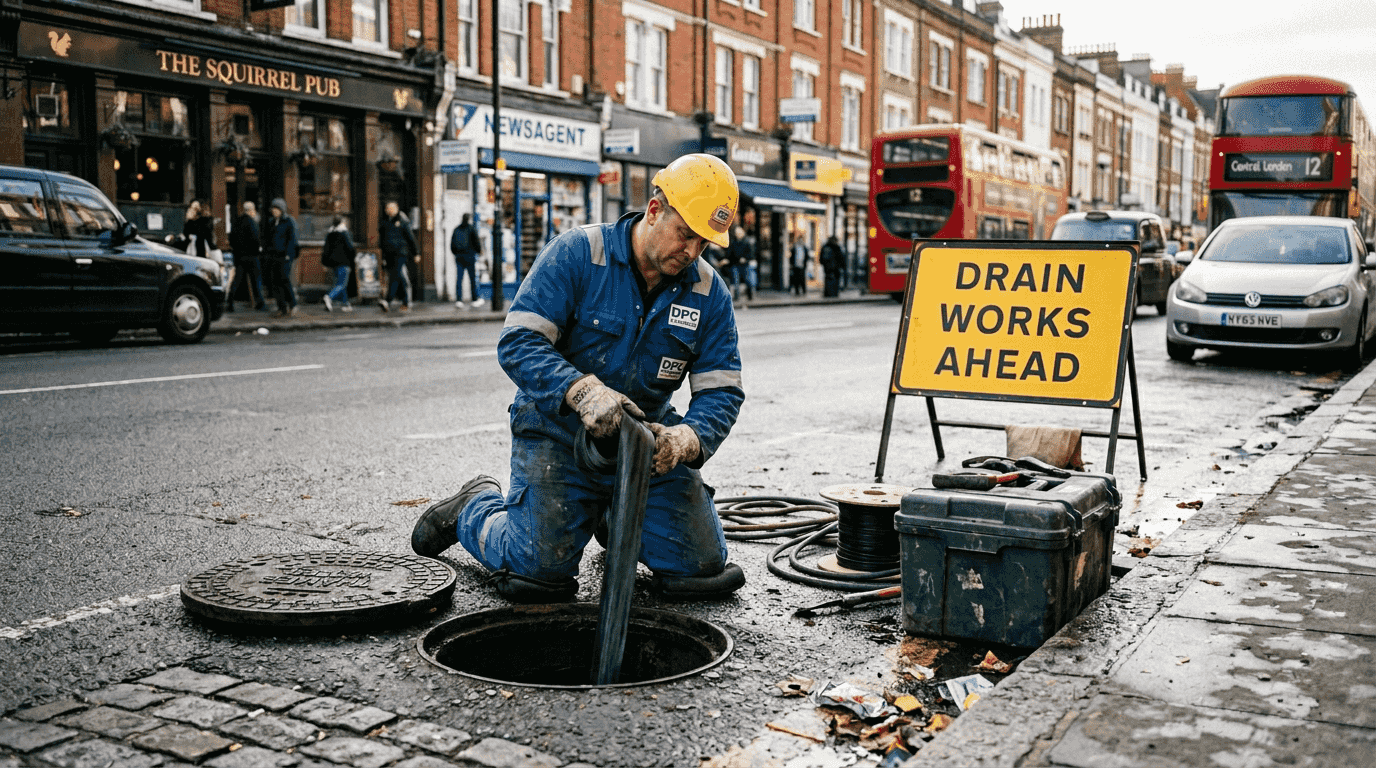
Dealing with damaged drains doesn’t have to mean weeks of excavation tearing up your garden or driveway. Many homeowners in Greater London still assume drain repairs require disruptive digging, but modern drain relining technology offers a faster, cleaner alternative. This guide explains what drain relining involves, how it works, when it’s the right choice for cracked or blocked drains, and what London property owners should expect. You’ll learn the process, costs, durability, and practical benefits for urban properties where access is limited and time matters.
Table of Contents
- What Is Drain Relining And How Does It Work?
- When Is Drain Relining The Right Solution For Your Property?
- Cost, Durability, And Risks Of Drain Relining In London
- How Drain Relining Benefits Greater London Homeowners And Managers
- Explore Professional Drain Relining And Inspection Services In London
- Frequently Asked Questions
Key takeaways
| Point | Details |
|---|---|
| Trenchless repair method | Drain relining creates a new pipe inside damaged drains without excavation, minimising disruption to properties. |
| Suitable for specific damage | Works best for cracks, root ingress, and open joints but cannot fix collapsed pipes or major subsidence. |
| Cost and speed advantages | Typical jobs cost around £95 per metre and complete within 2-3 hours, much faster than traditional replacement. |
| Long-term durability | Properly installed CIPP lining can last over 50 years when designed and fitted correctly by experienced contractors. |
| Quality installation critical | Poor design or installation causes failures, so choosing skilled professionals with guarantees prevents costly rework. |
What is drain relining and how does it work?
Drain relining is a trenchless repair technique that forms a seamless new pipe inside your existing damaged drainage system. Rather than digging up pipes and replacing them entirely, specialists insert a resin-impregnated liner into the existing pipe, inflate it to fit snugly against the old pipe walls, then cure it to create a durable, watertight barrier. The result is essentially a brand new pipe within the old structure, restoring full function without excavation.
The process begins with a thorough CCTV inspection to map damage and confirm suitability. Contractors then clean the pipe using high-pressure water jetting to remove debris, roots, and buildup. Next, they prepare a flexible liner saturated with special epoxy resin and insert it through an access point, often an existing manhole or cleanout. An inflatable bladder expands the liner against the pipe interior, holding it in place whilst the resin cures, typically using hot water, steam, or UV light depending on the system. Once hardened, the bladder is removed, leaving a smooth, jointless pipe that seals cracks and prevents future root penetration.
Common types of pipe lining systems include CIPP (cured-in-place pipe), epoxy coating, UV-cured liners, and point repairs for localised damage. CIPP is the most widely used for full-length repairs, whilst epoxy coatings work well for corrosion protection in smaller diameter pipes. UV-cured liners offer faster installation in accessible sections, and point repairs target specific cracks or joints without lining the entire run. Each method suits different pipe materials, diameters, and damage types, so accurate diagnosis is essential.
The beauty of this trenchless technology lies in minimal disruption. No trenches, no landscaping damage, no road closures. Most residential jobs access drains through existing entry points, preserving gardens, driveways, and pathways. For London properties where space is tight and access challenging, this advantage is significant. You can continue daily routines with little interruption, and the work completes in hours rather than days.
Pro Tip: Before committing to drain relining, confirm your service provider has proven expertise in selecting the right lining type for your specific drain issue. Mismatched solutions lead to failures and wasted money.
For homeowners considering this option, understanding the drain relining guide helps clarify whether it suits your situation and what to expect during the process.
When is drain relining the right solution for your property?
Drain relining excels at repairing specific types of damage but isn’t a universal fix. Knowing when it works and when it doesn’t saves you from ineffective repairs and unnecessary expense. The technique is most effective for root ingress, cracks without subsidence, and open joints in old clay pipes, where the structural integrity of the pipe remains largely intact despite localised damage.
Root intrusion is a common problem in mature London gardens where tree roots penetrate pipe joints seeking moisture. Relining seals these entry points permanently, preventing further root growth inside the drain. Similarly, hairline cracks and small fractures in clay, concrete, or cast iron pipes can be effectively sealed without excavation. Open joints in older clay pipe systems, where sections have separated slightly over time, respond well to relining because the liner bridges gaps and creates a continuous barrier.
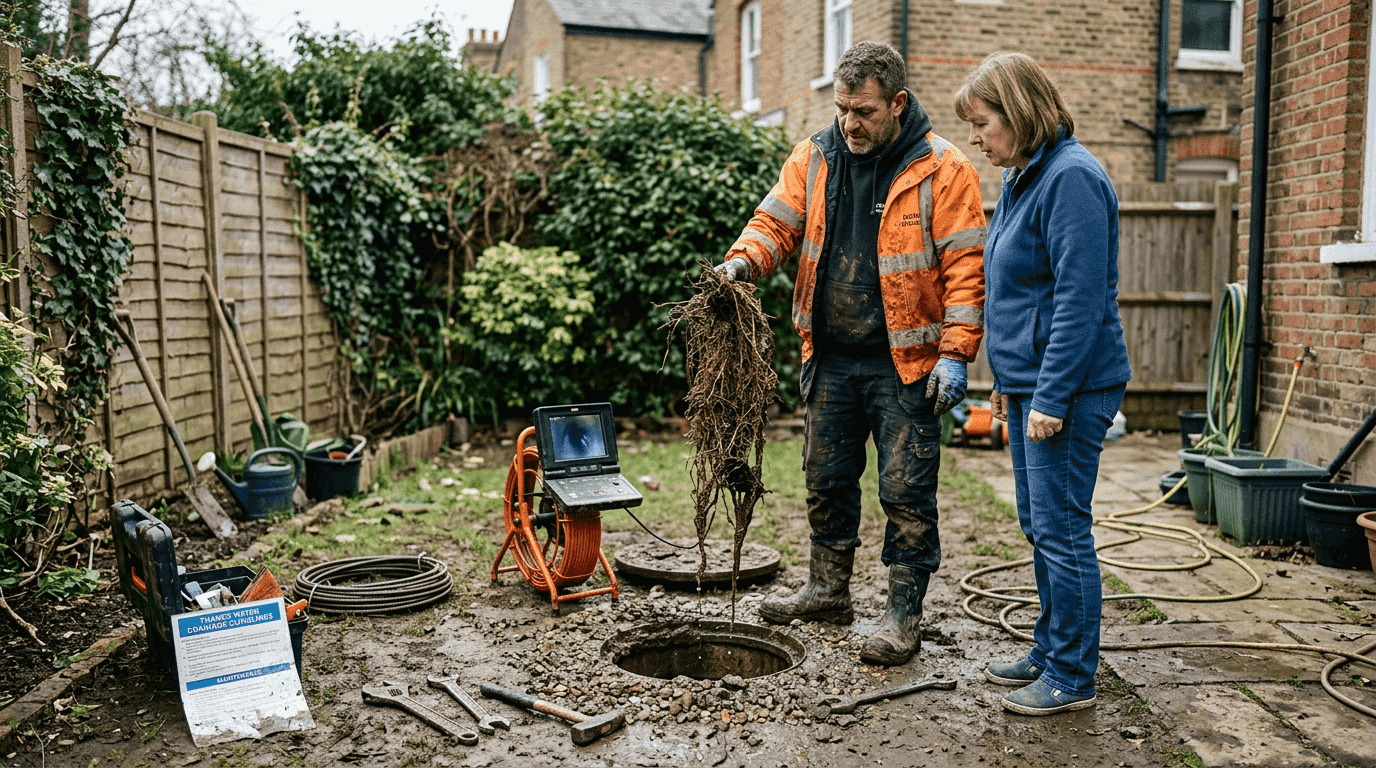
However, lining is not suitable when there’s significant subsidence or the pipe has collapsed completely. If the ground beneath the pipe has shifted substantially, causing severe misalignment or total structural failure, relining cannot restore proper fall or support. In these cases, full excavation and replacement are necessary to ensure safe, long-term drainage function. Attempting to line a collapsed pipe risks wasting money on a temporary fix that fails quickly.
Professional CCTV drain surveys are crucial before deciding on relining. These inspections reveal the exact nature, location, and extent of damage, allowing contractors to recommend the most appropriate solution. Without this step, you might proceed with relining only to discover later that the damage was too severe, resulting in costly rework.
| Repair Method | Disruption Level | Typical Duration | Cost Range | Best For |
|---|---|---|---|---|
| Drain Relining | Minimal | 2-3 hours | £95+ per metre | Cracks, roots, open joints |
| Full Replacement | High | Several days | £150+ per metre | Collapse, subsidence, severe damage |
For properties with cracked drains that haven’t yet caused major structural issues, relining offers a smart, cost-effective repair. It’s particularly valuable when damage is under buildings, driveways, or landscaped areas where digging would be expensive and disruptive. Learning how to fix cracked drains fast helps property owners act before minor issues escalate into emergencies.
Pro Tip: Always insist on a comprehensive CCTV inspection before agreeing to any drain repair. This confirms whether relining will fully solve your problem and prevents contractors from recommending unsuitable solutions.
Understanding the drain relining role in repairs clarifies how this technique fits within the broader range of drainage solutions available to London homeowners.
Cost, durability, and risks of drain relining in London
Budgeting for drain repairs requires understanding both upfront costs and long-term value. In London, drain lining costs approximately £95 per linear metre plus VAT, though final pricing varies based on pipe diameter, access difficulty, and damage extent. Longer runs, larger diameter pipes, and complex configurations increase material and labour requirements, raising the total bill. Despite this, relining typically costs 30-50% less than full excavation and replacement when you factor in restoration of landscaping, paving, and access routes.
Durability is a major selling point. When correctly installed, CIPP lining is marketed as a 50-year solution based on resin testing and engineering design factors. The cured epoxy liner resists corrosion, root penetration, and chemical degradation far better than traditional clay or cast iron pipes. This longevity makes relining a sound investment, especially for properties planning to stay in place for decades. However, this lifespan depends entirely on proper installation and appropriate application.
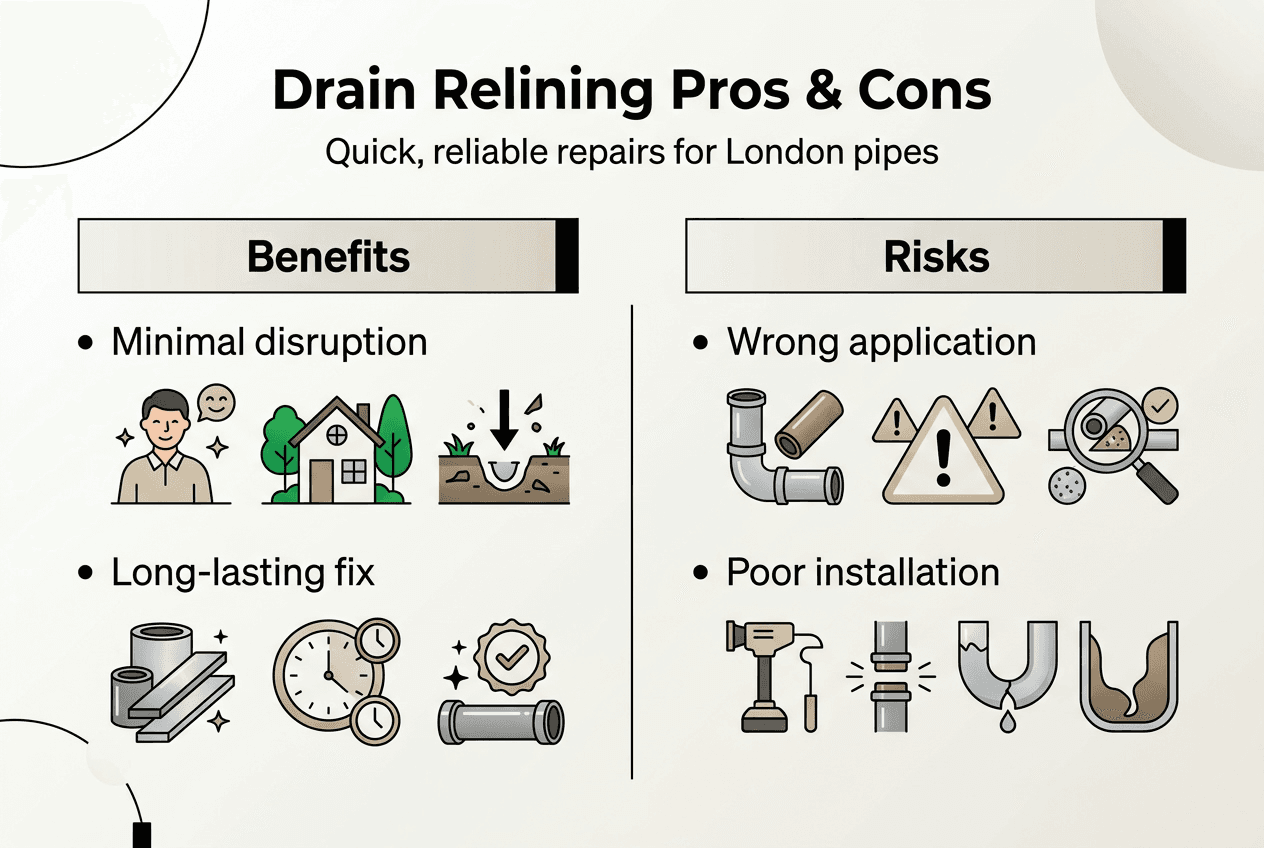
Unfortunately, failures in CIPP lining usually result from poor design, bad installation, or wrong application. Common problems include incomplete resin curing, incorrect liner thickness for the pipe condition, inadequate cleaning before installation, and misalignment during insertion. These errors lead to leaks, renewed blockages, foul odours, and structural weaknesses requiring expensive rework. Choosing inexperienced contractors or the cheapest quote often results in substandard work that fails within months.
| Risk Factor | Potential Consequence | Prevention Strategy |
|---|---|---|
| Poor resin curing | Soft spots, leaks | Use certified contractors with proper equipment |
| Inadequate cleaning | Liner detachment | Insist on thorough jetting before installation |
| Wrong liner thickness | Structural failure | Ensure design matches pipe condition |
| Misalignment | Flow problems | Verify contractor experience and references |
To ensure a quality job and avoid problems, consider these essential steps:
- Verify the contractor holds relevant certifications and insurance for drainage work
- Request detailed CCTV footage before and after relining to confirm proper installation
- Ask for written guarantees covering materials and workmanship for at least 10 years
- Confirm the contractor will conduct post-installation inspection to verify cure quality
- Check online reviews and ask for references from recent relining projects
The difference between a successful drain relining and a costly failure lies in the expertise of design and installation. Cutting corners on contractor selection almost always leads to expensive repairs down the line.
Pro Tip: Choose contractors offering comprehensive guarantees and follow-up inspection services. This commitment to quality protects your investment and ensures any issues are addressed promptly.
For professional assessment and repair, exploring drain repairing services and drain inspection services helps connect you with experienced specialists who prioritise quality workmanship.
How drain relining benefits Greater London homeowners and managers
London’s dense urban environment creates unique drainage challenges that make relining particularly valuable. Properties often have limited access, drains running under buildings, roads, or established gardens, and tight schedules where prolonged disruption is unacceptable. Relining addresses these constraints effectively, offering practical advantages that traditional excavation simply cannot match.
Pipe lining is recommended for municipal mains, buildings, pipes under slabs, corroded water lines, and frequent backups. For multistorey buildings, relining vertical stacks and horizontal branches avoids demolishing walls or ceilings to access damaged pipes. Under concrete slabs or tarmac driveways, it eliminates the need to break through surfaces and later restore them. In properties with mature landscaping or heritage features, preserving the existing environment whilst repairing essential drainage infrastructure is invaluable.
Speed is another critical benefit. Most relining jobs complete within a single working day, restoring drainage function quickly and minimising disruption to households or businesses. This rapid turnaround is essential for property managers overseeing multiple units or commercial premises where downtime directly impacts revenue. Emergency situations, such as sudden blockages or discovered cracks during inspections, can be resolved without extended closures or tenant displacement.
The compatibility with emergency drainage services makes relining an ideal solution for urgent repairs. When a drain fails unexpectedly, having access to contractors who can diagnose, prepare, and reline pipes within hours prevents escalation into sewage backups or property damage. For London homeowners, this responsiveness offers peace of mind knowing that serious drainage issues won’t spiral into weeks of upheaval.
Specific benefits for London homeowners and property managers include:
- No excavation means gardens, driveways, and pathways remain intact
- Faster completion reduces inconvenience to residents and tenants
- Lower overall costs when restoration and access work are factored in
- Minimal noise and disruption compared to heavy machinery and digging
- Suitable for properties with difficult access or heritage constraints
- Long-term durability reduces future maintenance and repair frequency
Beyond residential applications, relining suits commercial properties, schools, hospitals, and public buildings where maintaining operations during repairs is critical. The technique’s versatility extends to various pipe materials and configurations, making it a go-to solution for many drainage problems across Greater London’s diverse property stock. For broader context on residential applications, reviewing residential drain lining use illustrates how homeowners worldwide benefit from this technology.
Maintaining drainage systems proactively through regular inspections and cleaning extends the life of relined pipes and prevents emergencies. Understanding best practices in the drain maintenance guide London properties helps property owners protect their investment. When urgent issues arise, accessing emergency drainage services London ensures rapid, professional response.
Explore professional drain relining and inspection services in London
When drainage problems arise, choosing the right contractor makes all the difference between a lasting repair and a costly failure. RSJ Drains specialises in fast, reliable drain relining solutions tailored to Greater London properties, combining technical expertise with responsive service. Our team understands the unique challenges of urban drainage systems and delivers solutions that minimise disruption whilst ensuring long-term performance.
Comprehensive CCTV inspections form the foundation of every successful relining project. Detailed camera surveys identify damage precisely, confirm suitability for relining, and guide proper liner selection and installation. This diagnostic accuracy prevents misapplied repairs and ensures you invest in the right solution. Beyond relining, RSJ Drains offers 24-hour emergency drainage services for urgent blockages, burst pipes, or sudden failures requiring immediate attention.
Key services include:
- Expert drain relining for cracks, root ingress, and joint failures
- Detailed CCTV drain inspections for accurate diagnosis
- High-pressure water jetting to prepare pipes and clear blockages
- Emergency response within two hours across Greater London
- Comprehensive guarantees on workmanship and materials
Pro Tip: Schedule regular drain inspections annually to catch developing issues before they become emergencies. Early detection saves money and prevents disruptive failures.
RSJ Drains has earned the trust of London homeowners and property managers through consistent professionalism, rapid response, and reliable repairs that stand the test of time.
For detailed guidance on relining processes and suitability, visit our drain relining guide. To arrange an inspection or discuss your drainage concerns, explore our drain inspection services. When emergencies strike, our emergency drainage services London team is ready to respond quickly and restore your drainage system.
Frequently asked questions
What if I have root ingress in my drains?
Root ingress is one of the most common drainage problems in properties with mature trees or shrubs nearby. Drain relining effectively addresses root ingress by sealing the cracks and joints where roots enter, preventing further penetration. Before relining, contractors remove existing roots using high-pressure jetting or mechanical cutting. The seamless liner then creates a smooth, impenetrable barrier that roots cannot breach. A professional CCTV inspection confirms the extent of root damage and verifies that relining is suitable for your specific situation.
How long does drain relining usually take?
Typical lining jobs take 2-3 hours including setup, making it far faster than traditional excavation and pipe replacement methods. The timeline includes initial cleaning, liner preparation, insertion, curing, and final inspection. Complex jobs involving longer runs, difficult access, or multiple bends may require additional time. However, even extensive residential relining projects rarely exceed a single working day. This speed minimises disruption to your household or business, allowing you to resume normal activities quickly.
Can drain relining fix a completely collapsed pipe?
No, drain relining cannot repair fully collapsed pipes or sections affected by major subsidence. Lining is not suitable when there’s significant subsidence or the pipe has collapsed completely because the structural support is compromised. In these cases, full excavation and pipe replacement are necessary to restore proper drainage fall and prevent future failures. Attempting to line a collapsed pipe wastes money and delays the proper repair. A thorough CCTV inspection identifies the true extent of damage, ensuring you choose the right solution from the start.
What maintenance is needed after drain relining?
Relined drains require minimal maintenance but benefit from regular professional inspections to detect any developing issues early. Annual CCTV checks help monitor the liner’s condition and identify potential problems before they cause failures. Avoid flushing harmful substances like fats, oils, harsh chemicals, or non-biodegradable items that could damage the liner or cause blockages. Routine cleaning with high-pressure water jetting maintains good flow and prevents buildup. Following these simple practices in the drain maintenance guide London properties prolongs liner life and protects your investment for decades.