Blocked drains cost UK property owners over £3 billion annually, yet nearly 68% of these emergencies are entirely preventable through proper professional care. London homeowners face unique challenges from Victorian infrastructure to clay soil movement, making expert intervention essential rather than optional. DIY fixes often push blockages deeper or crack fragile pipes, creating costly repairs that far exceed the price of routine maintenance. This guide reveals why professional drainage services protect your property, save money, and prevent the headaches that come with amateur attempts at solving complex drainage problems.
Table of Contents
- Key takeaways
- Understanding professional drainage techniques
- Risks and limitations of DIY drainage attempts
- Unique drainage challenges in Greater London
- The cost benefits of professional drainage maintenance and inspections
- How RSJ Drains can help protect your London property
- What is the main benefit of professional drainage services?
Key Takeaways
| Point | Details |
|---|---|
| Advanced drainage techniques | Professional drainage services employ CCTV surveys and hydro jetting to deliver thorough, safe repairs while protecting your pipes. |
| DIY causes damage | DIY attempts often push blockages deeper or crack fragile pipes, creating costly repairs that exceed routine maintenance. |
| Inspections reduce emergencies | Scheduled inspections can reduce emergency callouts by over sixty percent, delivering substantial cost savings for London properties. |
| Preventative maintenance saves money | Routine preventative maintenance is cheaper than emergency repairs, with inspections costing under £250 compared to claims exceeding £2,500. |
Understanding professional drainage techniques
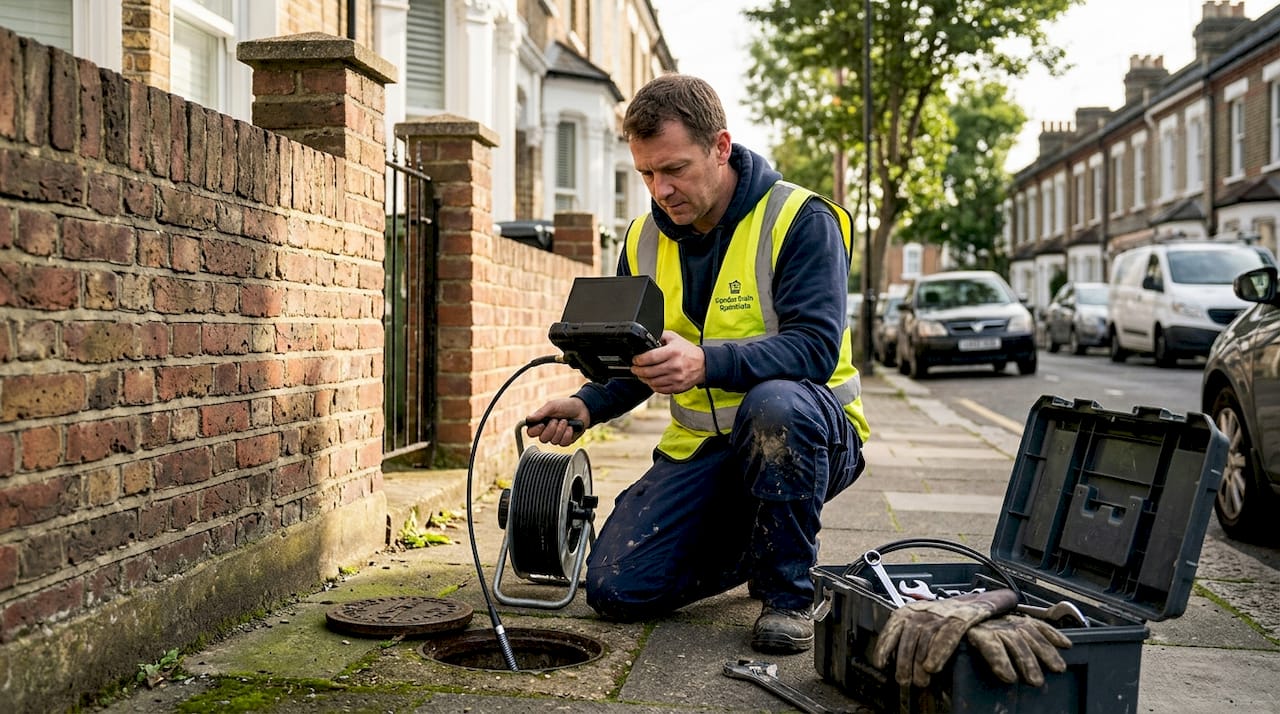
Professionals rely on sophisticated equipment that provides precision impossible to achieve with household tools. CCTV drain surveys use waterproof cameras to navigate your entire drainage system, identifying blockages, cracks, root intrusion, and structural weaknesses without excavation. The visual evidence shows exactly where problems exist and their severity, eliminating guesswork and preventing unnecessary digging.
High-pressure water jetting delivers cleaning power up to 4000 psi, far exceeding what manual rodding achieves. This method blasts away grease, scale, soap residue, and even tree roots without chemicals that damage pipes or harm the environment. The pressurised water scours pipe walls clean, restoring full flow capacity and preventing rapid re-blockage.
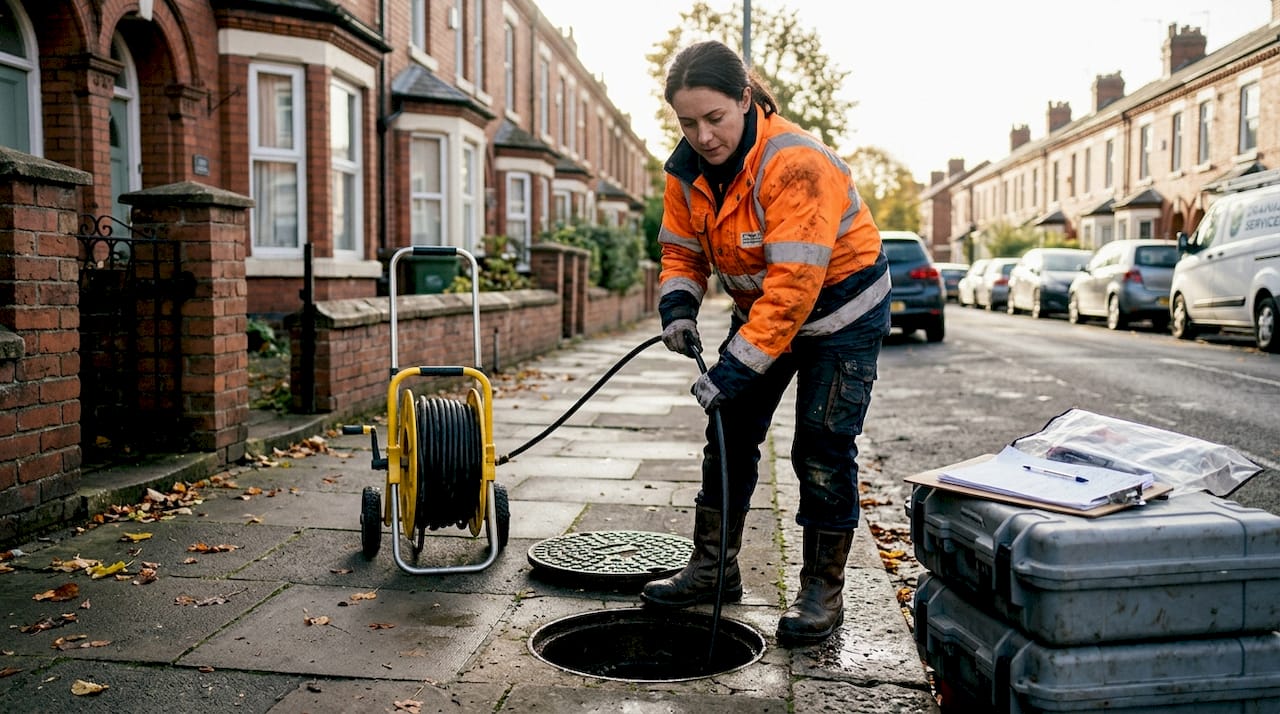
Hydro jetting uses specialised nozzles that direct water jets at multiple angles, ensuring complete coverage of pipe interiors. Forward-facing jets break through blockages whilst rear-facing jets propel the nozzle through the system and flush debris away. This thorough approach removes stubborn deposits that manual methods leave behind, extending the time between maintenance visits.
These professional methods avoid the pipe damage common with DIY rodding, where metal rods can crack fragile Victorian pipes or push blockages deeper into the system. Chemical drain cleaners create heat that weakens pipe joints and corrodes metal fittings over time. Professional techniques preserve your drainage infrastructure whilst delivering superior results.
Pro tip: Request a copy of your CCTV survey footage. This visual record helps you understand your drainage system’s condition and provides valuable documentation for insurance claims or property sales.
| Technique | Pressure/capability | Primary use | Pipe safety |
|---|---|---|---|
| CCTV survey | Visual inspection | Diagnosis and documentation | Non-invasive |
| Water jetting | Up to 4000 psi | Grease, scale, light roots | Gentle on pipes |
| Hydro jetting | Multi-angle nozzles | Stubborn blockages, heavy roots | Controlled force |
| Rodding (manual) | Physical force only | Basic blockages | Risk of damage |
Risks and limitations of DIY drainage attempts
DIY drainage work carries significant risks that many homeowners discover only after causing damage. Improper rodding techniques push blockages deeper into the system rather than removing them, creating problems that require professional excavation to resolve. Metal rods wielded without training crack fragile pipes, particularly in older London properties where Victorian clay pipes have become brittle over decades.
Chemical drain cleaners promise quick fixes but deliver temporary relief at best. These harsh substances generate heat that weakens pipe joints and corrodes metal fittings, creating future leaks and collapses. The chemicals rarely dissolve the entire blockage, instead creating channels that quickly re-block whilst damaging your drainage infrastructure.
Handling drainage work without proper protection exposes you to dangerous bacteria, viruses, and parasites that thrive in wastewater. Leptospirosis, E. coli, and hepatitis A pose serious health threats when DIY enthusiasts work without appropriate safety equipment or training. Professional drainage engineers wear protective gear and follow strict hygiene protocols to prevent infection.
“DIY attempts often cause pipe collapses that lead to expensive excavation and replacement work, far exceeding the cost of calling professionals initially.”
Professional drainage companies carry comprehensive insurance covering any accidental damage during repairs. Your household insurance typically excludes damage caused by DIY work, leaving you personally liable for costly repairs. A cracked pipe or collapsed drain can require excavation costing thousands of pounds, money you cannot recover without professional coverage.
DIY fixes provide short-term relief but fail to address underlying causes. You might clear a blockage temporarily, only to face the same problem weeks later because root intrusion, pipe damage, or structural issues remain unresolved. Safe drain unblocking requires identifying and fixing the root cause, not just treating symptoms.
- Improper tools damage pipe interiors and joints
- Pushed blockages create worse problems downstream
- Chemical cleaners corrode pipes over time
- Health hazards from bacterial exposure
- No insurance coverage for DIY damage
- Temporary fixes lead to recurring problems
Unique drainage challenges in Greater London
London properties face drainage challenges unlike anywhere else in Britain. Victorian infrastructure dating back 150 years forms the foundation of many drainage systems, with fragile clay pipes prone to collapse and displacement. These historic pipes were never designed for modern usage levels or today’s household products, making them vulnerable to stress and damage.
London clay, the geological foundation beneath much of the capital, expands during wet periods and contracts during dry spells. This constant movement displaces pipe joints, creates misalignments, and opens gaps where roots penetrate. Properties built on clay experience drainage problems at higher rates than those on stable ground, requiring expert diagnosis to identify movement-related damage.
Fatbergs represent a uniquely urban drainage problem exacerbated by London’s density. Wet wipes, cooking fats, and hygiene products combine to form solid masses that block main sewers and private drains alike. These blockages form faster in areas with mixed residential and commercial use, where restaurants contribute large quantities of grease to the system.
Tree roots seek moisture and nutrients, making drainage pipes attractive targets. Older pipes with clay or concrete joints provide easy entry points where roots penetrate and expand, creating blockages and structural damage. London’s tree-lined streets and mature gardens mean root intrusion affects properties across the capital, from Victorian terraces to modern developments.
Pro tip: Properties near mature trees or built before 1970 benefit from annual CCTV inspections to catch root intrusion early, before roots cause expensive structural damage.
| Challenge | Impact | Affected properties | Solution |
|---|---|---|---|
| Victorian pipes | Collapse, cracks, leaks | Pre-1900 buildings | CCTV survey, relining |
| London clay | Joint displacement, misalignment | Clay soil areas | Regular inspections |
| Fatbergs | Complete blockages | High-density areas | Hydro jetting, education |
| Root intrusion | Blockages, breaks | Near trees, older pipes | Root cutting, relining |
Understanding these challenges explains why blocked drains occur frequently in London and why professional expertise proves essential. Generic drainage advice from other regions fails to account for the unique combination of ageing infrastructure, problematic soil, and urban density that London property owners face daily. Preventing blocked drains requires strategies tailored to these specific local conditions.
The cost benefits of professional drainage maintenance and inspections
Routine drainage maintenance delivers substantial financial benefits compared to reactive emergency repairs. Planned preventative maintenance reduces emergency callouts by 60%, translating directly to lower costs and fewer disruptions for property owners. The numbers tell a compelling story about the value of proactive care.
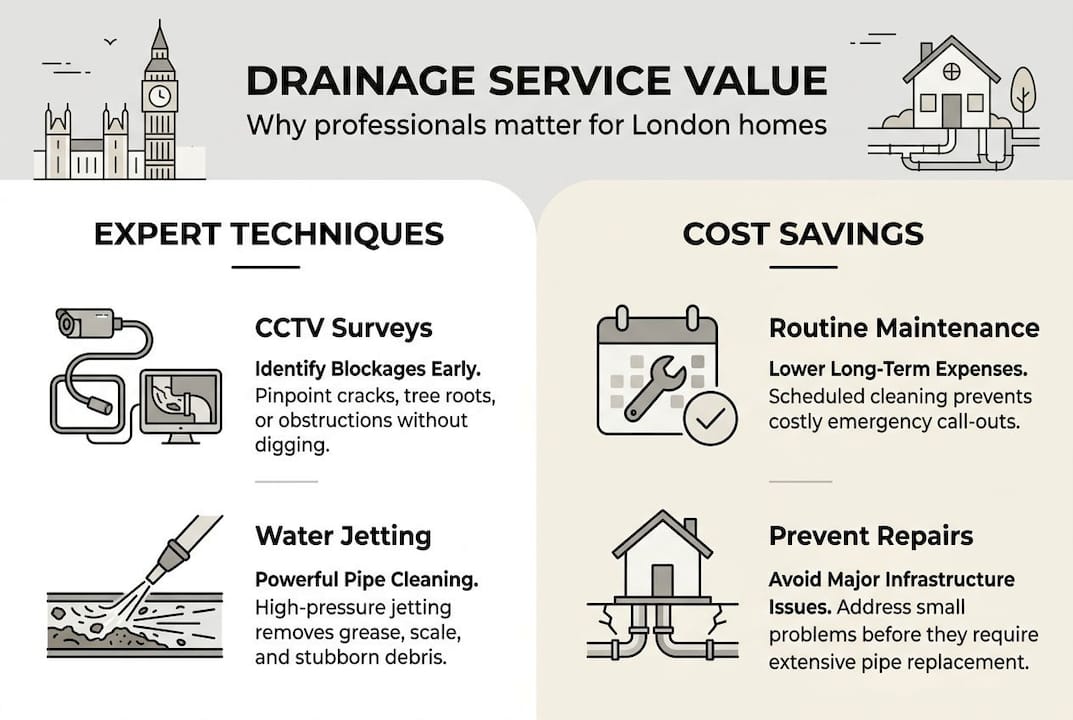
Typical London drain jetting costs £150-250 for routine maintenance, whilst emergency repairs average £2,500 or more when factoring in excavation, pipe replacement, and property restoration. A single emergency avoided pays for years of preventative care, making scheduled inspections a wise investment rather than an unnecessary expense.
Biannual or quarterly inspections detect early warning signs before they escalate into emergencies. Small cracks identified during routine surveys can be relined for hundreds of pounds, whilst collapsed drains requiring excavation cost thousands. Root intrusion caught early requires simple cutting, but roots left to grow cause pipe breaks demanding complete replacement.
Insurance claims for drainage damage average significantly higher than maintenance costs, yet many policies exclude damage from lack of maintenance. Demonstrating regular professional care strengthens your position if you need to claim, whilst preventing the situations that trigger claims in the first place.
| Service type | Typical cost | Frequency | Annual cost |
|---|---|---|---|
| Routine jetting | £150-250 | Biannual | £300-500 |
| CCTV inspection | £200-300 | Annual | £200-300 |
| Emergency unblocking | £400-800 | As needed | Variable |
| Excavation and repair | £2,500-5,000+ | When pipes fail | One-time |
Routine drain inspections provide additional value beyond cost savings. You gain peace of mind knowing your drainage system functions properly, avoid the stress and inconvenience of emergency blockages, and protect your property value by maintaining essential infrastructure.
- Schedule biannual inspections for typical residential properties
- Increase frequency to quarterly for commercial properties or older buildings
- Request CCTV surveys every 2-3 years to document system condition
- Keep maintenance records to support insurance claims and property sales
- Budget £500-800 annually for preventative care versus £2,500+ for emergency repairs
“Planned preventative maintenance proves cost-effective compared to emergency repairs, with London properties saving thousands by identifying issues early through professional inspections.”
Pro tip: Many drainage companies offer maintenance contracts with discounted rates for regular customers. These agreements typically include priority emergency response if problems do arise, adding extra value beyond the cost savings.
How RSJ Drains can help protect your London property
Protecting your London property from drainage problems requires expertise tailored to the capital’s unique challenges. RSJ Drains combines advanced technology with local knowledge to deliver reliable solutions for residential and commercial properties across Greater London. Our drain inspection services use state-of-the-art CCTV equipment to identify issues before they become emergencies, whilst our experienced engineers provide honest assessments and cost-effective repairs.
We understand the specific problems London properties face, from Victorian pipe fragility to clay soil movement and fatberg formation. Our comprehensive maintenance guide helps you implement preventative strategies that reduce emergency callouts and extend your drainage system’s lifespan. When repairs become necessary, our drain repairing services deliver lasting solutions using modern techniques like relining that avoid unnecessary excavation. We offer planned maintenance contracts that provide regular inspections at discounted rates, helping you budget effectively whilst protecting your property investment.
What is the main benefit of professional drainage services?
What is the main benefit of professional drainage services?
Professional drainage services provide accurate diagnosis through CCTV surveys, identifying exact problem locations and causes without guesswork. This precision enables targeted repairs that address root causes rather than symptoms, delivering longer-lasting results. Professionals use safe, effective methods like hydro jetting that clean thoroughly without damaging pipes, unlike DIY approaches that often create additional problems.
How often should I schedule a drainage inspection in Greater London?
Biannual inspections suit most London residential properties, catching problems before they escalate into emergencies. Properties with mature trees nearby, Victorian-era pipes, or commercial usage benefit from quarterly checks due to higher risk factors. Annual CCTV surveys every 2-3 years provide comprehensive documentation of your drainage system’s condition and identify developing issues requiring attention.
Can DIY methods cause more damage to my drains?
DIY attempts frequently push blockages deeper into drainage systems or crack fragile pipes, particularly in older London properties with Victorian infrastructure. Improper rodding techniques and harsh chemical cleaners damage pipe interiors and joints, creating leaks and weaknesses that require professional repair. Without proper training and equipment, DIY work often transforms minor blockages into major problems costing thousands to resolve.
What unique drainage problems do London properties face?
London properties contend with ageing Victorian clay pipes prone to collapse, London clay soil that displaces pipe joints through expansion and contraction, fatbergs from urban density, and tree root intrusion seeking moisture. These challenges combine to create drainage problems at higher rates than other UK regions. Professional inspections identify these specific issues and implement solutions tailored to London’s unique conditions, preventing costly failures.