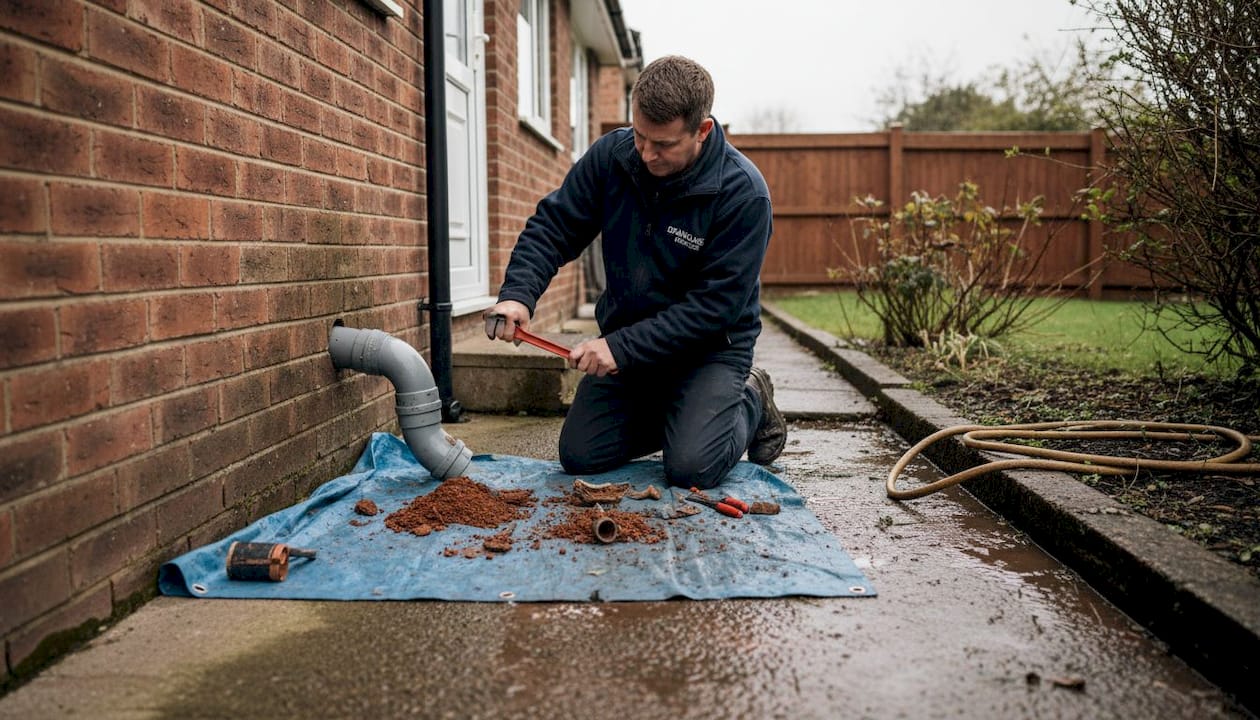
A slow drain or a faint gurgling sound might seem like a minor inconvenience, but for property owners and managers across Greater London, these small signs can signal the start of something far more serious. Drainage problems escalate quickly, and what starts as a partial blockage can become a flooded basement, a cracked foundation, or a costly insurance dispute within weeks. The difference between a modest repair bill and a major structural crisis often comes down to how fast you act. This article explains what is genuinely at stake, how to spot the warning signs early, and what practical steps you can take to protect your property.
Table of Contents
- Understanding drainage repair: what’s at stake for your property
- The hidden dangers of delayed drainage repair
- How drainage repair preserves property value and safety
- Identifying when repair is urgent: signs and solutions
- Professional drainage repair and inspection services in London
- Frequently asked questions
Key Takeaways
| Point | Details |
|---|---|
| Rapid damage escalation | Delaying repairs often leads to more extensive property damage and higher costs. |
| Health and safety risks | Blocked or damaged drains can create health hazards from mould, flooding, or sewage. |
| Protect property value | Regular drainage maintenance preserves the value and structure of your property. |
| Spot signs early | Learning early warning signs can prevent emergencies and save money. |
| Professional expertise matters | Using expert help ensures that repairs are effective, compliant, and long lasting. |
Understanding drainage repair: what’s at stake for your property
Drainage repair covers a wide range of issues, from blocked or collapsed pipes and leaking joints to slow-draining sinks and saturated ground around a building’s perimeter. Not every problem announces itself loudly. In fact, some of the most damaging issues develop silently beneath the surface for months before any visible sign appears.
Greater London properties face particular challenges. The city’s dense urban layout, ageing Victorian-era pipe networks, and heavy seasonal rainfall create conditions where drainage systems are under constant stress. Many buildings in inner London still rely on clay pipes installed over a century ago, which are prone to root intrusion, cracking, and displacement. Drainage problems can affect residential and commercial safety in ways that go far beyond a blocked sink.
Common drainage issues to watch for include:
- Blocked or partially obstructed pipes
- Cracked, collapsed, or displaced pipe sections
- Leaking joints causing ground saturation
- Root intrusion from nearby trees
- Slow drainage across multiple fixtures simultaneously
One of the most persistent misconceptions is that slow drains are harmless. In reality, a slow drain is often a symptom of a growing blockage or a structural fault. Using a drainage problem checklist to assess your property regularly is one of the most effective ways to catch issues before they worsen. The outdoor drainage system impact on surrounding ground and structures is frequently underestimated by property owners until visible damage has already occurred.
Remember: A drainage issue that costs a few hundred pounds to fix today can cost tens of thousands if left unaddressed for even a few months.
The hidden dangers of delayed drainage repair
Postponing drainage repairs is rarely a money-saving decision. The reality is that untreated blockages can lead to flooding and structural damage that dwarfs the original repair cost. The longer a fault is left, the more systems it affects and the more complex the remediation becomes.
Here is a comparison of typical repair costs based on response time:
| Issue | Immediate repair cost | Delayed repair cost (3+ months) |
|---|---|---|
| Partial pipe blockage | £150 to £300 | £800 to £2,000 |
| Cracked drain section | £400 to £700 | £2,500 to £6,000 |
| Root intrusion | £300 to £600 | £1,500 to £4,000 |
| Leaking joint | £200 to £400 | £1,000 to £3,500 |
The consequences of delay follow a predictable pattern:
- A minor blockage restricts water flow and creates pressure build-up
- Pressure causes pipe joints to weaken or crack
- Leaking water saturates surrounding soil and substructure
- Moisture penetrates foundations, leading to subsidence risk
- Damp conditions encourage mould growth inside the property
- Pest activity increases as rodents exploit damaged pipe entry points
- Legal and compliance issues arise if tenants or visitors are affected
The benefits of drainage systems are only realised when those systems are functioning correctly. A compromised drain does not just fail to remove water; it actively works against the structural integrity of your building.
Pro Tip: If you notice recurring blockages in the same location, do not simply clear them and move on. Recurring issues almost always indicate an underlying structural fault that needs professional investigation, not just repeated jetting.
Research into common drainage repairs shows that properties where issues are addressed within the first two weeks of detection spend, on average, significantly less on total remediation than those where repairs are delayed beyond 90 days.
How drainage repair preserves property value and safety
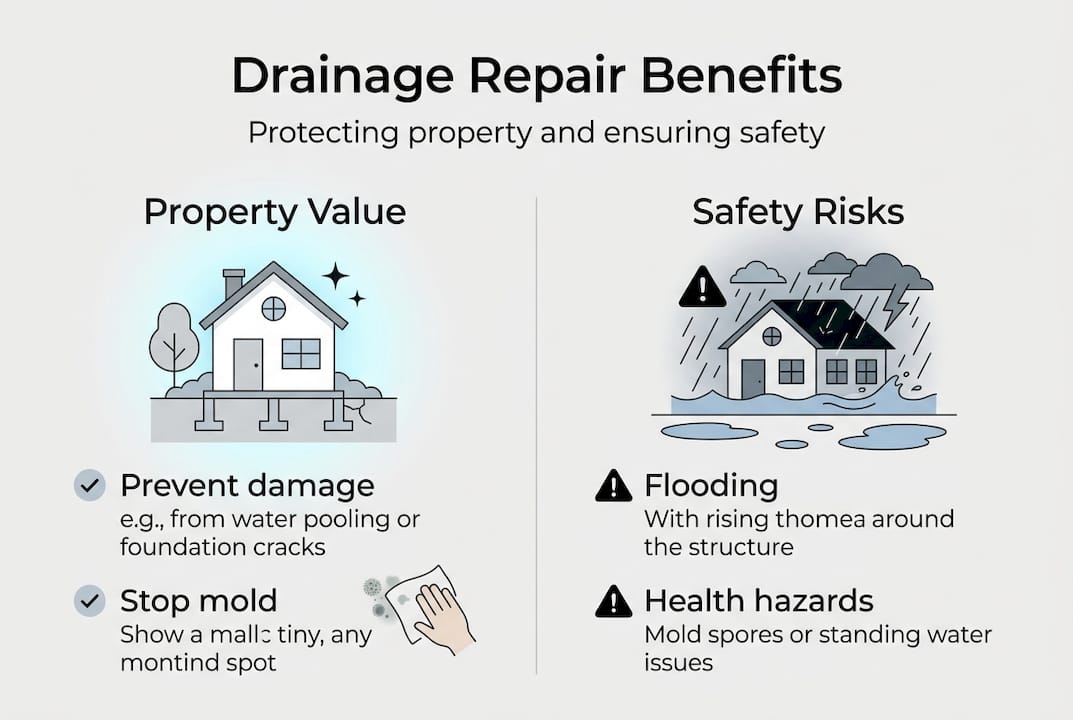
Proactive drainage maintenance does more than prevent damage. It actively protects the value of your asset and the wellbeing of everyone who uses the building. Preventive action extends lifespan and reduces major repair costs over the long term, making it one of the most cost-effective investments a property owner can make.
Consider the difference between two comparable properties:
| Factor | Maintained drainage | Neglected drainage |
|---|---|---|
| Insurance premiums | Standard or reduced | Often increased after claims |
| Property valuation | Stable or improved | Reduced due to risk flags |
| Tenant satisfaction | High, fewer complaints | Low, higher turnover |
| Emergency call-out frequency | Rare | Frequent and costly |
| Compliance status | Met | Potentially at risk |
The practical benefits of keeping your drainage in good repair include:
- Reduced insurance claims: Fewer water damage incidents mean fewer claims and lower premiums over time
- Improved health outcomes: Properly functioning drains prevent mould, damp, and the health issues associated with both
- Legal compliance: Landlords have a legal duty to maintain drainage systems; failure to do so can result in enforcement action
- Fewer emergency call-outs: Routine maintenance catches faults before they become crises
- Extended pipe lifespan: Solutions such as drain relining can add decades to the life of existing pipework without excavation
For landlords specifically, the legal responsibilities are clear. You are required to ensure that drainage systems serving your tenants are safe and functional. Neglecting this duty can expose you to claims, fines, and reputational damage. A structured drain maintenance guide tailored to London properties can help you stay on top of your obligations without guesswork.
Pro Tip: Schedule a professional drainage inspection at least once a year for residential properties and twice yearly for commercial premises. Catching a small fault in October is far preferable to dealing with a flooded property in January.
The drainage safety for homes extends beyond the building itself. A well-maintained system protects gardens, neighbouring properties, and public infrastructure from the knock-on effects of a failing drain.
Identifying when repair is urgent: signs and solutions
Knowing the benefits of repair is one thing; recognising when to act is just as critical. Timely response can prevent costly escalations, but only if you know what to look for.
Here are the most urgent warning signs that require immediate professional attention:
- Foul smells coming from drains, particularly sewage odours inside the property
- Gurgling noises from toilets, sinks, or floor drains when water is used elsewhere
- Recurring blockages in the same drain despite repeated clearing
- Wet patches or sinkholes appearing in the garden or near the building’s perimeter
- Multiple slow drains across different fixtures at the same time
- Sewage or dirty water backing up into sinks, baths, or toilets
- Visible cracks in external walls near drainage routes
If you spot any of these signs, take the following steps before the professionals arrive:
- Stop using the affected fixtures where possible to avoid worsening the blockage
- Do not pour chemicals down the drain, as these can damage older pipework
- Clear the area around external drain covers to allow easy access
- Note when the problem started and whether it follows any pattern (e.g., after heavy rain)
- Take photographs of any visible damage or wet patches for your records
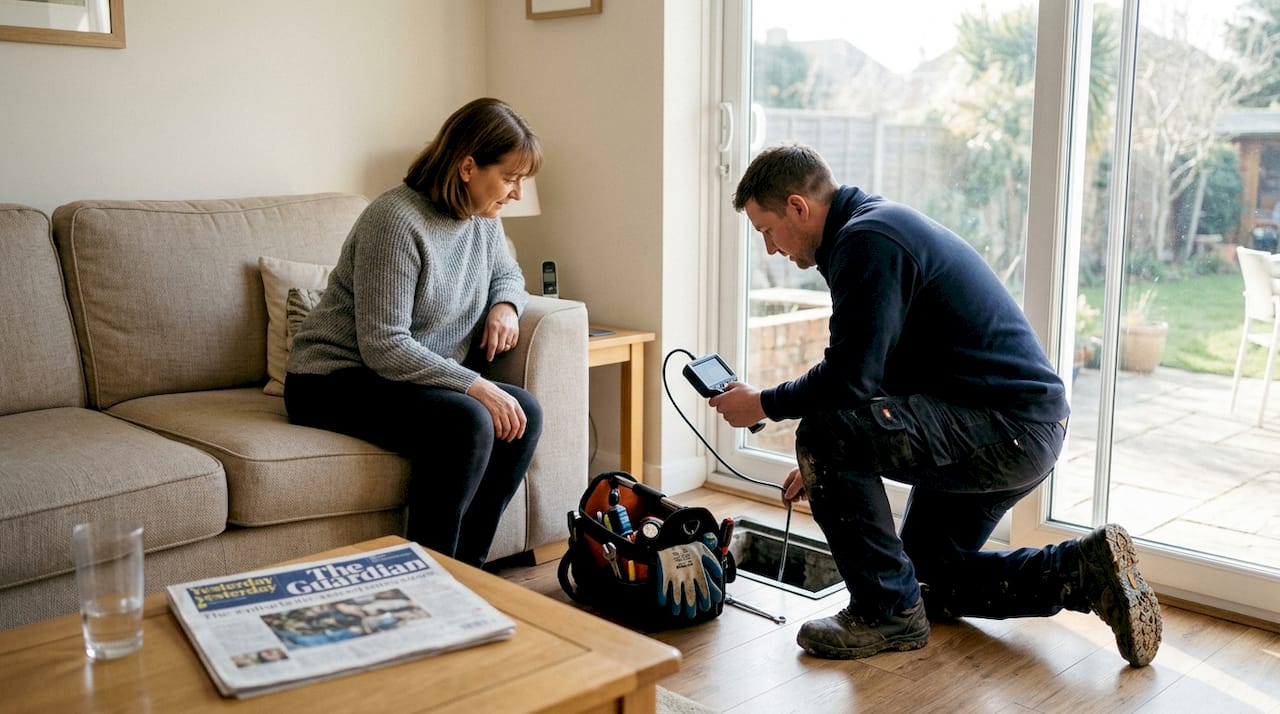
Some situations call for emergency repair rather than a routine appointment. If you are dealing with sewage backup, flooding, or a complete blockage affecting the whole property, contact professional drainage services immediately. General handymen are not equipped to diagnose or repair structural drainage faults safely. You need specialists with CCTV survey equipment, high-pressure jetting capability, and the knowledge to interpret what they find. A drain emergencies guide can help you distinguish between what needs same-day attention and what can be scheduled.
Professional drainage repair and inspection services in London
When drainage problems strike, the speed and quality of your response determines how much damage you ultimately face. Choosing a specialist rather than a general contractor means faster diagnosis, more accurate repairs, and the confidence that the work meets current standards.
At RSJ Drains, we provide drain repairing services across Greater London with a guaranteed two-hour emergency response, available 24 hours a day. Whether you need a CCTV drain survey to identify a hidden fault or full drain inspection services for a commercial property, our team brings the equipment and expertise to resolve issues quickly and thoroughly. We work with residential landlords, property managers, and commercial operators, providing clear reports, transparent pricing, and lasting repairs. Do not wait for a small problem to become a structural crisis. Get in touch with RSJ Drains today and protect your property with confidence.
Frequently asked questions
What is considered an emergency drainage issue?
Emergency drainage issues include severe blockages, flooding, raw sewage backups, and any situation posing immediate property or health risks. If the problem is affecting multiple fixtures or causing water to enter the building, treat it as an emergency.
How quickly should I repair a blocked drain?
Blocked drains should be dealt with as soon as possible to avoid structural damage, unpleasant odours, and increased repair costs. Even a partial blockage can worsen significantly within days if left unattended.
Are landlords responsible for drainage repairs?
In most cases, landlords are required by law to ensure drainage systems are maintained and repaired promptly to protect tenant safety. The drain maintenance guide for London properties outlines these responsibilities clearly.
How can routine inspections prevent drainage emergencies?
Routine inspections help spot issues before they escalate, allowing for timely repairs and reducing overall property risk. Regular inspections are particularly valuable for older London properties where pipe deterioration is more likely.
Can I repair drainage issues myself or should I use professionals?
Minor clogs can be attempted at home, but most drainage issues require specialist skills and equipment to ensure safety and compliance. For anything beyond a surface-level blockage, professional drainage help is strongly recommended.