TL;DR:
- Commercial drainage systems handle larger volumes and specialized waste, requiring robust infrastructure.
- Compliance with strict UK standards and regulations, including regular inspections and maintenance, is essential.
- Proper management minimizes costly emergencies, regulatory fines, and environmental impact for London properties.
Many property owners assume that commercial drainage is simply a bigger version of what sits beneath a family home. It is not. Commercial drainage operates under entirely different engineering standards, legal obligations, and maintenance demands. Get it wrong and you are looking at regulatory fines, voided insurance, and the kind of blockage that shuts down an entire building. This guide cuts through the confusion to explain what commercial drainage actually involves, why it matters for London property owners and managers, and what you need to do to stay compliant, operational, and protected.
Table of Contents
- Defining commercial drainage: Core components explained
- How commercial drainage systems differ from domestic
- Regulations, responsibilities and sustainable solutions
- Essential maintenance and emergency prevention
- Beyond the basics: What property owners really need to know
- Need reliable commercial drainage solutions in London?
- Frequently asked questions
Key Takeaways
| Point | Details |
|---|---|
| Commercial drainage scope | It covers all systems dealing with waste and surface water in non-residential properties. |
| Domestic vs. commercial | Commercial systems are larger, more complex and tightly regulated compared to domestic ones. |
| Regulation compliance | Property owners must adhere to national standards like Part H and SuDS for compliance and safety. |
| Maintenance is essential | Routine upkeep and rapid response plans are crucial to prevent emergencies and costly repairs. |
| Seek expert support | Specialist knowledge is needed for effective commercial drainage setup and problem-solving. |
Defining commercial drainage: Core components explained
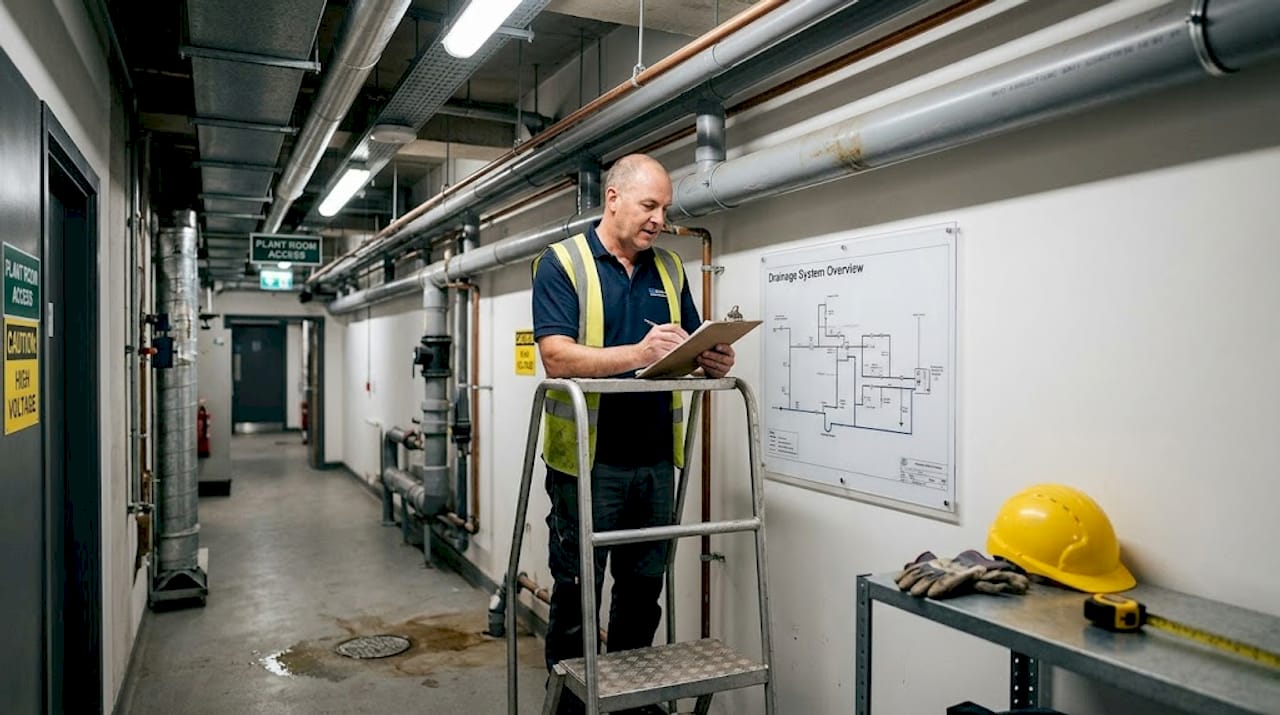
Commercial drainage refers to the complete system that manages both waste water and surface water for non-domestic properties. That covers everything from a small retail unit in Hackney to a multi-storey office block in Canary Wharf, a school in Croydon, or an industrial estate in Park Royal. The system does not just carry water away. It controls it, filters it, and in many cases treats it before it reaches the public sewer network.
The core components of a commercial drainage system include:
- Underground pipework: Larger diameter pipes capable of handling significantly higher flow rates than domestic equivalents
- Inspection chambers: Access points built at regular intervals to allow maintenance teams to inspect, clear, and monitor the system
- Interceptors: Chambers designed to separate oils, petrol, and other contaminants from waste water before it enters the sewer
- Grease traps: Essential for food service premises, these units capture fats, oils, and grease before they solidify and cause blockages further down the line
- Surface water systems: Separate drainage for rainwater runoff, often including gullies, channels, and attenuation tanks
Domestic systems are designed for predictable, low-volume use. Commercial systems must handle variable occupancy, shift patterns, industrial processes, and public footfall. The engineering tolerances are simply not comparable.
| Feature | Commercial drainage | Domestic drainage |
|---|---|---|
| Pipe diameter | 150mm or greater | 100mm typical |
| Inspection chambers | Multiple, regular spacing | Minimal |
| Grease management | Mandatory for food premises | Not required |
| Regulatory framework | Part H, BS EN 12056, SuDS | Part H only |
| Maintenance frequency | Scheduled, documented | As needed |
The regulatory framework governing these systems is substantial. National standards for sustainable drainage systems (SuDS) shape commercial drainage design across the UK, requiring larger capacities, sustainable surface water management, and documented maintenance programmes. If your property has recently changed use, for example from retail to food and beverage, your existing drainage may no longer be compliant. Our drain repairing services cover exactly these kinds of upgrade and remediation scenarios, and you can also browse drainage repairs examples to see the range of issues we regularly resolve.
How commercial drainage systems differ from domestic
With the basics in place, it is crucial to recognise exactly how commercial systems diverge from those supporting homes.
The most obvious difference is volume. A busy restaurant in Central London may push through thousands of litres of waste water during a single lunch service. An office block with 200 staff generates sustained demand across an entire working day. Domestic systems are simply not engineered for this kind of throughput, and attempting to manage a commercial property with domestic-grade infrastructure is a compliance failure waiting to happen.
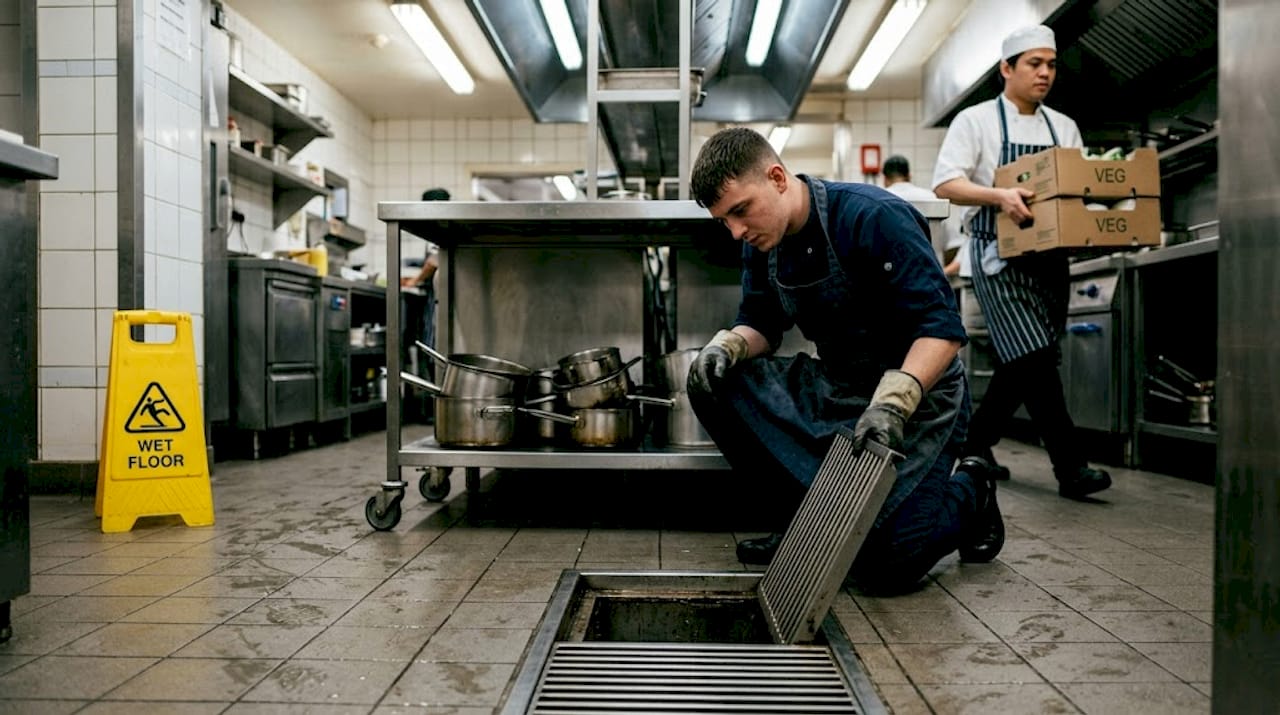
Beyond volume, the type of waste matters enormously. Commercial kitchens produce fats and grease that solidify in pipework. Workshops and garages generate hydrocarbon contamination. Laboratories may produce chemical waste requiring specialist interceptors. Each of these scenarios demands dedicated infrastructure that domestic drainage never accounts for.
Commercial systems also require far greater resilience. Public-facing properties carry a duty of care. A blocked drain at a school or a shopping centre is not just an inconvenience. It is a health and safety incident with potential legal consequences.
| Factor | Commercial | Domestic |
|---|---|---|
| Daily load | Very high, variable | Low, predictable |
| Waste profile | Mixed, including fats and chemicals | Primarily grey and black water |
| Maintenance requirement | Scheduled, compliance-driven | Reactive, as needed |
| Regulatory oversight | Strict, multi-standard | Basic Part H |
| Common failures | Grease build-up, interceptor failure | Root ingress, minor blockages |
Key differences worth highlighting:
- Commercial drainage must meet stricter standards for load and output
- Grease traps and interceptors are legally required in many commercial settings
- Inspection and maintenance records must be kept and made available to regulators
Our commercial drain cleaning guide explains the specific cleaning methods required for different types of commercial premises, and understanding your business drain cleaning needs is a sensible first step for any property manager.
Pro Tip: Neglecting commercial drainage regulations can invalidate your property insurance and expose you to enforcement action from the local authority. Always verify your drainage specification matches your current property use.
Regulations, responsibilities and sustainable solutions
Understanding the engineering behind commercial drainage only goes so far without grasping the legal and environmental responsibilities at play.
Three sets of rules govern commercial drainage in the UK. Part H of the Building Regulations covers the design and installation of drainage and waste disposal systems. BS EN 12056 sets out the technical requirements for gravity drainage systems inside buildings. SuDS (Sustainable Drainage Systems) standards govern how surface water is managed to reduce flood risk and environmental impact. Together, Part H, BS EN 12056, and SuDS apply to all commercial drainage in the UK, and compliance is not optional.
As a property owner or manager, your responsibilities include:
- Ensuring the drainage system was installed to the correct specification for your property type
- Commissioning regular inspections and keeping written records of findings
- Arranging maintenance and cleaning at intervals appropriate to the property’s use
- Responding promptly to any drainage failure or environmental incident
- Updating the drainage system whenever the property changes use or undergoes significant development
SuDS in particular have moved from best practice to legal requirement. Since 2025, SuDS are mandatory for all major new commercial developments in England. This means attenuation tanks, permeable surfaces, and green infrastructure are no longer optional extras. They are part of the planning approval process.
London’s ageing sewer infrastructure means that every commercial property adding unmanaged surface water runoff to the network increases flood risk for the entire surrounding area. Sustainable drainage is not just a regulatory box to tick. It is a genuine contribution to the city’s resilience.
Our drain inspection services can assess whether your current system meets these standards, and our explanation of drain maintenance outlines what a compliant maintenance programme looks like in practice.
Essential maintenance and emergency prevention
With the legal and sustainable framework set, the focus turns to day-to-day and long-term upkeep to prevent costly disasters.
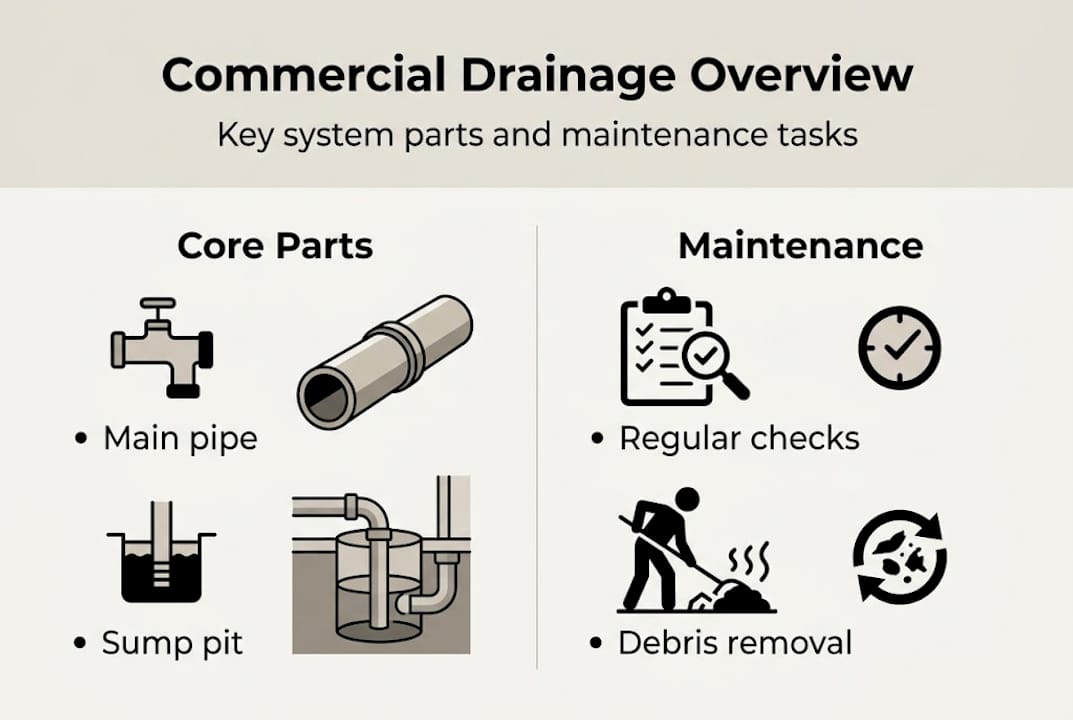
Reactive maintenance, fixing things after they break, costs significantly more than planned maintenance. An emergency call-out to clear a blocked interceptor during trading hours, with all the associated disruption, will always cost more than a scheduled quarterly clean. The gap widens further when you factor in potential fines, insurance complications, and reputational damage.
Routine maintenance reduces the risk of blockages and regulatory failures. A well-structured maintenance schedule for a commercial property typically includes:
- Quarterly inspections of all inspection chambers and interceptors
- Biannual CCTV surveys to identify root ingress, pipe deformation, or build-up before it becomes a blockage
- Annual high-pressure water jetting of main drainage runs
- Monthly grease trap servicing for any food service premises
- Post-event inspections following heavy rainfall or any reported drainage issue
Knowing how to recognise early warning signs is just as important as scheduled servicing. Slow drainage, gurgling sounds, and persistent odours are all indicators that something is building up. Our guide on signs of blocked drains explains what to look for and when to act.
Pro Tip: Schedule preventive maintenance twice a year: once after winter to clear debris and assess any frost damage, and once before autumn to prepare for increased rainfall. These two windows cover the highest-risk periods for London commercial properties.
When an emergency does occur, the response protocol for commercial premises differs from residential. You need to isolate the affected area, restrict access if there is any risk of flooding or contamination, and contact a specialist with commercial experience immediately. Our residential drain maintenance steps provide a useful comparison, but commercial emergencies require a contractor who understands the regulatory and operational stakes involved.
Beyond the basics: What property owners really need to know
After years of working across Greater London’s commercial properties, one pattern stands out clearly. The property managers who face the biggest drainage bills are rarely those who ignored the system entirely. They are the ones who cut costs at the wrong moments, usually by hiring a domestic contractor for a commercial job, or by delaying a CCTV survey that would have caught a developing problem early.
There is also a persistent myth that a single drainage solution works across all commercial property types. It does not. A Victorian warehouse conversion in Bermondsey has entirely different drainage challenges to a new-build office in Stratford. London’s infrastructure is layered, inconsistent, and in some areas, genuinely ancient. Generic national firms often miss these local nuances.
Local authority enforcement in London has also become more active. Inspectors are increasingly checking drainage compliance during change-of-use applications and licensing renewals. The property managers who sail through these checks are the ones who have maintained records and worked with specialists who understand both the technical and regulatory landscape. Reviewing real repair scenarios from properties similar to yours is one of the most practical ways to understand what genuine commercial drainage expertise looks like.
Need reliable commercial drainage solutions in London?
Understanding commercial drainage is the first step. Having the right specialist on call is what protects your property, your tenants, and your compliance record.
RSJ Drains provides full-service commercial drainage across Greater London, with a guaranteed two-hour emergency response available around the clock. Whether you need a scheduled maintenance programme, a compliance inspection, or urgent help with a blockage, our team has the equipment and expertise to handle it. Explore our complete London drainage services to see the full range of solutions available, and book drain inspections and CCTV surveys to get a clear picture of your system’s current condition. Call us today for fast, professional support.
Frequently asked questions
What counts as commercial drainage?
Commercial drainage includes all waste and surface water systems serving non-residential properties, such as offices, shops, and industrial buildings. UK regulations clarify the definition and standards that apply to these systems.
Are there special regulations for commercial drainage in London?
Yes, commercial drainage must meet Building Regulations Part H, BS EN 12056, and SuDS standards for sustainable surface water management. Part H, BS EN 12056, and SuDS all apply and compliance is a legal requirement, not a guideline.
What’s the best way to prevent blocked commercial drains?
Regular inspections, scheduled cleaning, and following a tailored maintenance plan reduce blockages and costly emergencies significantly. Maintenance and inspections are the most reliable preventive measures available to property managers.
Can domestic drainage contractors handle commercial systems?
No, commercial drainage requires specific expertise, larger equipment, and compliance knowledge that general domestic contractors seldom have. Commercial work is governed by separate standards and capacity requirements that demand specialist experience.
What should I do in a commercial drainage emergency?
Shut off water flow if possible, restrict access to the affected area, and contact a specialist drainage firm with commercial experience for immediate assistance. Prompt specialist response is essential to limit damage and maintain regulatory compliance.