TL;DR:
- Regular inspections and cleaning prevent costly drain blockages and structural damage.
- Emergency drain response follows urgent steps to stop flooding and repair damage.
- Documented maintenance records support legal compliance, insurance claims, and long-term property health.
Picture this: it’s a Tuesday morning, your kitchen sink is gurgling ominously, and water is pooling around your feet. For London homeowners and property managers, this scenario is all too familiar. Blocked drains don’t just cause inconvenience — they can lead to structural damage, health risks, and bills that spiral quickly out of control. Having a clear, repeatable maintenance workflow is the difference between a minor fix and a full-scale emergency. This guide walks you through exactly how to approach drain maintenance in Greater London, from routine checks to urgent responses, so you can protect your property and your peace of mind.
Table of Contents
- Understanding drain maintenance workflows in London
- Preparation: what to check and tools you’ll need
- Step-by-step: routine drain maintenance workflow
- Handling emergency drain issues in Greater London
- Verification, follow-up, and long-term prevention
- Why planned maintenance always beats emergencies (our perspective)
- London’s experts for drain workflow, inspection, and repairs
- Frequently asked questions
Key Takeaways
| Point | Details |
|---|---|
| Routine vs emergency workflows | Routine maintenance prevents emergencies, while emergency work is urgent and riskier. |
| Preparation saves time and money | Checking access, tools, and safety before you start prevents mistakes and speeds up results. |
| Regular checks reduce costs | Annual CCTV and jetting cut the risk of expensive emergencies by up to 70%. |
| Verify and document every job | Always record inspections and repairs for insurance and legal protection. |
Understanding drain maintenance workflows in London
Not all drain problems are equal, and neither are the workflows you need to resolve them. There are two core approaches: routine maintenance and emergency maintenance. Understanding both is essential for any London property owner.
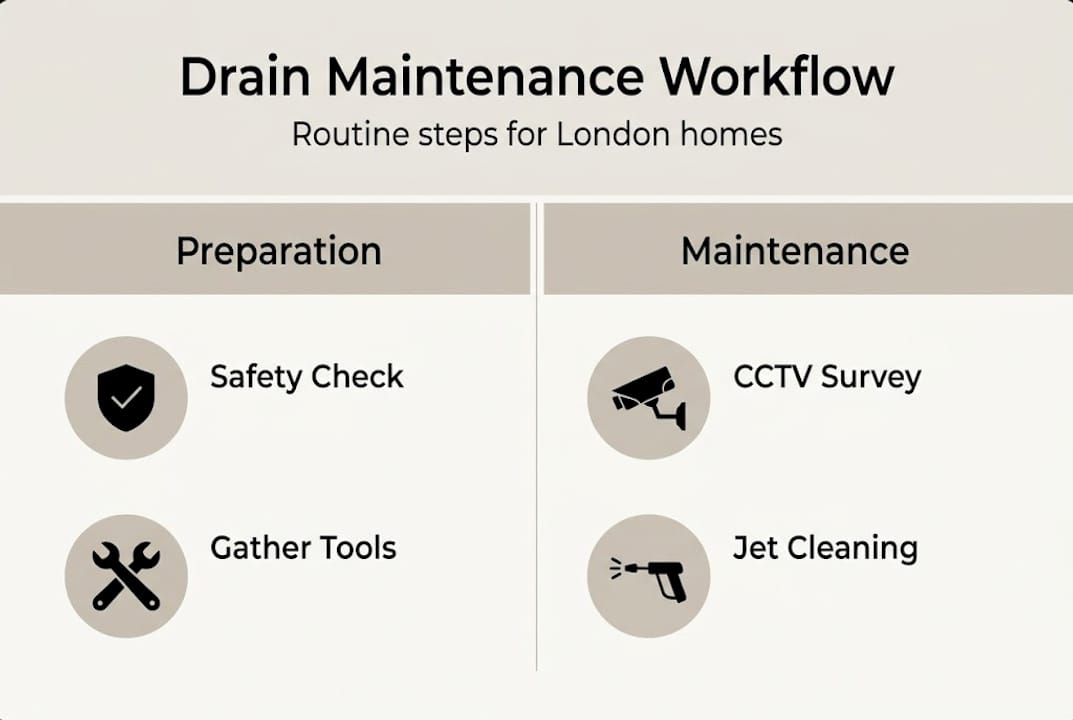
A standard drain maintenance workflow covers regular inspections, scheduled cleaning, and proactive repairs before small issues become serious. It typically involves visual checks, high-pressure jetting, and CCTV surveys at planned intervals. The goal is prevention. Emergency maintenance, by contrast, is reactive. The emergency workflow follows five urgent steps: ensure safety and stop inflow, carry out an initial assessment or CCTV inspection, apply immediate jetting or rodding to stop flooding, repair any structural damage, and complete post-work verification.
London’s drainage systems have their own challenges. Many properties sit above Victorian-era pipework that is over 100 years old, prone to root intrusion and collapse. Hard water in the capital accelerates limescale build-up, and the now-infamous “fatbergs” — solid masses of grease, wipes, and food waste — regularly block London’s sewers. These factors mean that London drain maintenance basics require a more attentive approach than in newer developments elsewhere in the country.
Documentation matters too. Keeping records of every inspection and cleaning session protects you legally, supports insurance claims, and helps you comply with SuDS maintenance standards for shared or sustainable drainage systems.
| Feature | Routine maintenance | Emergency maintenance |
|---|---|---|
| Timing | Scheduled, planned | Immediate, reactive |
| Goal | Prevention | Damage limitation |
| Methods | Jetting, CCTV, rodding | Rodding, jetting, repair |
| Cost | Lower, predictable | Higher, unpredictable |
| Documentation | Ongoing log | Incident report |
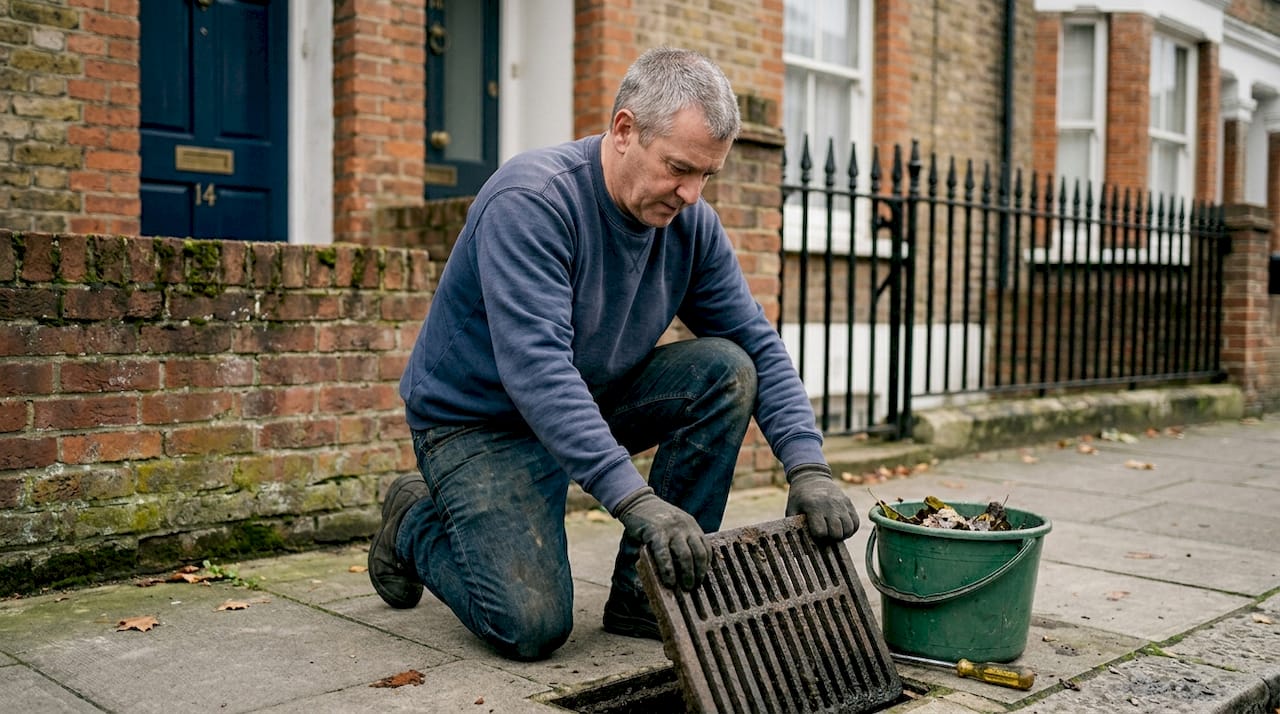
- Inspect external gullies and inspection chambers every six months
- Clear grease traps quarterly in kitchens
- Book annual CCTV surveys for older properties
- Log all findings with dates and photographs
Pro Tip: Schedule your routine maintenance for spring and autumn. London’s wet winters and leaf-fall season are prime times for blockages, so getting ahead of them twice a year makes a real difference.
Preparation: what to check and tools you’ll need
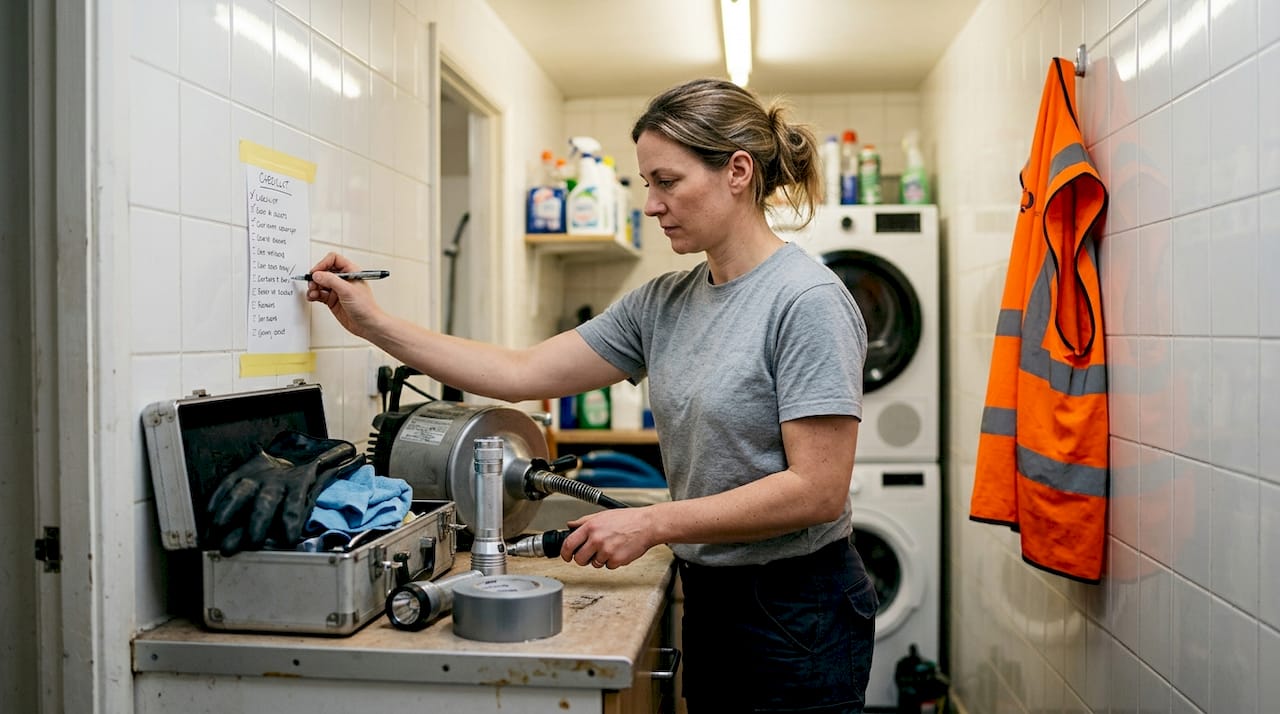
Before you touch a drain, preparation is everything. Rushing in without the right checks or equipment can turn a manageable job into a hazard. Start by locating all access points — inspection chambers, rodding eyes, and gully covers — and confirm they are safely accessible. Check for any backflow risk, particularly if the drain connects to a shared sewer. Assess whether the area is safe from electrical hazards, especially if flooding is involved.
Once safety is confirmed, gather your tools. The right equipment depends on the job. Key methodologies include high-pressure water jetting at 1,500 to 4,000 PSI for grease and scale, mechanical rodding for minor blockages, CCTV surveys for accurate diagnosis, and descaling treatments for hard water limescale.
| Tool | Best used for | DIY or professional? |
|---|---|---|
| Plunger | Minor sink/toilet blockages | DIY |
| Drain rods | Partial blockages in accessible pipes | DIY with care |
| High-pressure jetter | Grease, scale, stubborn blockages | Professional |
| CCTV camera | Diagnosis, structural checks | Professional |
| Descaling solution | Hard water limescale | DIY (mild) or professional |
| PPE (gloves, mask) | All drain work | Always |
Knowing when to call a professional is just as important as knowing your tools. Use this checklist from the drain maintenance checklist to guide your decision:
- Call a professional if: water is backing up into multiple fixtures, there is a foul smell from multiple drains, the blockage has not cleared after two DIY attempts, or you suspect structural damage
- DIY is reasonable if: a single fixture is slow-draining, there is no sign of flooding, and the blockage is clearly minor
Understanding the types of drain maintenance available helps you match the method to the problem rather than guessing.
Pro Tip: Always match jetting pressure to your pipe material and age. PVC pipes should never exceed 2,500 PSI, and Victorian clay or cast iron pipes require even more caution. When in doubt, opt for mechanical rodding first.
Step-by-step: routine drain maintenance workflow
With your checks done and tools ready, here is the standard workflow to follow for routine maintenance:
- Prepare access. Locate and open all relevant inspection chambers. Ensure PPE is on and the area is safe.
- Visual inspection. Look for obvious blockages, root intrusion, cracks, or standing water. Photograph anything unusual.
- Clear the drain. Choose your method based on the blockage type. Use rodding for minor obstructions. Use high-pressure jetting for grease or scale. Book a CCTV survey if the cause is unclear.
- Test the flow. Run water through the system and observe the drainage speed. A healthy drain clears within seconds.
- Document and schedule. Record what was found, what was done, and when the next maintenance is due.
When it comes to jetting versus rodding, jetting is more thorough and effective for grease and biofilm, but it carries a higher risk on fragile pipes and costs more. Rodding is gentler and cheaper but may not fully clear compacted blockages. For most London homes, a combination of both methods across the year gives the best results.
Safety warning: Never exceed 2,500 PSI on PVC pipework. Always wear waterproof gloves, eye protection, and a face mask when working near drains. If you are unsure about the pipe material or condition, stop and call a professional. Sewage exposure carries serious health risks.
Regular CCTV checks are also worth building into your routine. They provide a visual record that is invaluable for insurance claims and for demonstrating compliance to Thames Water if a shared drain is involved. The essential drain steps for residential properties include this as standard, and it can also prevent costly blockages from developing undetected.
Pro Tip: Keep a dedicated folder — digital or physical — for all CCTV footage, inspection reports, and maintenance receipts. This becomes your evidence trail if a dispute arises with a neighbour, insurer, or local authority.
Handling emergency drain issues in Greater London
A sudden blockage or drain flood requires a completely different mindset. Speed matters, but so does safety. The emergency workflow is clear:
- Ensure safety and stop inflow. Turn off water at the stopcock if flooding is active. Do not enter flooded areas where electrical sockets are present.
- Initial assessment. Identify the source. Is it a single fixture or multiple? Is sewage involved? A quick CCTV inspection confirms the location and severity.
- Immediate jetting or rodding. Clear the blockage as quickly as possible to stop further flooding or backflow.
- Repair if structural damage is found. Cracked pipes or collapsed sections need professional repair, not just clearing.
- Post-verification. Test the system thoroughly before closing access points and resuming normal use.
| Situation | DIY action | Call a professional |
|---|---|---|
| Single slow drain | Plunger or rods | If unresolved after two attempts |
| Multiple drains backing up | Stop water use | Immediately |
| Sewage smell or visible sewage | Ventilate, do not touch | Immediately |
| Flooding near electrics | Isolate power | Immediately |
Post-flood rehabilitation is critical for both safety and property value. Sewage-contaminated water carries bacteria that linger in walls and floors. A professional clean and inspection after any flooding event is not optional — it is essential. For emergency drainage support in Greater London, response time is everything, and understanding drainage emergencies helps you act decisively rather than panic.
Emergency caution: Sewage flooding presents serious health and electrical hazards. Never attempt to clear a drain if sewage is visible and you are unsure of the source. Call a professional immediately and keep children and pets away from the affected area.
Verification, follow-up, and long-term prevention
Once the work is done, verification is not optional — it is the step that confirms the job was actually successful. Run water through every fixture connected to the drain and observe the flow. A CCTV review post-maintenance confirms there are no residual blockages or damage that was missed during the initial work.
Annual CCTV and jetting contracts save property owners 50 to 70% compared to emergency call-out costs. That is a significant saving, and it comes with the added benefit of documented evidence for insurers and regulators. The SuDS guidelines also recommend regular maintenance documentation for both shared and private drainage systems, making record-keeping a compliance requirement in many cases.
Building a maintenance log is straightforward. Include the following:
- Date and type of each inspection or cleaning
- Name of contractor or person carrying out the work
- Findings, including photographs and CCTV footage references
- Actions taken and materials used
- Scheduled date for next maintenance
- Any issues flagged for future attention
Pro Tip: Ask your drainage contractor for a written report after every visit. Most reputable London firms provide this as standard, and it forms the backbone of your maintenance record.
For long-term prevention, consider booking CCTV surveys annually and pairing them with a high-pressure jetting session. This combination catches build-up before it becomes a blockage and keeps your pipes in the best possible condition. You can also save money with maintenance by negotiating an annual contract rather than paying per visit.
Why planned maintenance always beats emergencies (our perspective)
After years of responding to drainage crises across Greater London, we have seen the same pattern repeat itself. A property manager skips the annual survey to cut costs. Six months later, a fatberg forms, a pipe collapses, and the emergency call-out costs five times what the contract would have. The maths is not complicated, but the lesson keeps getting learned the hard way.
Planned maintenance versus emergencies is not just a financial argument. It is about control. When you have a scheduled workflow, you know the condition of your pipes. You have records. You have evidence. When something does go wrong — and in London’s ageing infrastructure, something eventually will — you are in a far stronger position to act quickly and recover costs.
London’s Victorian pipework, combined with hard water and the capital’s notorious fatbergs, makes reactive maintenance a genuinely risky strategy. The properties that fare best are those where maintenance is built into the annual budget as a fixed line item, not treated as an optional expense. That shift in thinking is what separates costly emergencies from manageable, predictable upkeep.
London’s experts for drain workflow, inspection, and repairs
When a drain issue feels overwhelming or you simply want the reassurance of a professional assessment, RSJ Drains is here to help. We provide drain inspection services across Greater London, with rapid response times and a team that understands the specific challenges of London’s drainage systems.
From routine CCTV drain surveys to emergency call-outs and tailored annual maintenance contracts, we cover everything your property needs. Our family-run approach means you get honest advice, clear pricing, and work that is done properly the first time. Find out how drain maintenance savings with a planned contract can protect your property and your budget over the long term. Call us today or book online for a fast, friendly response.
Frequently asked questions
What is the difference between routine and emergency drain maintenance?
Routine maintenance prevents problems through regular inspections and cleaning, while emergency maintenance is a reactive response to active blockages or flooding. Standard and emergency workflows differ significantly in preparation, urgency, and cost.
How often should I book professional drain maintenance in London?
Annual contracts for CCTV and high-pressure jetting are recommended for London properties, given the hard water and ageing pipework that accelerate build-up and deterioration.
Can I use household chemicals for drain maintenance?
Mild methods like boiling water may shift minor grease, but aggressive chemicals risk damaging pipes and are far less effective than professional clearing. For anything beyond a minor DIY blockage, professional methods are safer and more reliable.
What records should I keep for drain maintenance?
Maintain a log of all inspections, cleaning sessions, CCTV surveys, repairs, and follow-up actions. SuDS standards emphasise maintenance plans and documentation for both shared and private drainage systems.