TL;DR:
- Drain tracing accurately locates underground pipe issues, preventing unnecessary excavation.
- Professional tools like CCTV surveys and acoustic equipment identify subtle faults early.
- Regular drain tracing reduces costs, protects property value, and ensures regulatory compliance.
Water backing up in your sink, a persistent foul smell from the garden, or a suspicious damp patch appearing near the foundations — these are the moments when property owners in London realise something is seriously wrong underground. The trouble is, knowing something is wrong is very different from knowing where the problem is. Guessing costs money, wastes time, and often makes things worse. Drain tracing is the professional method that removes the guesswork entirely, giving you a precise, accurate picture of what is happening beneath your property before a single shovel breaks the ground.
Table of Contents
- What is drain tracing and why does it matter?
- How does drain tracing work? Tools and technologies explained
- When and why should you use drain tracing?
- How does drain tracing prevent future problems?
- What most property owners misunderstand about drain tracing
- Get peace of mind with professional drain tracing
- Frequently asked questions
Key Takeaways
| Point | Details |
|---|---|
| Accurate diagnosis | Drain tracing finds the exact location and cause of underground drainage problems. |
| Reduces repair costs | Pinpointing issues early helps avoid expensive excavation and repeated repairs. |
| Saves time | Professional tracing quickly resolves urgent issues and minimises disruption. |
| Supports long-term maintenance | Regular tracing stops minor problems turning into emergencies. |
| Professional value | Expert drain tracers use safe, non-invasive technology suited for all property types. |
What is drain tracing and why does it matter?
Let’s start by clarifying what drain tracing actually is, and why understanding it matters to property owners.
Drain tracing is an investigative method used to accurately track the route, detect blockages, and identify leaks or defects within underground drainage systems. In plain terms, it means finding out exactly where your drains run, how deep they sit, and what condition they are in — all without unnecessary excavation.
For most properties in Greater London, the drainage network is a maze of pipes that were laid decades ago, sometimes without detailed records. When problems arise, knowing the layout and condition of those pipes is the difference between a swift, targeted repair and weeks of disruptive digging in the wrong place.
Common reasons to arrange drain tracing include:
- Persistent or recurring blockages that keep coming back despite clearing
- Foul odours that cannot be traced to an obvious source
- Unexplained subsidence or sinkholes in gardens or driveways
- Repeated flooding in basements or low-lying areas
- Damp patches inside the property without an obvious cause
The risks of ignoring these warning signs are real. Without accurate tracing, contractors may excavate in the wrong location, causing unnecessary property damage and inflating costs. There are also legal considerations: when spotting drain blockages early is critical, and when selling or renting a property, building regulations and due diligence checks increasingly require documented evidence of drain condition. Failure to provide this can create disputes, delay sales, or even expose landlords to liability.
Understanding why blocked drains matter to your property’s long-term condition is the first step. Acting on that understanding before problems escalate is what separates reactive owners from proactive ones.
“Drain tracing is not just about finding a problem — it is about protecting the investment you have made in your property. Accurate information is always cheaper than guesswork.”
Pro Tip: If you have recently bought an older London property or are managing a portfolio, commission a drain trace before problems appear. Knowing your drain layout in advance means any future issue can be dealt with in hours, not days.
How does drain tracing work? Tools and technologies explained
Knowing what drain tracing does is only useful if you understand how it works in practice. Here’s what really happens during a professional tracing session.
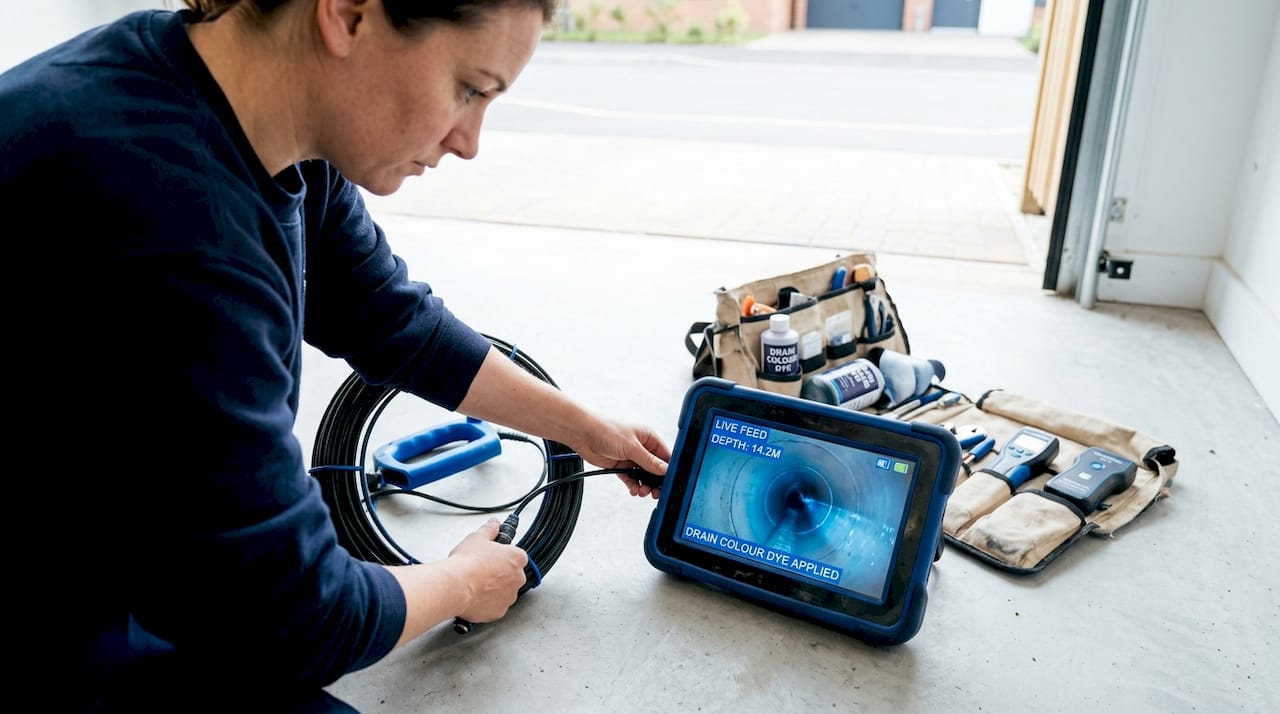
Experienced professionals rely on methods such as CCTV camera drain surveys, tracer dye, and acoustic equipment to precisely locate underground pipes and diagnose problems. Each method has its strengths, and the right choice depends on the age, layout, and complexity of the drains involved.
Overview of the main drain tracing tools:
| Tool | Main use | Pros | Cons |
|---|---|---|---|
| CCTV camera survey | Visual inspection of pipe interiors | Highly detailed, records findings | Access point needed |
| Sonde/tracer wire | Mapping pipe routes and depth | Accurate positioning above ground | Limited in very deep or narrow pipes |
| Tracer dye | Confirming flow paths between drains | Fast, low-cost, clear results | Works best in accessible systems |
| Acoustic equipment | Detecting leaks and underground voids | Non-invasive, detects minor leaks | Requires quiet conditions for accuracy |
What happens during a professional drain tracing appointment:
- Initial assessment — The engineer inspects visible access points such as manholes and inspection chambers, noting the property layout and any known drain history.
- Equipment selection — Based on the suspected issue and the drain’s age, the most suitable tools are chosen. Older Victorian-era drains common across London often need a combination of CCTV and acoustic methods.
- Camera or sensor deployment — A camera or sonde transmitter is fed into the drain. Above ground, a locating device tracks the signal to map the pipe’s exact route and depth.
- Dye or acoustic testing — Where flow paths are unclear, a coloured dye is introduced at one point and monitored downstream. Acoustic sensors are used if a leak is suspected but not visible.
- Data capture and reporting — All findings are recorded, either as video footage, a digital map, or a written report, giving you a clear, documented picture of your drainage system.
A professional drain inspection of a standard London home typically takes between one and two hours. More complex commercial properties or systems with multiple interconnected drains may take longer. The important thing is that the process is methodical, not rushed.
Tools are always matched to the problem. For example, a relatively new property with accessible inspection chambers is well suited to a straightforward CCTV survey. An older terraced house in inner London, where drains may run beneath extensions or under shared walls, often benefits from a sonde transmitter to track the pipe’s path from outside the building without opening walls or floors.
When and why should you use drain tracing?
Once you understand the tools, it’s time to consider when tracing is the smart, cost-effective option.
Drain tracing pinpoints hidden blockages and solves recurring drainage issues that basic clearing cannot resolve. This matters enormously for London property owners, where drainage systems are often old, shared between multiple properties, and invisible beneath concrete or landscaping.
Key situations where drain tracing is the right call:
- Recurring blockages — If you have had the same drain cleared more than once in a year, there is likely an underlying structural issue that clearing alone will not fix.
- Unexplained damp inside the property — Leaking underground pipes saturate surrounding soil, which then pushes moisture through foundations and floor slabs.
- Sinkholes or depression in paving — These are classic signs that a drain has collapsed or cracked, creating a void beneath the surface.
- Foul smells with no obvious source — A cracked pipe leaking effluent into surrounding soil creates persistent odours that no amount of drain cleaning will eliminate.
- Pre-purchase or pre-sale surveys — Knowing the condition of drains before exchange protects both buyers and sellers from unexpected post-sale disputes.
There is also a meaningful financial argument. Fast and accurate tracing reduces property repair time by as much as 50% compared to trial-and-error investigation. When you consider that a single day of unnecessary excavation in London can cost hundreds of pounds in labour, equipment, and reinstatement of surfaces, the case for tracing first becomes obvious.
Drain tracing also divides neatly into two categories: urgent and planned. Urgent tracing applies when a drain has failed and is causing immediate damage, such as flooding or sewage backing up. In these cases, a rapid response is essential, and a trace is the fastest way to direct the repair team to the exact fault location. Planned tracing, by contrast, is scheduled maintenance — a periodic check used by landlords and property managers to monitor the condition of drains and catch small issues before they become expensive emergencies.
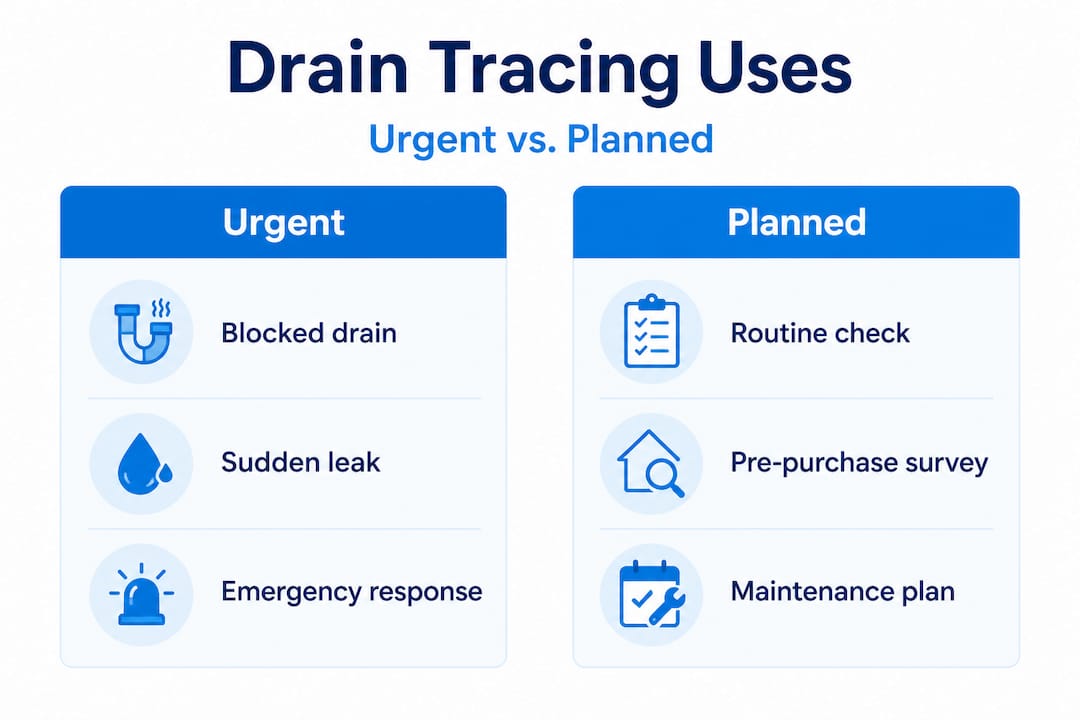
You can use a drainage problem checklist to evaluate which category applies to your situation, then decide whether to book as an emergency or a scheduled visit.
Pro Tip: Always request a written report or digital map after any tracing survey. This document becomes part of your property records and is invaluable for insurance claims, future maintenance, or when selling the property.
How does drain tracing prevent future problems?
So how does ongoing tracing actually protect your property and bottom line? Here’s the practical impact.
Routine drain tracing and inspection lets property managers spot minor defects before they become costly emergencies. This is particularly relevant for landlords managing multiple London properties, where a single burst drain can create liability, displace tenants, and trigger large-scale repair bills.
The most common issues detected early through regular tracing:
- Root ingress from trees and shrubs gradually constricting pipe flow
- Minor cracks forming in older clay or cast-iron pipes before they collapse
- Partial blockages caused by accumulated grease, silt, or debris
- Misaligned joints that allow groundwater infiltration or effluent leakage
- Deteriorating pipe lining in Victorian-era drains common across inner London
The financial argument for regular tracing is compelling. Consider the difference in typical maintenance costs over a five-year period:
| Approach | Year 1 | Year 2 | Year 3 | Year 5 total |
|---|---|---|---|---|
| Reactive (no tracing) | £0 | £1,200 (emergency) | £800 (repeat repair) | £4,500+ |
| Proactive (annual trace) | £250 | £250 | £250 | £1,500 or less |
These figures represent typical London residential costs and illustrate why essential drain maintenance tasks should be treated as planned expenditure, not unexpected expense. The proactive approach almost always wins on cost, and it also avoids the stress and disruption that emergency repairs bring.
Accurate tracing records also directly support property value. A well-documented drain history signals to buyers, surveyors, and insurers that the property has been properly maintained. Conversely, properties with no drainage records and a history of repeated blockages will face harder questions during conveyancing.
For landlords, there is a compliance dimension too. Following the guide to preventing blockages and maintaining drainage records demonstrates a duty of care toward tenants, which matters if disputes arise. Councils and housing inspectors take drainage condition seriously, particularly in older housing stock.
What most property owners misunderstand about drain tracing
Insights from the field reveal why a professional eye saves more than it costs. Here is what owners and managers often get wrong.
The most persistent myth is that any drain blockage can be cleared with a rod, a plunger, or a bottle of drain cleaner from the hardware shop. Sometimes that is true. But DIY methods rarely identify all causes of drainage faults, which can lead to repeated, costly issues. Clearing a blockage without understanding why it formed means it will almost certainly return, usually at a worse time and at greater cost.
A second misunderstanding is about equipment. Some property owners assume that hiring a camera on a rod from a tool hire shop is equivalent to a professional trace. It is not. Professional drainage engineers understand what they are looking at. They can recognise early root ingress, subtle pipe misalignment, or areas of partial collapse that an untrained eye simply will not register. The equipment also needs to be properly calibrated and used by someone who knows how to interpret the data.
There is also a common belief that tracing is only necessary for major, obvious problems. In reality, the most damaging drainage faults are the subtle ones: a hairline crack slowly leaching effluent into foundations, a slowly migrating joint creating a void beneath the driveway. These are exactly the faults that regular professional tracing is designed to catch.
Our experience across London properties tells us consistently that the owners who invest in identifying drain problems early spend far less over time than those who wait for a crisis. The call we dread taking is from an owner who has already spent a significant sum on repeated clearing, only to discover that the underlying pipe has been cracked for years. A single tracing survey at the outset would have changed everything.
Quick fixes have their place, but they should never substitute for understanding what is actually happening underground. That understanding is precisely what professional drain tracing provides.
Get peace of mind with professional drain tracing
If you want reliable answers and long-term protection, here is where to start.
At RSJ Drains, we carry out professional drain inspections across Greater London, using CCTV cameras, sonde equipment, and acoustic tools to give you a clear, accurate picture of your drainage system. Whether you are dealing with an urgent blockage or planning ahead as a landlord or property manager, our team can respond within two hours for emergency call-outs.
Every survey comes with a full written report, so you leave with something tangible: a record of your drain layout, the condition of your pipes, and clear recommendations for any remedial work. You can also explore our drain maintenance guide for practical advice on keeping your drains in good order between inspections, or book a CCTV drain survey directly to get started. We are a family-run business, and we treat your property with the same care we would give our own.
Frequently asked questions
How long does a typical drain tracing survey take?
Most tracing surveys are completed in one to two hours, depending on the size and complexity of your drains.
Does drain tracing require digging up my garden or drive?
Modern drain tracing is non-invasive and avoids unnecessary property damage, using cameras and sensors rather than disruptive excavation.
What problems can drain tracing detect?
Drain tracing detects collapses, root ingress, blockages, and leaks that are not accessible from the surface, including faults in very deep or inaccessible pipes.
Is drain tracing worth it for minor or occasional blockages?
Repeat or unexplained blockages may require tracing to identify underlying problems, as simple cleaning rarely addresses structural faults that cause recurring issues.
Recommended
- Solve drainage problems: types, causes and expert fixes
- How to identify drain problems: a guide for London homes
- Common types of drain blockages and expert solutions
- Why choose 24 hour drainage: rapid solutions for urgent problems
- How drain cameras revolutionize home plumbing diagnosis – AG-Plumbing
- Drain maintenance guide: prevent costly plumbing issues at home