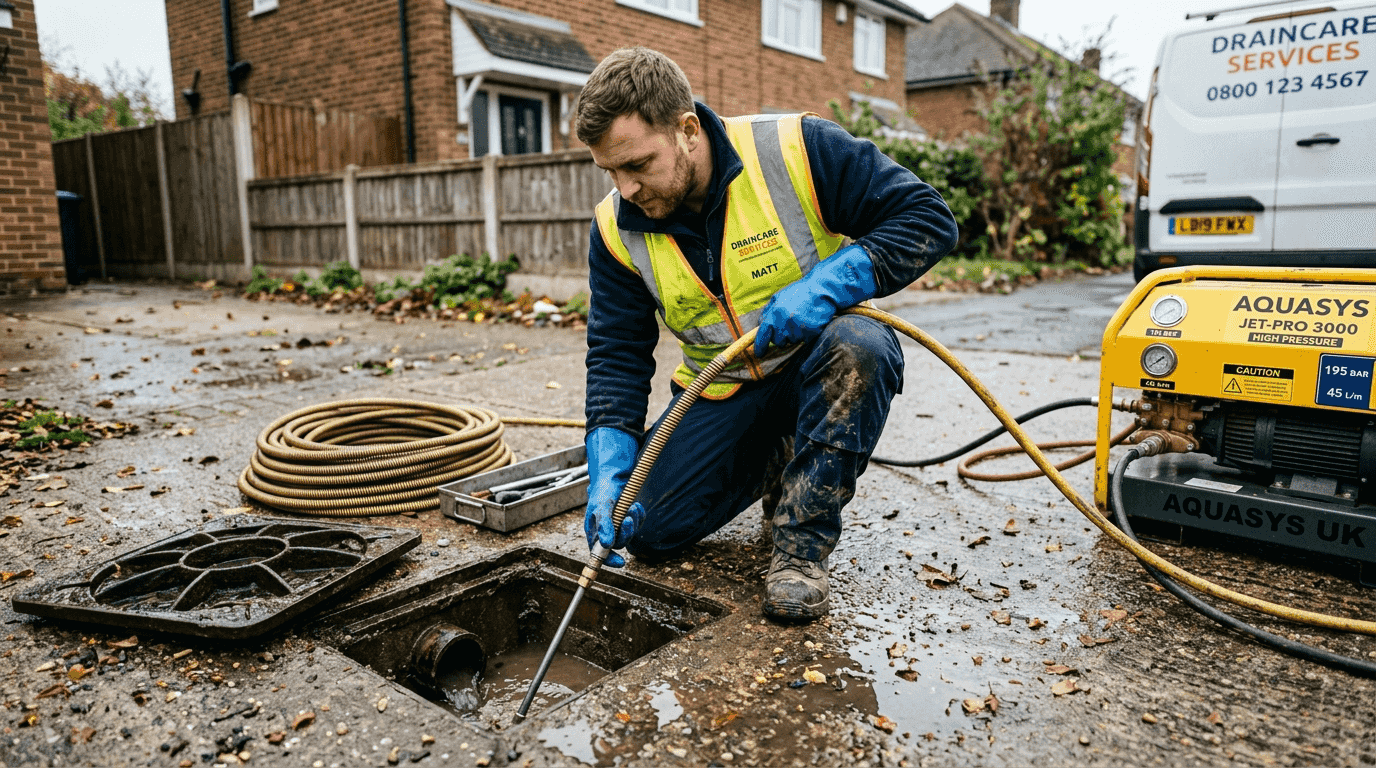
Blocked drains create serious headaches for property owners across Greater London, leading to unpleasant odours, water damage, and costly emergency repairs. Traditional clearing methods often provide only temporary relief, leaving residue that causes recurring problems. High-pressure water jetting effectively clears blocked drains by utilising the force of pressurised water to remove obstructions completely. This article walks you through the essential steps for safely and efficiently clearing blocked drains using high-pressure water jetting, from preparation through completion, so you understand exactly how this modern technique delivers lasting results for your property.
Table of Contents
- Preparing For High-Pressure Water Jetting
- Step-By-Step High-Pressure Water Jetting Procedure
- Common Issues, Troubleshooting And Safety Tips
- Expected Results And Maintaining Clear Drains
- Explore Professional High-Pressure Water Jetting Services In Greater London
Key takeaways
| Point | Details |
|---|---|
| Pressure range | High-pressure water jetting uses pressurised water streams from 10,000 to 60,000 psi to effectively remove blockages. |
| Nozzle selection | Different nozzles target specific pipe blockages, including piercing, rotary, and fan types for optimal cleaning. |
| Safety compliance | Following Water Jetting Association codes and proper preparation ensures effective and safe jetting operations. |
| Preventive maintenance | Regular maintenance using jetting can prevent costly emergency drain problems and extend pipe life. |
Preparing for high-pressure water jetting
Proper preparation determines whether your high-pressure water jetting operation succeeds or creates additional problems. You need specific equipment assembled and safety measures in place before starting any drain clearing work.
Essential equipment includes a high-pressure pump capable of delivering appropriate force for your specific blockage, a reliable water source with sufficient flow rate, reinforced hoses rated for the pressure levels you’ll use, secure clamps and fittings, and appropriate nozzles for your drain type. The pump serves as your system’s heart, converting standard water pressure into the powerful streams needed to scour pipe walls clean.
Selecting the right nozzle type makes the difference between complete blockage removal and wasted effort. Piercing nozzles work best for breaking through solid obstructions like compacted debris or tree roots. Rotary nozzles spin whilst moving forward, providing 360-degree cleaning action ideal for removing grease buildup and scale from pipe walls. Fan nozzles deliver wider spray patterns suited for general cleaning and flushing operations. Your jetting guide for clear drains helps match nozzle characteristics to specific blockage types.
Pre-assessment steps prevent surprises during operations. Inspect drain condition thoroughly, checking for visible damage, cracks, or structural weaknesses that high pressure might worsen. Plan access points carefully, ensuring you can reach the blockage efficiently without unnecessary pipe navigation. Document pipe material, age, and diameter, as these factors influence safe pressure levels. Professional drain inspection services provide detailed assessments when uncertainty exists.
Critical safety measures follow WJA codes of practice strictly. Flexible lances and hoses should not be used as washdown devices, as this practice has caused serious incidents. Secure all flexible hoses properly before operation, never allowing them to whip or move uncontrollably. Operate pumps at recommended low RPMs to maintain control and prevent equipment damage. Wear appropriate protective equipment including eye protection, waterproof clothing, and non-slip footwear.
Pro tip: Use a drain inspection camera to assess blockage location, type, and severity before jetting begins, allowing targeted nozzle selection and pressure settings that clear the obstruction efficiently without wasting time on trial and error approaches.
| Equipment Type | Purpose | Selection Criteria |
|---|---|---|
| High-pressure pump | Generates water force | Match PSI rating to pipe size and blockage severity |
| Nozzles | Direct water streams | Choose piercing, rotary, or fan based on obstruction type |
| Hoses | Deliver pressurised water | Select reinforced hoses rated above operating pressure |
| Inspection camera | Pre-assess blockages | Ensure camera fits pipe diameter and provides clear imaging |
Step-by-step high-pressure water jetting procedure
Executing the water jetting procedure methodically ensures thorough cleaning whilst protecting your drainage system from damage. Each step builds on the previous one, creating a systematic approach to blockage removal.
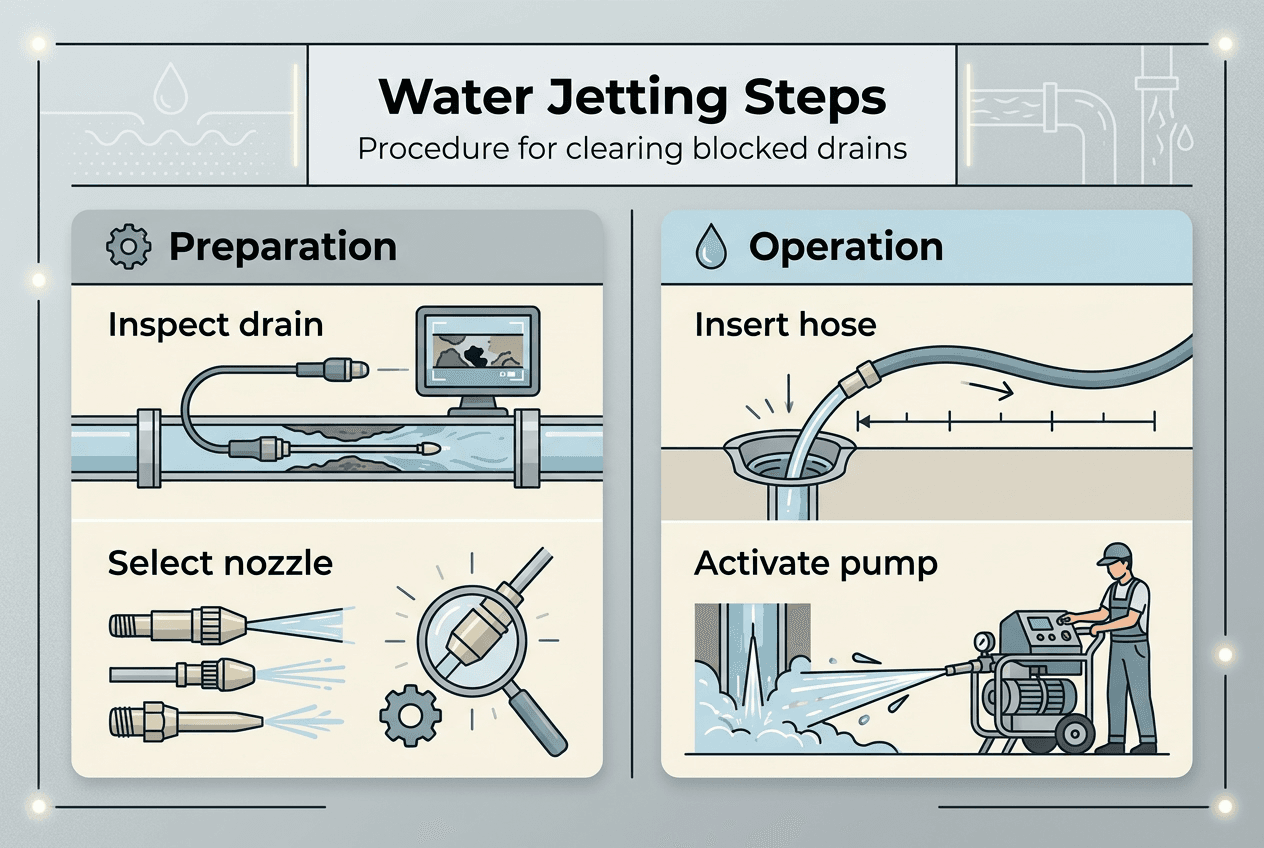
Step 1: Set up the pumping system and water source. Position your high-pressure pump on stable ground near the drain access point. Connect it to a reliable water source with adequate flow rate, typically requiring at least 15 litres per minute for residential applications. Verify all connections are secure and leak-free before proceeding. Test the pump briefly at low pressure to confirm proper operation.
Step 2: Select and attach the correct nozzle for the blockage type. Based on your pre-assessment findings, choose the nozzle that matches your specific obstruction. Thread it securely onto your jetting hose, ensuring tight connections that won’t separate under pressure. Double-check the nozzle’s pressure rating matches or exceeds your intended operating pressure.
Step 3: Insert the nozzle into the drain carefully, securing flexible hoses as recommended. Feed the nozzle and hose into the drain access point slowly, avoiding sharp bends that might kink the hose or damage the nozzle. Secure flexible sections according to manufacturer guidelines, preventing dangerous whipping if pressure surges occur. Mark the hose at regular intervals to track penetration depth.

Step 4: Activate the pump at low RPM to start water flow, gradually increasing pressure. Begin with minimal pressure to establish water flow and confirm the system operates correctly. Gradually increase pressure whilst monitoring equipment response and water return flow. High-pressure water jetting uses a focused stream of water to dislodge and remove blockages with an 85-95% success rate when operated properly.
Step 5: Slowly move the nozzle through the pipe sections to scour and dislodge debris. Advance the nozzle forward steadily, allowing water jets to work on pipe walls and obstructions. The jetting action pulls the hose forward naturally as water pressure creates thrust. Maintain consistent forward movement, typically 30 to 60 centimetres per minute, adjusting speed based on debris resistance.
Step 6: Monitor debris removal and water flow improvement continuously. Watch return water carefully for signs of debris clearing. Improved flow indicates successful blockage removal. Hydro jetting effectively removes grease buildup, scale, and tree roots that traditional methods leave behind. If flow doesn’t improve after several passes, reassess your nozzle choice or pressure settings.
Step 7: Flush the system post-clearing and inspect with camera if possible. After clearing the blockage, run clean water through the system to flush loosened debris completely. Use your inspection camera to verify thorough cleaning and check for any pipe damage that jetting might have revealed. Document the final pipe condition for maintenance records.
Pro tip: Avoid rushing nozzle movement through pipes, as hurried operation misses stubborn deposits and risks damaging pipe walls through concentrated pressure application on weak spots.
- Always maintain steady, controlled nozzle advancement
- Monitor pressure gauges constantly during operation
- Keep communication clear between team members
- Document each step for future maintenance planning
Common issues, troubleshooting and safety tips
Even experienced operators encounter challenges during water jetting operations. Recognising common problems quickly and responding appropriately keeps your project on track whilst maintaining safety standards.
Common issues include hose kinks that restrict water flow and reduce jetting effectiveness. These typically occur at tight bends or access points where hoses fold sharply. Nozzle blockages happen when debris particles lodge in jet openings, reducing spray pattern effectiveness. Incomplete cleaning results when operators move too quickly through pipe sections or use insufficient pressure for the blockage type encountered.
Troubleshooting clogged nozzles requires stopping operations immediately and relieving system pressure completely before attempting any nozzle inspection or cleaning. Remove the nozzle carefully and flush it with clean water to dislodge particles. Check jet openings visually to confirm they’re clear before reinstalling. Ensure pump pressure stability by monitoring gauges throughout operations, watching for fluctuations that indicate supply problems or equipment issues.
Safety tips prevent the serious incidents that prompted industry code updates. Always secure flexible hoses properly, never allowing them to move freely during pressurised operations. Never use hoses as washdown devices, as this practice has caused injuries. Run pumps at recommended low RPM settings, typically below 1500 RPM for most residential applications, maintaining better control and reducing wear on equipment components.
The Water Jetting Association updated codes following serious incidents, emphasising safety with flexible lances and hoses. These updates reflect real-world accidents where improper equipment use caused injuries, making strict adherence to safety protocols essential for every operation.
Maintain clear communication during jetting operations to ensure quick responses to any risks that emerge. Establish hand signals or radio protocols before starting work, especially when team members can’t maintain visual contact. Designate one person to monitor equipment whilst another manages hose advancement, preventing divided attention that misses warning signs.
Additional safety considerations include establishing exclusion zones around work areas to keep unauthorised persons away from high-pressure equipment. Store and transport jetting equipment properly, protecting hoses from damage and keeping nozzles clean. Conduct regular equipment inspections, replacing worn components before they fail during operations. Professional training through recognised programmes ensures operators understand both technique and safety requirements thoroughly. Resources for safe drain unblocking in London provide additional guidance for property managers.
- Check hoses for wear, cracks, or weak spots before each use
- Replace damaged components immediately, never attempting repairs on pressurised equipment
- Maintain equipment logs documenting inspections, repairs, and operational hours
- Store jetting equipment in clean, dry conditions away from extreme temperatures
Pro tip: Establish clear communication protocols before starting jetting operations, including emergency stop signals that any team member can use instantly if safety concerns arise.
Expected results and maintaining clear drains
Successful high-pressure water jetting delivers measurable improvements you can verify immediately. Restored water flow represents the most obvious sign, with drains emptying quickly and completely after treatment. Absence of odours indicates organic buildup removal, as decomposing matter trapped in pipes typically causes unpleasant smells. Eliminated backups confirm the blockage cleared completely rather than just creating a small opening through the obstruction.
Hydro jetting removes up to 95% of debris from pipes, significantly improving flow and reducing future blockages compared to methods that merely puncture obstructions. This thoroughness explains why jetting results last considerably longer than traditional approaches.
| Comparison Factor | Hydro Jetting | Traditional Snaking |
|---|---|---|
| Cleaning thoroughness | Removes 95% of debris, cleans entire pipe diameter | Creates hole through blockage, leaves residue |
| Result longevity | Typically 3-5 years before retreatment needed | Often 6-12 months before blockage returns |
| Pipe wall condition | Scours walls clean, removing scale and buildup | Minimal wall cleaning, residue remains |
| Environmental impact | Uses only water, no chemicals required | May require chemical treatments for some blockages |
| Effectiveness on roots | Cuts through and removes root intrusions | Temporarily breaks roots but doesn’t remove them |
Routine maintenance recommendations using jetting prevent future costly blockages that disrupt property operations. Schedule preventive jetting annually for residential properties with standard usage patterns. Commercial properties with higher drain loads benefit from quarterly maintenance. Properties with mature trees near drain lines need more frequent attention, as root intrusion occurs progressively.
Maintenance tips for sustaining clear drains between professional jetting services include conducting periodic visual inspections of accessible drain sections, watching for slow drainage that indicates developing problems. Schedule regular jetting before blockages become severe, making clearing easier and protecting pipes from damage caused by complete obstructions. Avoid disposing of grease, oils, and fats down drains, as these substances solidify in pipes and create stubborn blockages. Install drain screens to catch hair, food particles, and other debris before they enter your drainage system.
Property managers should maintain detailed records of all jetting operations, including dates, locations treated, pressure settings used, and results achieved. These records help identify problem areas requiring more frequent attention and demonstrate proactive maintenance to property owners. Your drain maintenance guide provides comprehensive scheduling recommendations based on property type and usage patterns.
- Document all maintenance activities with dates and detailed notes
- Train staff to recognise early warning signs of developing blockages
- Budget for preventive maintenance rather than waiting for emergency situations
- Consider maintenance contracts that provide scheduled service at predictable costs
Establishing relationships with qualified drainage professionals ensures rapid response when problems do occur, even with diligent preventive maintenance. Professional services combine jetting expertise with diagnostic capabilities, identifying underlying issues that cause recurring blockages and recommending permanent solutions.
Explore professional high-pressure water jetting services in Greater London
Understanding the technical aspects of high-pressure water jetting helps property owners and managers make informed decisions about drain maintenance. However, the specialised equipment, safety requirements, and technical expertise needed for effective jetting often make professional services the practical choice.
RSJ Drains offers expert professional high pressure water jetting tailored specifically for Greater London properties, combining advanced equipment with experienced technicians who understand local drainage systems. Their rapid response capabilities mean blockages get cleared quickly, minimising disruption to your property operations.
Professional drain inspection services enhance identification and enable precise jetting treatments by revealing exact blockage locations, pipe conditions, and underlying problems that cause recurring issues. This diagnostic approach prevents wasted effort on symptoms whilst missing root causes. Regular maintenance plans help prevent unexpected blockages and keep drains flowing reliably year-round, protecting your property investment whilst avoiding emergency repair costs. Contact RSJ Drains for quick, safe, and effective drainage solutions backed by local expertise and proven results. Their comprehensive approach addresses immediate problems whilst establishing preventive strategies outlined in their drain maintenance guide for London properties.
FAQ
What pressure is typically used in high-pressure water jetting?
Pressure can range from 10,000 to over 60,000 psi depending on the application, pipe size, and blockage severity. Residential drains typically require 10,000 to 20,000 psi for effective cleaning, whilst commercial and industrial applications may use higher pressures. Professionals select pressure levels carefully to balance effective cleaning with pipe safety, particularly for older drainage systems where excessive pressure might cause damage.
How does hydro jetting compare to traditional snaking for blocked drains?
Hydro jetting cleans pipe walls thoroughly and removes grease, roots, and scale, whilst snaking mainly breaks up blockages without cleaning residue that remains on pipe surfaces. Jetting provides comprehensive cleaning that delivers longer-lasting results, typically preventing blockage recurrence for three to five years. Snaking offers a quicker, less expensive immediate solution but often requires repeated treatments as residue accumulates and causes new obstructions within months.
Is high-pressure water jetting safe for older drains?
The effectiveness and safety depend on pipe condition, making pre-inspection essential to choose appropriate pressure and nozzle types. Older pipes with cracks, corrosion, or structural weaknesses require careful pressure selection and gentle nozzle options to avoid causing additional damage. Professional drainage contractors conduct thorough inspections before jetting older systems, adjusting techniques to accommodate pipe age and condition whilst still achieving effective cleaning results.
How long does a typical high-pressure water jetting operation take?
Most residential drain jetting operations complete within one to three hours, depending on blockage severity, pipe length, and access point locations. Simple blockages in accessible pipes clear quickly, often within 30 to 60 minutes. Complex situations involving multiple blockages, difficult access, or extensive pipe networks require more time for thorough cleaning. Commercial properties with larger drainage systems may need several hours or multiple service visits for complete treatment.
Can high-pressure water jetting damage my pipes?
Properly executed jetting with appropriate pressure settings and correct nozzle selection rarely damages sound pipes. However, pipes already weakened by age, corrosion, or existing damage may fail under high pressure, which is why pre-inspection proves critical. Professional operators adjust pressure levels based on pipe material, age, and condition, ensuring effective cleaning without causing harm. The risk of damage increases significantly when inexperienced operators use excessive pressure or inappropriate techniques.