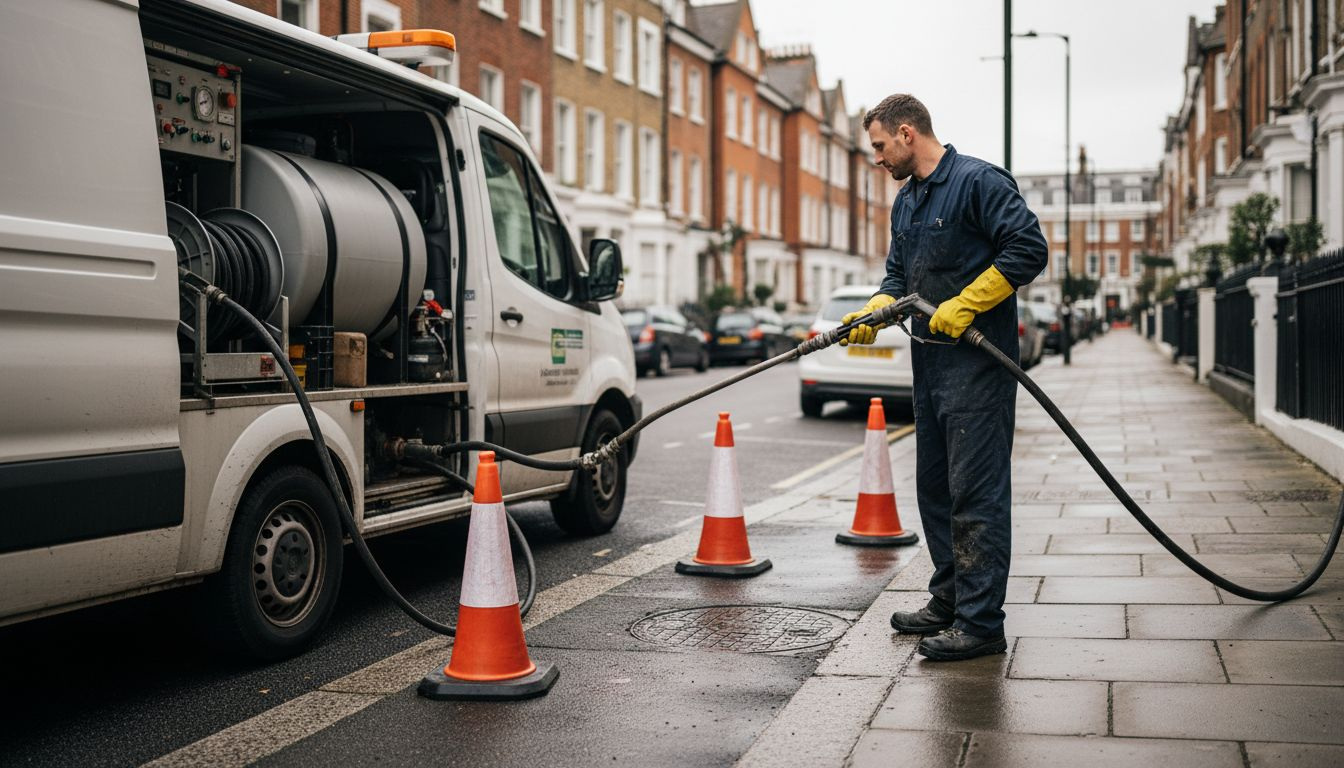
Blocked drains bring chaos to London homes and businesses, halting daily operations and threatening property damage. High pressure water jetting achieves up to 90% faster clearance times compared to traditional methods, offering a rapid, minimally invasive solution. This article explains how water jetting works, its benefits, and when to deploy it for urgent drainage problems across Greater London.
Table of Contents
- Introduction To High Pressure Water Jetting
- How High Pressure Water Jetting Works
- Types Of Blockages And Drainage Problems Solved By Water Jetting
- Comparing High Pressure Water Jetting To Other Drain Cleaning Methods
- Safety, Risks, And Structural Considerations
- Common Misconceptions About High Pressure Water Jetting
- Practical Application And When To Call Professionals
- Experience Reliable Drain Solutions With RSJ Drains
- Frequently Asked Questions
Key Takeaways
| Point | Details |
|---|---|
| Pressure Range | High pressure water jetting uses water at 1,500 to 4,000 psi for effective drain cleaning. |
| Speed Advantage | Clears grease, roots, and debris up to 90% faster and safer than rods or chemicals. |
| Professional Control | Expert operators ensure pipe safety even on older materials like clay and PVC. |
| Ideal Applications | Best for urgent blockages and routine maintenance to reduce recurrence by up to 60%. |
| Misconceptions Addressed | Updated facts correct myths about pipe damage and excessive costs. |
Introduction to High Pressure Water Jetting
High pressure water jetting employs water at pressures typically between 1,500 and 4,000 psi to mechanically dislodge and flush blockages from drainage pipes. Unlike chemical cleaners that dissolve debris slowly or drain rods that push obstructions around, water jetting physically removes buildup through sheer force and velocity. This method proves particularly valuable for London’s urban drainage systems, where decades of grease accumulation, tree root intrusion, and sediment deposits create stubborn blockages.
The technique works without introducing harsh chemicals into your plumbing or the environment. Water alone, delivered at controlled high pressure, scours pipe walls clean and carries debris away. This makes it safer for older pipe materials common in London properties, including Victorian era clay pipes and mid century PVC installations.
Common applications span residential and commercial settings:
- Emergency clearance of complete blockages causing backups and flooding
- Routine maintenance cleaning to prevent future obstructions
- Grease removal in restaurant and food service drainage systems
- Root cutting in pipes near mature trees and vegetation
- Pre inspection cleaning before CCTV drainage surveys
Professional operators adjust pressure and nozzle selection based on pipe material, diameter, and blockage type. This customization protects your drainage infrastructure while maximizing cleaning effectiveness, making water jetting the preferred choice for Greater London property managers facing urgent drainage issues.
How High Pressure Water Jetting Works
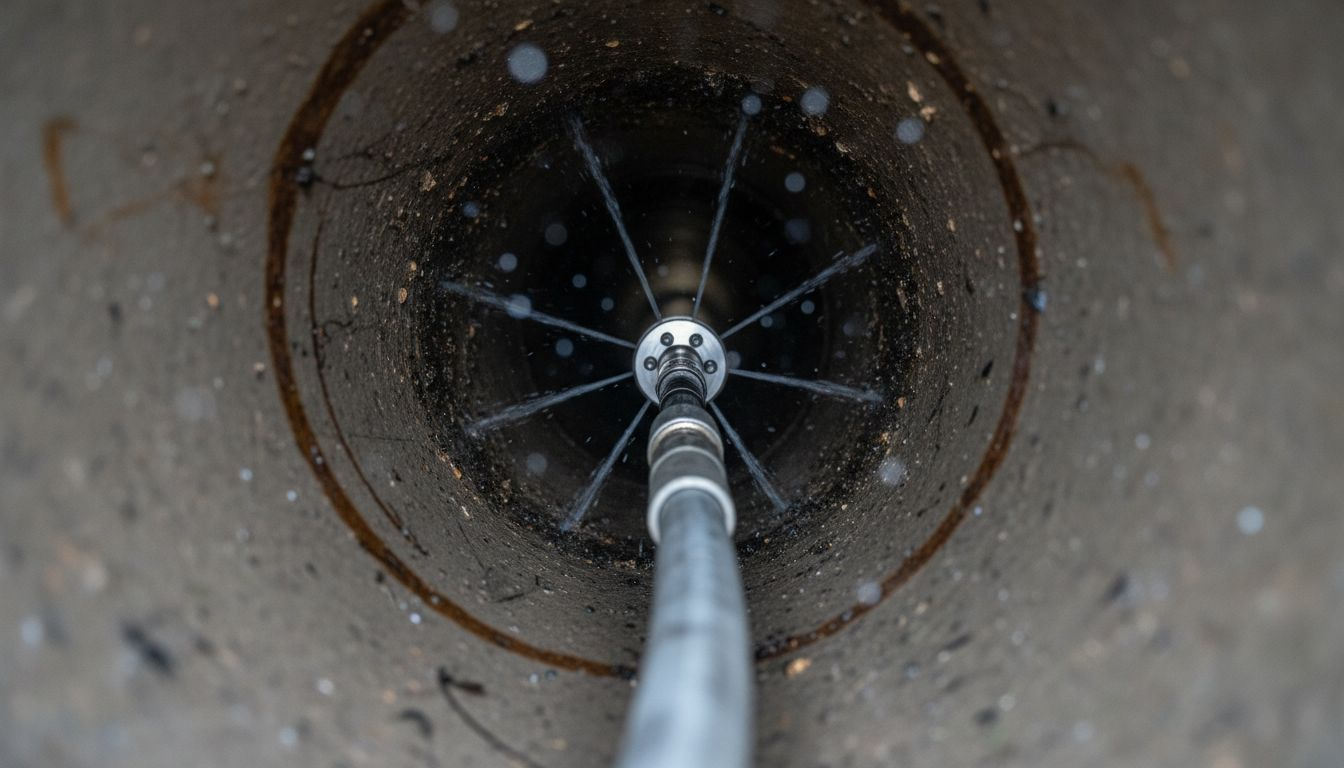
Understanding the mechanics reveals why water jetting outperforms traditional methods. The process centers on specialized equipment that pressurizes water and directs it through carefully designed nozzles. These nozzles create jets that produce both forward cutting action and backward scouring force, thoroughly cleaning pipe interiors as the hose advances through your drainage system.
The standard jetting procedure follows these steps:
- Initial CCTV inspection identifies blockage location, type, and pipe condition
- Operator selects appropriate nozzle based on obstruction and pipe material
- High pressure pump generates water flow at selected psi level
- Flexible hose with attached nozzle enters drain through access point
- Forward jets cut through blockage while rear jets scour pipe walls
- Debris flows downstream and exits system through main sewer connection
- Post jetting CCTV survey confirms complete clearance and pipe integrity
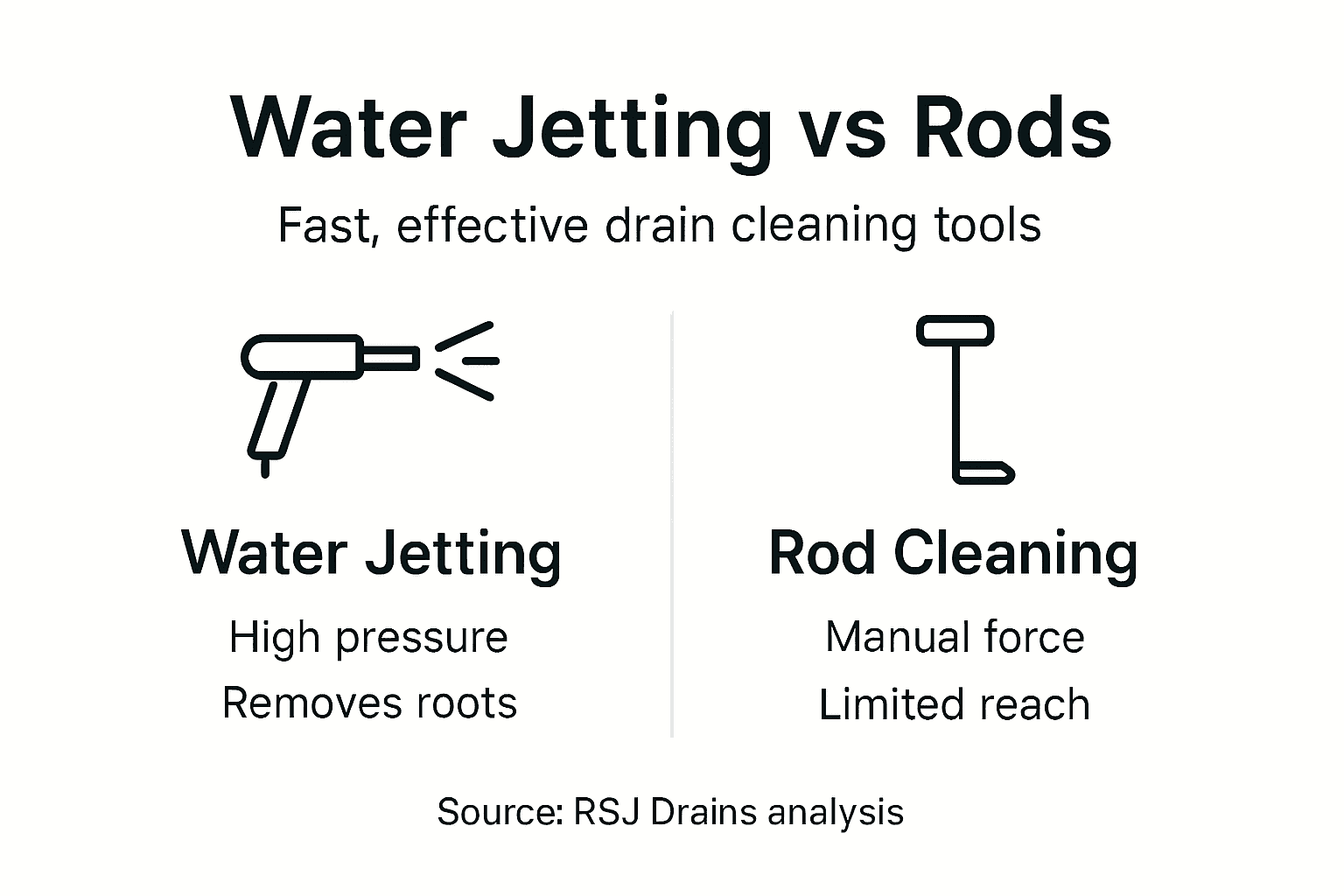
Water velocity creates the mechanical action that dislodges blockages more effectively than rods. Traditional rods simply puncture obstructions, leaving biofilm and debris clinging to pipe walls. This residue quickly attracts new buildup, causing repeat blockages within weeks. Water jetting removes everything, delivering a clean pipe surface that resists future accumulation.
Pro Tip: Always insist on pre and post jetting CCTV inspections. The before survey ensures jetting suits your specific blockage, while the after survey confirms complete clearance and reveals any underlying pipe damage requiring attention. This dual inspection approach prevents recurring problems and catches structural issues early.
Nozzle design significantly impacts cleaning effectiveness. Penetrating nozzles concentrate force forward for breaking through solid obstructions. Flushing nozzles distribute jets radially to scour walls. Chain flail attachments tackle heavy scale and mineral deposits. Professional operators maintain multiple nozzle types to address varied drainage challenges across London properties.
Types of Blockages and Drainage Problems Solved by Water Jetting
Water jetting excels at clearing numerous blockage types that plague Greater London drainage systems. Grease buildup, organic debris, tree roots, and sand deposits respond particularly well to high pressure cleaning. Each blockage type requires specific pressure settings and nozzle configurations for optimal results.
Common blockages effectively cleared by water jetting include:
- Kitchen grease and fat accumulation coating pipe interiors
- Hair, soap scum, and organic matter in bathroom drains
- Tree and shrub root intrusion through pipe joints
- Sand, silt, and sediment deposits in outdoor drains
- Mineral scale buildup in hard water areas
- Foreign objects lodged in pipes
- Concrete and construction debris in new builds
The method works across various pipe materials including PVC, clay, cast iron, and concrete. Modern flexible hoses navigate bends and junctions easily, reaching blockages throughout your drainage network. Pressure adjustment prevents damage to older, more fragile materials while still delivering thorough cleaning.
Important limitations exist. Water jetting cannot repair collapsed pipes, fix separated joints, or remove hardened concrete that has fully set. Attempting to jet these conditions wastes time and may worsen damage. This highlights why CCTV surveys before jetting prove essential. The camera inspection reveals whether your drainage problem requires cleaning or structural repair.
For blockages in various pipe types, professional assessment determines the best approach. Root intrusion may need cutting followed by pipe relining. Collapsed sections require excavation and replacement. Scale buildup responds to extended jetting sessions. Understanding blockage characteristics ensures you receive appropriate treatment, avoiding ineffective procedures and unnecessary costs.
Comparing High Pressure Water Jetting to Other Drain Cleaning Methods
Property owners face multiple options when addressing blocked drains. Water jetting provides faster clearance, chemical free operation, and superior pipe safety compared to rods or chemical cleaners. Understanding these differences helps you select the most effective solution for your specific drainage issue.
| Method | Clearance Speed | Pipe Safety | Environmental Impact | Thoroughness | Cost |
|---|---|---|---|---|---|
| Water Jetting | 90% faster | High (with proper pressure) | Excellent (water only) | Complete cleaning | Higher upfront |
| Drain Rods | Slow | Moderate (risk of damage) | Good (no chemicals) | Partial (punctures only) | Low upfront |
| Chemical Cleaners | Very slow | Poor (corrosive) | Poor (toxic runoff) | Minimal (surface only) | Low upfront |
Key advantages of each method:
- Water jetting delivers thorough pipe wall cleaning, removing biofilm that causes rapid reblockage
- Rods provide immediate low cost intervention for simple, accessible blockages
- Chemicals offer convenience for minor slow drains without specialist equipment
Critical drawbacks to consider:
- Rods leave debris and biofilm, causing blockages to return within weeks
- Chemicals damage pipes over time through corrosive action and generate toxic waste
- Improper jetting pressure can harm older, fragile pipes without expert control
Pro Tip: Match your method to blockage severity and pipe condition. Minor slow drains may clear with rods or careful chemical use. Complete blockages, recurring problems, and preventative maintenance justify water jetting’s higher cost through superior results and longer lasting clearance. Professional assessment prevents choosing ineffective methods that waste money on repeat callouts.
Environmental considerations increasingly influence drainage maintenance decisions. Water jetting produces no chemical waste, protecting waterways and soil. The water used simply flushes through existing sewer systems. This makes it the responsible choice for environmentally conscious London property owners and managers.
Safety, Risks, and Structural Considerations
Pressure regulation tailored to pipe material forms the foundation of safe water jetting practice. PVC pipes tolerate higher pressures than century old clay pipes. Metal pipes resist corrosion induced weakening differently than concrete. Professional operators understand these material properties and adjust equipment accordingly.
Safe pressure ranges vary significantly:
- Modern PVC pipes: 3,000 to 4,000 psi safely removes stubborn blockages
- Clay pipes over 50 years old: 1,500 to 2,500 psi prevents joint separation
- Cast iron with corrosion: 2,000 to 3,000 psi balances cleaning and protection
- Concrete pipes: 2,500 to 3,500 psi addresses mineral deposits without erosion
Excessive pressure causes multiple damage types. Weakened pipe joints separate under force. Corroded sections develop new cracks. Misaligned nozzles gouge pipe walls. These risks explain why DIY jetting equipment rental typically produces poor outcomes. Homeowners lack the training to recognize vulnerable pipe conditions or adjust pressure appropriately.
Environmental advantages extend beyond chemical elimination. Water jetting generates no airborne particulates, produces minimal noise compared to mechanical methods, and leaves no residue requiring special disposal. Urban London properties benefit from these low impact characteristics, especially in densely populated areas with shared drainage infrastructure.
Professional safety protocols include:
- Mandatory CCTV inspection before jetting to identify fragile sections
- Pressure testing on small pipe segments before full system cleaning
- Continuous monitoring during jetting to detect unusual resistance
- Post jetting inspection confirming no new damage occurred
These safeguards ensure effective cleaning without compromising your drainage system’s structural integrity. The combination of expert knowledge and proper equipment makes professional water jetting both powerful and safe for Greater London’s diverse pipe infrastructure.
Common Misconceptions About High Pressure Water Jetting
Myth 1: Water jetting always damages pipes. Reality shows professional jetting with controlled pressure safely cleans even older pipes. Damage occurs from improper technique or excessive pressure, not the method itself. Trained operators assess pipe condition beforehand and adjust settings to protect vulnerable sections while still achieving thorough cleaning.
Myth 2: Jetting fixes all drainage problems including collapsed pipes. The truth reveals limitations. Water jetting excels at removing blockages but cannot repair structural damage. Collapsed sections, separated joints, and fractured pipes require excavation and replacement. CCTV surveys distinguish between blockages needing jetting and damage requiring repair, preventing wasted effort on inappropriate treatments.
Myth 3: Water jetting costs too much for routine use. Cost analysis shows different results. Higher upfront jetting expenses offset repeat callouts for rod clearance. Blockages cleared by rods typically return within four to eight weeks as biofilm remains. Properly jetted drains stay clear for months or years, reducing total annual drainage maintenance costs despite higher per service pricing.
“Expert operators with proper training and calibrated equipment safely clean pipes of all ages and materials. The key lies in matching pressure to pipe condition, not avoiding the method entirely.”
Additional misconceptions include:
- Belief that DIY rental equipment matches professional results (lacks pressure control and specialized nozzles)
- Assumption that jetting wastes excessive water (uses similar volumes to extended flushing)
- Fear that high pressure necessarily means pipe damage (controlled force differs from destructive force)
Understanding these facts helps London property owners make informed decisions about drainage maintenance approaches. Water jetting delivers superior results when applied correctly by trained professionals using calibrated equipment. The method’s reputation suffers from improper application by inexperienced operators, not inherent flaws in the technique itself.
Practical Application and When to Call Professionals
Recognizing situations demanding professional water jetting protects your property from drainage emergencies and reduces long term maintenance costs. Complete blockages causing backups, slow draining fixtures despite rod clearance, and foul odors indicating biofilm buildup all signal jetting needs. Emergency blockages benefit from rapid professional response that water jetting provides.
Scheduling routine maintenance prevents crises. Commercial kitchens benefit from quarterly jetting to manage grease accumulation. Residential properties near mature trees should schedule annual root control jetting. Properties over 30 years old gain from biannual preventative cleaning that removes gradual buildup before complete blockages form. Regular maintenance reduces emergency callouts by up to 60%.
Professional operators bring critical advantages:
- Specialized equipment calibrated for safe pressure delivery
- Training in pipe material identification and appropriate settings
- CCTV survey capability for accurate problem diagnosis
- Insurance coverage protecting you from potential damage claims
- Waste disposal compliance for commercial and regulated properties
Steps for arranging professional jetting service:
- Contact drainage specialists describing your symptoms and property type
- Request combined CCTV survey and jetting quote for comprehensive service
- Provide access to external drain inspection chambers and manholes
- Clear area around access points for equipment positioning
- Review survey footage with technician to understand blockage cause
- Discuss preventative maintenance schedule based on findings
Pro Tip: Establish a relationship with local drainage professionals before emergencies strike. Pre arranged service agreements guarantee faster response during crises and often include discounted rates for routine maintenance. This proactive approach minimizes disruption and protects your property investment.
DIY attempts risk pipe damage, personal injury from high pressure equipment, and incomplete clearance leading to rapid reblockage. Professional service costs prove worthwhile through guaranteed results, proper safety protocols, and long lasting drainage performance. For Greater London properties facing recurring blockages or needing preventative maintenance, professional water jetting delivers reliable value.
Experience Reliable Drain Solutions with RSJ Drains
Now that you understand high pressure water jetting’s power and applications, connect with experts who deliver results across Greater London. RSJ Drains offers tailored high pressure water jetting services using advanced equipment and experienced technicians who understand London’s diverse drainage infrastructure. Whether you face emergency blockages or want to establish preventative care, our team provides rapid response within two hours for urgent situations.
Our comprehensive approach combines CCTV surveys with precision jetting, ensuring we address root causes rather than just symptoms. We adjust pressure settings for your specific pipe materials, protecting older clay pipes while thoroughly cleaning modern PVC systems. Beyond immediate clearance, explore our drain maintenance programmes designed to keep your drainage flowing year round. For persistent issues requiring structural solutions, our professional repair services restore damaged pipes to full function, backed by detailed surveys and quality guarantees.
Frequently Asked Questions
What maintenance frequency is recommended for water jetting?
Commercial kitchens benefit from quarterly jetting to control grease buildup. Residential properties typically need annual or biannual service depending on usage and pipe age. Properties with mature trees nearby should schedule root control jetting at least once yearly to prevent intrusion damage.
Can water jetting be used on all pipe types safely?
Professional water jetting safely cleans PVC, clay, cast iron, and concrete pipes when operators adjust pressure appropriately. Fragile or severely corroded pipes may require reduced pressure or alternative methods. Pre jetting CCTV surveys identify vulnerable sections requiring special care.
How quickly can a professional respond to emergency drain blockages?
RSJ Drains guarantees response within two hours for emergency callouts across Greater London. Actual jetting time varies from 30 minutes to two hours depending on blockage severity and drainage system complexity. Most residential blockages clear within one hour of technician arrival.
Is water jetting environmentally safer than chemicals?
Yes, water jetting uses only water under pressure, generating no chemical waste or toxic runoff. This protects waterways, soil, and groundwater from contamination. The method produces minimal environmental impact beyond standard water consumption, making it the responsible choice for eco conscious property owners.
What signs indicate my drain would benefit from jetting now?
Slow draining sinks or toilets despite rod clearance, gurgling sounds from drains, foul odors from fixtures, and recurring blockages within weeks of clearing all indicate biofilm buildup requiring thorough jetting. Multiple affected fixtures suggest main line blockage needing immediate professional attention.
Does water jetting guarantee permanent blockage elimination?
Water jetting removes existing blockages thoroughly but cannot prevent new accumulation from ongoing use. Regular maintenance extends clear drainage periods significantly. Combining jetting with behavior changes like proper grease disposal and root barriers provides longest lasting results for London properties.