Thames Water removes over 10,000 blockages annually, with many traced to preventable household waste disposal habits. London’s sewer system battles an ongoing war against fatbergs, some weighing up to 100 tonnes, threatening properties with sewage backups and costing millions in clearance operations. Homeowners and property managers often underestimate how everyday actions contribute to these blockages. This guide explains what causes drain blockages, their financial and environmental consequences, and proven prevention methods to protect your property from costly drainage failures.
Table of Contents
- What Causes Drain Blockages In London?
- The Impact And Cost Of Drain Blockages
- Preventing And Managing Drain Blockages
- Professional Solutions And Routine Inspections
- Drainage Services To Protect Your London Property
Key takeaways
| Point | Details |
|---|---|
| Main causes | Fats, oils, grease and non-biodegradable items like wet wipes form blockages in London drains. |
| Financial impact | Thames Water spends £18 million annually clearing blockages, costs ultimately passed to customers. |
| Seasonal risks | December and January see increased blockages from festive cooking waste entering drainage systems. |
| Prevention steps | Scrape plates, use sink strainers, and never flush wet wipes or pour fats down drains. |
| Professional help | Regular CCTV inspections and maintenance detect problems early, preventing expensive emergency repairs. |
What causes drain blockages in London?
London’s Victorian sewer infrastructure faces constant pressure from modern waste disposal habits. Fatbergs form when solidified fats, oils and grease combine with non-biodegradable items like wet wipes in underground pipes. These congealed masses grow over time, eventually blocking entire sewer sections and forcing sewage back into homes and streets.
The formation process begins innocently. Hot cooking fat flows easily down your sink, but cools rapidly in cold pipes. As temperatures drop below 20°C, the fat solidifies and clings to pipe walls. Each subsequent disposal adds another layer, creating a sticky surface that traps passing debris. Wet wipes, marketed as “flushable”, don’t break down like toilet paper and become embedded in the fatty mass. One east London fatberg discovered in December 2025 weighed approximately 100 tonnes, requiring weeks of specialist work to remove.
Common contributors to drain blockages include:
- Cooking fats, oils and grease from roasting tins, frying pans and fatty meats
- Wet wipes, cotton buds and sanitary products that don’t decompose
- Food scraps including rice, pasta and coffee grounds that expand in water
- Hair and soap scum accumulation in bathroom drains
- Tree roots penetrating aging pipe joints seeking moisture
Most blockages occur in local pipes serving just a few households, not main sewers. This means your disposal habits directly impact your property’s drainage performance. A single household pouring fat down the sink weekly can create a significant blockage within months, affecting neighbours connected to the same pipe section.
“The majority of blockages happen in the pipes connecting a small number of properties to the main sewer, highlighting how individual household behaviour creates widespread problems.”
Understanding these causes empowers you to make better disposal choices. The fatberg crisis isn’t just Thames Water’s problem, it’s a collective responsibility requiring changed habits from every London property owner.
The impact and cost of drain blockages
Drain blockages cause severe damage extending far beyond inconvenience. When pipes become completely obstructed, sewage backs up into properties, flooding bathrooms, kitchens and gardens with contaminated water. This creates immediate health hazards from bacteria and pathogens, requiring professional cleaning and often replacement of damaged flooring, fixtures and personal belongings. Insurance claims for sewage damage average £8,000 per incident, with excess payments and premium increases adding financial burden.
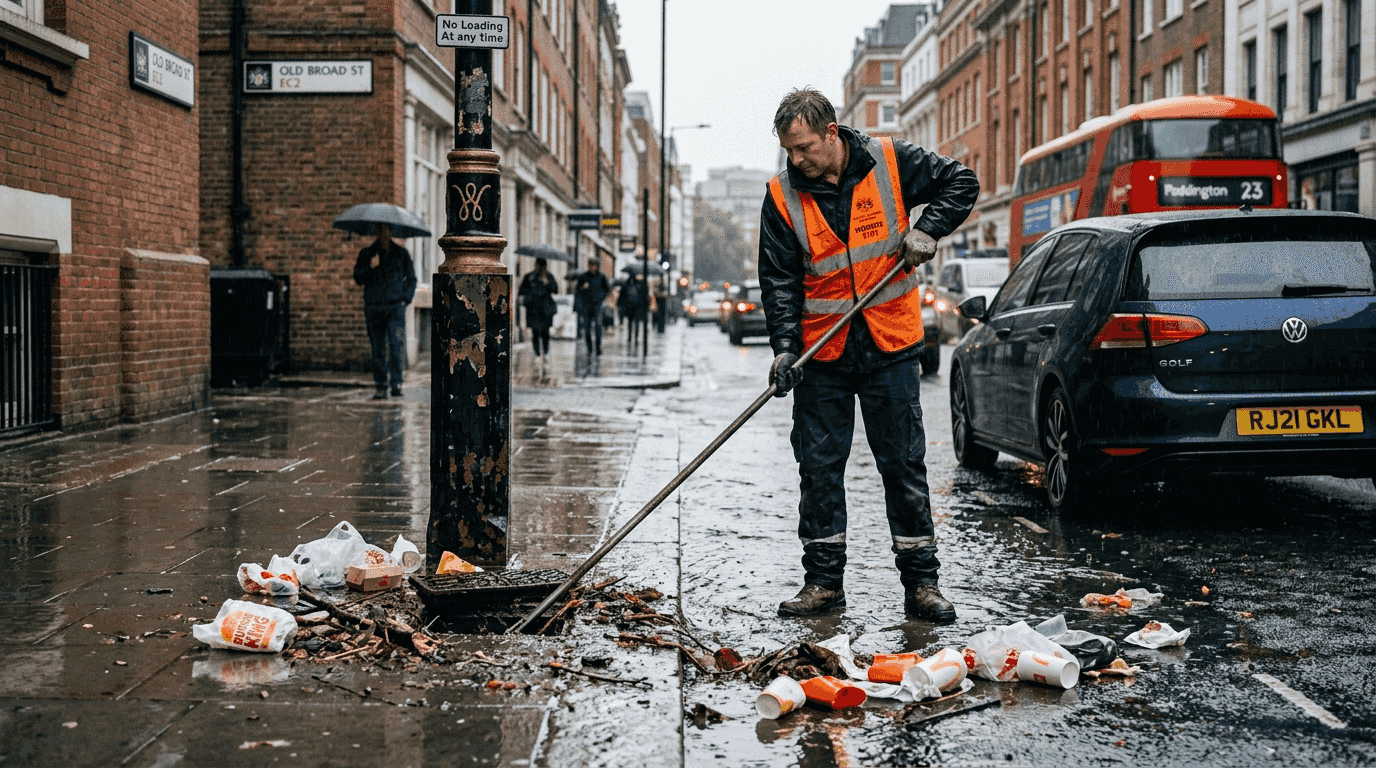
Environmental consequences prove equally serious. Blocked sewers overflow into streets and watercourses during heavy rainfall, polluting the Thames and its tributaries. These pollution events harm aquatic life, close beaches and damage London’s reputation. Thames Water reported over 10,000 blockage incidents in recent years, with annual clearance costs reaching £18 million. These operational expenses don’t disappear, they’re recovered through customer bills, meaning property owners ultimately fund the cleanup of preventable blockages.
Seasonal patterns reveal telling insights into blockage causes:
| Month | Blockage increase | Primary cause |
|---|---|---|
| December | 35% above average | Festive cooking fats and increased food waste |
| January | 28% above average | Post-holiday disposal of cooking oils |
| March | 15% above average | Spring cleaning and garden waste |
| July | 8% above average | Summer barbecues and outdoor cooking |
December and January consistently see the highest blockage rates as festive cooking generates excessive fats, oils and grease. Roasting multiple joints of meat, preparing rich gravies and disposing of turkey fat creates a perfect storm for drainage systems. Property managers report increased emergency callouts during these months, with many blockages traced directly to FOG accumulation from holiday meals.
The financial burden extends beyond direct clearance costs. Properties with recurring blocked drains face reduced valuations, difficulties selling and tenant complaints. Commercial properties lose business during closures for emergency repairs. Multi-occupancy buildings split costs among residents, creating disputes and ill feeling. Emergency callouts during evenings and weekends command premium rates, often exceeding £500 for urgent clearance.
“Clearing a 100-tonne fatberg requires specialized equipment, multiple crews working in confined spaces, and weeks of dangerous manual labour, with costs running into hundreds of thousands of pounds.”
Prevention costs a fraction of remediation. Simple habit changes eliminate most blockage risks, protecting your property investment and avoiding the stress, expense and disruption of sewage emergencies. The question isn’t whether you can afford prevention, it’s whether you can afford the consequences of neglect.
Preventing and managing drain blockages
Protecting your drainage system requires consistent good habits, not expensive equipment or complex procedures. The most effective prevention strategy focuses on what you don’t put down your drains rather than what you do to maintain them.
Follow these essential practices to minimise blockage risks:
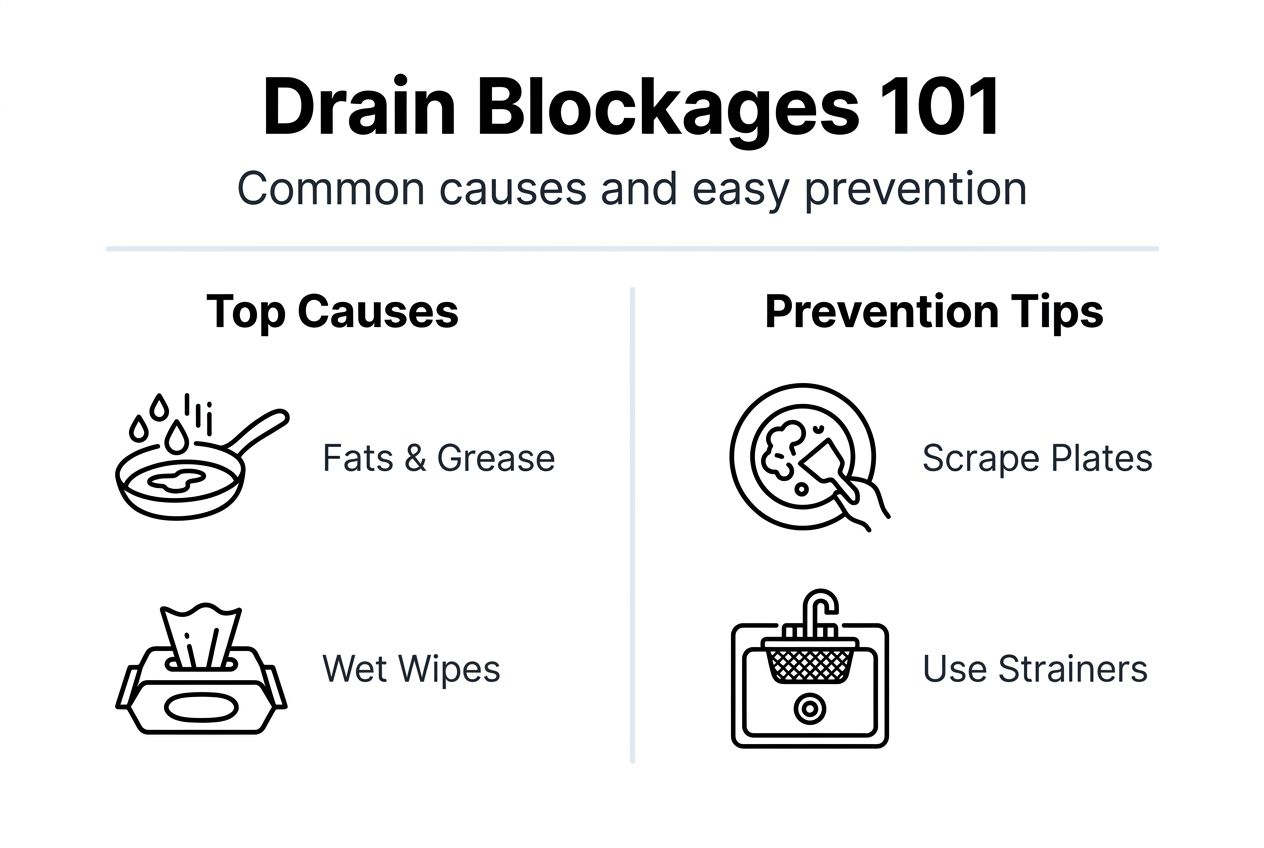
- Never pour fats, oils or grease down sinks. Wait for cooking fats to cool and solidify, then scrape into your food waste bin. Even small amounts accumulate over time, so this applies to butter from toast, salad dressings and bacon grease equally.
- Scrape plates thoroughly before washing. Remove all food debris into bins, including sauces, gravies and liquid foods that seem harmless but contribute to blockages when combined with other waste.
- Install sink strainers in every drain. These inexpensive mesh screens catch food particles, hair and debris before they enter your pipes, requiring only quick daily emptying.
- Flush only the three Ps. Toilets handle pee, poo and paper (toilet paper), nothing else. Wet wipes don’t break down even when labelled flushable, so bin them instead.
- Run hot water after washing up. A 30-second hot water flush helps clear any residual fats from pipes before they cool and solidify.
- Schedule annual professional inspections. Regular drain maintenance catches developing problems before they cause blockages, costing far less than emergency repairs.
Pro Tip: Keep a dedicated container beside your cooker for collecting cooking fats and oils during food preparation. When full, let it solidify completely, then dispose of the entire container in your general waste. This single habit eliminates the primary cause of household drain blockages.
Winter months demand heightened vigilance. December cooking generates excessive fats from roasting, so take extra care during festive preparations. After large meals, never rush cleanup by pouring leftover fats down the sink. Instead, let roasting tins cool, scrape solidified fat into bins, then wash with hot water and washing up liquid. This simple sequence prevents the seasonal blockage spike that overwhelms drainage systems every year.
Bathroom drains require different attention. Hair combines with soap scum to create stubborn blockages in shower and bath drains. Install hair catchers over plugs and clean them weekly. Avoid bar soaps that leave more residue than liquid alternatives. Pour a kettle of boiling water down bathroom drains monthly to dissolve soap buildup before it hardens.
Property managers overseeing multiple units should educate tenants about proper disposal habits. Clear guidance in welcome packs, reminder notices during December and provision of sink strainers demonstrate proactive management. Regular drain surveys identify which properties contribute most to shared pipe blockages, allowing targeted education where it’s needed most.
Children and elderly residents may need extra support understanding what belongs in drains. Provide visual guides showing acceptable items and clearly marking bins for different waste types. Make proper disposal the easy, obvious choice rather than expecting people to remember complex rules.
Professional solutions and routine inspections
Some drainage problems exceed DIY capabilities, requiring specialist equipment and expertise. Professional services provide thorough assessment and targeted solutions that prevent minor issues escalating into expensive emergencies.
CCTV drain surveys use waterproof cameras mounted on flexible rods to inspect your entire drainage system. Operators feed the camera through your pipes, recording footage that reveals blockages, cracks, root intrusions and structural defects invisible from above ground. This diagnostic approach identifies problems precisely, eliminating guesswork and unnecessary excavation. Drain inspection services typically cost £150-300 for residential properties but save thousands by catching problems early.
Once identified, blockages require appropriate clearance methods:
| Method | Best for | Advantages | Limitations |
|---|---|---|---|
| High pressure water jetting | FOG buildup, debris, tree roots | Thorough cleaning, environmentally safe, clears pipes completely | Requires specialist equipment, not suitable for damaged pipes |
| Mechanical rodding | Simple blockages, accessible pipes | Quick, lower cost, effective for straightforward obstructions | Limited reach, may not clear all debris |
| Drain relining | Cracked or damaged pipes causing repeated blockages | No excavation needed, creates seamless new pipe inside old one | Higher initial cost, requires dry conditions |
High pressure water jetting proves most effective for clearing established fatbergs and FOG accumulation. Specialized nozzles spray water at up to 4,000 PSI, cutting through solidified fats and flushing debris completely from pipes. Unlike chemical drain cleaners that damage pipes and harm the environment, water jetting is safe and thorough. Most residential blockages clear within an hour, restoring full drainage capacity.
For properties with recurring blockages from the same location, drain relining offers a permanent solution. This technique inserts a resin-impregnated liner into damaged pipes, then inflates and cures it to form a smooth, seamless new pipe inside the old one. The process fixes cracks, seals joints where roots penetrate and eliminates rough surfaces where debris accumulates, all without excavating your garden or driveway.
Pro Tip: Schedule drain inspections before problems appear, not after blockages force emergency action. Annual surveys during summer months (when drainage systems face less pressure) identify developing issues you can address during planned maintenance rather than disruptive emergency callouts.
Clearing large fatbergs requires intensive specialist work. Crews work in confined spaces using hand tools, high pressure jets and vacuum tankers to break up and remove congealed masses. The 100-tonne Whitechapel fatberg discovered in 2025 took weeks of dangerous work to clear, highlighting why prevention matters so much. Individual households creating these blockages rarely face direct costs, but their actions impact entire communities through service disruptions and increased bills.
Most blockages occur in local pipes serving small groups of properties, meaning a few households’ poor habits affect many neighbours. This makes individual responsibility crucial. If your property experiences frequent blockages, professional inspection identifies whether the problem originates from your drains or shared pipes. Understanding the source guides appropriate action, whether changing your habits or coordinating with neighbours to address shared pipe issues.
Modern drain mapping technology creates permanent records of your drainage layout, showing pipe locations, depths, materials and connections. This information proves invaluable during future work, preventing accidental damage during building projects and speeding repairs when problems occur. Many drainage companies offer mapping as part of comprehensive surveys, providing lasting value beyond immediate problem-solving.
Drainage services to protect your London property
Proactive drainage care prevents the stress and expense of emergency blockages. Understanding causes and consequences empowers you to protect your property through better disposal habits and timely professional maintenance. London’s aging sewer infrastructure demands responsible waste management from every property owner.
Comprehensive drain maintenance guidance helps you establish effective routines tailored to your property type. Regular drain inspection services catch developing problems before they escalate, whilst expert drain repairing services resolve issues quickly when they occur.
Professional drainage contractors provide rapid response for emergencies and scheduled maintenance for long-term protection. Their local knowledge of London’s drainage challenges, combined with specialist equipment and proven techniques, ensures your property remains protected from blockages and sewage backups. Investing in professional support costs less than recovering from drainage failures, protecting both your property value and your peace of mind.
FAQ
How can I prevent fatbergs forming in my drain?
Never flush wet wipes or pour fats, oils and grease down your drains, as these combine to create blockages. Scrape all food waste into bins before washing dishes and install sink strainers to catch debris. These simple habits eliminate the primary ingredients fatbergs need to form.
Why do drain blockages often increase in winter months?
Holiday cooking during December and January produces excessive fats, oils and grease that enter drainage systems when poured down sinks. Festive meals involving roasted meats generate more cooking fats than typical daily meals, creating seasonal blockage spikes. Property owners should take extra care disposing of waste properly during these months.
When should I consider professional drain inspection?
Seek professional inspection if you notice slow draining, unpleasant odours or frequent blockages, as these indicate developing problems. Early detection through inspection prevents costly emergency repairs and protects your property from sewage damage. Annual preventive surveys catch issues before they cause disruptions, particularly valuable for older properties with aging drainage systems. Recognising early warning signs allows timely intervention whilst problems remain manageable.
What happens during a CCTV drain survey?
A waterproof camera on flexible rods travels through your drainage system, recording detailed footage of pipe interiors. Operators identify blockages, cracks, root intrusions and structural defects, then provide a comprehensive report with recommendations. The non-invasive process typically takes one to two hours and creates a permanent record of your drainage layout for future reference.
Can tree roots really damage my drains?
Yes, tree roots seek moisture and nutrients, making drain pipes attractive targets. Roots penetrate tiny cracks in pipe joints, then expand as they grow, eventually blocking the entire pipe. Older clay pipes prove particularly vulnerable, whilst modern plastic pipes resist root intrusion better. Regular inspections identify root problems before they cause complete blockages, allowing targeted treatment.