TL;DR:
- Many drain problems are caused by structural failure, not just blockages.
- Proper diagnosis using CCTV surveys saves money and prevents unnecessary repairs.
- Effective solutions include jetting, rodding, relining, or excavation, depending on the issue.
Most London homeowners assume every drain problem is simply a blockage waiting to be cleared. That assumption is costing people hundreds of pounds in repeat callouts, failed DIY attempts, and temporary fixes that do nothing to address the real cause. Blocked and broken drains look similar on the surface but behave very differently underground, and treating one like the other is where the real damage begins. This article walks you through the key differences, the warning signs that matter, and the right solutions for each problem so you can make confident, informed decisions about your property’s drainage.
Table of Contents
- Understanding blocked drains: What you need to know
- Broken drains and structural failures: Beyond blockages
- Blocked or broken? How to tell and why it matters
- Effective solutions: Fixing blocked and broken drains
- Expert perspective: Why accurate diagnosis saves money and stress
- Professional help for blocked and broken drains in London
- Frequently asked questions
Key Takeaways
| Point | Details |
|---|---|
| Blocked vs broken | Blocked drains involve simple obstructions while broken drains mean structural pipe failure. |
| Symptoms and diagnosis | Spot blocked drains by slow drainage and smells; broken drains show leaks and recurring blockages. |
| Repair solutions | High-pressure jetting fixes blockages, but broken drains need lining or excavation. |
| Expert advice | Accurate diagnosis is essential—misjudging structural issues costs time and money. |
| Call professionals | Expert help ensures correct treatment and prevents future property damage. |
Understanding blocked drains: What you need to know
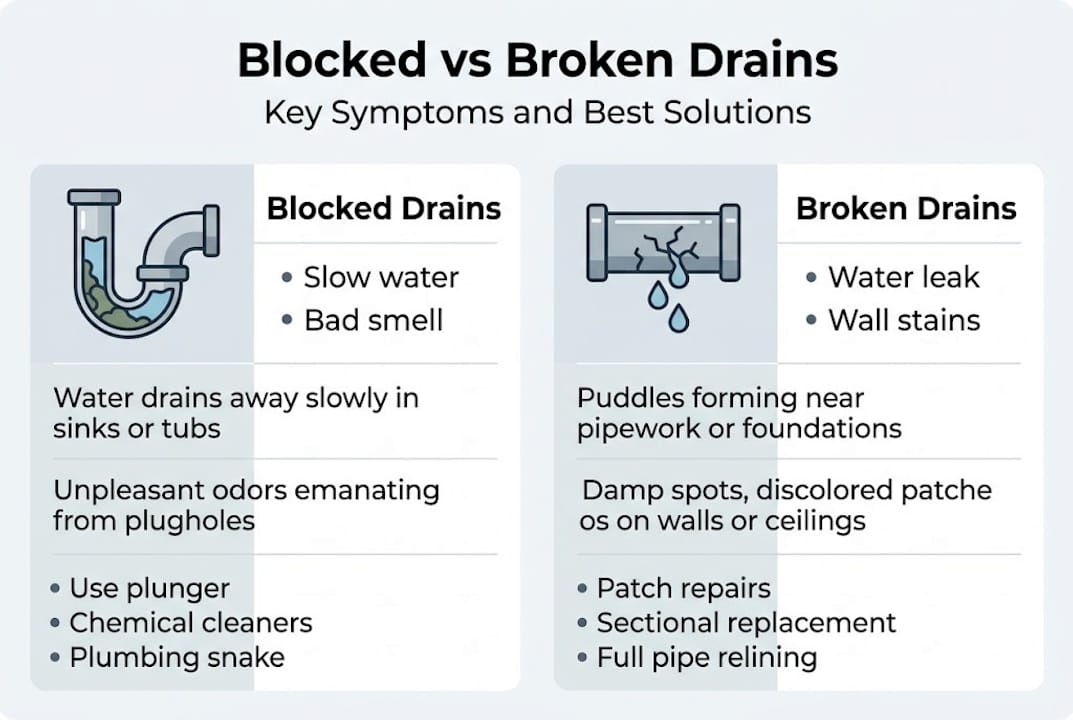
A blocked drain is exactly what the name suggests: something is physically obstructing the flow of waste water through the pipe. The pipe itself remains structurally intact, but debris has accumulated to the point where water cannot pass freely. This distinction is important, because it means the problem is, in principle, removable.
The most common culprits behind blocked drains in London homes are fats and cooking oils poured down kitchen sinks, wet wipes flushed despite being labelled “flushable,” hair and soap residue in bathroom drains, and garden debris in outdoor gullies. Over time, these materials combine and harden inside the pipe, reducing the bore width until water backs up completely.
Common warning signs of a blocked drain include:
- Water draining noticeably slower than usual in sinks, baths, or showers
- Unpleasant odours rising from plug holes, particularly a rotten or sulphurous smell
- Gurgling or bubbling noises from the drain when water is running elsewhere in the house
- Water pooling on the surface of outdoor drains or around gully covers
- Toilets that take longer than usual to empty or that bubble when flushed
The trouble is that many of these symptoms appear gradually. By the time you notice a serious slowdown, the blockage may already be well established. Recognising signs of blocked drains early gives you the best chance of resolving the problem before it escalates.
DIY solutions such as chemical drain cleaners or plungers sometimes shift minor blockages, but they are often ineffective against compacted grease or deep-seated debris. More importantly, they can mask the problem temporarily while the underlying obstruction grows. For persistent blockages, professional intervention is far more reliable. Safe drain unclogging using the right equipment avoids the risk of damaging pipes with aggressive chemicals.
Professional fixes for blocked drains fall into two main categories. High-pressure water jetting, which forces water at high velocity to break up and flush away blockages, typically costs between £150 and £400. Rodding, a mechanical method using flexible rods to dislodge debris, generally costs between £80 and £250. Both have high success rates for non-structural blockages, but DIY attempts frequently lead to recurrence because they fail to clear the full length of the obstruction.
Pro Tip: The best way to avoid recurring blockages is to install a fat trap beneath your kitchen sink, never pour cooking oil down the drain, and use a drain guard in your shower to catch hair. Simple habits save significant expense over time. If you want to go further, preventing blocked drains in London homes is easier than most people think with the right preparation.
Understanding that a blockage is a content problem rather than a structural one is the foundation of everything that follows. Once you know what a healthy drain with a blockage looks like, you are in a much better position to recognise when something more serious is happening beneath your garden or floor.
Broken drains and structural failures: Beyond blockages
Once you grasp blocked drains, it is vital to understand when the problem is more serious: a broken drain with structural issues. Where a blocked drain has an obstruction inside an intact pipe, a broken drain means the pipe itself is compromised. The walls may be cracked, fractured, partially collapsed, or in severe cases entirely caved in.
Broken or collapsed drains involve structural failure: the pipe may be crushed, fractured, or caved in, often as a result of ageing infrastructure, ground movement, poor original installation, root intrusion from nearby trees, or long-term corrosion. Many of London’s older Victorian properties still have clay or pitch fibre drainage systems that were never designed to last indefinitely, and decades of soil shifting and tree growth have taken their toll.
The most common causes of broken or collapsed drains are:
- Ageing clay or cast iron pipes that become brittle over decades
- Tree root intrusion, where roots follow water sources and gradually crack pipes from within
- Ground movement, particularly relevant in areas of London with clay-heavy soil that shrinks and swells seasonally
- Heavy vehicles or construction work exerting pressure on buried pipes
- Corrosion in older metal pipes, particularly in properties built before the 1970s
The impact of a broken drain extends well beyond poor drainage. Sewage or groundwater leaking from fractured pipes saturates the surrounding soil, which can cause rising damp in ground floors and walls, undermine building foundations, and create an environment where rats and other pests are attracted to the moisture and waste. Identifying types of drain blockages versus structural failures is not always straightforward from the surface.

Here is a quick comparison of the two problems to help clarify the difference:
| Feature | Blocked drain | Broken drain |
|---|---|---|
| Pipe integrity | Intact | Compromised or collapsed |
| Main cause | Debris, grease, wipes | Age, roots, ground movement |
| Water flow | Restricted | Leaking or absent |
| Typical symptom | Slow drainage, smells | Damp, recurring blockages, sinkholes |
| Fix required | Jetting, rodding | Relining, excavation |
“A collapsed drain is not simply a very bad blockage. The pipe wall itself has failed, and no amount of jetting or chemical treatment will restore its structural integrity. Without proper diagnosis, you will keep clearing debris from a pipe that keeps producing more because the pipe itself is broken.”
Spotting drain blockages at the surface level is only part of the picture. If problems keep returning after professional cleaning, the drain may well be broken rather than blocked, and that requires a fundamentally different approach to repair.
Blocked or broken? How to tell and why it matters
Now that both concepts are clear, here is how to reliably spot which issue you are facing, and why accurate diagnosis is crucial. Misidentifying a broken drain as a simple blockage is one of the most expensive mistakes a property owner can make. You could spend money on repeated jetting sessions, only for the problem to return within weeks, because the pipe is continuing to collapse or crack with every passing month.
Symptoms that suggest a blockage:
- Slow drainage that began recently and affects one fixture
- Gurgling noises from a single drain or toilet
- A bad smell that clears temporarily after plunging or jetting
- A blockage that responds initially to professional treatment but returns within a year
Symptoms that suggest structural failure:
- Recurring blockages in the same location despite repeated professional cleaning
- Visible damp patches on walls or floors near drain runs
- Sunken or soft patches of soil in the garden above buried pipe routes
- Rodent activity near drainage systems
- Multiple fixtures backing up simultaneously, suggesting a deeper systemic problem
The most important tool for accurate diagnosis is a CCTV drain survey, where a small camera is pushed through the pipe to produce a live video feed of the interior. This removes all guesswork. When safe drain unblocking is attempted on a pipe that is actually collapsing, the jetting equipment may temporarily clear debris but cannot restore the pipe wall, meaning the debris builds up again almost immediately.
Jetting is ineffective on a collapsed pipe: debris that originates from the collapse itself will simply block the pipe again. In a full collapse where there is no remaining pipe pathway, excavation becomes unavoidable. Roots present a particularly confusing picture because they both mimic blockages and cause structural damage simultaneously. A root mass may be removed by jetting, but if the roots entered through a crack in the first place, that crack remains and will invite further intrusion.
The financial stakes of misdiagnosis are real. Repeat jetting sessions can cost upwards of £300 each, and several callouts to fix the same recurring problem could easily exceed the cost of a single proper survey and repair. Getting the diagnosis right first is the most cost-effective course of action available to you. Professional drain jetting in London is highly effective for genuine blockages but should always be preceded by a proper assessment of the pipe’s condition.
Effective solutions: Fixing blocked and broken drains
It is clear each problem requires its own solution. Here is exactly how to fix blocked and broken drains with minimal disruption and lasting results.
For blocked drains, the primary professional solutions are:
- High-pressure water jetting: Highly effective for grease, fat, and compacted debris. Costs typically range from £150 to £400 depending on the severity and location. Success rates are excellent when the pipe is structurally sound.
- Rodding: Mechanical rodding uses flexible steel rods to break up and dislodge solid obstructions. This works well for localised blockages and is often the first intervention attempted. Costs range from £80 to £250.
- Chemical treatments: Occasionally used as a follow-up to jetting to dissolve residual grease deposits. Not suitable as a standalone solution for significant blockages.
For broken drains, the repair options depend on the severity of the damage:
- CIPP lining (Cured-In-Place Pipe lining): A resin-saturated liner is inserted into the damaged pipe and inflated, then cured to form a new pipe within the old one. This is a trenchless method, meaning no excavation is required. It is cost-effective and minimally disruptive.
- Pipe bursting: Used when the pipe needs replacing entirely but excavation is undesirable. A bursting head shatters the old pipe outward while simultaneously pulling in a new one.
- Excavation and replacement: The most disruptive but sometimes unavoidable option for completely collapsed pipes where no pathway remains. Gardens, driveways, or even flooring may need to be lifted.
A key technical point: partial collapse may still allow CIPP lining if more than 25% of the pipe wall remains intact. A complete obstruction, however, requires pipe bursting or full excavation. This is precisely why jetting should always precede relining: a clean pipe ensures the liner bonds properly and covers the full internal surface without gaps.
Pro Tip: Never proceed to relining or major structural repair without jetting the pipe first. The jetting clears loose debris and allows the CCTV camera to give you a clear, accurate view of the pipe’s condition so the engineer can make the right repair decision. Skipping this step is a shortcut that costs more in the long run. Explore your options through effective drainage solutions to understand the full range of interventions available.
Repeated DIY attempts carry real risk. Aggressive chemical drain cleaners can soften and weaken older clay or plastic pipes. Over-vigorous plunging can push debris further into the system or, worse, dislodge corroded sections of ageing pipe. The more times a blockage is treated without resolving the root cause, the more likely the situation is to deteriorate. Professional intervention, underpinned by an accurate survey, is consistently the most economical path to a lasting repair.
Expert perspective: Why accurate diagnosis saves money and stress
Here at RSJ Drains, one of the most common situations we encounter is a property owner who has already spent several hundred pounds on repeat jetting callouts before calling us. In almost every case, a CCTV survey reveals a structural problem that cleaning alone could never fix. The money spent on those earlier treatments was not entirely wasted, but a significant portion of it was avoidable with the right first step.
The uncomfortable truth is that cleaning feels like a solution because the drain clears temporarily. That temporary relief creates a false sense of resolution, and it delays the moment when the real fix gets authorised. Meanwhile, the structural damage worsens, the surrounding soil becomes increasingly saturated, and the cost of eventual repair rises.
Investing in a proper survey upfront is not a luxury; it is simply the most logical use of your money. A CCTV survey typically costs between £100 and £300, and it tells you definitively whether your problem is structural or not. If it is a straightforward blockage, you have lost very little. If it reveals a crack, collapse, or root intrusion, you have potentially saved yourself thousands. Knowing how to prevent drain blockages is valuable, but knowing when the problem has moved beyond prevention is more valuable still.
Accurate diagnosis is not just about saving money in the short term. It is about protecting your property from rising damp, foundation movement, and the health risks associated with sewage leaks. A well-timed, correctly identified intervention is the single most effective thing you can do for your drainage system.
Professional help for blocked and broken drains in London
If slow drains, persistent smells, or recurring problems have been troubling your property, the right professional support makes all the difference.
RSJ Drains provides rapid, expert drainage services across Greater London, with emergency response available within two hours. Whether you need a simple blockage cleared or a full structural assessment, our team is equipped to diagnose and resolve the problem correctly the first time. Our London drainage services cover everything from high-pressure jetting and rodding to drain relining and excavation. For properties with recurring issues, a CCTV drain survey is the most reliable way to identify the true cause and plan the right repair with confidence.
Frequently asked questions
How can I tell if my drain is blocked or broken?
Blocked drains typically show slow drainage, unpleasant smells, and gurgling noises, while broken drains cause leaks, rising damp, and recurring blockages even after professional cleaning. A CCTV survey provides definitive confirmation.
Is high-pressure jetting effective for broken drains?
Jetting is highly effective for genuine blockages but ineffective on collapsed pipes, where debris from structural failure will simply accumulate again. Structural failures require relining or excavation.
Can I fix drain problems myself or should I call a professional?
DIY fixes frequently fail for persistent blockages and can worsen structural damage. Professional jetting and rodding carry far higher success rates, and a professional survey ensures the correct repair is chosen from the outset.
What causes broken drains?
Structural drain failure is most commonly caused by ageing pipes, tree root intrusion, ground movement, corrosion, and poor original installation, all of which are prevalent in London’s older housing stock.