TL;DR:
- Regular drain maintenance prevents costly emergencies and infrastructure deterioration.
- Common causes of blockages include FOG, foreign objects, and tree root intrusion.
- Professional inspections and scheduled cleaning are essential for London’s aged drainage systems.
Blocked drains cost the UK far more than most homeowners ever realise. UK sewer blockages number around 300,000 every year, and households alone spend roughly £25 million annually calling out plumbers for clogged toilets. Yet most London property owners only think about their drains when something goes visibly wrong. That reactive mindset is exactly what turns a £150 cleaning job into a £1,500 emergency. This article explains why routine drain cleaning is one of the smartest investments you can make in your property, what the real risks of neglect look like, and how a simple maintenance schedule protects both your home and your wallet.
Table of Contents
- The true risks of neglected drains
- Main causes of blockages: how everyday habits matter
- How regular cleaning prevents emergencies and saves money
- Tailored strategies for London properties
- Why most people underestimate regular drain cleaning
- Get expert help for hassle-free drain maintenance
- Frequently asked questions
Key Takeaways
| Point | Details |
|---|---|
| Neglect costs more | Emergency drain repairs can be 40–60% more expensive than regular maintenance. |
| Everyday habits matter | Fat, oil, and grease are the top causes of blockages, so small changes make a big impact. |
| London has unique risks | Older pipes and tree roots increase blockage risk in London, requiring tailored maintenance. |
| Preventative cleaning works | Biannual inspections can reduce emergencies by 60% for London properties. |
| Expert help pays off | Professional services offer the insight and tools to keep drains reliably clear. |
The true risks of neglected drains
Most people assume their drains are fine until water starts backing up. By that point, the damage is often already done. Ignored drains do not simply stay blocked; they deteriorate. Slow build-up of fat, debris, and sediment puts constant pressure on pipe joints, accelerates corrosion in older systems, and creates the conditions for overflows that can flood kitchens, bathrooms, and even basements.
In London, the risks are amplified. The city’s housing stock is among the oldest in the country, with millions of properties still connected to Victorian-era clay pipes that crack, shift, and attract tree roots. Many buildings share communal drainage systems, meaning one household’s neglect can trigger problems for an entire block. Understanding why blocked drains matter is the first step to avoiding the consequences.
There are also legal dimensions to consider. Property owners and managers have a duty of care to maintain drainage infrastructure. Failure to do so can result in liability for water damage to neighbouring properties, disputes with insurers, and in some cases, enforcement action from local authorities. Damp caused by drainage failures is a serious structural risk, and removing damp for owners often involves far more than just fixing the pipes.
Here are the most common problems that develop when drains are left unmaintained:
- Partial blockages that restrict flow and cause slow drainage throughout the property
- Full blockages leading to sewage backup and overflow into living spaces
- Pipe corrosion and cracking from prolonged pressure and chemical build-up
- Tree root intrusion through joints in older clay pipes
- Rat ingress via damaged or unsealed drain sections
- Flooding during heavy rain when drainage capacity is already reduced
UK households spend £24.8M on plumbers for clogged toilets alone each year, with around 300,000 sewer blockages recorded annually across the country.
These are not rare worst-case outcomes. They are the predictable result of treating drainage as someone else’s problem. See blocked drain examples from London homes to understand just how quickly situations escalate.
Main causes of blockages: how everyday habits matter
Understanding why problems happen helps clarify what regular drain cleaning must address. The majority of blockages are not caused by freak accidents or ageing infrastructure alone. They are caused by everyday habits repeated over months and years.
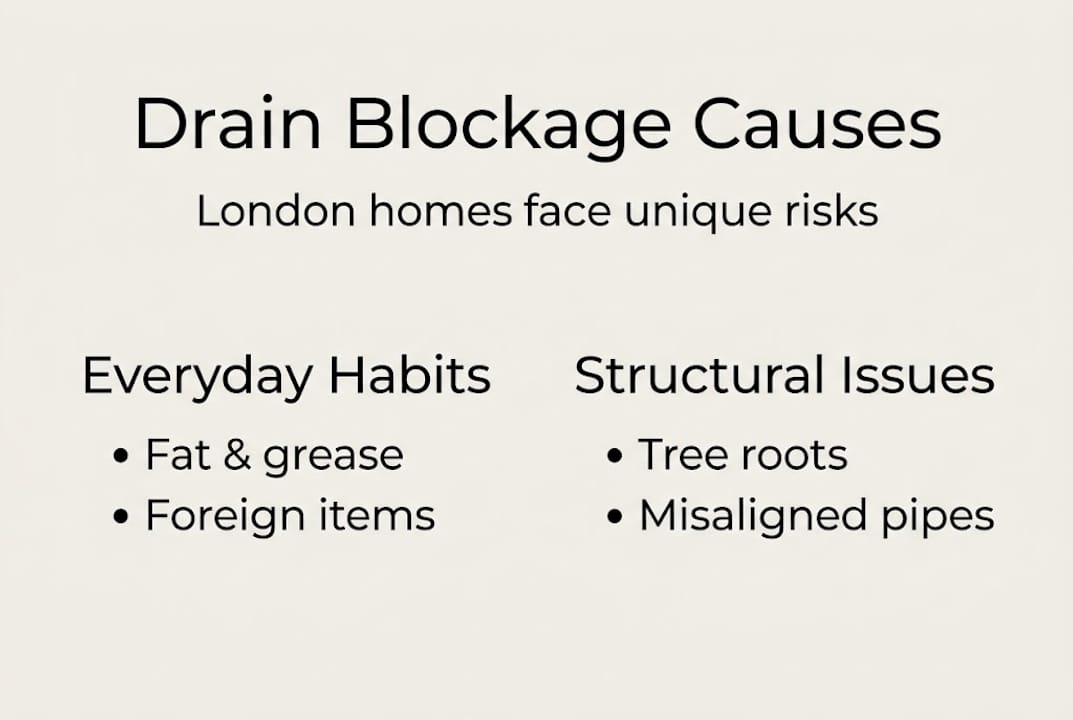
Research is clear on this. FOG (fat, oil, grease) accounts for 37.5% of all drain blockages in the UK. Foreign items such as wet wipes, cotton buds, and sanitary products cause a further 33.3%. These are behavioural issues, not structural ones, which means they are entirely preventable.
| Cause | Percentage of blockages | Primary source |
|---|---|---|
| Fat, oil, and grease (FOG) | 37.5% | Kitchen sinks and dishwashers |
| Foreign items and wipes | 33.3% | Toilets and bathroom drains |
| Misaligned pipes | 12.5% | Older properties, ground movement |
| Tree root intrusion | 6.8 to 8.3% | Gardens, tree-lined streets |
| Other/unknown | ~8% | Mixed sources |
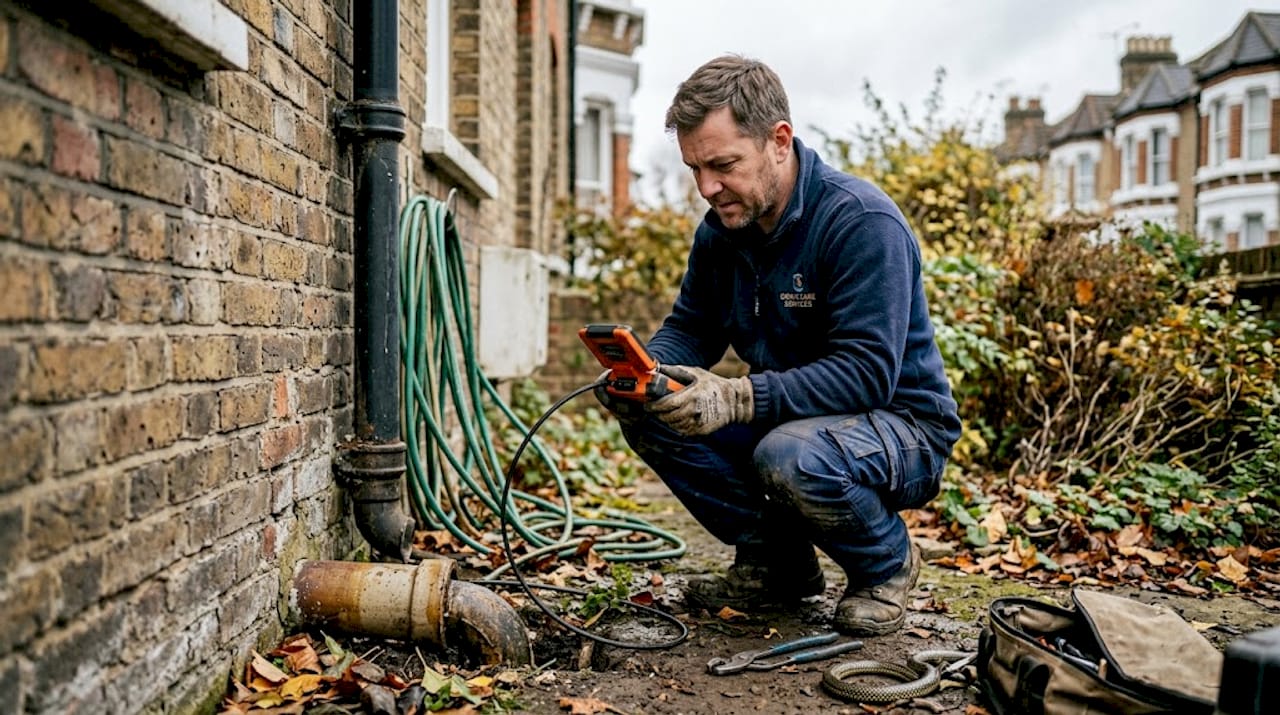
For London properties, the structural causes deserve special attention. Tree roots and misaligned pipes account for a combined 19 to 21% of blockages, with older clay pipes at significantly higher risk of root intrusion through cracked joints. London’s famous tree-lined streets are beautiful, but those roots travel far underground. Explore the causes of drain blockages in more detail to understand how these factors combine.
For property managers overseeing communal buildings, the stakes are higher still. One tenant pouring cooking fat down a shared drain affects every resident connected to that system. Education and clear signage matter, but scheduled cleaning is the only reliable safeguard.
Simple daily habits that reduce your risk:
- Scrape plates and pans into the bin before washing up
- Use a sink strainer to catch food debris and hair
- Never flush wipes, even those labelled “flushable”
- Pour cooled cooking fat into a sealed container and bin it
- Run hot water through the drain after washing greasy dishes
Learn more about blockage causes in London and how local infrastructure shapes the risk profile for different property types.
How regular cleaning prevents emergencies and saves money
Now that we know what causes blockages, let’s get practical about the proven value of consistent maintenance. The financial case is straightforward. Routine maintenance cuts repair costs by 40 to 60% by identifying issues before they become structural problems. Emergency repairs, by contrast, cost 40 to 60% more than the same work carried out as planned maintenance. Biannual inspections alone reduce emergency callouts by 60%.
| Emergency repair | Routine maintenance | |
|---|---|---|
| Typical cost | £500 to £2,000+ | £100 to £300 per visit |
| Disruption | High, often urgent | Minimal, planned |
| Long-term outcome | Reactive, repeat risk | Proactive, reduced risk |
| Property impact | Potential structural damage | Early detection, prevention |
For property managers, scheduled maintenance also simplifies budgeting and compliance. A predictable annual spend on routine drain maintenance is far easier to manage than unpredictable emergency costs that disrupt tenants and trigger insurance claims.
A basic preventative schedule for most London properties looks like this:
- January/February: Post-winter inspection to check for root intrusion and pipe movement caused by frost
- April/May: Spring clean of external gullies and downpipes after leaf fall
- July/August: Mid-year check of kitchen and bathroom drains, especially in high-occupancy properties
- October/November: Pre-winter inspection to clear debris and ensure drainage is clear before heavy rain
Pro Tip: Keep a simple maintenance log with dates, findings, and any work carried out. This is invaluable for insurance claims, compliance checks, and when selling or letting a property. A basic spreadsheet or notebook works perfectly.
For more detail on how saving money with drain maintenance works in practice, the numbers speak for themselves. Prevention is not just cheaper; it is consistently cheaper, every single time.
Tailored strategies for London properties
Finally, London’s buildings need a localised approach. Here is how you can ensure your strategy fits your property’s age, layout, and specific risks.
Different property types need different approaches. A Victorian terraced house with original clay pipes needs more frequent inspection than a modern flat with plastic pipework. Communal buildings with shared drainage require coordinated maintenance across all units, not just individual effort. London’s older infrastructure and dense tree coverage increase risks significantly, and maintenance programmes are the most reliable way to prevent communal blockages and stay compliant with regulations.
For landlords and property managers, here are the fast checks you should carry out regularly:
- Visual inspection of external drain covers for debris or standing water
- Flow test by running taps and checking for slow drainage
- Odour check around drain access points, which can indicate partial blockages
- Gully clearance after autumn leaf fall and before winter
- CCTV survey every two to three years for older properties or those with known issues
Capillary damp caused by drainage failures near foundations is a serious risk in London’s older housing stock. Capillary damp risks are often traced back to drainage issues that were never properly addressed. Catching them early through regular inspection prevents far more expensive structural remediation later.
For houses on tree-lined streets, consider a CCTV inspection every two years rather than three. Root intrusion is gradual but relentless, and catching it early means a simple jetting job rather than a full pipe repair. Find practical drain maintenance tips tailored to London conditions, and review the top ways to prevent blocked drains in London homes.
Pro Tip: Create a maintenance logbook for your property that records every inspection, cleaning visit, and repair. Include the date, contractor, findings, and any follow-up actions. For landlords, this log demonstrates due diligence and can be critical in resolving disputes with tenants or insurers.
Why most people underestimate regular drain cleaning
There is a cultural reason why so many London homeowners and managers neglect routine drain care, and it goes beyond laziness or cost. Drains are invisible. When something works, we do not think about it. When it stops working, we panic. That gap between “fine” and “emergency” is exactly where the real damage accumulates.
Many blockages result from neglect, even when residents genuinely believe they are being careful. Infrastructure age silently increases risk in ways that no amount of good intentions can offset. The slow narrowing of a pipe over two years looks identical to a perfectly clear pipe until the day it does not.
In communal systems, this is even more pronounced. One property’s build-up becomes everyone’s emergency. We see this regularly across London’s older housing stock. The homeowners who call us in a panic are rarely reckless people. They simply did not know what they could not see.
The honest truth is that saving money with maintenance is not just about cost. It is about not being the person whose neglected drain floods a neighbour’s kitchen at midnight. Regular cleaning is not a luxury. In London, it is a responsibility.
Get expert help for hassle-free drain maintenance
If you are serious about keeping your drainage trouble-free, consider working with professionals who know London’s systems inside out.
At RSJ Drains, we provide drain inspection services and CCTV drain surveys that give you a clear picture of what is happening inside your pipes before problems escalate. Our scheduled maintenance programmes are designed around the specific risks of London properties, from Victorian clay pipes to modern communal systems. Whether you manage a single flat or a portfolio of buildings, our drainage services are built to keep your property protected, compliant, and free from costly surprises. Get in touch with our team to arrange an inspection and start protecting your property today.
Frequently asked questions
How often should I clean my drains in London?
Twice a year is the recommended minimum for most London homes. Biannual inspections reduce emergencies by 60%, making it one of the most cost-effective maintenance habits for any property owner.
What’s the most common cause of household drain blockages?
Fat, oil, and grease (FOG) is the leading culprit, responsible for 37.5% of blockages across UK homes. Avoiding pouring cooking fat down the sink is the single most impactful habit change you can make.
Is regular drain cleaning really cheaper than fixing emergencies?
Yes, consistently so. Emergency repairs cost 40 to 60% more than planned preventative maintenance, and that figure does not include the cost of any associated property damage or tenant disruption.
Do property managers have legal responsibilities for communal drains?
Yes. Managers must maintain communal drainage to prevent blockages and comply with regulations. Maintenance programmes for managers are not just good practice; they are a legal and contractual obligation in most tenancy arrangements.
Can tree roots really cause blockages in London?
Absolutely. Tree roots cause 6.8 to 8.3% of UK blockages by entering through joints and cracks in older clay pipes, a particular risk on London’s many tree-lined residential streets.