TL;DR:
- Regular maintenance routines and proper tools prevent costly drain blockages in London homes.
- Common causes include fats, hair, wipes, tree roots, and aging pipes, with early signs like slow draining.
- Professional inspection and CCTV surveys help confirm pipe health and ensure long-term drainage reliability.
Blocked drains in Greater London are responsible for thousands of pounds in property damage every year, and the disruption they cause to daily life is far worse than most homeowners expect. A single serious blockage can mean flooded floors, foul odours, and emergency call-out fees that dwarf the cost of simple prevention. The good news is that keeping your drains clear is not complicated. In this guide, we walk you through the exact causes of blockages, the tools you need, a practical routine to follow, and how to catch problems before they become expensive emergencies.
Table of Contents
- Understanding the causes of drain blockages
- Essential tools and products for drain care
- Step-by-step routine to prevent blockages
- Spotting early warning signs and troubleshooting
- Our perspective: why prevention always trumps cure in London drains
- Get expert help and long-term drain solutions
- Frequently asked questions
Key Takeaways
| Point | Details |
|---|---|
| Know the main causes | Most blockages come from fat, wipes, hair, and urban debris—know what to avoid. |
| Use the right tools | Drain guards, eco-friendly cleaners, and regular manual cleaning all prevent problems. |
| Follow a routine | Weekly habits like cleaning and checking for early signs prevent costly emergencies. |
| Act on warning signs early | Slow drains and odours should be dealt with before they become major blockages. |
| Call professionals when needed | Persistent or complex issues may require inspection or repair by qualified drainage specialists. |
Understanding the causes of drain blockages
Before you can stop blockages from forming, you need to know what causes them. Common blockage causes range from everyday household habits to environmental factors that are completely outside your control. Understanding both gives you a realistic picture of the risks your property faces.
In the kitchen, fats, oils, and grease are the biggest culprits. When hot cooking fat is poured down the sink, it cools and solidifies inside the pipe, gradually narrowing the channel until water can barely pass through. In bathrooms, hair and soap scum bind together to form stubborn clogs that build up over weeks. Wet wipes, cotton buds, and sanitary products flushed down toilets are another major source of blockages, even when packaging claims they are flushable.
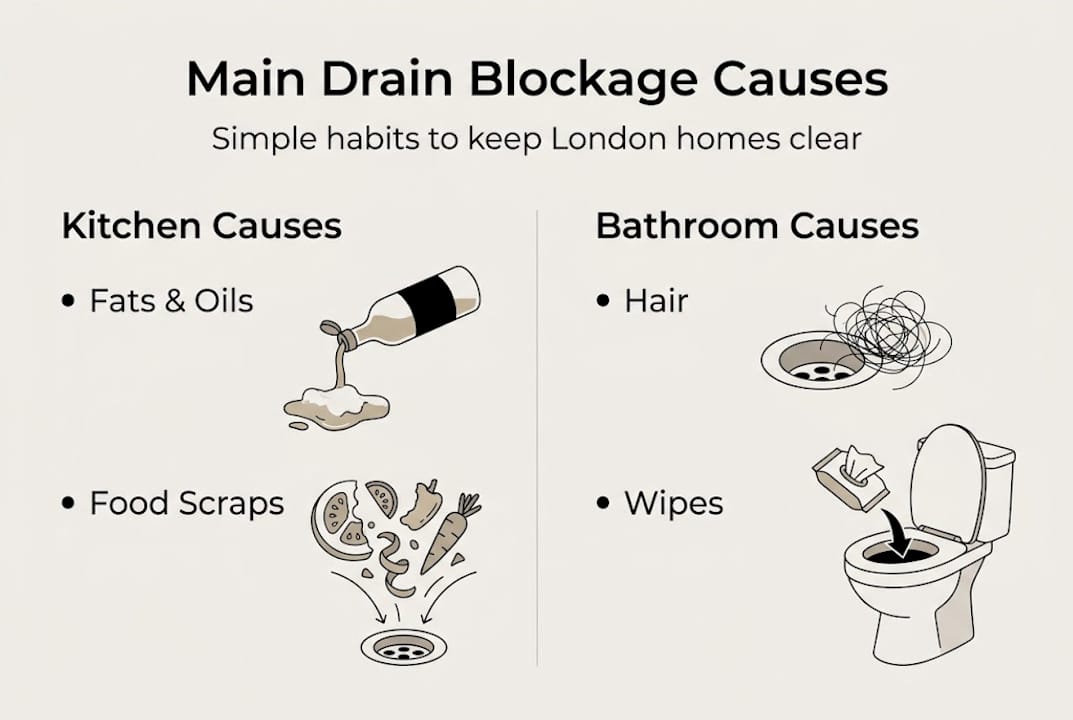
London has its own set of challenges on top of these. The city’s drainage infrastructure is largely Victorian, meaning many pipes are old, narrow, and prone to cracking or root intrusion. Tree roots from London’s abundant street trees can work their way into pipe joints, causing partial or complete obstructions. Urban runoff carries leaves, grit, and debris into outdoor drains, especially during autumn. Spotting drain blockages early is far easier once you know what to look for.
As Thames Water advises, keeping drains clear starts with understanding what should never go down them. The risks of ignoring these causes include slow-draining sinks, persistent bad smells, and in serious cases, sewage backing up into your property.
| Cause | Location | Risk level |
|---|---|---|
| Fats, oils, and grease | Kitchen sink | High |
| Hair and soap scum | Bathroom | High |
| Wet wipes and cotton buds | Toilet | High |
| Tree root intrusion | Outdoor pipes | Medium to high |
| Leaf and debris build-up | Outdoor drains | Medium |
| Ageing or cracked pipes | Throughout property | Medium to high |
The most common warning signs to watch for include:
- Water draining more slowly than usual
- Gurgling sounds from sinks or toilets
- Unpleasant odours rising from drains
- Water pooling around outdoor gullies
- Damp patches near external walls
Essential tools and products for drain care
Understanding the cause is key. Now let’s get set up with the right prevention tools. Having the correct equipment to hand means you can act quickly before a minor issue turns into a major one.
The foundation of any good drain care kit is a quality drain guard or strainer. These sit over the plug hole and catch hair, food particles, and debris before they enter the pipe. They are inexpensive and available for every type of drain, from kitchen sinks to shower trays. Essential drain maintenance starts here, and it is genuinely one of the highest-return investments you can make for your property.
For cleaning products, you have two main options: chemical cleaners and natural alternatives. Chemical drain cleaners work fast but can corrode older pipes with repeated use, which is a real concern in London’s ageing housing stock. Natural enzyme-based cleaners break down organic matter without damaging pipework and are safe for regular use. A simple mixture of bicarbonate of soda and white vinegar, followed by boiling water, is a surprisingly effective weekly flush for most household drains. The NHS oil disposal advice also recommends collecting cooled cooking oil in a sealed container and disposing of it in general waste rather than pouring it down the sink.
| Product type | Best use | Pipe safety | Cost |
|---|---|---|---|
| Drain guard or strainer | Daily prevention | Safe | Low |
| Enzyme-based cleaner | Weekly routine | Safe | Low to medium |
| Bicarbonate and vinegar | Weekly flush | Safe | Very low |
| Chemical drain cleaner | Occasional stubborn clogs | Use sparingly | Medium |
| Drain snake or auger | Manual blockage removal | Safe with care | Low to medium |
| Plunger | Immediate blockage | Safe | Low |
You should also keep a basic toolkit available: a rubber plunger for immediate blockages, a flexible drain snake for reaching deeper obstructions, and a pair of rubber gloves. These three items can resolve the majority of minor household blockages without any specialist knowledge. Drain maintenance examples show just how far simple tools go when used consistently.
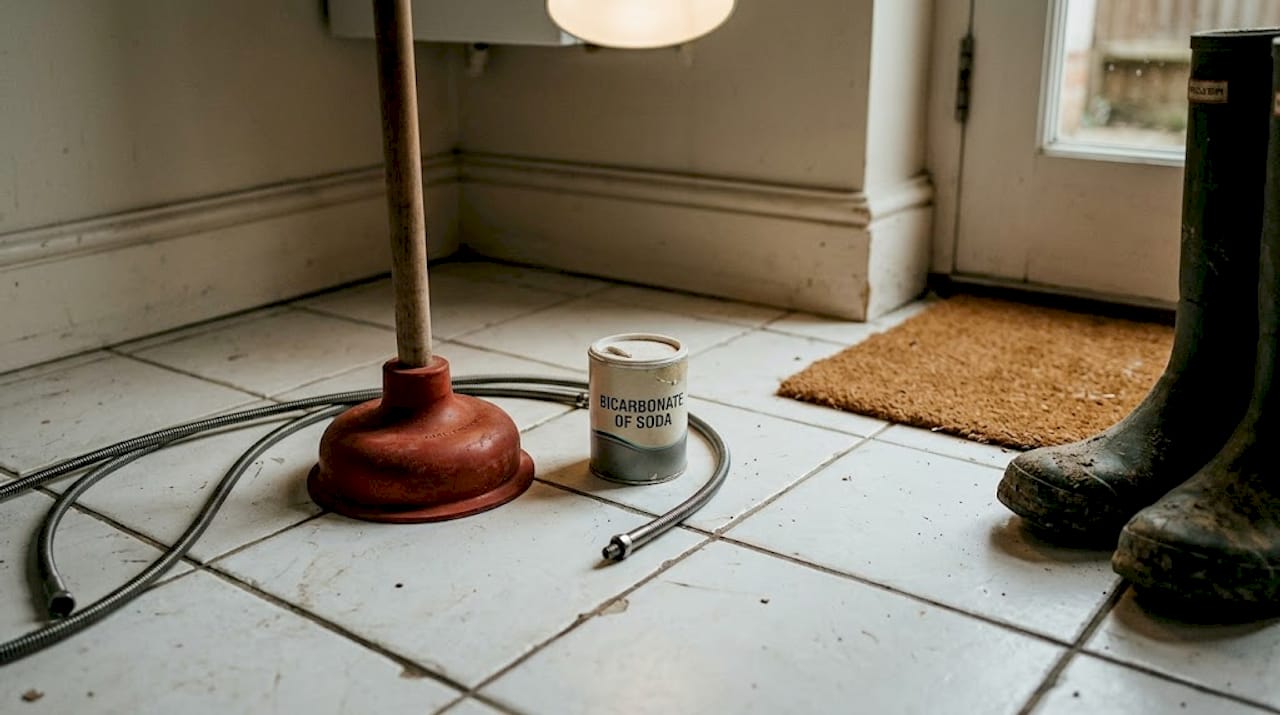
Pro Tip: Never mix chemical drain cleaners with other products, including bicarbonate of soda solutions. The reaction can produce harmful fumes and may damage your pipes further.
Step-by-step routine to prevent blockages
With tools ready, let’s put prevention into practice with an easy-to-follow routine. Consistency matters far more than occasional deep cleans, and even five minutes a week can make a significant difference.
A regular routine is vital to preventing major drain blockage incidents, and the good news is that it does not need to be time-consuming. Follow these steps across your kitchen, bathroom, and outdoor drains:
- Daily (kitchen): Scrape plates and pans into the bin before washing. Never pour cooking fat down the sink. Use your drain strainer every time you wash up.
- Daily (bathroom): Remove hair from the shower or bath strainer after each use. Do not flush wipes, cotton buds, or sanitary products.
- Weekly (kitchen): Pour a kettle of boiling water slowly down the kitchen sink to help dissolve any grease build-up. Follow with a bicarbonate of soda and vinegar flush if you want extra protection.
- Weekly (bathroom): Use an enzyme-based cleaner in the shower, bath, and basin. Check the strainer for build-up and rinse it clean.
- Monthly (outdoor drains): Clear leaves and debris from outdoor gullies. Check that drain covers are intact and not cracked. Look for signs of slow drainage or standing water.
- Seasonally: Inspect visible pipework under sinks for signs of moisture or staining. Check outdoor drain covers after heavy rainfall. Consider a professional inspection if your property has older pipes.
During your routine, watch for these warning signs: water that drains noticeably slower than usual, any gurgling from nearby drains when you flush, and any smell that was not there before. Catching these early is the whole point of the routine. The step-by-step maintenance process becomes second nature quickly.
Consistency is the difference between a five-minute weekly task and a costly emergency call-out. Build drain care into your existing cleaning routine and it will never feel like extra work.
Pro Tip: Set a monthly phone reminder to check your outdoor gullies. London’s autumn leaf fall is one of the most common causes of outdoor drain blockages, and it happens fast. Water.org.uk drain tips reinforce how seasonal awareness can save you real money.
Spotting early warning signs and troubleshooting
Even with good routines, issues can appear. Here is how to spot and troubleshoot them early before they become serious.
Early intervention can prevent full blockages and expensive repairs, but only if you know what to look for. The most reliable early warning signs are:
- Slow drainage: Water sitting in the sink or shower tray longer than usual is the first and most common sign.
- Gurgling sounds: Air trapped behind a partial blockage creates a distinctive gurgling noise from nearby drains or toilets.
- Bad odours: Decomposing organic matter in a partially blocked pipe produces a persistent, unpleasant smell.
- Water backing up: If water rises in a toilet or sink when you use another fixture, there is likely a blockage further down the shared pipe.
- Damp patches: Moisture near external walls or under sinks can indicate a slow leak caused by pressure from a blockage.
For DIY troubleshooting, start with the simplest fix. Use a plunger on the affected drain with a firm, steady action. If that does not clear it, try a drain snake to physically break up or retrieve the obstruction. A bicarbonate of soda and vinegar flush can help dissolve softer organic blockages. Avoid pouring boiling water into plastic waste pipes, as this can soften and warp the fittings over time.
If you have tried two or three DIY methods without success, stop. Repeated attempts can push a blockage deeper or damage ageing pipework, making the eventual professional repair more expensive.
Knowing when to call a professional is just as important as knowing how to troubleshoot. DIY unclogging tips are effective for minor issues, but persistent blockages, recurring problems, or any sign of sewage backing up all warrant professional attention. Citizens Advice drainage help can also clarify your responsibilities as a homeowner or tenant when drainage problems arise.
Our perspective: why prevention always trumps cure in London drains
After years of attending drainage emergencies across Greater London, we have seen the same pattern repeat itself. A homeowner ignores a slow drain for a few weeks, assumes it will clear on its own, and then faces a full blockage, potential flooding, and a repair bill that could have been avoided entirely. The myth of the ‘quick fix’ is one of the most expensive beliefs a property owner can hold.
London’s infrastructure makes this worse. Many properties sit above Victorian-era drainage systems that were never designed for modern water usage. A partial blockage in an old clay pipe does not just slow your drain. It can crack the pipe under pressure, allow root intrusion, and create subsidence risk over time. The cost of ignoring that is not just a plumber’s bill. It is potential structural damage.
Our drain maintenance insights consistently show that properties with a simple prevention routine spend a fraction of what reactive-only households spend over a five-year period. Small, regular investments in guards, cleaning, and seasonal checks are not just sensible. In London, they are essential.
Get expert help and long-term drain solutions
If you have worked through this guide and want to make sure your drainage system is in the best possible shape, a professional inspection is the smartest next step. Prevention goes a long way, but knowing the actual condition of your pipes gives you certainty that no routine can provide on its own.
At RSJ Drains, we offer thorough drain inspection services using CCTV survey technology, so you can see exactly what is happening inside your pipework. Whether you are dealing with a recurring blockage, an older property with unknown pipe conditions, or simply want a baseline check, our team is available 24 hours a day across Greater London. Our full drain maintenance guide is also available to help you build on everything covered here and keep your drains flowing year-round.
Frequently asked questions
What are the quickest ways to prevent a drain from blocking?
Using a guard and regular safe cleaning prevents most household blockages. Fit a drain strainer, avoid pouring oils or flushing wipes, and flush drains with hot water and a mild cleaner each week.
How do I know if my drain is starting to block?
Slow drains and bad odours warn of impending blockages. Early signs include water draining slowly, gurgling sounds from sinks, or persistent smells rising from indoor or outdoor drains.
Are chemical drain cleaners safe to use regularly?
Natural cleaners are recommended over harsh chemicals for regular maintenance. Frequent use of chemical cleaners can corrode older pipes, so enzyme-based or bicarbonate solutions are the safer choice for routine care.
When should I call a professional for drain issues?
Professional help is advised for persistent blockages or flooding risks. If DIY methods fail, or if you notice repeat blockages, water backing up, or any sign of flooding, contact a drainage specialist promptly.
How often should I routinely clean my drains?
Weekly cleaning reduces build-up and blockage risk. Kitchen and bathroom drains benefit most from a weekly flush, with outdoor gullies checked at least once a month.