TL;DR:
- Proactive maintenance and biannual inspections can reduce drain emergencies in London by up to 60 percent.
- Routine tasks include visual checks, debris removal, hot water flushing, biological cleaning, and annual CCTV surveys.
- Common causes of blockages are fat, wet wipes, leaf fall, and tree roots, emphasizing the need for regular prevention.
A blocked drain rarely announces itself politely. One morning you notice the kitchen sink draining slowly, and by evening you’re facing a full overflow, a flooded utility room, and an emergency call-out bill that could easily exceed £400. For homeowners and property managers across Greater London, this scenario plays out thousands of times every year. The good news is that proactive maintenance and biannual inspections can cut your risk of a drainage emergency by as much as 60%, and routine care costs a fraction of emergency repairs. This guide gives you everything you need to stay ahead of the problem.
Table of Contents
- What you need to maintain your London drains
- Step-by-step routine maintenance for London homes
- Drain cleaning methods: what works best in London?
- Troubleshooting, costs, and handling emergencies
- Why drain maintenance in London really matters: our take
- How we can help with London drain maintenance
- Frequently asked questions
Key Takeaways
| Point | Details |
|---|---|
| Routine checks matter | Monthly visual inspections and debris removal prevent most drain issues in London homes. |
| Choose the right cleaning method | Select jetting or rodding based on pipe type and blockage, as improper methods can damage old drains. |
| Get annual CCTV surveys | Annual professional CCTV inspections catch hidden issues early and reduce emergency costs. |
| Emergency calls are costly | Preventative maintenance is far cheaper than emergency repairs, which can exceed £300 in London. |
What you need to maintain your London drains
Now that you’re keen to avoid unnecessary drain drama, let’s get clear on what you really need, both tools and professional help, for effective maintenance.
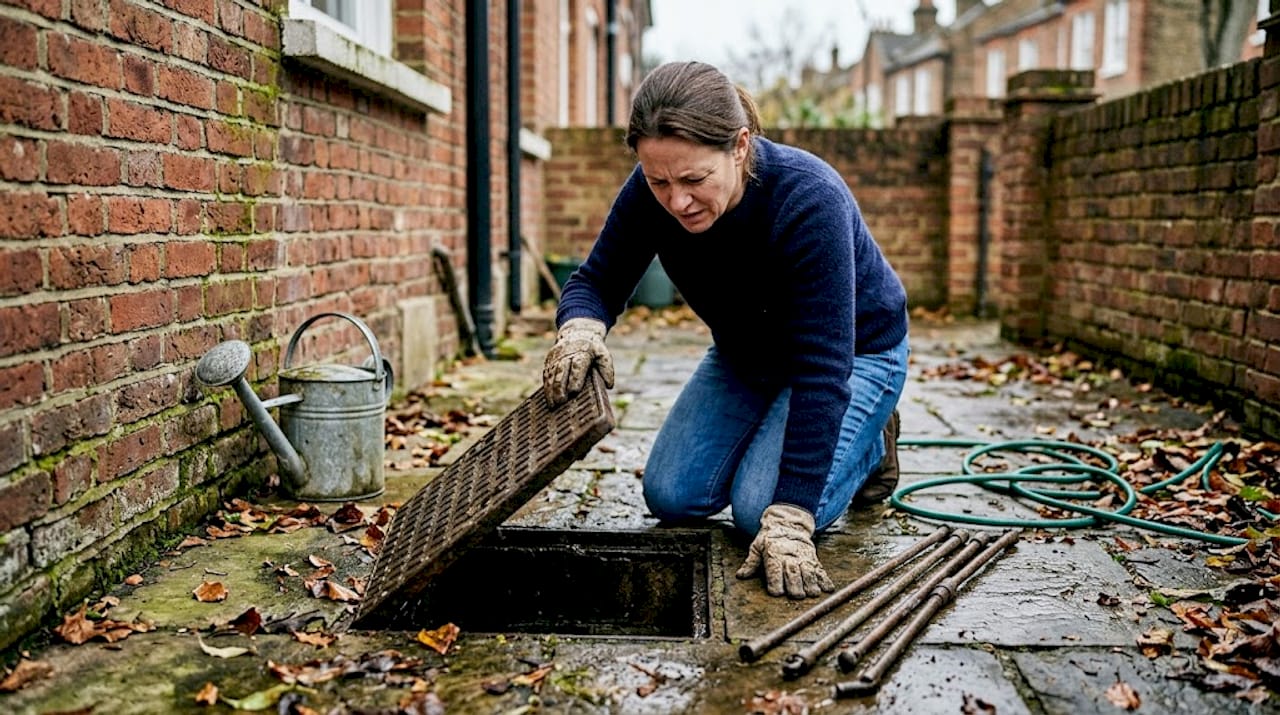
The basics are straightforward and inexpensive. A decent set of rubber gloves, a set of drain rods, a good inspection torch, access to hot water, and a bottle of biological drain cleaner will handle the majority of routine tasks for most London properties. Biological cleaners use natural enzymes to break down grease and organic build-up without attacking pipe walls, which matters a great deal in properties with older pipework.
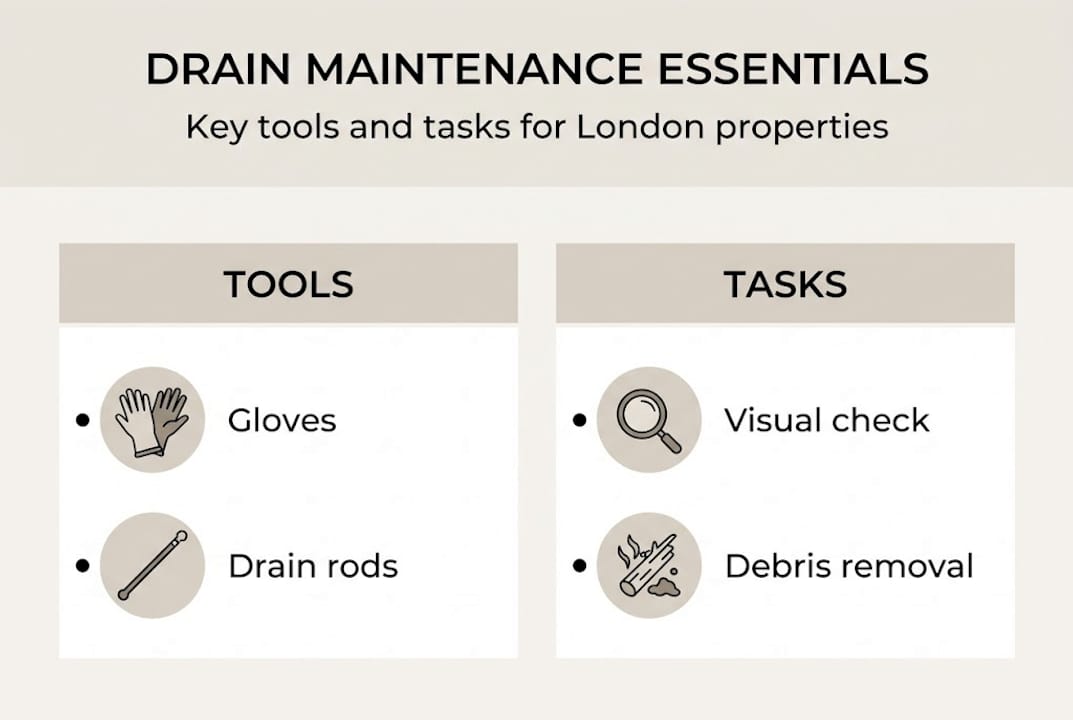
Beyond the DIY kit, you’ll want to know which professional services to call on. A full maintenance guide will tell you that monthly visual inspections, debris removal, hot water flushing, and an annual professional CCTV survey form the backbone of preventing costly repairs. CCTV surveys use a small waterproof camera to inspect the inside of your pipes, spotting cracks, root ingress, or build-up that no amount of surface-level checking would reveal. High-pressure water jetting is the professional go-to for clearing stubborn blockages or giving drains a thorough annual clean.
Self-maintenance essentials at a glance:
- Rubber gloves and protective eyewear
- Drain rods (1.5 metre sections, available from most hardware shops)
- Biological enzyme cleaner (avoid caustic soda on older pipes)
- Inspection torch or head torch
- Drain cover key for access
- Hot water kettle or outdoor hose
| Task | DIY suitable? | Professional needed? |
|---|---|---|
| Visual inspection of covers | Yes | No |
| Debris removal from grates | Yes | No |
| Monthly hot water flush | Yes | No |
| Minor surface blockage | Yes | Sometimes |
| Annual CCTV drain survey | No | Yes |
| High-pressure water jetting | No | Yes |
| Structural repairs or relining | No | Yes |
Use this 7-step checklist to track what you’re doing and when. Consistency is what turns good intentions into actual prevention.
Pro Tip: Note down the exact location of every inspection cover on your property and store it alongside your home documents. During an emergency, finding the right access point quickly can save a significant amount of time and money.
Step-by-step routine maintenance for London homes
With your kit ready, here’s the frontline approach to keeping your drains healthy all year, step by step.
London properties present a particular challenge. Many homes were built during the Victorian era, meaning the drainage infrastructure beneath them is well over a century old. Combine this with clay soil that shifts, plane trees dropping leaves by the tonne each autumn, and a city that generates enormous volumes of grease and food waste, and you have a recipe for persistent drain trouble.
A practical maintenance workflow for London homes looks like this:
- Monthly visual check: Walk around your property and look for pooling water, sunken ground near drain runs, or slow-draining sinks and baths. Lift gully covers if accessible and check for build-up.
- Clear surface debris: Remove leaves, mud, and debris from external grates, especially after wind or rain. Autumn is the highest-risk period in London, so increase checks from September through December.
- Hot water flush: Once a month, slowly pour a kettle of boiling water down each internal drain. This softens grease deposits before they harden into solid blockages.
- Apply biological cleaner: Every 6 to 8 weeks, use a biological enzyme cleaner overnight. These are safe for most pipe materials and break down organic matter gently.
- Check for odours: Persistent bad smells from drains often signal a partial blockage forming or a dry trap. A simple water top-up in rarely used sinks often solves the latter.
- Test water flow: Run taps and observe drain speed. A noticeably slower flow than usual is an early warning worth acting on.
- Annual professional CCTV survey: Book this every 12 months. It’s the single most effective step you can take, and extra drain protection tips reinforce why even new-build properties benefit from this check. Routine maintenance including CCTV protects against the slow deterioration that’s invisible from the surface.
| Season | Key risk | Recommended action |
|---|---|---|
| Spring | Root growth acceleration | Check for root ingress, book CCTV |
| Summer | Grease build-up (BBQs, cooking) | Increase hot water flushing |
| Autumn | Leaf fall, heavy rain | Weekly grate clearance |
| Winter | Fat solidification in cold pipes | Use biological cleaner monthly |
Pro Tip: Set a calendar reminder for the first weekend of October to clear all external grates before the worst of the leaf fall hits. This one habit prevents a large proportion of autumn blockages.
Drain cleaning methods: what works best in London?
Following your routine, you may sometimes encounter tougher blockages. Here’s how to choose the right cleaning approach for London’s unique drains.
Not all cleaning methods suit all pipes, and this is particularly important in London where Victorian clay pipes and modern plastic systems often sit side by side, sometimes even connected in the same run.
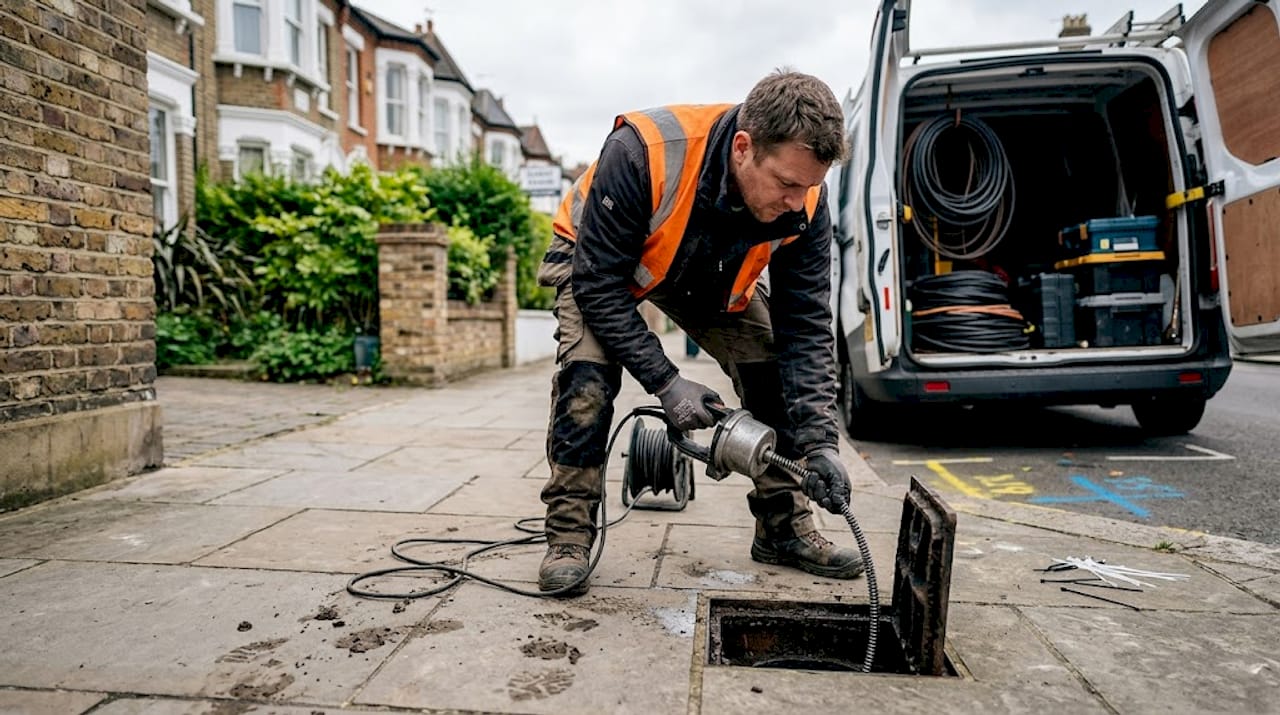
The primary drain cleaning methods used by professionals are high-pressure water jetting, mechanical rodding, and electro-mechanical cleaning. Each has its strengths.
High-pressure water jetting fires water at pressures up to 4,000 PSI through your drain, blasting away grease, scale, and debris. It’s highly effective for large blockages and annual cleaning of modern pipes. However, it can be damaging on fragile Victorian clay pipes, particularly where joints have already deteriorated.
“Always have a CCTV survey before jetting older pipes. What clears the blockage could crack a weakened joint and turn a £150 job into a £1,500 repair.”
Mechanical rodding is the gentler option. Drain rods are fed into the pipe and rotated manually to break up blockages. It’s slower but far safer on fragile pipework, making it the first-choice method for pre-1950 properties. Types of maintenance explains when each approach is appropriate for your property type.
Electro-mechanical cleaning uses a rotating cable with a cutting head, ideal for tree root intrusion or compacted debris. London’s street trees, particularly in areas like Islington and Hackney, are notorious for sending roots into older drain runs.
| Method | Best for | Risk on old pipes | DIY possible? |
|---|---|---|---|
| High-pressure jetting | Grease, large blockages | High | No |
| Mechanical rodding | Minor obstructions | Low | Yes (with care) |
| Electro-mechanical | Roots, compacted debris | Medium | No |
| Biological cleaner | Maintenance, slow drains | Very low | Yes |
Common mistakes to avoid:
- Pouring chemical drain unblockers repeatedly, which can corrode older pipe materials
- Using jetting without a prior inspection on unknown pipework
- Ignoring a recurring blockage in the same location, which usually signals a structural fault
- Assuming a cleared blockage means the underlying cause is resolved
For anything beyond a simple manual rod, book a professional. The water jetting details on our site explain exactly what the process involves and when it’s the right call.
Troubleshooting, costs, and handling emergencies
Even with the best routines, problems occasionally pop up. Here’s how to spot issues early, handle the unexpected, and make smart cost decisions.
Knowing the signs of drain trouble early is the difference between a £150 service call and a £600 emergency repair. Act on these warning signals immediately:
- Slow drainage in one or more fixtures simultaneously (suggests a main drain, not just one trap)
- Gurgling sounds from drains or toilets when water is run elsewhere in the property
- Persistent bad smells, particularly sulphurous odours from outside gullies
- Water backing up into sinks, baths, or toilet bowls
- Visible overflow from external manholes or gullies after rain
What you can safely try yourself: Plunge a single blocked sink or toilet, apply biological cleaner to a slow drain, or clear a visibly debris-blocked grate. Stop there. Anything deeper warrants a professional.
The cost reality for London is worth understanding clearly. Emergency unblocking costs typically range from £80 to £300, with jetting or CCTV inspection adding £90 to £250 on top. Emergencies called out at night or weekends carry a 30 to 60% premium on standard rates. Routine professional maintenance, by contrast, generally costs £150 to £300 per visit.
One statistic stands out: wet wipes and fat cause up to 90% of London drain blockages. Thames Water removes over 75,000 blockages from London’s sewer network every year, and the majority trace back to flushed wipes or cooking fat poured down sinks. The simplest blocking prevention step you can take today is fitting a sink strainer and never flushing wipes, regardless of whether the packet says “flushable.”
Edge cases worth knowing: tree root ingress is common near London’s Victorian sewer lines, fatbergs form in low-flow sections of older pipes, and autumn leaf fall creates surface blockages that quickly become pressure problems after heavy rain. CCTV surveys reduce emergencies by detecting these issues before they escalate, which is why demand for them has grown consistently across London.
Why drain maintenance in London really matters: our take
Understanding the practicalities is one thing, but here’s what years in London drainage has taught us about prevention and peace of mind.
The phrase “out of sight, out of mind” is genuinely dangerous when it comes to London’s drains. Beneath the streets of Kensington, Lewisham, or Enfield lies infrastructure that was often laid down during the reign of Queen Victoria. It works, mostly, but it was never designed for the population density or the volume of waste we generate today.
We’ve attended properties where a single CCTV survey, costing around £150, would have revealed a root intrusion that eventually caused a collapsed pipe and a repair bill of over £600. The homeowner had noticed slower drainage for nearly two years but assumed it would “sort itself out.” It never does.
The financial case for maintenance is compelling, but the practical case is stronger still. Emergency call-outs cause disruption, stress, and sometimes damage to floors and walls. Regular biannual inspections cut your risk significantly, and they give you documented evidence of your drainage condition, which is increasingly valuable when selling a London property. Make maintenance a habit, not a reaction.
How we can help with London drain maintenance
Ready to get proactive, or in need of urgent help? Here’s where to get trusted London drain support.
At RSJ Drains, we cover Greater London with a team of local engineers who know the specific challenges of the area’s Victorian infrastructure, clay soils, and seasonal pressures. Whether you need a routine check or an emergency response within two hours, we’re equipped to help.
Our drainage services include professional CCTV drain surveys, high-pressure water jetting, drain relining, and full emergency call-outs available 24 hours a day, 7 days a week. You can also explore our drain maintenance services to find a planned maintenance programme that keeps your drains clear year-round. Get in touch today for a no-obligation quote and start protecting your property before a problem starts.
Frequently asked questions
How often should London homeowners inspect their drains?
London homeowners should carry out visual drain checks monthly and arrange a professional CCTV drain survey every 12 months to catch hidden issues before they become costly.
What is the average cost of emergency drain unblocking in London?
Emergency unblocking typically costs between £80 and £300, with jetting or CCTV inspection adding a further £90 to £250, plus a 30 to 60% premium for out-of-hours call-outs.
What causes most drain blockages in London?
Fat, wet wipes, and debris are responsible for up to 90% of blockages across London, with cooking fat and so-called “flushable” wipes being the most common culprits.
Are CCTV drain surveys really necessary?
Yes. CCTV surveys detect hidden structural faults and root ingress early, reducing the likelihood of emergency call-outs by as much as 60% across London properties.
Recommended
- Drain maintenance: save money and protect your property
- Drain maintenance workflow: step-by-step for London homes
- Drain Maintenance Guide for London Homes and Properties
- Drain Maintenance Explained: Protecting London Homes
- Drain Surveys London | CCTV Drainage Inspections & Reports – Pest Control 24 London