TL;DR:
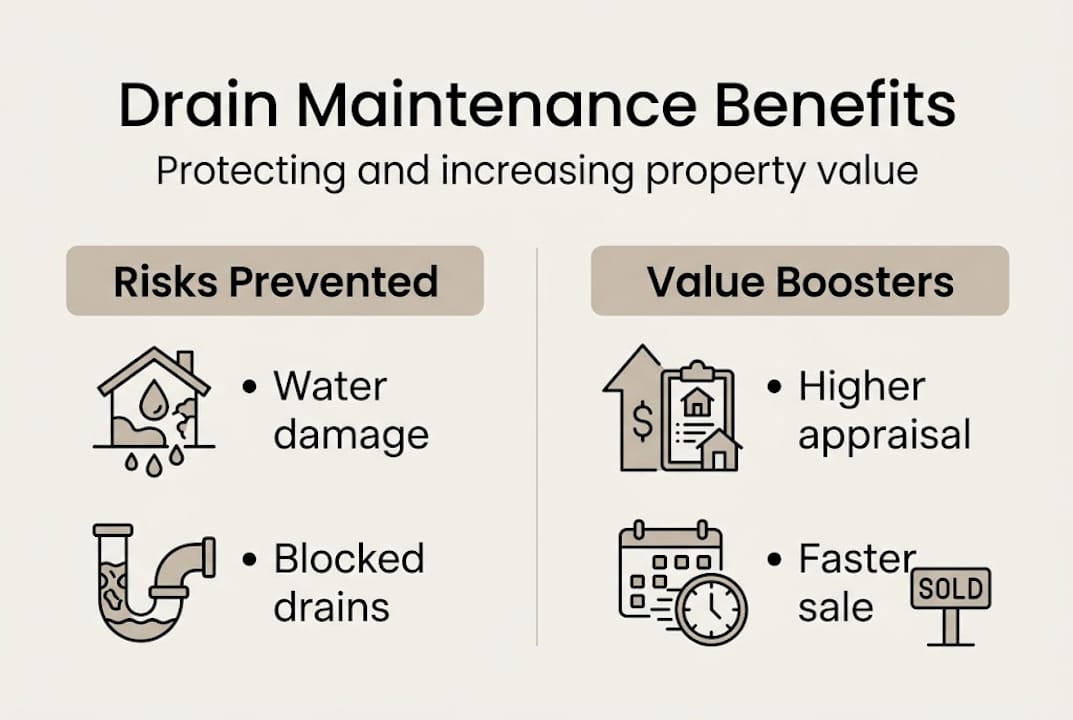
- Water damage claims are the UK’s top insurance expense, highlighting the importance of drain maintenance.
- Regular drain inspections and repairs protect property value and ensure smoother transactions.
- Proper documentation of drain care can influence buyers, lenders, and insurance premiums positively.
Water damage is now the number one insurance claim in the UK, with £585 million paid out in 2024 alone. For property owners and managers across Greater London, that figure is a warning sign, not a footnote. Most of those claims trace back to drainage systems that were ignored until something went badly wrong. What follows is a practical, evidence-backed guide to understanding how your drain maintenance routine directly determines your property’s market value, its insurability, and its appeal to buyers and lenders alike.
Table of Contents
- Why drainage matters more than you think
- How regular drain maintenance preserves property value
- Key maintenance methods and when to use them
- London-specific standards and practical steps
- The hidden truth: why drain maintenance is your best asset
- Professional support for lasting drainage value
- Frequently asked questions
Key Takeaways
| Point | Details |
|---|---|
| Hidden risks | Undocumented drainage issues can quietly cut property value and block sales. |
| Financial savings | Regular maintenance prevents costly repairs and rising insurance premiums. |
| Compliance matters | Lenders and insurers increasingly demand drainage records and maintenance proof. |
| Practical action | Combine DIY checks with annual professional inspections for best results. |
| Market leverage | Clear drainage records are a selling point that increase buyer trust. |
Why drainage matters more than you think
Most property owners in London spend considerable time and money on visible improvements. New kitchens, fresh paint, updated bathrooms. These improvements matter, but they rarely prevent the kind of structural damage that quietly erodes a property’s foundations and market appeal. Neglected drains are one of the most common and most expensive sources of that silent deterioration.
When drains are left without regular attention, debris, grease, roots, and sediment build up inside the pipework. Over time, this leads to slow blockages, then complete blockages, and eventually water backing up and finding its way into walls, floors, and foundations. Damp patches appear. Timber rots. Concrete cracks. The damage compounds quickly, and emergency call-outs become expensive and disruptive. What started as a £150 routine clean can turn into a £5,000 structural repair.
There is a financial argument beyond repairs, too. The importance of routine home maintenance is well established among surveyors and estate agents: properties with documented care histories attract stronger offers and shorter sale cycles. Drainage is part of that story.
Buyers, mortgage lenders, and insurers now look far more closely at drainage records than they did even five years ago. Lenders in particular have become cautious. A property with unresolved drainage concerns may be refused a standard mortgage, forcing buyers into specialist lending at higher rates or causing them to withdraw entirely. For sellers, that can mean months of delays and significant price reductions.
Here is what undocumented or neglected drainage typically triggers during a property transaction:
- Price renegotiation after a surveyor flags drainage concerns
- Mortgage delays or refusals from lenders requiring a clean drainage report
- Higher buildings insurance premiums once a water damage claim appears on record
- Buyer withdrawal when drainage repairs appear extensive or undocumented
- Valuation reductions tied directly to perceived structural risk
“Undocumented drainage issues lead to buyer negotiations, lender hesitancy, higher insurance premiums.”
The scale of financial exposure is real. Over half a billion pounds in water damage claims in a single year reflects how widespread drainage neglect has become across the UK housing stock. London properties, with their older Victorian and Edwardian pipework, face particular vulnerability. Understanding these risks is the first step. Knowing how to save money and protect your property through proactive maintenance is the second.
With the risks clear, let’s uncover how good drain maintenance becomes a value-preserving asset, not just a chore.
How regular drain maintenance preserves property value
The connection between a well-maintained drainage system and a higher property valuation is more direct than most people realise. It is not simply about avoiding damage. It is about creating a documented record of care that reassures buyers, satisfies lenders, and keeps insurance premiums competitive.
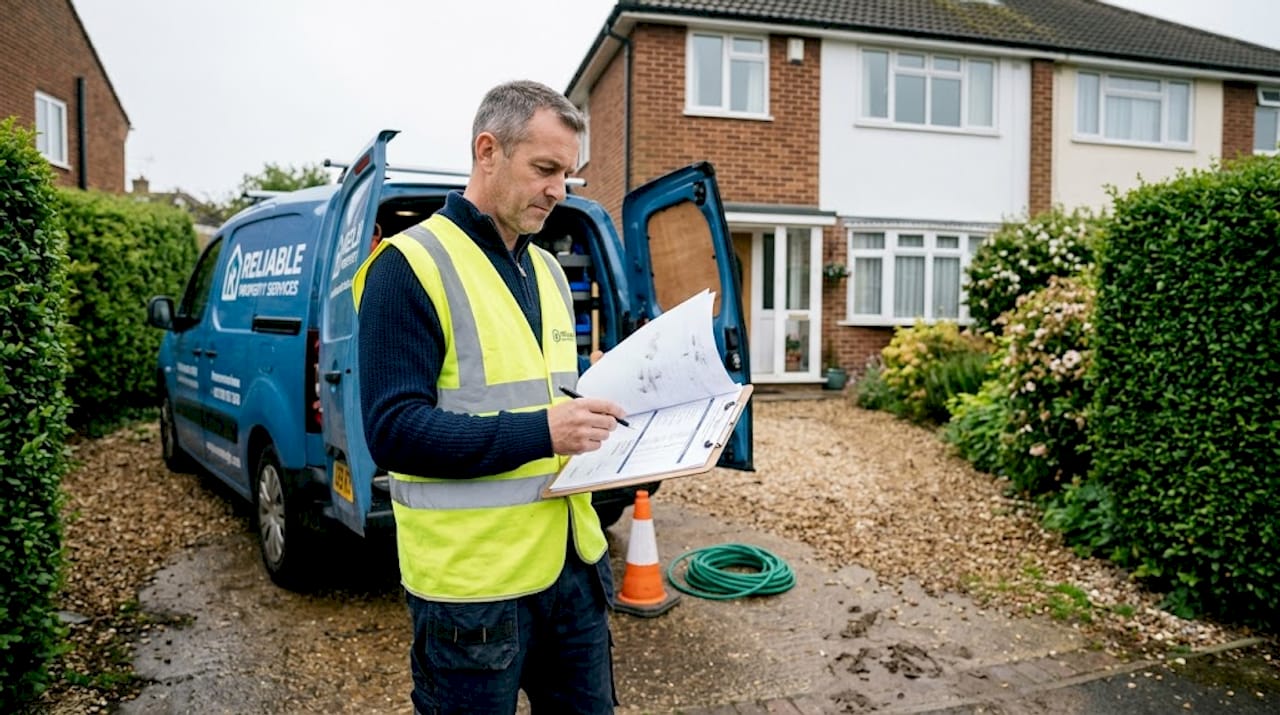
Water-related insurance claims are the most common in the UK, which means insurers are increasingly pricing policies based on drainage risk. Properties with no maintenance history or a record of previous claims pay significantly more. Properties with annual inspection records and clean CCTV drainage reports attract better terms.
Here is a clear picture of the financial stakes:
| Scenario | Estimated annual cost | Long-term impact |
|---|---|---|
| No maintenance, reactive repairs | £2,500 to £8,000+ | Structural damage, reduced valuation |
| Annual professional inspection | £150 to £350 | Clean records, stable premiums |
| High-pressure jetting every 2 years | £200 to £400 | Blockages prevented, pipework extended |
| Emergency call-out after neglect | £500 to £2,000+ per event | Claim history, higher premiums |
| CCTV survey before sale | £250 to £450 | Buyer confidence, stronger offers |
The contrast is stark. Routine maintenance costs a few hundred pounds per year. Reactive repairs after years of neglect can run to thousands, and that is before you account for the impact on your sale price or the cost of a rejected mortgage application.
Here are the top ways that regular drain care directly enhances your property’s value:
- Clean drainage surveys provide documentary evidence of property health to buyers and lenders
- Blocked drain prevention stops water ingress that leads to damp, mould, and structural movement
- Pipe relining and repair extends the life of ageing Victorian pipework common in London properties
- Rat gate installations prevent rodent ingress through drainage systems, protecting health and structure
- Scheduled jetting removes grease and debris before it becomes a blockage, avoiding emergency call-outs
- CCTV inspections identify early-stage cracks or root intrusion before they develop into costly failures
Reviewing key drain maintenance examples shows clearly that proactive care is not a luxury. It is a financially sound decision that pays back multiple times over.
Pro Tip: Always request a written report and any CCTV footage from your professional drain inspection. Keep these with your property records and share them during conveyancing. Buyers and their solicitors will view this documentation as evidence of responsible ownership, and it can tip the balance in a competitive negotiation.
Using a drain maintenance checklist ensures nothing is missed between annual surveys, particularly in properties with multiple tenants or complex drainage layouts. You can also look at boosting property value with exterior care as part of a joined-up approach to protecting your asset.
Now we can see the value in regular upkeep, but which methods make the most difference?
Key maintenance methods and when to use them
Not every drain problem requires a specialist, and not every drain problem can be safely handled without one. Understanding the boundaries between DIY maintenance, scheduled professional care, and emergency intervention is essential for any property owner or manager looking to protect long-term value.
Proactive inspection and repair avert structural damage that affects property value. That principle shapes how we recommend you approach your annual maintenance routine.
| Method | Suitable for | Typical cost | Impact on property value |
|---|---|---|---|
| DIY drain cleaning | Surface blockages, slow plug drains | £5 to £30 | Low, no documentation |
| Annual CCTV inspection | Full drainage health check | £250 to £450 | High, provides buyer-ready report |
| High-pressure water jetting | Grease, debris, root removal | £150 to £400 | High, prevents future blockages |
| Emergency call-out | Active blockages, flooding | £300 to £2,000+ | Negative if repeated |
| Drain relining | Cracked or collapsed pipes | £500 to £3,000 | Very high, avoids excavation |
DIY methods are appropriate for surface-level issues. Clearing a slow-draining sink with a plunger or a simple drain cleaner is reasonable home upkeep. However, DIY approaches cannot identify root intrusion, pipe fractures, or partial collapses. These issues sit below the surface, cause serious structural damage over time, and are invisible without a CCTV camera.
A well-structured annual maintenance routine for a London property should follow these steps:
- Schedule a CCTV drain survey at the start of each year to establish a baseline condition report
- Arrange high-pressure jetting to clear any accumulation identified by the CCTV survey
- Inspect external gullies and gutters for leaf build-up and debris, especially after autumn
- Check rodent activity around drain access points and consider rat gate installation if activity is detected
- Review any drainage maps provided by Thames Water or your local authority to understand shared drain responsibilities
- File all reports and receipts in a dedicated property maintenance folder for future sale or insurance use
Following a clear drain maintenance guide removes ambiguity and makes it easier to delegate maintenance tasks to a property manager or building supervisor. The maintenance workflow sets out a clear process tailored to London properties specifically.
Pro Tip: Document all repairs and inspections with the date, the contractor used, and the outcome recorded. This paper trail is not just useful for future sales. It supports insurance claims, demonstrates due diligence to tenants, and protects you legally if a drainage dispute arises with a neighbour or local authority.
A note on the importance of clean exteriors alongside drainage maintenance: surface water management and external drain gullies are part of the same system. Blocked gullies contribute directly to drainage overload, particularly during the heavy rainfall that London regularly experiences.
Let’s put these methods into action with a practical, London-focused blueprint.
London-specific standards and practical steps
Greater London presents unique challenges for property drainage. Much of the housing stock dates from the Victorian and Edwardian eras, meaning many properties rely on clay pipe systems that are over 100 years old. These pipes are prone to root intrusion, joint displacement, and gradual collapse. Managing them requires a specific approach that goes beyond the generic maintenance advice found in most guides.
Lender requirements and compliance checks are rising, with drainage health increasingly scrutinised during mortgage applications, lease renewals, and commercial property valuations. London property owners who understand and act on these requirements are at a clear advantage.
Here is a minimum annual maintenance programme that aligns with current London expectations:
- Conduct a professional CCTV drainage survey to document pipework condition and identify any defects
- Clear all external gullies and soakaways to prevent surface water backing up during rainfall
- Arrange high-pressure jetting of any build-up identified in the survey before it worsens
- Inspect shared drain connections with neighbouring properties and confirm legal responsibilities with your solicitor or managing agent
- Obtain a compliance report or certificate from your drainage contractor confirming the system meets current standards
- Store all documentation securely and update your property file before any tenancy review or planned sale
Your maintenance checklist must answer these essential questions to be genuinely useful:
- When was the last professional CCTV survey conducted, and do you have a written report?
- Are all external gullies and drainage access points clear and accessible?
- Has the property experienced any blocked drains, flooding, or water ingress in the past 12 months?
- Are shared drains with neighbouring properties clearly identified and maintained under agreement?
- Does the property have a rat gate or similar rodent barrier installed on drainage access points?
- Are all insurance policy requirements for drainage maintenance being met?
The role of routine maintenance and cost prevention cannot be overstated in this context. For those managing commercial properties or multi-tenancy buildings, the drain cleaning role for businesses adds further context on compliance obligations that apply specifically to commercial premises across London.
With practical steps in place, what’s the real lesson most owners still miss?
The hidden truth: why drain maintenance is your best asset
Most property owners in London think about drain maintenance the way they think about boiler servicing. Something to do when it stops working. That mindset is understandable, but it is costing people significant money and causing unnecessary stress during what should be straightforward property transactions.
Here is what years of working across London’s residential and commercial property market teaches you. Buyers and their surveyors are not just looking for problems. They are looking for evidence of how a property has been managed. A clean CCTV drainage report from the past 12 months signals responsible ownership. It says, clearly and without words, that someone has been paying attention.
‘Drainage records are a silent currency in London’s property market.’
Decor and extensions get all the attention, but valuers and experienced buyers zero in on foundational health. Water damage history. Damp evidence. Structural movement. All of these trace back, in the majority of cases, to drainage failures that were preventable. The hard-won lesson is simple: it is cheaper and smarter to prevent than to explain away.
Using effective drainage solutions as a consistent annual practice transforms drain maintenance from a reactive cost into a proactive marketing asset for your property.
Professional support for lasting drainage value
Protecting your property’s value through expert drain maintenance has never been more straightforward for London owners and managers. RSJ Drains offers scheduled inspections, CCTV surveys, high-pressure jetting, and full maintenance programmes designed specifically for Greater London properties.
Our local team provides written reports after every visit, giving you the compliance documentation that buyers, lenders, and insurers increasingly expect. With a two-hour emergency response guarantee and a family-run approach that prioritises genuine customer care, RSJ Drains makes it easy to stay ahead of drainage problems rather than chasing them. Book a professional drain survey today and receive tailored advice on the most cost-effective maintenance programme for your property type and drainage setup.
Frequently asked questions
How often should I inspect my drains to protect property value?
Annual drain inspections are recommended for all London properties, or after any major storm event. With lender scrutiny increasing around drainage health, annual CCTV surveys provide the documented evidence that supports both mortgage applications and insurance renewals.
Can neglected drains really lower my property’s sale value?
Yes. Undocumented drainage issues frequently trigger price reductions during negotiations and may delay or block property sales entirely when lenders require a satisfactory drainage report before releasing funds.
What documentation should I keep for future buyers?
Keep written reports from all professional inspections, receipts for maintenance and repairs, CCTV footage where available, and any compliance certificates issued by your drainage contractor. These records are central to a smooth conveyancing process.
Is DIY drain cleaning enough to maintain property value?
DIY helps with minor surface upkeep, but water-related claims being the most common UK insurance event shows that hidden faults need professional CCTV inspection to detect and address before they escalate into costly structural damage.